Key Notes
- Anthropic reportedly struck a $3.4 billion deal to take over commitments for 1.7 gigawatts of gas-fired generation.
- The agreement covers equipment and installation capabilities rather than an acquisition of OnePWR itself.
- The deal puts power equipment and fuel costs in focus ahead of Anthropic’s planned IPO.
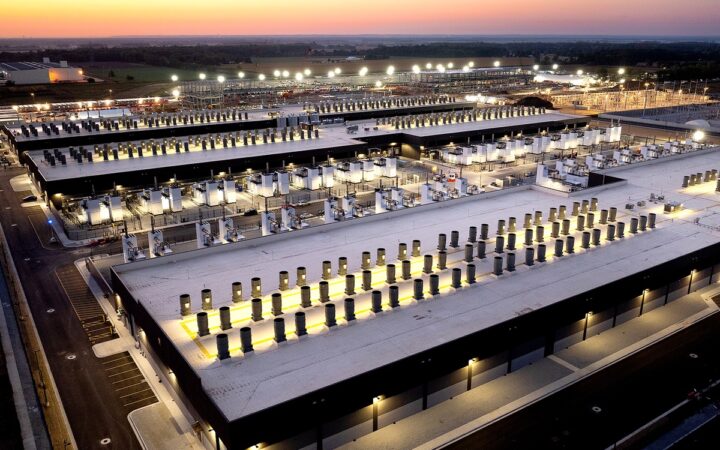
Anthropic has struck a $3.4 billion deal for gas-fired generators capable of supplying 1.7 gigawatts of electricity, the Financial Times reported on Sunday, as the developer of Claude moves to secure power for its expanding data-center network.
The agreement transfers equipment commitments from San Antonio-based OnePWR Solutions to Anthropic. It gives the AI company a more direct role in obtaining the machinery needed to power its computing infrastructure, alongside the increasingly expensive chips inside it.
For investors weighing Anthropic’s planned IPO, the reported purchase offers a tangible example of how the AI spending boom reaches beyond cloud contracts into engines, construction and fuel supply.
Taking Over Generator Orders
Anthropic acquired the commitments in late September, according to Reuters, which cited the FT report. The package included engineering and construction capabilities needed to install the generators. Anthropic did not acquire OnePWR itself, and none of the supplier’s employees transferred to the AI company.
Reuters said it could not immediately verify the report and had not received responses from Anthropic or OnePWR. The news emerged on November 8; the reported transaction took place several weeks earlier.
The equipment orders had been placed with Caterpillar (NYSE: CAT) roughly two years ago, according to The Next Web, citing the FT. OnePWR needed financing to complete them. Anthropic initially planned to buy electricity from the supplier before taking over the orders and installation work instead. The locations where the equipment will be deployed have not been disclosed.
An Industrial Supplier Benefits From AI Demand
Caterpillar’s own results show why power-generation equipment has become an important part of the AI investment cycle. Its Power & Energy division generated $8.78 billion of third-quarter sales, up 18% from a year earlier. Within that division, power-generation sales rose 30% to $3.42 billion.
The manufacturer attributed growth in that business to turbines, related services and large reciprocating engines, particularly for data centers, in its quarterly results. That demand helped underpin the record backlog it disclosed last month.
The OnePWR arrangement involves taking over existing orders. The reported $3.4 billion package therefore cannot be treated as an equivalent amount of newly booked Caterpillar revenue.
Securing Power Adds Costs of Its Own
Anthropic’s IPO filing describes shortages of generators, turbines and other electrical equipment, with some delivery lead times stretching several years. It also says certain planned facilities will use dedicated natural-gas generation, exposing the company to fuel-price changes and limits on pipeline capacity.
As of and after September 30, Anthropic had entered purchase and lease commitments totaling about $895.4 billion, largely for computing and infrastructure. Roughly $447.5 billion was expected before the end of 2030. About $213.8 billion of the total was subject to termination rights or conditions before the arrangements begin.
Those obligations span many years. The new reporting does not establish whether the generator deal is already included in that total.
Taking control of equipment orders may help secure scarce supply, but electricity still has to be generated economically. Fuel transport, installation and operating costs will help determine how much of the resulting computing revenue reaches the bottom line.
The Electricity Bill Is Also a Political Issue
Anthropic pledged in February to cover electricity-price increases caused by its data centers, including all grid upgrades needed to connect them. It also committed to matching its needs with new generation and reducing demand during periods of grid stress.
That promise now sits alongside local opposition to data-center expansion and closer scrutiny of the industry’s infrastructure spending. Owning the generators could give Anthropic more control over one scarce component. The next step is turning those orders into permitted, fueled and operating power capacity.