Key Notes
- The New York Times reports that approved H200 handlers New Matrix and Maginfra had vacant listed offices and links to restricted groups.
- US H200 licenses require customer screening and independent testing under a case-by-case review policy.
- Nvidia says H200 shipments under the China licensing program contributed less than 1% of its latest quarterly Data Center revenue.
US approvals for Chinese companies to handle Nvidia (Nasdaq: NVDA) H200 chips included firms with vacant listed offices and reported links to export-restricted groups, The New York Times reported on Saturday. The findings put the screening of approved customers and assemblers under scrutiny as Washington permits some sales of advanced AI processors to China.
New Matrix and Maginfra were among roughly two dozen Chinese companies cleared to buy or handle H200s, according to the newspaper. Their role included assembling the processors into AI systems. Approval identifies a permitted transaction or customer; it does not establish how many chips have been delivered.
For Nvidia shareholders, the investigation adds a compliance question to a market already constrained by rules on both sides of the Pacific. The company has disclosed limited H200 sales in China and inventory costs associated with products it could not sell.
Empty Offices and Corporate Connections
The Times found that New Matrix’s listed Beijing office was vacant. Its reporting linked the company’s owners to Wise Road Capital, a Chinese investment firm added to the US Commerce Department’s Entity List in 2024.
Maginfra’s listed office also appeared empty when reporters visited, the paper reported. It described personnel and patent connections between Maginfra and Inspur, the Chinese server group whose parent is subject to US export restrictions.
The findings concern who was cleared to handle the chips and how those companies were vetted. An empty registered office or a corporate connection is not, by itself, proof that processors reached a prohibited military user.
In responses described in The Insider’s coverage of the investigation, the Bureau of Industry and Security said it carefully reviews applications, while Nvidia said sales support American jobs. Those positions reflect the policy argument behind controlled exports: preserving commercial access while screening out prohibited uses.
H200 Licenses Carry Specific Conditions
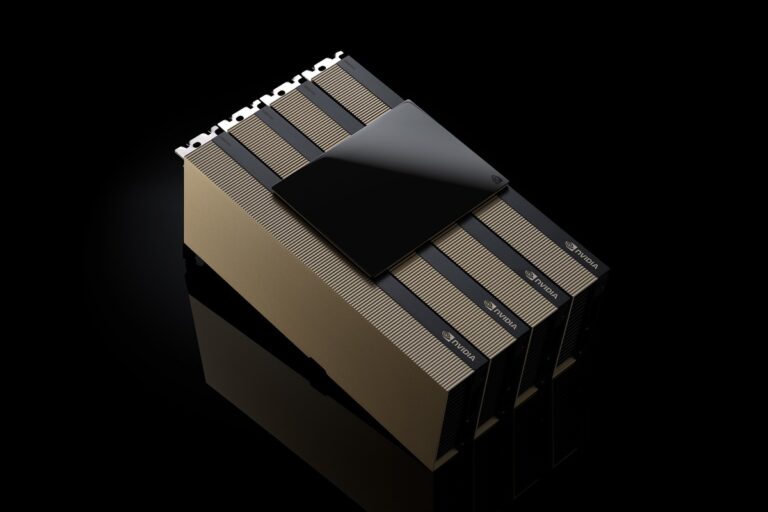
The H200 is an AI accelerator based on Nvidia’s Hopper architecture, used in systems that train and run large models. Washington’s decision to allow some sales did not open the Chinese market without restrictions.
BIS’s January 13 policy placed H200 applications under case-by-case review, subject to security requirements. Applicants must show that exports will not reduce semiconductor production capacity available to American customers and that the Chinese purchaser has export-compliance procedures, including customer screening.
The policy also requires independent testing in the United States to verify performance and security. Those conditions make the identity and operations of an approved buyer or assembler central to the licensing process.
Maginfra’s approval had been reported before Saturday’s investigation. Reuters reported in July, citing documents and people familiar with the matter, that the server maker had permission to purchase H200s. It also noted that Chinese import reviews and Beijing’s support for domestic alternatives could limit actual sales even after US clearance.
The Blacklist Entries Are Export Restrictions
Commerce’s December 2024 rule added Wise Road Capital to the Entity List. The department cited its involvement in helping China acquire companies with sensitive semiconductor-manufacturing capabilities. The entry imposed a license requirement for all items subject to US export regulations, with applications reviewed under a presumption of denial.
Inspur Group Co., Ltd. was listed in March 2023, also with a presumption-of-denial review policy. The Entity List controls exports, reexports and transfers involving named entities; it is a different instrument from a blanket financial asset freeze.
China H200 Sales Remain Limited
Nvidia’s own filing shows the commercial limits of the program. The company said US licenses issued from February allowed small H200 shipments to specified China-based customers, but Chinese restrictions prevented it from selling all the licensed products.
During the first half of fiscal 2027, Nvidia recorded a $400 million H200 charge for excess inventory and purchase obligations as demand diminished. Shipments completed under the licensing program accounted for less than 1% of Data Center revenue in the quarter ended July 26.
That small revenue contribution sits alongside a longer-term competitive concern. Domestic chipmakers have been gaining ground as restrictions narrow the products Nvidia can offer Chinese buyers. In its filing, Nvidia warned that limited access helps competitors build larger customer and developer ecosystems.
Its broader business has continued to expand. Nvidia’s August results showed quarterly revenue of $96.2 billion, including $89 billion from Data Center. Its third-quarter forecast of $108 billion, plus or minus 2%, assumed no Data Center compute revenue from China.