Shares of AMD, Intel and Arm surged on Monday as the explosive popularity of Meta’s new Muse AI agent triggered a fresh Wall Street bet on an often-overlooked beneficiary of the artificial intelligence boom: server CPUs.
AMD climbed nearly 10%, briefly pushing its market capitalization above $1 trillion for the first time, while Intel gained roughly 12% and Arm jumped about 17%. The broader semiconductor sector also rallied as investors reassessed how widespread adoption of autonomous AI agents could change computing demand.
Meta Muse Becomes America’s Top Free App
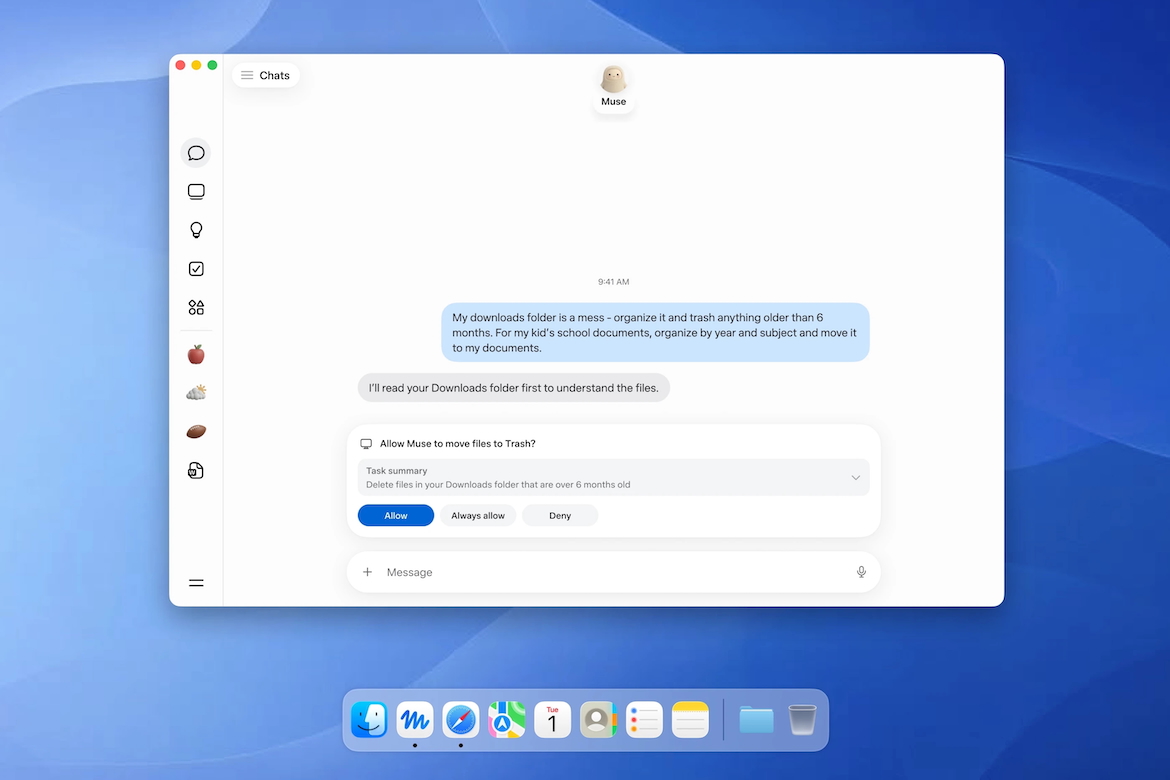
The catalyst was the rapid adoption of Muse, Meta’s new personal AI agent. Muse reached the No. 1 position among free iPhone apps in the U.S. and held the top ranking for three consecutive days, according to Sensor Tower data cited by Barron’s. It also reached the top of Google’s U.S. Play Store rankings.
Meta launched Muse on September 8 as a personal AI agent capable of doing substantially more than answering questions. The service can manage email, book reservations, research information and carry out multi-step tasks on a user’s behalf through its own secure virtual environment.
That distinction is important for semiconductor investors. Traditional generative AI applications are heavily associated with GPUs, which perform the intensive calculations required for model training and inference. Autonomous agents, however, can generate additional demand for conventional CPUs because they continuously orchestrate tasks, retrieve information, move data and coordinate different computing resources.
The popularity of Muse is therefore being viewed as an early consumer-scale demonstration of what could happen if autonomous agents become a mainstream way of interacting with computers.
AMD Sees a $220 Billion Server CPU Market
AMD has become increasingly bullish about the implications of agentic AI for processors. Earlier this year, the company expected the server CPU market to grow more than 35% annually and exceed $120 billion by 2030. It subsequently raised that forecast dramatically.
AMD now expects the market to reach approximately $220 billion by 2030, representing annual growth of more than 50%. CEO Lisa Su has said agentic AI and the servers used to operate AI-agent environments could become the largest component of that market by the end of the decade.
The change is striking because AMD had estimated the 2030 server CPU opportunity at only about $60 billion during its November 2025 analyst day. The company has therefore raised its long-term estimate several times as enterprise adoption of AI agents accelerated.
AMD executives argue that agents require CPUs for workflow execution, data retrieval, orchestration and coordination with GPUs and other accelerators. That means the AI infrastructure boom may increasingly benefit both types of processors rather than concentrating spending almost exclusively on GPUs.
Intel and Arm Could Also Benefit
The same thesis is lifting Intel and Arm. Intel remains one of the largest suppliers of server CPUs through its Xeon family, while Arm’s architecture is increasingly being adopted in data centers and custom processors designed by hyperscale cloud companies.
Demand is already putting pressure on supply. Intel CEO Lip-Bu Tan has said the company is currently able to satisfy only around half of customer CPU demand, according to Barron’s.
Arm occupies a different position because it licenses processor architectures rather than competing solely through finished server chips. Greater adoption of Arm-based processors across cloud infrastructure could therefore translate into higher licensing and royalty revenue as data-center CPU volumes expand.
The rally also shows how Wall Street’s AI trade is evolving. Nvidia and other GPU suppliers have dominated investor attention because of the enormous accelerator requirements associated with training frontier models. Agentic AI could broaden that investment cycle toward processors responsible for running and coordinating millions of persistent software agents.
AI Agents Could Reshape the Semiconductor Trade
Muse’s early popularity does not guarantee that consumer AI agents will ultimately create the level of CPU demand currently anticipated by semiconductor companies. The technology is still developing, and widespread adoption will depend on reliability, privacy, cost and whether consumers find autonomous agents genuinely useful.
But the market reaction demonstrates that investors are beginning to price in a broader definition of AI infrastructure.
If autonomous agents eventually perform tasks continuously for hundreds of millions of consumers and enterprise workers, the computing requirements could extend far beyond GPUs. CPUs would be needed to coordinate those agents, operate their environments and connect AI models with conventional software and data.
For AMD, Intel and Arm, that possibility represents an enormous new addressable market. Meta’s Muse becoming America’s most downloaded free iPhone app has given investors an early glimpse of what mass-market agent adoption could look like and Wall Street is already betting that the next phase of the AI boom will require far more CPUs.