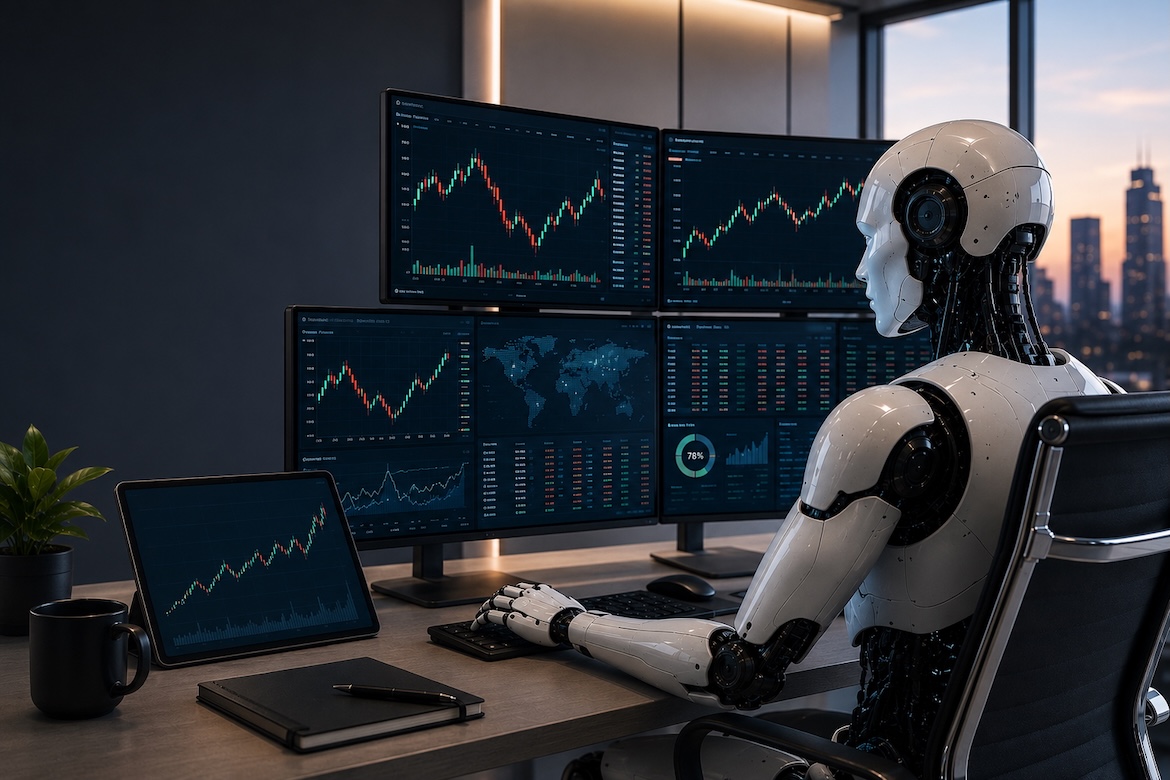
Artificial intelligence is moving beyond chatbots and productivity tools into one of the world’s most competitive industries: Wall Street. Brokerages, fintech startups, and even individual investors are rapidly developing AI agents capable of monitoring portfolios, researching investment opportunities, and executing routine financial tasks without constant human oversight.
The technology marks the next phase of AI adoption in finance, where autonomous software can work continuously, reacting to market developments, processing vast amounts of information, and assisting investors 24 hours a day.
AI Agents Move Beyond Chatbots
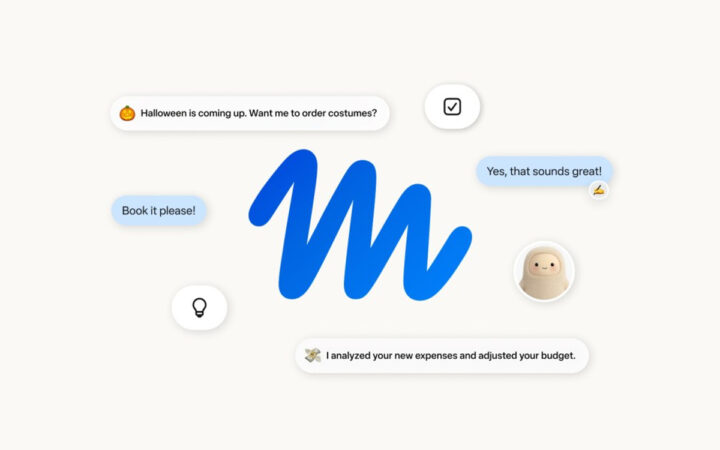
Unlike traditional AI assistants that primarily answer questions, AI agents are designed to perform multi-step tasks with minimal human intervention.
In investing, these systems can track market-moving news, analyze earnings reports, monitor portfolio allocations, identify trading opportunities, and even prepare or execute trades based on predefined rules. Many platforms are also integrating AI agents into customer services, allowing users to receive personalized portfolio insights and automated investment recommendations.
Major brokerage firms and fintech companies view the technology as a way to make sophisticated investment tools available to a broader range of investors while reducing operational costs.
Retail Investors Gain Institutional-Style Tools
The rapid development of AI agents is narrowing the technological gap between retail and institutional investors.
Individual traders can now build customized AI workflows that continuously monitor specific stocks, evaluate technical indicators, summarize financial news, or alert users when investment conditions change. Some advanced systems are already capable of coordinating multiple specialized AI agents, each handling research, risk management, portfolio analysis, or trade execution.
Supporters argue that these tools can dramatically improve productivity by automating repetitive tasks and allowing investors to focus on higher-level decision-making instead of constantly monitoring markets.
Human Oversight Still Matters
Despite rapid progress, industry experts caution that fully autonomous investing remains some distance away.
AI agents can generate inaccurate conclusions, misinterpret market events, or fail under unusual conditions, making human supervision essential for high-value financial decisions. Regulators are also beginning to examine how autonomous investment systems should be governed as AI becomes increasingly involved in financial markets.
Rather than replacing portfolio managers or financial advisers, many firms expect AI agents to function as intelligent assistants that enhance human decision-making while reducing manual workloads.
The Future of Wall Street
The emergence of AI agents represents one of the biggest technological shifts in financial services since the rise of algorithmic trading.
As language models become more capable and financial institutions continue integrating AI into their operations, autonomous software is expected to play a growing role in research, compliance, portfolio management, and client services.
For investors, the biggest change may not be whether AI participates in markets, but how quickly these always-on digital assistants become a standard part of investing.