
Key Notes
- Trump’s latest $5,000 dividend pledge refers to every American citizen, but remains conditional on a Republican midterm victory and lacks detailed eligibility rules.
- The White House says separate one-time $90 Medicare payments will go to more than 20 million eligible beneficiaries in early October.
- Medicaid-paid premiums and higher-income Part B surcharges disqualify recipients from the Medicare payment, which offsets about 44% of one standard monthly premium.
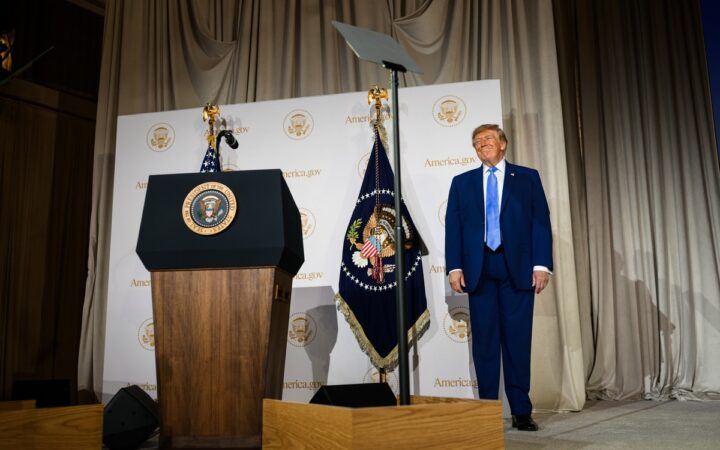
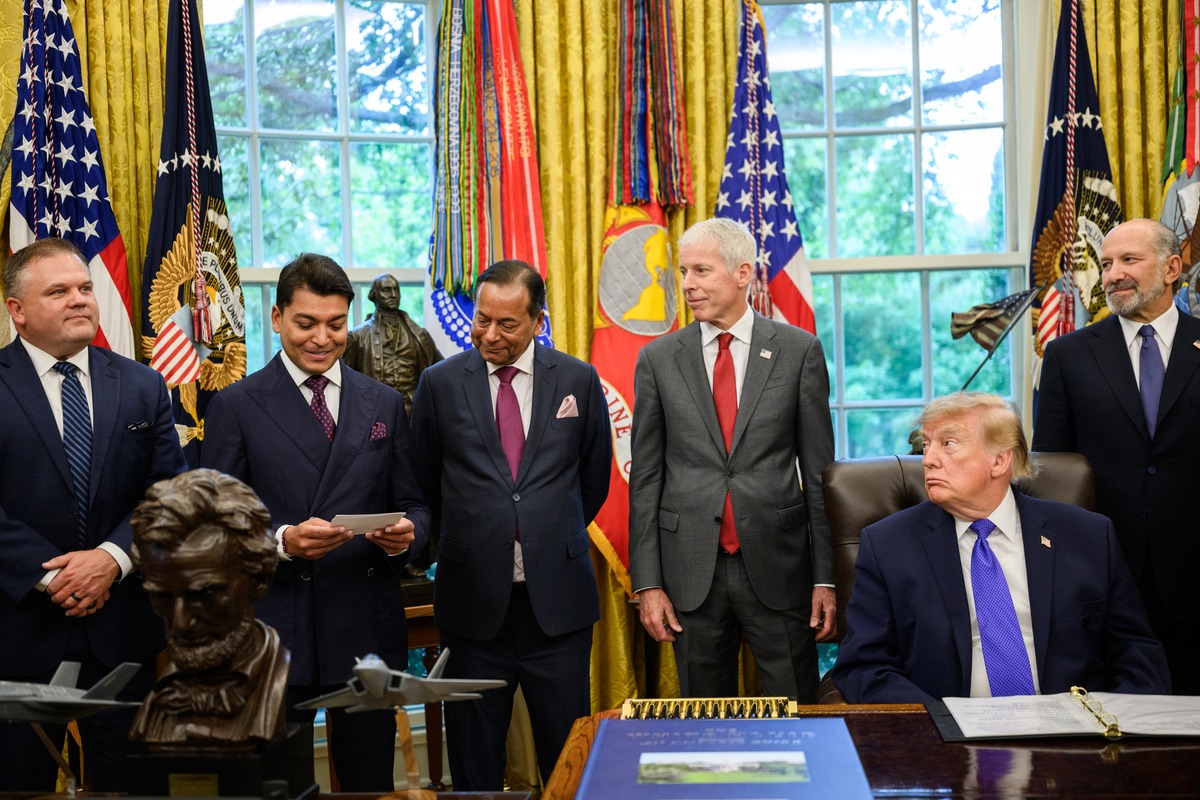
President Donald Trump said his proposed $5,000 “Trump dividend” would go to every U.S. citizen if Republicans win the midterm elections, using broader wording than his earlier pledge to pay adult citizens. He also announced separate Medicare premium relief that the White House says will provide one-time $90 payments to more than 20 million beneficiaries.
In a late-Friday Truth Social post, Trump linked the two announcements, saying the dividend would be distributed to “every U.S. Citizen” if Republicans win the midterms. The statement did not set out legislation, detailed eligibility rules or a payment date for the $5,000 proposal.
The distinction matters for household finances: the larger dividend remains a conditional political promise, while the Medicare announcement includes a funding source, delivery arrangements and exclusions.
Latest wording drops the adult-only qualifier
Trump introduced the dividend at the Republican midterm convention in Dallas on September 9. A White House release the following day described a $5,000 payment to adult American citizens, contingent on Republicans winning both the House of Representatives and the Senate.
MarketSpeaker previously covered that adult-only pledge and the questions surrounding its financing. The latest post instead refers to every citizen, without the age qualifier.
That language suggests a potentially wider pool of recipients, but it does not establish a formal policy for children. Trump did not explain whether minors would qualify directly, whether payments would go to parents or guardians, or how citizenship and household eligibility would be verified.
Broader eligibility would increase the fiscal bill
The Committee for a Responsible Federal Budget estimated on September 10 that the original adult-citizen proposal would cost about $1.2 trillion in one year. The group said the bill could be smaller if payments were restricted for higher earners.
Extending a $5,000 payment to additional citizens would increase that cost. Every extra 10 million eligible recipients would add $50 billion before administrative expenses. That is a straightforward illustration of the proposal’s scale, rather than an official estimate of the latest pledge.
Trump’s post did not provide a revised recipient count or financing plan. Until eligibility is defined, a precise total would depend on assumptions about age, income, residence and other possible restrictions.
The budget group also warned that the original proposal could increase deficits, inflation and borrowing costs. Its assessment concerns a hypothetical program, rather than spending already authorized or money already distributed.
Congress would still control the funding
Winning an election would not itself authorize a federal payment. Congress controls the government’s spending authority, and the Constitution requires appropriations made by law before money can be drawn from the Treasury.
Implementing a nationwide dividend would therefore require a lawful funding mechanism and rules governing its distribution. The president’s statement alone does not create an entitlement to a $5,000 check.
The financing question comes as Washington faces higher borrowing costs and growing scrutiny of debt-service expenses. Any eventual dividend would have to be assessed alongside those existing commitments.
Medicare relief is $90, with specific exclusions
For the separate Medicare payment, the White House’s October 2 fact sheet specifies $90 per eligible person. Trump described the amount as nearly $100, but the published program figure is $90.
The administration says the money will come from the Medicare Improvement Fund, which Congress provided with $2 billion for improvements to Medicare’s fee-for-service program.
Most eligible recipients are expected to receive a direct deposit in early October. Those without direct deposit are to receive a paper check at the address registered with Medicare.
The White House says most Part B enrollees qualify, but excludes beneficiaries whose premiums are paid by Medicaid and those who pay an Income-Related Monthly Adjustment Amount, the surcharge applied to higher-income recipients.
How much of the premium does $90 cover?
The Centers for Medicare & Medicaid Services sets the standard 2026 Part B premium at $202.90 per month, up from $185 in 2025. Part B covers services including doctor visits, outpatient hospital care and certain medical equipment.
A $90 payment offsets about 44% of one standard monthly premium. Over 12 months, that premium totals $2,434.80, making the one-time payment equivalent to roughly 3.7% of the annual amount. It does not represent a recurring $90 monthly benefit or a change to the published premium rate.
The White House directs beneficiaries to 1-800-MEDICARE for eligibility questions and the Social Security Administration at 1-800-772-1213 for payment-status inquiries.
For now, the two announcements have different levels of detail. Medicare beneficiaries have an announced amount and delivery window; the broader $5,000 dividend still depends on the election outcome, a funding mechanism and eligibility rules that have yet to be specified.