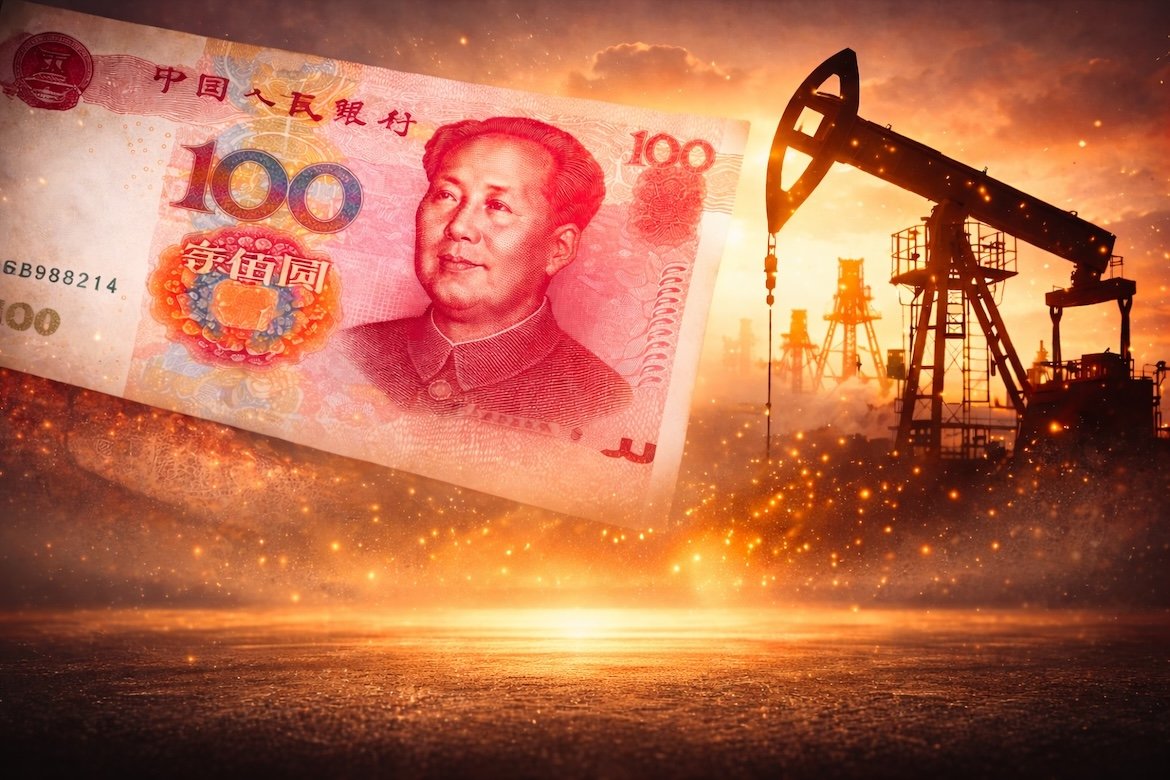
Deutsche Bank has warned that the ongoing Iran war could accelerate the emergence of a so-called ‘petroyuan”, intensifying debate over the long-term dominance of the U.S. dollar in global trade and finance.
The note highlights a growing trend toward de-dollarization, particularly in energy markets, where China has been expanding efforts to settle oil transactions in yuan instead of dollars. The shift, if sustained, could gradually erode the dollar’s central role in global reserves and commodity pricing.
The U.S. dollar index, which tracks the currency against a basket of major peers, has already declined nearly 10% through 2025, reflecting shifting macroeconomic dynamics and evolving capital flows.
Geopolitics and Energy Trade Drive Currency Shift Narrative
The concept of a “petroyuan” refers to the pricing and settlement of oil trades in Chinese yuan rather than U.S. dollars, a move that could reshape global financial architecture if widely adopted.
The Iran war has added momentum to this narrative by encouraging alternative trade arrangements among countries seeking to reduce exposure to Western financial systems and sanctions frameworks.
China, as the world’s largest oil importer, has been actively promoting yuan-based energy contracts, particularly with partners in the Middle East and other emerging markets.
Deutsche Bank analysts suggest that geopolitical fragmentation and sanctions risks are prompting countries to diversify currency usage in trade, potentially accelerating structural shifts away from the dollar.
As previously covered, discussions around de-dollarization have intensified in recent years, though actual shifts in reserve currency allocations have remained gradual rather than abrupt.
Market Outlook Suggests Gradual Change, Not Immediate Displacement
Despite growing attention to the “petroyuan,” analysts caution against prematurely calling an end to dollar dominance.
The U.S. dollar continues to benefit from deep and liquid capital markets, strong institutional frameworks, and its status as the primary global reserve currency.
While alternative systems may gain traction at the margins, a full-scale transition away from the dollar would likely take years, if not decades.
Investors are increasingly monitoring currency trends as part of broader portfolio strategies, particularly in commodities and emerging markets where shifts in trade settlement could influence pricing dynamics.
At the same time, the dollar’s recent weakness has been driven by multiple factors, including interest rate expectations, fiscal dynamics, and global growth differentials not solely geopolitical developments.
For markets, the key takeaway is that while de-dollarization narratives are gaining momentum, structural changes in the global monetary system are expected to unfold gradually.
The debate around the ‘petroyuan’ underscores a broader theme: geopolitical tensions are increasingly intersecting with financial markets, shaping long-term currency dynamics and investor positioning.