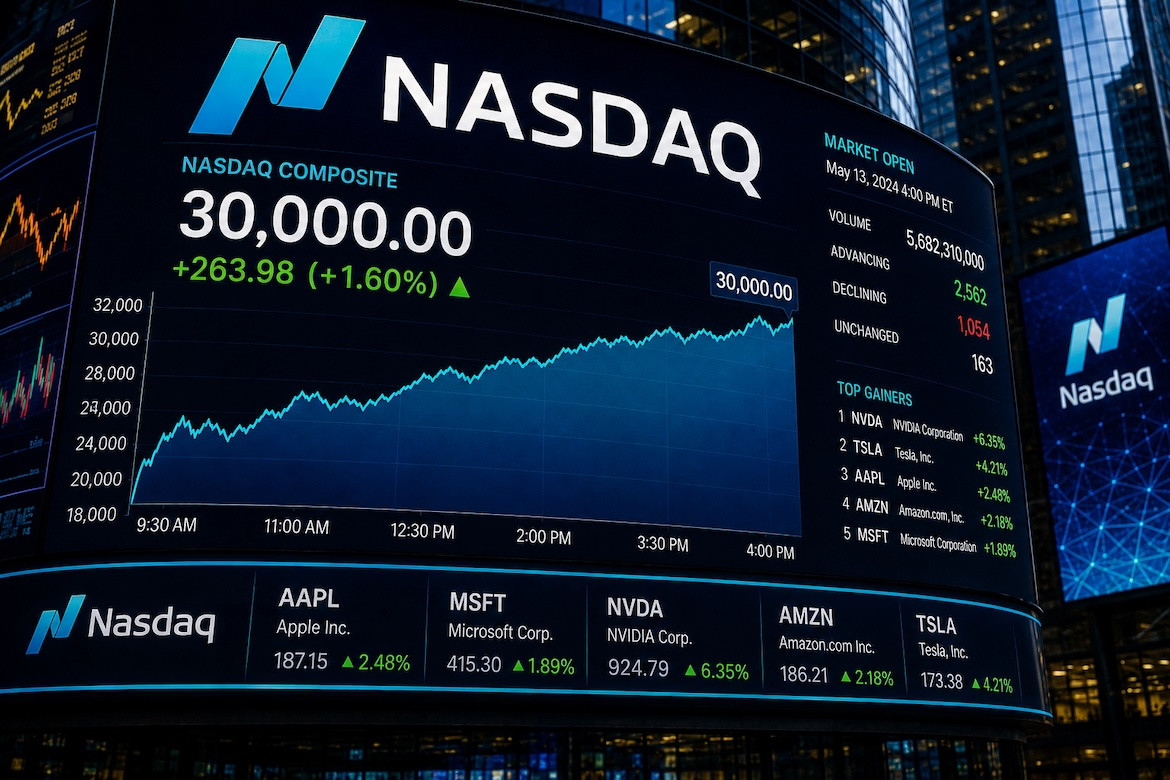
The Nasdaq-100 closed above 30,000 points for the first time in history after gaining 1.76%, extending one of the fastest recoveries ever recorded in U.S. equity markets.
Just 56 days ago, the index traded near 22,800 amid fears surrounding conflict with Iran and oil prices above $100 per barrel. Since then, the Nasdaq has surged approximately 31%.
During the same period, the S&P 500 gained roughly 19.3%, while the Russell 2000 advanced more than 22%, highlighting broad participation across equities.
AI Spending Fuels Historic Recovery
Analysts point to three primary drivers behind the market’s rapid rebound.
First, Nvidia reported revenue of $81.6 billion, reinforcing investor confidence in AI demand.
Second, capital expenditures on artificial intelligence from Microsoft, Alphabet, Meta Platforms, and Amazon are expected to reach approximately $325 billion this year.
Third, expectations surrounding a potential U.S.-Iran agreement reduced energy market risk premiums and eased inflation concerns.
Analysts increasingly describe the recovery as a market rebound initially triggered by geopolitical fears and later accelerated by the AI investment cycle.
Wall Street Sees Echoes of 1999
Some market strategists argue that today’s AI rally is beginning to resemble the late-stage phase of the dot-com boom.
They point out that in the late 1990s, many investors repeatedly called market tops well before the Nasdaq reached its eventual peak. Similar skepticism has accompanied the AI-driven rally since 2023.
According to this view, the current market structure shares several characteristics with the period preceding the final surge of the internet bubble, including accelerating momentum, persistent bearish forecasts, and concentrated gains among technology leaders.
Some analysts suggest that if the comparison continues to hold, the Nasdaq could potentially move significantly higher before the cycle ultimately peaks.
Others caution that historical analogies are imperfect and that elevated valuations can increase downside risks if earnings growth fails to keep pace with expectations.
The broader takeaway is that artificial intelligence has become the dominant force driving global equity markets, creating both extraordinary opportunities and growing concerns about whether the current rally is approaching bubble territory.