Donald Trump is now estimated to hold $870 million in Bitcoin, placing him among the largest individual crypto holders in the U.S.
By David Sinclair | Edited by Oleg Petrenko
Published:
Updated:
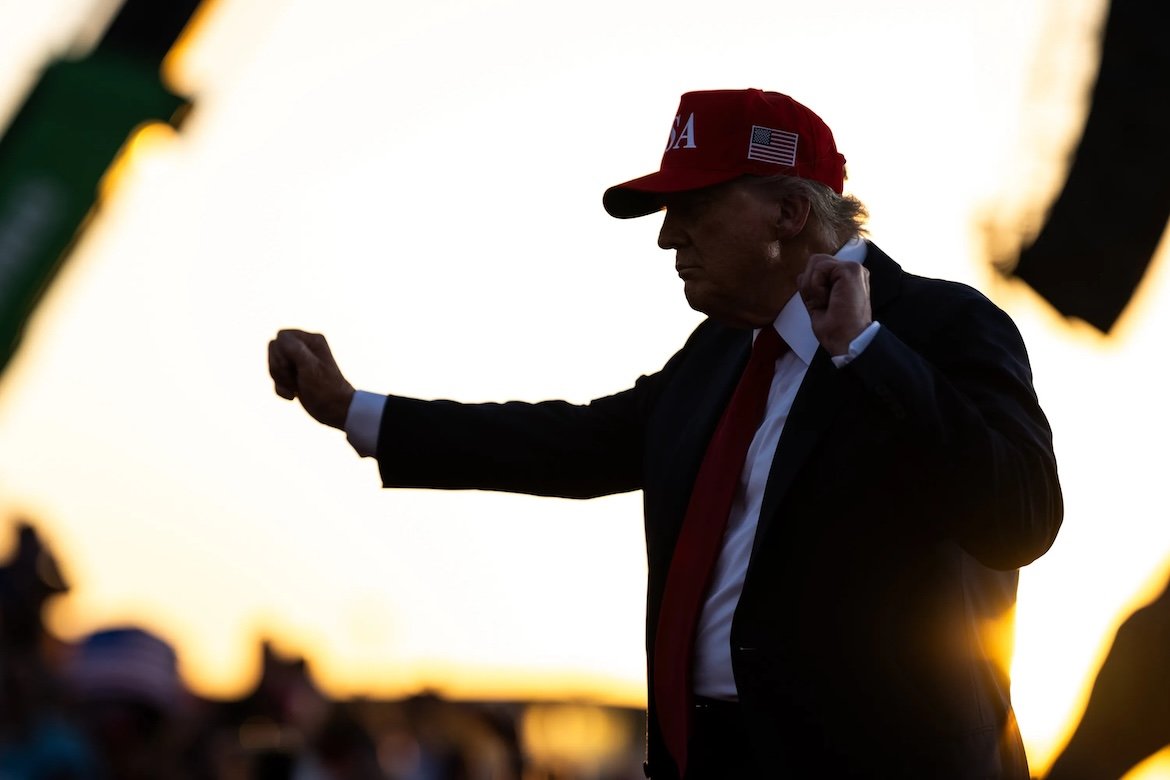
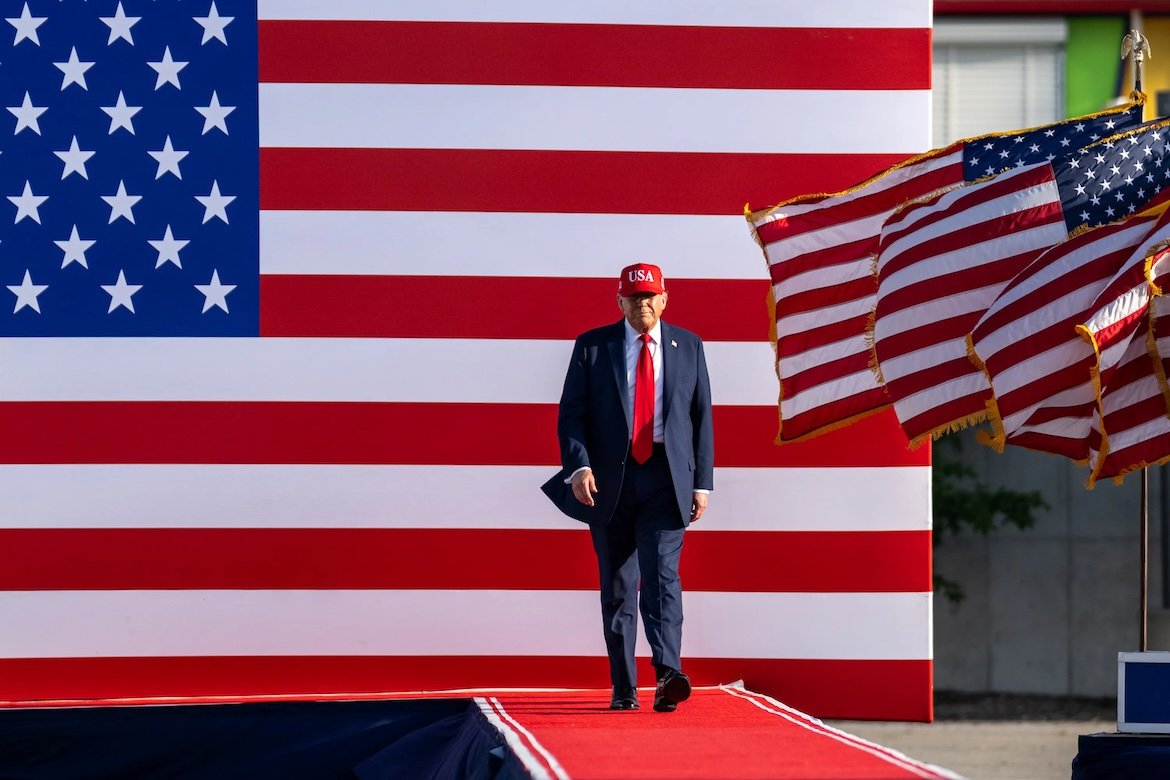
President Donald Trump dances during the 'Salute to America' celebration in Des Moines, Iowa. Recent filings show his Bitcoin holdings now exceed $870 million, highlighting his growing political and financial ties to the crypto market. Photo: The White House
Donald Trump now appears to hold approximately $870 million in Bitcoin, making him one of the largest individual crypto investors in the United States. The figure comes from crypto analytics and market reporting that track significant wallet holdings.
This shift reflects a notable tilt in Trump’s wealth toward digital assets. His media company, Trump Media, has signaled intentions to accumulate additional Bitcoin and raise capital for crypto initiatives.
What This Means for Trump & the Crypto Landscape
With this Bitcoin position, Trump now ranks alongside prominent holders such as Michael Saylor and the Winklevoss twins. His growing exposure underlines how digital assets are seeping into the portfolios of high-net-worth individuals beyond pure tech and institutional players.
His association with crypto has already extended to other ventures. Trump’s backing of token initiatives like World Liberty Financial and a stablecoin tied to his media ventures underscores his strategic interest in the evolving crypto economy.
The magnitude of his holdings also raises questions about balance, liquidity, and intent. A swing in Bitcoin’s price could dramatically affect his net worth; meanwhile, accumulation at this scale often involves strategic timing and deep capital deployment.
Market Implications & Risks
Trump’s Bitcoin position may fuel further legitimacy for crypto in political and investment circles. It could attract more media and institutional attention, especially if his holdings become public and transparent.
But risk is unavoidable. Bitcoin remains volatile and sensitive to regulatory, macro, and sentiment shocks. Large holdings are vulnerable to sudden losses in downturns, especially if leverage or derivatives exposure is involved.
From a perception standpoint, critics may flag conflicts of interest or political bias when prominent leaders hold substantial crypto stakes. Regulatory scrutiny might intensify if such holdings intersect with policy decisions.
As previously covered, when high-profile figures take large crypto positions, markets often respond in kind. Trump’s crypto footprint adds a potent new influencer to the narrative shaping how much tradition, politics, and digital assets intersect.
A crypto whale placed a $900 million short bet against Bitcoin and Ethereum, signaling growing bearish sentiment amid volatile market conditions.
By David Sinclair | Edited by MS Team
Published:
Updated:
Traders track volatile price moves after a crypto whale reportedly launched $900 million in short positions on Bitcoin and Ethereum, betting on a correction following months of gains. Photo: Emma Li / Pexels
A major crypto whale – identified by Arkham Intelligence as the “0x52D” wallet cluster, which manages over $11 billion in digital assets – has initiated a $900 million short position split between Bitcoin and Ethereum, in one of the largest coordinated bearish moves of the year.
According to blockchain analytics data, the entity opened a $600 million short on Bitcoin with 8× leverage and a $330 million short on Ethereum at 12× leverage through offshore exchanges Binance, OKX, and Bybit. The positions were placed in rapid succession late Sunday, triggering a sharp uptick in open interest and derivatives volume.
Liquidation levels are estimated around $114,000 for Bitcoin and $3,950 for Ethereum, suggesting the whale expects a near-term pullback below $108,000 and $3,600, respectively.
Arkham and Lookonchain data confirm that collateral for the trades originated from wallets previously associated with early 2021 Bitcoin accumulation and 2023 Ethereum rotation — signaling a sophisticated institutional-style strategy rather than retail speculation.
Strategic Reversal and Market Timing
The move marks a stark reversal for the same whale wallet that reportedly shifted $5.1 billion in holdings from Bitcoin to Ethereum earlier this year, helping drive ETH’s mid-2025 rally. Now, by taking heavily leveraged short exposure, the trader appears to be betting that crypto’s recent surge is running out of steam amid broader macro uncertainty.
Analysts note that extreme leverage magnifies both upside and downside risk. If Bitcoin were to rise just 4% from current levels, the whale’s BTC short could face forced liquidation. Conversely, if markets decline as expected, the position could yield profits exceeding $250 million within days.
Exchange data shows retail traders are similarly cautious: 52% of Bitcoin and 51% of Ethereum positions are currently short across major platforms, according to Coinglass. This near-even distribution increases the risk of rapid volatility swings as liquidations cascade in either direction.
Implications for the Market
The short plays arrive amid a fragile macro backdrop. Risk assets have wobbled following President Trump’s proposed 100% tariff on Chinese imports, which triggered a wave of liquidations across crypto markets last week. The broader digital asset market has already lost over $350 billion in value since early October, as leveraged traders unwind risk exposure.
If Bitcoin and Ethereum prices fall below current support levels, the whale’s short thesis could be validated – potentially signaling a wider correction across the sector. But if momentum reverses, a short squeeze could amplify gains just as violently, forcing large players to cover positions.
Observers are now watching closely as funding rates remain deeply negative and open interest remains elevated. The scale of this whale’s bet — representing nearly 8% of all open BTC perpetual positions on Binance – underscores how single entities can shift sentiment and liquidity across the crypto landscape overnight.
As previously covered, large leveraged traders have become de facto market makers in digital assets. This $900 million short attack may serve as another reminder that in crypto’s highly reflexive ecosystem, conviction trades by whales can shape – and sometimes break – the trend itself.
President Trump announced plans to impose an additional 100% tariff on Chinese imports, triggering an estimated $18 billion sell-off in crypto markets as investors react to renewed trade tensions.
By David Sinclair | Edited by MS Team
Published:
Updated:
Traders react to sharp declines in Bitcoin and Ethereum after President Trump’s 100% tariff plan on Chinese goods triggers heavy liquidations in crypto markets. Photo: The White House
President Donald Trump warned of a sweeping 100% tariff on Chinese imports, intensifying trade tensions and rattling global markets. The announcement sparked a rapid exodus from crypto, with traders pulling roughly $18 billion from digital assets in a matter of hours.
The move comes amid rising friction over China’s export controls on rare earth minerals and critical technologies – stoking fears of escalating retaliation and supply chain disruption.
Many crypto outlets described the market rout as “the largest liquidation event in crypto history.” Bitcoin has fallen nearly 10% over the past five days, trading around $111,600 as of 3:45 p.m. ET after briefly plunging to $103,000 on Friday.
Ether dropped from $4,365 on Friday to about $3,745, a decline of roughly 14%, while Solana slid almost 20%, falling from $223 to $179 during the same period.
Drivers Behind the Market Shock
Trump framed the tariff escalation as a response to what he called China’s “hostile” export behavior, especially over strategic minerals essential to advanced manufacturing and defense. He argued that imposing the tariff would protect U.S. interests and restore leverage.
Crypto markets, already vulnerable to macro headlines, were quick to react. Automated liquidations and margin calls amplified losses. Many traders viewed the announcement as a signal of heightened geopolitical risk, prompting a flight from high-beta assets.
The sell-off spanned across major coins. Bitcoin and Ethereum experienced sharp intraday drops, while altcoins with thinner liquidity fared worse. The timing also inflicted damage: some positions were highly leveraged ahead of weekend news flows.
Implications, Risks & Market Outlook
The tariff threat shifts risk dynamics across asset classes. For crypto, the sell-off underscores that even long-hyped sectors are not insulated from macro and geopolitical shocks. Investor confidence, especially in leveraged positions, is more fragile than some narratives suggest.
Equity markets are poised for volatility. Tech and industrial stocks with China exposure may face outsized headwinds. Any retaliation from Beijing – including counter-tariffs or stricter export controls – could deepen the sell-off.
Supply chain flows, particularly of rare earths and critical components, must now be closely watched. Delays or cutoff risks could ripple through semiconductor, battery, and defense sectors.
On the policy side, markets and diplomats alike will watch how China responds. If it opts for measured counters, escalation may be blunted. An aggressive counterattack, however, could spark a full-blown trade war.
Citigroup projects that Indian companies could raise as much as $20 billion via IPOs in the coming year, signaling strong momentum in equity capital markets.
By Oleg Petrenko | Edited by MS Team
Published:
Updated:
Citigroup expects Indian IPOs could raise up to $20 billion in the next year, highlighting investor confidence. Photo: Scott Webb / Unsplash
Citigroup expects that Indian firms could raise up to $20 billion through initial public offerings (IPOs) over the next year, driven by an active pipeline and improving equity market conditions.
The forecast underscores growing confidence in India’s capital markets, as regulatory reforms and strong valuations encourage more companies to list.
Drivers Behind the Surge
India’s relatively under-penetrated IPO market stands to benefit from several catalysts. First, regulatory changes are streamlining the listing process and easing capital requirements, making public market entry more accessible for mid-to large-cap firms.
Second, robust investor appetite – especially from domestic institutional funds – is pushing valuations higher and increasing the feasibility of new offerings.
Third, several high-profile companies and subsidiaries of global firms are preparing to tap public markets, adding heft to the overall issuance potential. Banks and advisors also view the momentum as a chance to expand deal pipelines, which have already gathered traction in recent quarters.
Implications, Risks & Outlook
If the $20 billion mark is reached, India could solidify its status as a leading global IPO destination, just behind the U.S. That would attract more international capital and boost the country’s financial infrastructure.
For investors, successful IPOs may offer fresh alpha opportunities. However, valuations could be stretched, and listing-day volatility may challenge newer issues. Unlike mature markets, the Indian IPO space often experiences sharp gains or reversals immediately post-listing.
Risks include macroeconomic pressures, interest rate hikes, and regulatory reversals. Companies may also delay listings if conditions weaken. Additionally, competition among issuers could compress deal terms, affecting returns and structure.
Overall, the next year in India’s equity capital markets may see an influx of new names, bigger floats, and more aggressive pricing – especially if momentum sustains.
WeWork India’s stock slipped nearly 2% from its ₹648 IPO price during its trading debut, as investors expressed caution over valuation and governance.
By Oleg Petrenko | Edited by MS Team
Published:
Updated:
The company’s shares fell in their market debut after a $338 million IPO, as investors weighed growth potential against profitability challenges. Photo: WeWork India
Shares of WeWork India slipped nearly 2 %, trading at around ₹634.50, during their market debut, falling from the ₹648 IPO price. The drop underscores investor wariness even after its $338 million public offering.
The company raised 30 billion rupees through the IPO, which was fully subscribed on the final day, largely driven by institutional demand. Retail investor participation remained modest, highlighting reservations about valuation and risk.
Market Sentiment, Valuation & Risks
The drag on share performance stems from several factors. The valuation at the IPO was viewed as aggressive compared to peers, especially in a capital-intensive, margin-sensitive sector. Concerns over corporate governance and transparency have led many investors to tread cautiously.
Ahead of listing, advisory firms flagged weak cash flows, high lease liabilities, and a lack of fresh capital infusion. These warnings amplified doubts about the firm’s sustainability in an environment of rising interest rates and real estate pressure.
WeWork India operates under a licensing agreement with its U.S. namesake, which has undergone multiple restructurings. The local firm competes with listed co-working peers that have shown more tempered valuations and clearer profit paths.
Investor Caution and Long-Term Outlook
Despite the lukewarm start, analysts say the long-term fundamentals for flexible workspaces remain intact. India’s shift toward hybrid work and growing startup ecosystem continue to drive strong underlying demand.
As previously covered, India’s office leasing market has rebounded sharply since 2023, with flexible spaces now accounting for nearly 15% of total new commercial leases. The challenge for WeWork India will be to sustain occupancy rates above 80% while navigating higher rent and capital costs.
For now, the debut highlights the broader tension between market optimism over India’s economic expansion and investor caution about asset-heavy business models. The company’s performance in the coming quarters will likely determine whether this IPO marks a temporary dip or a cautious start to longer-term growth.
Barry Silbert is launching Yuma Asset Management, backed by $10 million from DCG, to invest in AI-crypto infrastructure via Bittensor subnet tokens.
By David Sinclair | Edited by MS Team
Published:
Updated:
Barry Silbert’s Digital Currency Group seeded Yuma with $10 million to launch an AI-driven crypto asset manager aiming to merge algorithmic trading with decentralized finance. Photo: DLD Conference / Flickr
Barry Silbert, founder of Digital Currency Group (DCG), is making a high-stakes return to crypto infrastructure with the launch of Yuma Asset Management. The new firm is capitalized with a $10 million seed investment from DCG and aims to channel institutional dollars into AI-crypto networks, especially Bittensor subnet tokens.
Barry Silbert – once among the most influential crypto investors – positions Yuma as a bridge between opaque AI innovation and structured institutional capital deployment.
Strategy, Structure & Vision
Yuma’s mandate centers on investing in protocols built on Bittensor, a decentralized AI network where participants run subnet models in exchange for token rewards. The asset manager will deploy capital across those subnet tokens via fund vehicles designed for accredited and institutional investors.
The firm plans two flagship strategies: one aiming for broad exposure across active subnets, another targeting the largest subnet tokens by market capitalization. The structure seeks to make exposure to decentralized AI accessible without requiring deep technical or on-chain know-how.
Silbert frames subnet tokens as an emergent asset class – akin to early crypto – designed to reward AI contribution and infrastructure innovation. His prior venture, Grayscale (through DCG), offered institutional crypto access; now Yuma targets AI in the crypto layer.
Yuma also taps into familiar investment metaphors: one fund mirrors a “composite” index of subnets, another focuses on large-cap leaders. This approach lowers barriers for investors wary of unstructured crypto bets.
Implications, Risks & Outlook
For Silbert and DCG, Yuma represents redemption and evolution. After setbacks tied to DCG’s lending arm and industry turbulence, Yuma is a signal that Silbert is betting on the synergy between AI and blockchain as the next frontier.
Institutional capital drawn into Yuma could validate decentralized AI as a serious investable sector – not just speculative talk. If subnet tokens gain real usage and token valuations follow, early investors could reap outsized returns.
But risk is high. The Bittensor ecosystem is nascent and volatile. Token valuations hinge on adoption, technical performance, and developer activity. Regulatory uncertainty around tokenized infrastructure and AI may expose Yuma to scrutiny.
Liquidity and valuation discovery also pose challenges: subnet tokens may trade thinly, complicating fund operations or redemption. If market sentiment cools, these strategies could face steep drawdowns.
Still, the launch suggests a broader trend: overlap between AI and crypto is accelerating in investment rationale, not just hype. As previously covered, the future of capital allocation in tech may be shaped by hybrid models that straddle software, hardware, protocols, and token incentives. Yuma’s success – or failure – will test whether crypto can meaningfully power AI’s next wave.
Shayne Coplan becomes the youngest self-made billionaire after ICE, the New York Stock Exchange parent, invests $2 billion in Polymarket.
By David Sinclair | Edited by Oleg Petrenko
Published:
Updated:
Polymarket founder Shayne Coplan became the world’s youngest self-made billionaire following ICE’s investment in the prediction-market platform, marking a milestone moment for crypto’s new generation of entrepreneurs. Photo: Shayne Coplan / X
Shayne Coplan, founder and CEO of the blockchain prediction market Polymarket, has become the youngest self-made billionaire following a $2 billion investment by Intercontinental Exchange (ICE), parent of the New York Stock Exchange. The deal values Polymarket at roughly $8 billion before the investment.
Coplan, now 27, launched Polymarket in 2020 after leaving New York University. He worked early hours from modest settings, often describing his first office as a bathroom setup in his apartment.
How Coplan Rose to the Billionaire Club
ICE’s investment was delivered in cash and gives it a meaningful stake in Polymarket, while signaling institutional validation for the prediction market space. This backing elevated Coplan’s net worth to billionaire status, making him the youngest self-made individual on prominent billionaire lists.
Markets on everything.
We’re proud to announce that $ICE, the owner of @NYSE and the largest exchange company in the world, is making a strategic investment of $2 billion into Polymarket, valuing us at $9 billion post-money.
The platform’s trajectory is remarkable: Polymarket was banned from serving U.S. users in 2022 after a regulatory settlement with the U.S. Commodity Futures Trading Commission. That deal included a $1.4 million penalty and required withdrawal of U.S. access due to operating as an unregistered derivatives platform.
Weeks after the 2024 U.S. election, Coplan’s apartment was searched by the FBI amid scrutiny over the platform’s operations, though authorities later ended investigations without charges. In mid-2025, Polymarket acquired QCEX, a CFTC-licensed exchange and clearinghouse, allowing it to reenter U.S. markets legally. With this regulatory path cleared, the ICE investment strengthens its institutional positioning.
Coplan has often cited economist Robin Hanson’s work on prediction markets as a guiding inspiration. He described his early days as “having nothing to lose,” betting on a future where prediction markets help discern collective outcomes.
Implications, Risks & What’s Next
ICE’s move signals that prediction markets are shifting toward legitimacy, backed by major financial institutions. Polymarket now has both the capital and regulatory framework to expand in U.S. markets — a longstanding challenge it previously couldn’t overcome.
For Coplan personally, the jump to billionaire status consolidates his role as a leading figure in crypto-fintech circles. The milestone could also attract additional institutional interest and partnerships in sectors like political risk, financial derivatives, and sentiment analytics.
However, numerous risks remain. The new valuation assumes Polymarket will scale successfully in U.S. markets without regulatory pushback. The success of its integration with licensed exchanges and continued compliance will be critical. Any renewed regulatory scrutiny or unfavorable policy changes could reverse momentum.
Technologically, scaling infrastructure to support higher transaction volume — especially during major event cycles — will strain system resilience. Also, platform credibility will hinge on fair design and trust, especially as stakes grow.
As previously covered, the evolution of disruptive crypto models often depends on marrying innovation with regulatory legitimacy. This investment might mark the moment prediction markets move from fringe experiments into financial infrastructure.
Spot silver prices surged past $49 per ounce on Wednesday, reaching levels not seen since April 2011 and renewed interest in precious metals markets.
By Nathan Cole | Edited by MS Team
Published:
Updated:
Spot silver breaking above $49/oz marks the highest price since 2011, reflecting renewed investor demand. Photo: Tara Winstead / Pexels
Spot silver prices climbed steadily on Wednesday, pushing past $49 per ounce – a threshold not crossed since April 2011. The move underscores growing momentum in the precious metals sector and renewed investor interest in silver as a store of value.
The rally comes amid shifting sentiment toward safe havens, as economic uncertainty and inflation worries drive capital toward non-correlated assets.
What’s Driving the Move
Several factors are converging to bolster silver’s appeal. Inflation pressures and rising interest in hedging strategies are pushing investors toward precious metals. Amid volatile equity and bond markets, silver’s dual role as both an industrial input and a monetary asset makes it particularly attractive in uncertain times.
Physical demand, especially from industrial users and jewelry markets, remains firm. Silver also benefits when other metals rally or when supply constraints tighten — factors that amplify upside during periods of strong demand.
Additionally, silver’s relative affordability compared to gold gives it extra appeal when investors look for metal exposure with a lower entry point. That affordability often translates into higher volatility and sharper moves during periods of strong sentiment.
Implications for Markets, Investors, and Risks
The break above $49 could attract more momentum traders and technical buyers, amplifying upward pressure if the trend sustains. For portfolios, silver’s resurgence may encourage rebalancing toward metals or broader commodity exposure.
However, risks remain. Silver is inherently more volatile than gold; price corrections or profit-taking can be swift. Industrial demand is also sensitive to global growth trends — if manufacturing slows, silver’s industrial floor could weaken.
Monetary policy will be a key variable. Rising real interest rates often dampen the appeal of non-yielding assets like silver. If central banks tighten aggressively, the rally may run into resistance.
Moreover, supply disruptions or changes in mining output can amplify price swings. Silver’s relatively smaller market size compared to other commodities means it tends to overreact to shifts in sentiment or demand.
As previously covered, the resurgence of precious metals typically reflects broader macro stress and hedging demand. This move above $49/oz marks a turning point: if it sticks, silver could reaffirm its place in diversified portfolios as both an industrial metal and safe haven.
Nvidia will invest as much as $2 billion in xAI’s $20 billion funding round, backing the startup’s purchase and rental of its own GPUs.
By Oleg Petrenko | Edited by MS Team
Published:
Updated:
Nvidia and xAI agreed to a financing framework that will deploy up to $2 billion toward AI chip purchases under a $20 billion round, expanding Musk’s computing infrastructure. Photo: Nvidia
Elon Musk’s AI company xAI is raising $20 billion in a new funding effort, with Nvidia stepping in to finance part of the deal. Nvidia’s participation includes up to $2 billion in equity that helps underwrite xAI’s acquisition and deployment of its chips.
The capital raise blends equity and debt, structured through a dedicated vehicle that purchases Nvidia processors and leases them back to xAI. The financing supports xAI’s data center project, called Colossus 2, which relies heavily on GPU compute power.
Nvidia’s involvement marks a strategic deepening of its ties with xAI – not only supplying hardware but backing the capital structure that will drive demand.
Deal Structure and Strategic Drivers
The $20 billion round is split between roughly $7.5 billion in equity and $12.5 billion in debt. Nvidia’s equity portion is capped at $2 billion. The special purpose vehicle is structured to buy Nvidia processors and lease them to xAI for use in its Colossus 2 data center.
This setup ties Nvidia’s investment returns to xAI’s hardware deployment. By investing in the same chips it sells, Nvidia reinforces demand for its product while gaining upside exposure to xAI’s growth.
xAI launched in 2023 and positions itself as a challenger to established AI firms by tightly coupling model development with infrastructure ownership. The funding push comes amid a broader industry race to lock in long-term compute resources.
Implications, Risks, and Market Outlook
For Nvidia, the deal does more than sell chips – it blurs the lines between supplier and financial backer. It bets on xAI’s success in scaling compute-intensive workloads and cements Nvidia’s role in the AI value chain.
Investors are likely to weigh the upside: if xAI scales as planned, Nvidia could reap gains both from hardware sales and equity appreciation. But risks are notable. The structure hinges on xAI meeting deployment targets and maintaining operational execution.
The debt burden also matters: a $12.5 billion debt component increases financial leverage, putting pressure on revenue and margin performance. Any delays in chip delivery or AI adoption could strain returns.
Beyond this deal, it underscores the intensifying interplay between chip makers and AI startups. Future alliances may follow, with hardware firms taking more active financial stakes in their customers’ growth.
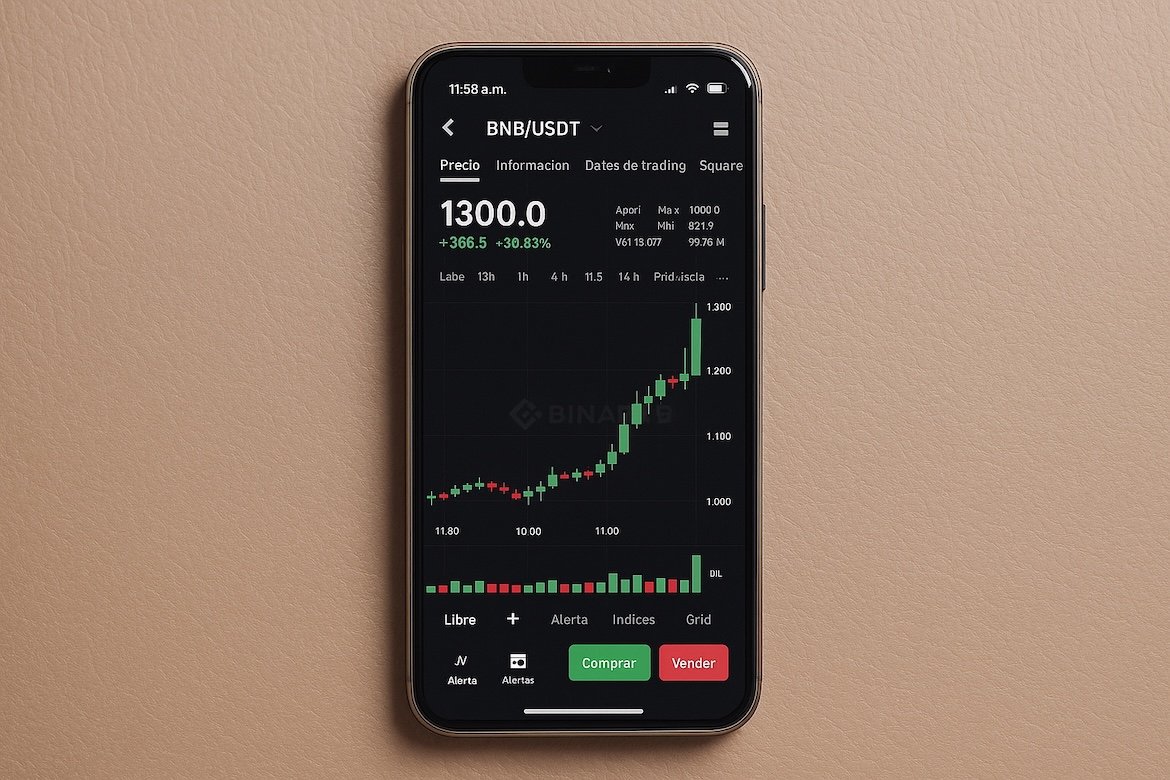
BNB reached a record high near $1,330, surpassing XRP in market capitalization and reinforcing its position as the third-largest cryptocurrency.
By David Sinclair | Edited by MS Team
Published:
Updated:
BNB’s market capitalization surged past $180 billion, overtaking XRP and reinforcing Binance’s position among the top digital assets amid renewed momentum in the crypto market. Photo: Oleg Petrenko / MarketSpeaker
BNB has overtaken XRP in market capitalization after soaring to an all-time high near $1,330, extending its strong 2025 rally. The Binance-linked token now holds a valuation above $180 billion, making it the third-largest cryptocurrency behind Bitcoin and Ethereum.
The price spike reflects renewed investor confidence in Binance’s ecosystem and sustained inflows into the broader crypto market, which has benefited from increased institutional interest and a revival in decentralized-finance activity.
Why BNB Is Surging
BNB’s breakout follows weeks of consolidation below $1,200 before a rapid climb driven by higher trading volumes and network usage. The token’s utility – used for transaction fees, staking, and DeFi applications – continues to anchor its demand.
Analysts attribute the rally to improved sentiment surrounding Binance’s regulatory progress and stabilization of its operations. With compliance frameworks expanding and ecosystem projects launching on its BNB Chain, market confidence has strengthened.
BNB’s rise also coincides with a broader rebound in altcoins, as investors rotate from Bitcoin into high-performing ecosystem tokens. Technical indicators show overbought conditions but also strong bullish momentum, with traders eyeing $1,500 as the next resistance level.
Market Impact and Outlook
BNB’s climb past XRP is a symbolic shift in crypto market dynamics, highlighting how capital is concentrating in tokens with strong infrastructure and practical use cases.
For investors, the move reinforces BNB’s role as both a utility asset and a speculative vehicle within Binance’s ecosystem. However, volatility remains a key risk. A pullback could occur if macroeconomic conditions tighten or if crypto market liquidity thins.
Regulatory oversight also remains an overhang. Although Binance has improved compliance across major jurisdictions, any new enforcement actions or policy changes could weigh on sentiment.
Despite these risks, momentum appears strong. If trading activity remains elevated and ecosystem adoption continues, BNB could extend its lead over XRP and solidify its ranking through the end of 2025.
As previously covered, shifts in token leadership often signal broader investor realignment – favoring utility-driven platforms over legacy crypto assets.
ICE, owner of the New York Stock Exchange, is in advanced talks to invest $2 billion in prediction market operator Polymarket, in a move that could validate its U.S. return strategy.
By David Sinclair | Edited by MS Team
Published:
Updated:
The New York Stock Exchange building in New York City. ICE, its parent company, has invested in Polymarket, marking a strategic move into crypto prediction markets and decentralized finance. Photo: Keenan Constance / Pexels
Intercontinental Exchange (ICE), the parent company of the New York Stock Exchange, is nearing a deal to make a $2 billion investment in Polymarket, a crypto-based prediction market platform. The transaction could value Polymarket between $8 billion and $10 billion and is expected to be finalized soon.
The proposed investment comes as Polymarket positions itself for a return to the U.S. market after years of regulatory constraints. News of the talks lifted ICE’s shares, reflecting investor optimism about its digital finance ambitions.
Deal Mechanics and Strategic Rationale
Under the emerging agreement, ICE would provide capital in cash, acquiring a sizable stake in Polymarket that reflects confidence in the platform’s growth trajectory. The valuation range of $8 billion to $10 billion underscores ICE’s aggressive bet on prediction markets.
Polymarket, founded in 2020, allows users to wager on yes/no questions across areas like politics, sports, and pop culture. The company drew wide attention in 2024 for its election-related markets, which handled more than $2 billion in trading volume and accurately predicted Donald Trump’s victory.
The firm has faced regulatory hurdles. In 2022, it settled with the U.S. Commodity Futures Trading Commission for operating an unregistered derivatives platform, which temporarily suspended access for U.S. users.
More recently, Polymarket has worked to restore compliance, acquiring a licensed exchange and clearinghouse and expanding its advisory board. The company also received backing from new investors, including prominent political and venture figures.
ICE’s involvement could extend beyond capital. The exchange operator is expected to help distribute Polymarket’s “event data” — turning real-time market sentiment into analytics for institutional clients and further integrating decentralized finance with traditional markets.
Market Impact, Risks, and Outlook
The pending deal marks one of the most significant institutional moves into prediction markets, a sector that has long hovered at the intersection of finance, technology, and speculation. For ICE, the investment diversifies its portfolio and offers exposure to one of digital finance’s fastest-emerging niches.
Investors welcomed the development, sending ICE shares up roughly 4 % in premarket trading following reports of the negotiations. Analysts noted that the transaction could cement ICE’s leadership in bridging regulated exchanges and blockchain-based financial products.
Still, the path forward carries regulatory and operational risks. Polymarket’s valuation upside depends on execution, user growth, and successfully regaining U.S. market access. A renewed regulatory clampdown could limit its expansion.
The deal also raises competitive pressure on gaming and sportsbook operators as prediction markets move closer to mainstream finance.
As previously covered, digital-asset innovation now depends as much on regulatory coordination as on technology. If ICE and Polymarket deliver on their plan, the deal could mark a turning point in legitimizing prediction markets as a new financial asset class.
Gold prices surged to a record $4,000 per ounce, driven by renewed demand for safe-haven assets amid global market volatility and interest rate uncertainty.
By Benjamin Harper | Edited by MS Team
Published:
Updated:
Gold prices have staged a historic breakout, soaring 50% in 2025 to surpass $4,000 an ounce as central banks ramp up purchases and investors seek shelter from a weakening U.S. dollar. Photo: Robert Lens / Pexels
Gold prices surged beyond $4,000 per ounce for the first time ever, extending a powerful rally driven by global instability, falling bond yields, and expectations of additional U.S. rate cuts. The milestone underscored gold’s enduring appeal as a store of value during times of financial stress.
Spot gold hit an intraday record near $4,015 before settling around $4,000 late Monday, with futures following closely. The metal rose roughly 50% in 2025, supported by geopolitical tensions, monetary easing, and record central bank purchases.
The surge came as investors braced for further Federal Reserve rate reductions following September’s 0.25% cut. Markets had priced in two additional cuts before year-end, betting the Fed would continue to ease as growth moderated and political risk increased.
Why Gold Keeps Climbing
Gold’s rally was fueled by several overlapping factors. The prospect of a prolonged U.S. government shutdown, political uncertainty in France, and shifting fiscal policies in Japan all heightened risk aversion. Central banks, particularly in Asia, continued to buy aggressively, while the dollar’s weakness made gold more affordable to foreign investors.
Gold also benefited from a dramatic acceleration in its long-term price trend. Between October 2009 and January 2024, it took nearly 15 years for gold to double from $1,000 to $2,000. But in just 14 months, it climbed another $1,000 to reach $3,000 around March 2025. Since then, the metal has added another $1,000 in just over seven months — the fastest climb in modern history — as it breached $4,000 this week.
This rapid rise drew attention from both institutional and retail investors, many reallocating from equities into commodities as a hedge against currency risk and inflation uncertainty.
What the Record Means for Markets
Analysts said the $4,000 mark was both psychological and structural. Goldman Sachs recently raised its December 2026 gold forecast to $4,900 per ounce, citing long-term support from global reserve diversification and fiscal imbalances.
J.P. Morgan had projected an average gold price of around $3,675 per ounce for the fourth quarter of 2025, noting potential for sustained highs if the Federal Reserve maintained a dovish policy path. However, analysts cautioned that any rebound in the U.S. dollar or signs of economic resilience could trigger short-term pullbacks.
Mining companies and gold ETFs have surged alongside the metal, reflecting renewed investor appetite for physical and paper gold exposure. The broader commodities market is now watching whether this rally will persist — or if $4,000 represents a plateau before consolidation.
As previously covered, investors are increasingly turning to hard assets amid weakening global growth signals. Gold’s meteoric climb from $3,000 to $4,000 in just seven months underscores how quickly sentiment can shift when markets lose faith in policy stability.
OpenAI and AMD agreed on a multi-gigawatt GPU deployment that could award OpenAI up to 160 million AMD shares. AMD stock surged while rivals cooled.
By Oleg Petrenko | Edited by MS Team
Published:
Updated:
OpenAI and AMD announced plans to deploy up to 6 GW of AMD Instinct GPUs, beginning with a 1 GW rollout in the second half of 2026. The partnership aims to scale OpenAI’s next-generation AI infrastructure globally. Photo: AMD
OpenAI has signed a sweeping hardware agreement with AMD, committing to deploy as much as 6 gigawatts of the chipmaker’s high-performance GPUs across multiple generations. In return, OpenAI receives warrants to acquire up to 160 million shares of AMD — potentially giving it a 10% stake — tied to deployment scale and share price targets.
AMD’s shares soared as much as 37% in early trading before settling above +26%. Rival Nvidia, which recently struck its own mega-deal with OpenAI, slipped roughly 1.5% on the news.
Deal Drivers and Terms
Under the agreement, OpenAI’s deployment of AMD GPUs will begin in the second half of 2026, ramping gradually until the full 6-gigawatt target is achieved.
The equity component is structured via warrants, allowing OpenAI to convert them into up to 160 million AMD shares depending on hardware deployment levels and stock-price milestones.
AMD CEO Lisa Su emphasized that the pact “enables the world’s most ambitious AI buildout.” CFO Jean Hu added that the deal is “expected to deliver tens of billions of dollars in revenue” to AMD.
For OpenAI, the deal complements its broader infrastructure expansion — part of a $1 trillion-plus push that includes previous arrangements with Nvidia to boost compute capacity.
In recent years, AMD has aggressively invested in accelerator chips for AI inference and training, though Nvidia still dominates the market. Nvidia’s data-center business reported more than $115 billion in annual revenue last year, while AMD’s AI revenue is projected to reach around $6.5 billion in 2025.
Implications for Markets, AI, and AMD
The deal shifts competitive dynamics in the AI chip market, signaling OpenAI’s confidence in diversifying beyond a sole reliance on Nvidia. For AMD, the agreement offers both a major revenue opportunity and a stronger strategic foothold in the rapidly growing AI infrastructure space.
Investors responded swiftly, driving AMD shares higher as analysts reassessed its growth outlook and market share potential. Nvidia’s minor decline underscores the shifting alliances within the AI supply chain.
Still, the structure of the warrants introduces uncertainty. The equity upside depends on OpenAI meeting both deployment and price milestones, meaning the benefits could take years to fully materialize.
The partnership also highlights broader industry themes: massive capital requirements, energy demand challenges, and intensifying competition for chip supply.
As previously covered, the global AI race now depends as much on access to hardware and power as on model innovation. With this deal, AMD moves from a supporting player to a core contender in the AI infrastructure arena.
Berkshire Hathaway agreed to acquire Occidental Petroleum’s OxyChem division for $9.7 billion in cash, marking Warren Buffett’s largest purchase since 2022.
By Oleg Petrenko | Edited by MS Team
Published:
Updated:
Berkshire executives announce the $9.7 billion acquisition of OxyChem, adding to its industrial holdings. Photo: Occidental Petroleum Corporation
Berkshire Hathaway has struck a $9.7 billion cash deal to acquire Occidental Petroleum’s petrochemical arm, OxyChem, in the conglomerate’s largest purchase in three years. The acquisition expands Warren Buffett’s industrial portfolio as Berkshire sits on a near-record cash pile of $344 billion.
Occidental shares fell more than 7% on Thursday following the announcement, reflecting investor recalibration as the Houston-based company focuses on debt reduction and shareholder returns.
Buffett’s latest move echoes his history of targeting stable, cash-generating businesses. OxyChem produces key materials for water treatment, health care, and other commercial sectors — industries that align with Berkshire’s preference for steady earnings and long-term demand visibility.
Debt Reduction and Strategic Focus
Occidental CEO Vicki Hollub said the sale will enable the company to use $6.5 billion of the proceeds to pay down debt, a move she described as pivotal for restoring investor confidence and restarting share repurchases.
“The problem has been getting our debt down faster, so this resolves the one outstanding issue,” Hollub said Thursday on CNBC’s Squawk Box. “Now we’re going to be able to start our share repurchase program again. This is the last step in our major transformation that we started 10 years ago.”
Berkshire, which already holds a 28.2% stake in Occidental as of June, remains a key strategic partner rather than an outright owner. Buffett, 95, has previously said he has no intention of taking full control of the oil producer.
Greg Abel, Berkshire’s vice chairman of non-insurance operations and Buffett’s designated successor, said OxyChem would become a new operating subsidiary. “We look forward to welcoming OxyChem,” Abel said in a statement, praising Hollub’s “commitment to Occidental’s long-term financial stability.”
The transaction, expected to close in the fourth quarter, follows Berkshire’s 2011 acquisition of Lubrizol for roughly $10 billion — its last major move in the chemicals industry.
What It Means for Investors and Buffett’s Legacy
The OxyChem acquisition comes as Berkshire’s cash reserves near all-time highs, signaling that Buffett continues to favor selective, capital-heavy investments over smaller stock purchases. The timing also aligns with his upcoming retirement as CEO at year-end, passing the reins to Abel in 2026.
For Occidental, the deal strengthens its balance sheet and positions it to resume stock buybacks, potentially lifting investor sentiment. Analysts view the divestiture as a pragmatic way to reduce leverage while maintaining core oil and gas operations.
Buffett’s involvement with Occidental dates back to 2019, when Berkshire provided $10 billion to finance the company’s purchase of Anadarko Petroleum in exchange for preferred shares and warrants. Hollub confirmed that as Occidental’s cash flow grows, it plans to begin redeeming Berkshire’s preferred stock in 2029 — which currently pays an 8% dividend.
As previously covered, Buffett’s investment strategy has leaned toward companies with predictable earnings and disciplined capital management — characteristics OxyChem fits squarely into.
The move underscores Buffett’s enduring influence on corporate dealmaking even as his era at Berkshire approaches its close.
Gold surged to a record high above $3,800 per ounce Monday as investors rushed into safe haven assets amid fears of a U.S. government shutdown and growing expectations of Federal Reserve rate cuts.
By Benjamin Harper | Edited by MS Team
Published:
Updated:
Gold breaks past $3,800/oz as investor concern over U.S. shutdown and rate cut odds intensifies. Photo: Zlataky.cz / Pexels
Gold prices vaulted past $3,800 per ounce, setting a fresh record as markets digested worsening U.S. political risk and rising odds of interest rate cuts. The jump reflects a surge in safe-haven demand, particularly in light of growing fears that Congress might fail to avert a government shutdown.
The move was also underpinned by growing conviction that the Federal Reserve is likely to cut rates later this year. Softer inflation prints and a weaker U.S. dollar have stoked hopes that monetary easing is on the horizon, boosting the appeal of non-yielding assets like gold.
Fueling the Rally: Shutdown Fears and Rate Cut Sentiment
A looming U.S. government funding deadline has added urgency to the bullish case. With no funding bill secured yet, the risk of a shutdown is front of mind for many investors—and that political uncertainty favors safe-haven flows.
At the same time, markets see a strong chance of a rate cut in October or December. The latest inflation data have shown signs of cooling, supporting the view that the Fed could pivot. In this environment, gold becomes more attractive because lower rates reduce the opportunity cost of holding a non-interest-bearing asset.
The weaker dollar has amplified the effect. As the greenback falls, gold becomes cheaper for holders of other currencies, increasing foreign demand. That dynamic has helped push prices even higher.
What’s Next: Risks, Pullbacks, and Sustaining Momentum
While the rally has momentum, it’s not without risk of pullbacks. Profit-taking at record levels is always a possibility, especially if Fed officials deliver hawkish remarks or if unexpected economic data surprises.
Analysts caution that sustaining this run will depend on continued weak economic signals, further dovish tilts from the Fed, and political developments in Washington. A shutdown or serious budget impasse could exacerbate volatility—or reverse sentiment abruptly.
Investors will also monitor key indicators such as upcoming job reports, consumer spending, and inflation gauges. If the data align with dovish expectations, gold could push even further, potentially targeting $3,850 or beyond. But if those metrics surprise on the upside, the metal could see corrections as markets reprice rate expectations.