Key Notes
- Formula 1 sportswear sponsorship spending topped $200 million in 2026, up 75% in two years.
- Nike becomes the championship’s official apparel and uniform supplier in 2027, replacing Puma.
- Adidas and Puma are expanding through team partnerships as brands pursue younger, affluent fans and everyday apparel sales.
Nike is taking on Adidas and Puma in a Formula 1 sportswear market where annual sponsorship spending has topped $200 million, up 75% in two years. The contest is increasingly about selling everyday shoes and clothing to racing fans.
Nike (NYSE: NKE) will become the championship’s official apparel and uniform supplier in 2027, replacing Puma in a role the German group has held since 2024. Nike announced the long-term partnership on November 19; financial terms were not disclosed.
Nike Buys a Championship-Wide Platform
The agreement gives Nike access across the race calendar. It will outfit Formula 1 staff worldwide, develop footwear, apparel and accessories, and stage experiences around race weekends.
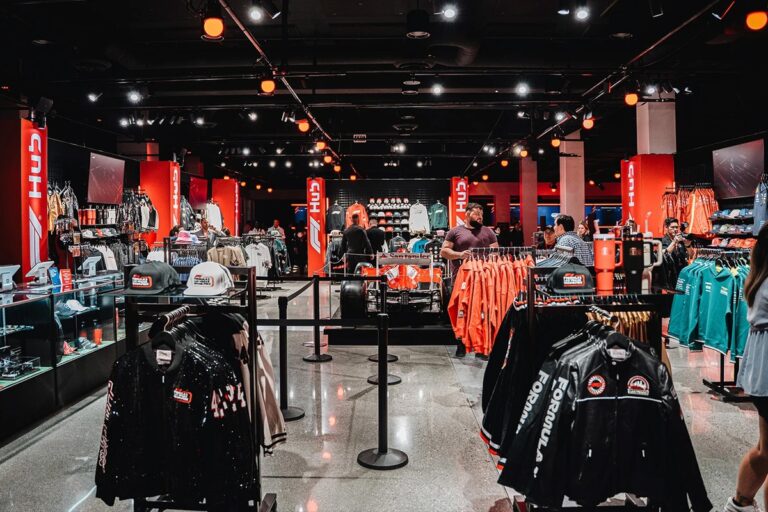
A limited Las Vegas Grand Prix collection went on sale November 20 at Nike’s Caesars Palace store and the F1 Hub at The Venetian. The partnership also covers F1 Academy, the all-female racing series, where Nike will work with drivers on performance products.
Adidas has built its presence through individual teams. It signed Mercedes for the 2025 season and added Audi for its 2026 debut. Puma retains its Ferrari relationship and introduced its first McLaren Racing replica collection in February, led by drivers Lando Norris and Oscar Piastri.
With only 11 teams, sponsorship opportunities are scarce. That limited supply helps explain why apparel brands are paying more when contracts become available.
Asia Drives the Audience Growth
Ampere Analysis puts sportswear sponsorship spending above $200 million in 2026, CNBC reported on November 27. The research firm’s surveyed Asia-Pacific markets have added more than 25 million F1 fans since 2023, accounting for 84% of overall fan growth.
The audience also skews toward consumers that clothing brands want to reach. Almost a third of F1 fans are under 35, while 45% belong to the two highest-earning socioeconomic groups, compared with 36% of the general population.
The Payoff Goes Beyond Team Shirts
The commercial opportunity extends beyond race merchandise. Ampere found that F1 fans were 29% more likely than average consumers to plan sports-apparel purchases over the following year and 27% more likely to plan other apparel purchases.
For Nike, which is rebuilding its business after weaker China sales and further job-cut plans, that broader appeal matters. A race-weekend collection can generate attention quickly. The larger test is whether fans keep buying Nike products between races.
Disclaimer: MarketSpeaker content is provided for informational and educational purposes only and does not constitute financial or investment advice. Investing involves risk, including the possible loss of principal. Verify information independently and consult a qualified professional before making financial decisions.