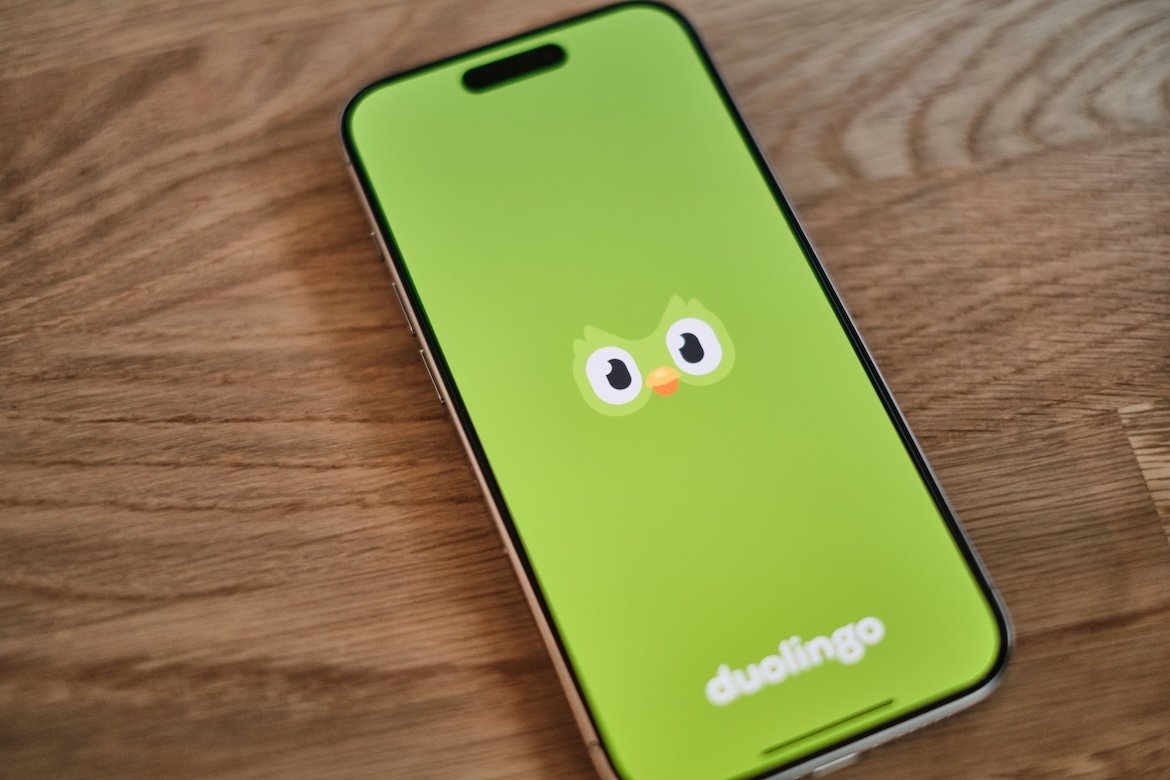

Shares of Duolingo plunged 27% after the language-learning platform delivered weaker-than-expected guidance for the current quarter, despite reporting stronger third-quarter revenues. The sharp selloff reflects investor concerns over the company’s pivot toward long-term growth and away from short-term profit maximization.
The Pittsburgh-based firm now expects fourth-quarter bookings between $329.5 million and $335.5 million, falling short of analysts consensus estimate of $344.3 million. Adjusted EBITDA is projected to come in between $75.4 million and $78.8 million, also below expectations of $80.5 million.
Strategic Shift Toward Long-Term Growth
CEO and co-founder Luis von Ahn said Duolingo has deliberately shifted investment priorities to build for the future. “We’ve made a slight shift over the last quarter in how we invest, and we’re investing a lot more in long-term things because we see that as such a big opportunity ahead of us,” von Ahn said.
The company’s recent strategy involves prioritizing user acquisition, platform expansion, and content innovation over short-term monetization metrics. Duolingo believes that investing in its product ecosystem now particularly in AI-driven personalization and course diversification will yield sustainable growth and retention over time.
While this approach supports Duolingo’s mission of global reach and education accessibility, it has raised investor concerns about near-term profitability. Analysts noted that the new guidance suggests slower revenue acceleration through the end of 2025.
User Metrics and Market Reaction
During the third quarter, Duolingo grew its paid subscribers to 11.5 million, slightly exceeding expectations of 11.38 million. However, the platform’s daily active users (DAUs) reached 50.5 million – short of the 51.2 million expected – while monthly active users (MAUs) came in at 135.3 million versus forecasts of 137.4 million.
Despite the strong subscriber growth, the weaker activity metrics reinforced fears that user engagement may be plateauing. Still, Duolingo’s leadership emphasized that engagement levels remain historically high, supported by growing interest in premium tiers and educational partnerships.
Investors reacted swiftly, sending the stock down to its lowest level in months. Market watchers said the selloff reflects skepticism that Duolingo’s long-term vision can sustain short-term earnings pressure.
Looking ahead, the company’s next few quarters will test whether its focus on scaling users and AI-driven product development can translate into a broader monetization rebound.