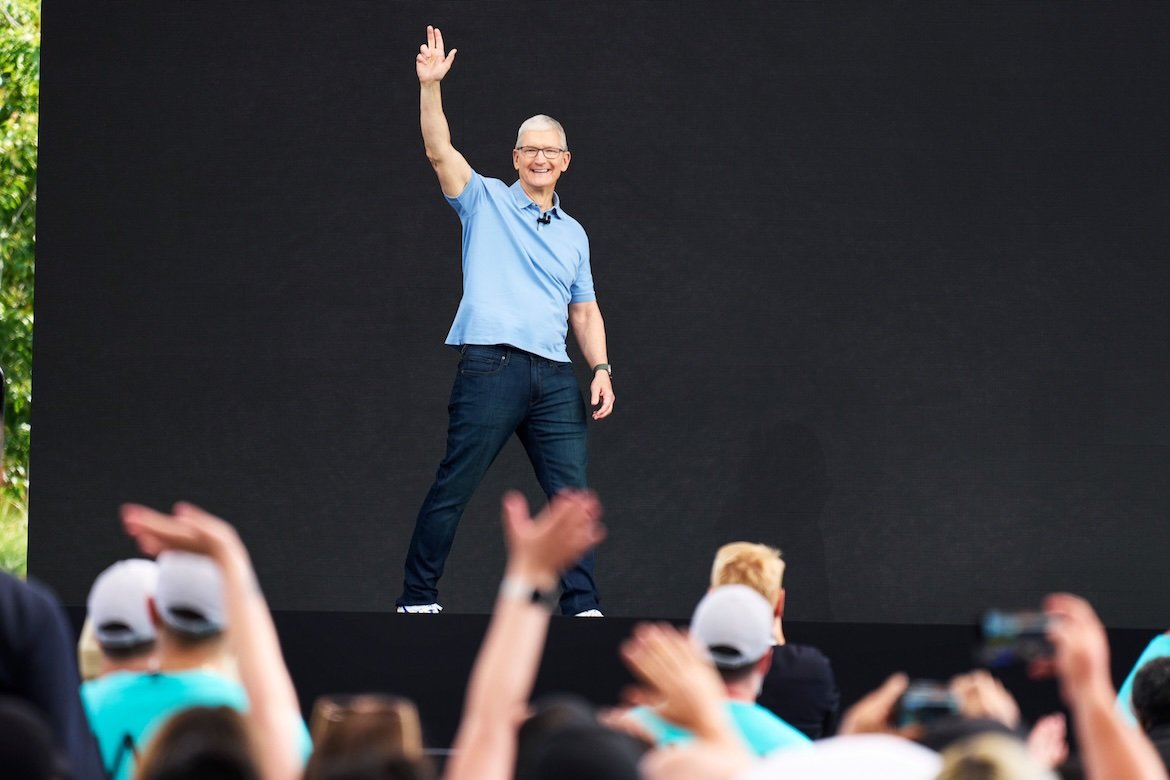

Apple Chief Executive Officer Tim Cook’s compensation has once again drawn attention to the scale of income inequality in the United States, after new comparisons showed he earns more in just seven hours than the average American makes in an entire year.
Based on Apple’s latest disclosed compensation figures, Cook received nearly $75 million in total pay last year, including salary, stock awards, and incentives. By contrast, the typical U.S. worker earns roughly $62,000 annually. At that pace, Cook effectively matches an average annual salary before the workday is even over.
The disparity becomes even more striking when translated into everyday purchases. Cook earns enough in just over 20 minutes to buy a $3,000 MacBook Pro, and less than eight minutes to afford a $1,100 iPhone Pro. In roughly two days of work, his compensation equals the price of an average U.S. home, currently estimated at around $439,000.
Executive Pay vs. Household Income
Cook’s compensation reflects Apple’s continued financial strength, with the company generating hundreds of billions of dollars in annual revenue and maintaining one of the largest market capitalizations globally. Apple’s board has repeatedly argued that Cook’s pay aligns with shareholder interests, as the bulk of his compensation is tied to long-term stock performance and operational targets.
Still, the comparison highlights a broader trend across corporate America. Executive pay has risen sharply over the past several decades, while wage growth for many workers has struggled to keep pace with inflation, housing costs, and healthcare expenses. Studies consistently show that CEO-to-worker pay ratios have expanded significantly, particularly in large technology firms.
Supporters of high executive compensation argue that leading a global company like Apple involves extraordinary responsibility, strategic decision-making, and accountability to investors. Critics counter that the scale of the gap reflects structural imbalances in how value is distributed across the economy.
Broader Implications for Inequality Debate
The timing of the renewed scrutiny comes as policymakers and economists debate income inequality, labor market resilience, and the sustainability of consumer spending. While unemployment remains relatively low, many households face affordability pressures, particularly in housing and education.
High-profile pay comparisons, such as Cook’s, often reignite discussions around executive compensation governance, tax policy, and corporate responsibility. Some shareholders and advocacy groups have pushed for greater transparency and restraint, while others focus on tying pay more closely to long-term performance and workforce outcomes.
As previously covered, technology leaders have increasingly become symbols in the broader conversation about wealth concentration in the digital economy. Cook’s earnings are not unusual among top executives, but they offer a stark illustration of how far compensation at the top has diverged from the experience of the average worker.