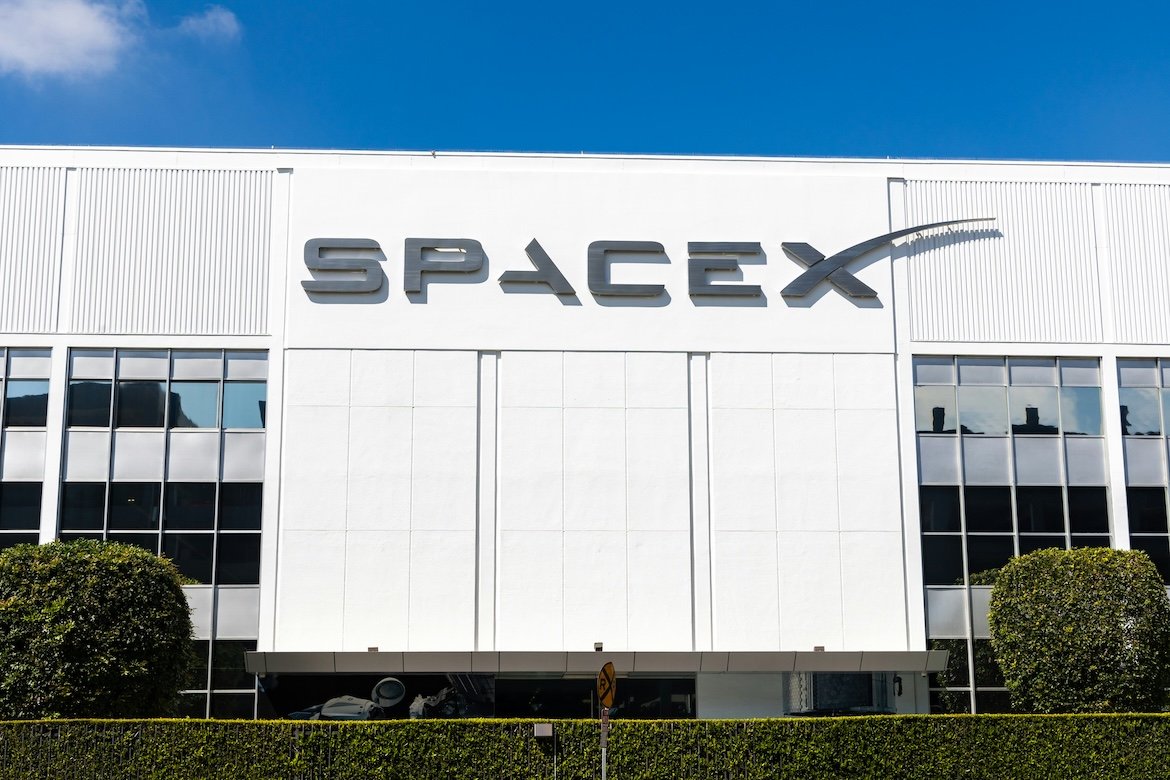

SpaceX, the aerospace company founded by Elon Musk, has selected four of Wall Street’s largest investment banks – Goldman Sachs, JPMorgan, Bank of America, and Morgan Stanley – to lead its long-anticipated initial public offering.
The IPO is expected to take place in the second half of 2026 and could become the largest public listing in financial history. SpaceX is currently valued at approximately $1.5 trillion, according to people familiar with the matter, reflecting extraordinary investor confidence in the company’s long-term growth prospects.
SpaceX is preparing for a historic IPO
SpaceX’s decision to move toward a public listing comes after years of rapid expansion across launch services, satellite communications, and defense contracts. The company has established itself as the dominant player in commercial spaceflight, with frequent rocket launches and a growing backlog of government and private-sector customers.
A central driver of SpaceX’s valuation is its satellite internet business, Starlink, which has scaled rapidly and generates recurring revenue from millions of users worldwide. As previously covered, Starlink has become a key pillar of SpaceX’s business model, providing cash flow that supports capital-intensive rocket development.
Selecting four major investment banks signals the scale and complexity of the planned offering. Such a syndicate suggests SpaceX is preparing for a global IPO with broad institutional participation, significant retail interest, and intense regulatory scrutiny.
What the IPO could mean for markets and investors
At a projected valuation of $1.5 trillion, SpaceX’s IPO would surpass previous records and reshape equity markets. For comparison, few public companies globally command valuations above $1 trillion, placing SpaceX in the top tier of global corporations upon listing.
For investors, the IPO offers rare access to a company that has remained private despite its size and influence. However, analysts caution that SpaceX’s business remains highly capital-intensive, with significant ongoing investment required for rocket development, satellite deployment, and next-generation space systems.
The listing could also have broader implications for the space and technology sectors. A successful IPO may unlock funding for competitors, accelerate consolidation, and increase investor appetite for space-related assets across public markets.
Looking ahead, market participants will closely watch SpaceX’s financial disclosures, revenue mix, and profitability timeline as the IPO approaches. While expectations are exceptionally high, the deal’s success will ultimately depend on execution, market conditions, and investor willingness to support one of the most ambitious companies ever to go public.