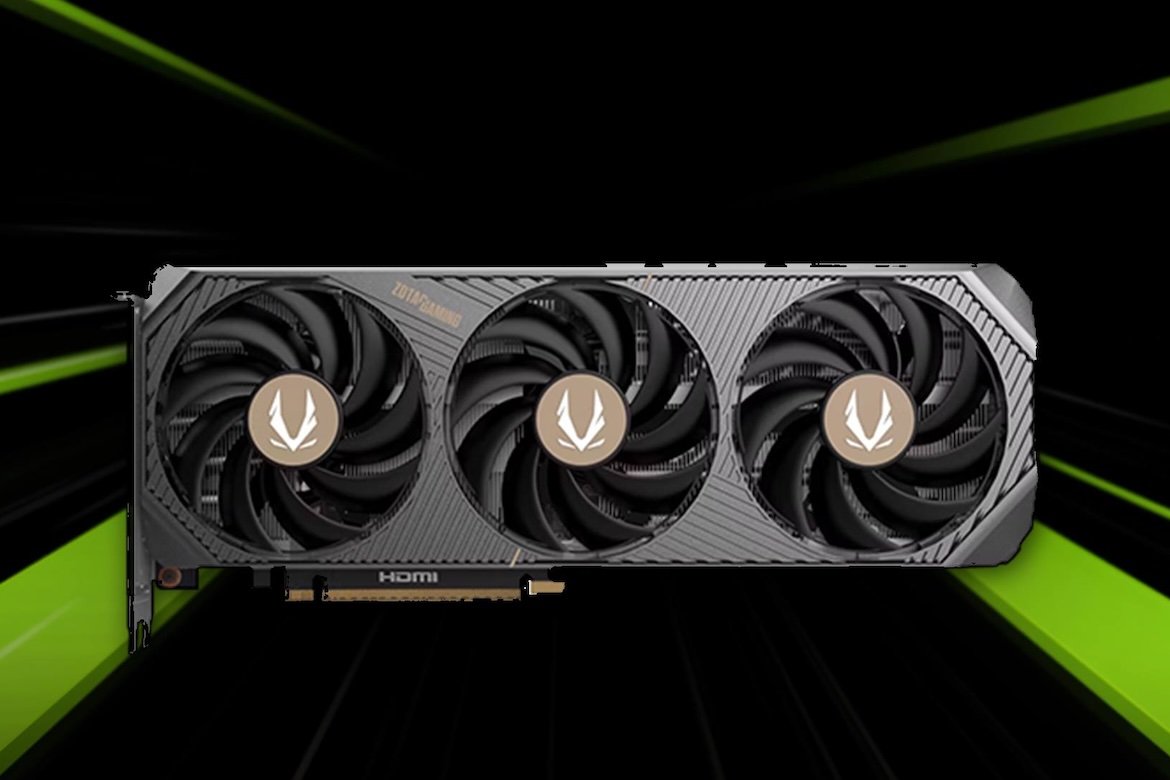

Nvidia is preparing to reduce production of its next-generation GeForce RTX 50 graphics cards, responding to weaker-than-expected consumer demand driven by sharply rising prices for key PC components such as memory and solid-state drives.
According to industry sources in Asia, Nvidia is aiming to prevent excess inventory by tightening supply, particularly in China, where shipments of RTX 50 GPUs could decline by 30% to 40% compared with the first half of 2025. The adjustment is expected to affect Nvidia’s most popular mid-range models first, including the RTX 5070 Ti and RTX 5060 Ti, both equipped with 16 gigabytes of video memory.
Rising Costs Are Slowing Consumer Upgrades
The planned production cut comes as the broader PC hardware market faces renewed cost pressures. Prices for DRAM and NAND flash memory have climbed significantly in recent months as suppliers redirect capacity toward data centers and artificial intelligence infrastructure, where margins are higher and demand remains robust.
As previously covered, memory manufacturers have increasingly prioritized enterprise and AI customers, reducing availability for consumer electronics. The resulting price increases have made full system upgrades more expensive, prompting many gamers and PC enthusiasts to delay purchases rather than absorb higher total build costs.
Market participants say Nvidia is acting preemptively to avoid a repeat of past cycles where oversupply led to steep discounts and channel inventory corrections. By controlling output, the company aims to support pricing discipline across its retail partners while aligning shipments more closely with actual end-user demand.
This cautious stance contrasts with Nvidia’s data center business, where demand for AI accelerators continues to outstrip supply. However, consumer GPUs remain sensitive to macroeconomic conditions, household budgets, and component pricing, making supply management critical.
Implications for the GPU Market and Investors
A pullback in RTX 50 production could have mixed implications for the broader graphics card market. In the near term, tighter supply may help stabilize prices and prevent sharp markdowns, particularly for mainstream models that drive the bulk of unit sales. For consumers, that could mean fewer promotional discounts but better availability balance over time.
For Nvidia, the move signals a more disciplined approach to its gaming segment as it increasingly relies on AI-driven growth elsewhere. While gaming remains an important revenue stream, it no longer dominates the company’s valuation narrative, which is now heavily tied to data centers and AI infrastructure spending.
Investors will be watching closely to see whether the slowdown in consumer GPU demand proves temporary or structural. If memory prices remain elevated into 2026, prolonged weakness in PC upgrades could weigh on the gaming segment, even as Nvidia’s overall earnings remain supported by enterprise demand.
The situation also underscores a broader shift in the semiconductor industry, where capital and capacity are flowing decisively toward AI workloads, sometimes at the expense of traditional consumer markets.