
Nvidia Targets $1 Trillion in AI Chip Revenue by 2027

Nvidia expects cumulative revenue from AI chips to reach $1 trillion by the end of 2027, according to CEO Jensen Huang. The forecast doubles the company’s previous projection for the fast-growing AI market.

By Emma Clarke | Edited by Oleg Petrenko Published:
Nvidia Targets $1 Trillion in AI Chip Revenue by 2027
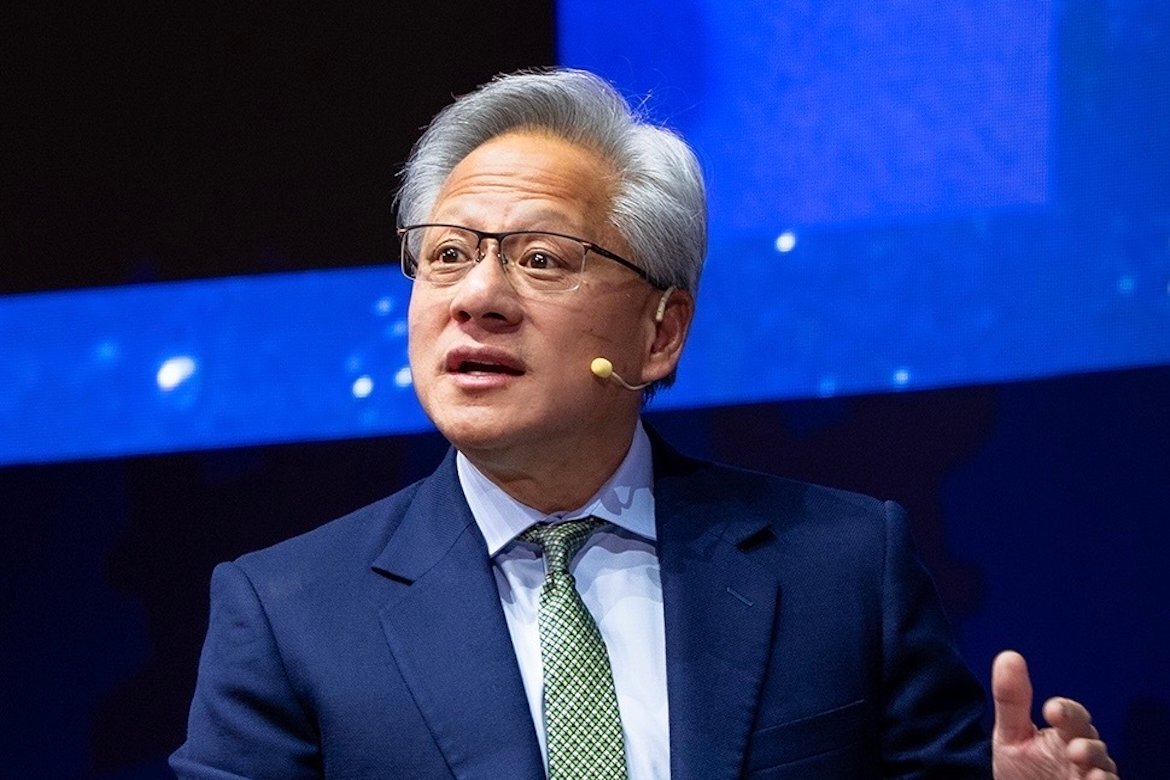
Nvidia projects that cumulative revenue from its AI chips will reach $1 trillion by the end of 2027, CEO Jensen Huang said. The estimate doubles the company’s earlier forecast, underscoring the rapid expansion of the AI market. Photo: Nvidia / Facebook

Nvidia expects cumulative revenue from artificial intelligence chips to reach $1 trillion by the end of 2027, according to CEO Jensen Huang.

The projection marks a dramatic increase from the company’s previous forecast of $500 billion in AI-related revenue through 2026, highlighting how rapidly demand for AI computing infrastructure is expanding.

Nvidia’s chips have become the backbone of the global artificial intelligence boom, powering large language models, generative AI systems, and advanced machine-learning platforms used by technology companies and enterprises worldwide.

AI Demand Drives Massive Revenue Forecast

The trillion-dollar revenue target reflects explosive growth in demand for specialized processors designed to train and run artificial intelligence models.

Large technology companies, cloud providers, and startups are investing heavily in AI infrastructure, building massive GPU clusters capable of handling increasingly complex computational workloads.

Nvidia currently dominates the market for AI accelerators, with its GPU architecture widely used in data centers across the global technology sector. The company’s hardware and software ecosystem has made it a central supplier to firms racing to develop advanced AI capabilities.

As previously covered, the surge in AI spending has triggered an unprecedented wave of investment in data centers, cloud infrastructure, and specialized semiconductor technologies.

The rapid expansion of generative AI applications across industries from finance and healthcare to software development and media has further accelerated demand for high-performance computing platforms.

AI Infrastructure Race Intensifies

Nvidia’s aggressive revenue forecast also underscores the scale of the global race to build artificial intelligence infrastructure. Major technology companies including Microsoft, Meta Platforms, and Amazon are investing tens of billions of dollars into data centers and AI computing capacity. These investments aim to secure the processing power needed to train next-generation AI models and deliver AI-powered services to businesses and consumers.

Analysts say Nvidia’s dominant position in AI hardware could allow the company to capture a significant portion of the rapidly expanding AI infrastructure market.

At the same time, the extraordinary scale of the company’s projections highlights just how central artificial intelligence has become to the future of the technology industry.

If the forecast proves accurate, Nvidia would generate revenue on a scale rarely seen in the semiconductor sector, cementing its position as one of the most influential companies in the global AI ecosystem.


Nvidia and Uber Plan Robotaxi Rollout Across 28 Cities by 2028

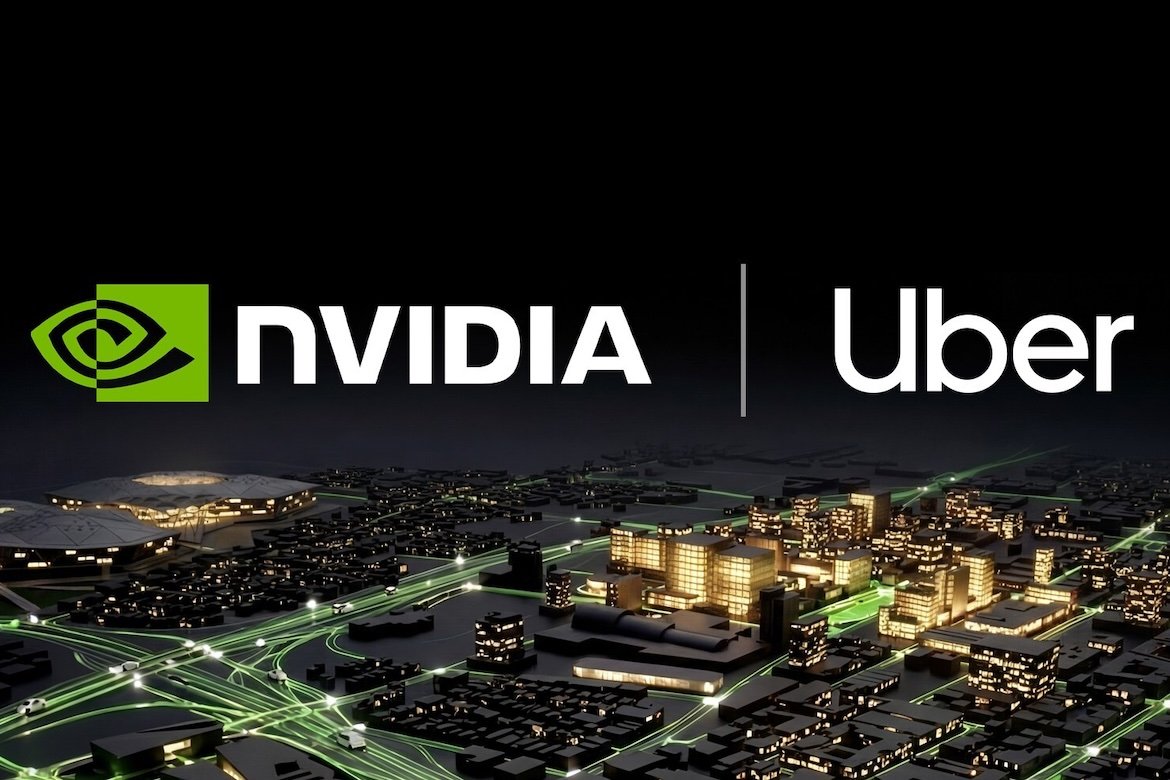
Nvidia and Uber announced plans to launch Level 4 autonomous robotaxis in 28 cities by 2028. The partnership aims to scale AI-powered self-driving fleets across major urban markets.

By Emma Clarke | Edited by Oleg Petrenko Published: Updated:
Nvidia and Uber Plan Robotaxi Rollout Across 28 Cities by 2028
Nvidia and Uber revealed plans to deploy Level 4 autonomous robotaxis across 28 cities by 2028. The partnership is designed to expand AI-powered self-driving fleets in major urban markets. Photo: Uber

Nvidia and Uber announced plans to launch Level 4 autonomous robotaxis across 28 cities by 2028, marking one of the most ambitious deployments of self-driving vehicles to date.

The initiative will integrate Nvidia’s artificial intelligence computing platforms with Uber’s global ride-hailing network to operate fleets of autonomous vehicles capable of driving without human intervention in defined urban environments.

The companies aim to begin early deployments as soon as next year, starting with selected cities before expanding the network globally.

AI and Autonomous Driving Converge

Level 4 autonomy allows vehicles to operate independently in most conditions within designated service areas, relying on advanced AI systems, sensors, and high-performance computing.

Nvidia’s autonomous driving technology will serve as the backbone of the system, processing massive volumes of real-time data from cameras, radar, and lidar sensors to navigate complex urban environments.

The company has been steadily expanding its presence in the autonomous vehicle industry through its AI software stack and high-performance computing chips designed for self-driving systems.

As previously covered, Nvidia has positioned its hardware and software ecosystem as a central platform for companies developing autonomous driving technologies.

By combining Nvidia’s computing infrastructure with Uber’s mobility network, the companies aim to accelerate commercialization of robotaxi services.

Implications for the Mobility Industry

If successful, the rollout could mark a significant step toward large-scale adoption of autonomous ride-hailing services.

Robotaxis promise to dramatically reduce operating costs by removing the need for human drivers, potentially transforming the economics of ride-sharing and urban transportation.

However, the industry still faces regulatory hurdles, safety challenges, and technological barriers before fully autonomous fleets become widespread.

Cities and regulators remain cautious about approving large-scale deployments, particularly in densely populated urban areas where safety concerns remain high.

Still, partnerships between technology companies and mobility platforms are becoming increasingly common as the race to commercialize autonomous vehicles intensifies.

The Nvidia-Uber collaboration signals that major players in both artificial intelligence and transportation believe robotaxi networks could become a major component of future urban mobility systems.

If the timeline holds, fleets powered by Nvidia’s AI platforms could begin operating in dozens of cities within the next few years.

Meta Invests $27B in Nebius as AI Infrastructure Race Intensifies

Meta has invested $27 billion in AI cloud company Nebius as it races to secure computing power for artificial intelligence development. The deal highlights growing demand for large-scale AI infrastructure.

By Emma Clarke | Edited by Oleg Petrenko Published: Updated:
Meta Invests $27B in Nebius as AI Infrastructure Race Intensifies
Meta has committed $27 billion to AI cloud provider Nebius as it moves to secure the computing capacity needed for artificial intelligence development. The investment underscores surging demand for large-scale AI infrastructure. Photo: Julio Lopez / Unsplash

Meta Platforms has invested $27 billion in Nebius, the artificial intelligence infrastructure firm founded by former Yandex CEO Arkady Volozh. The move signals Meta’s growing urgency to secure computing capacity as competition in the global AI race accelerates.

Shares of Nebius surged following the announcement as investors interpreted the deal as a major endorsement of the company’s role in the rapidly expanding AI cloud market.

The investment could grow further. Analysts say Meta may ultimately commit up to an additional $15 billion, potentially raising the total value of the partnership significantly as demand for computing power increases.

AI Infrastructure Becomes Strategic Priority

Artificial intelligence development now requires massive computing capacity powered by specialized GPUs and high-performance data centers. Technology giants are racing to secure these resources as demand for AI training and inference continues to surge.

Nebius has emerged as a key provider of AI cloud infrastructure, offering large-scale GPU clusters and high-performance computing platforms designed specifically for machine-learning workloads.

Meta’s investment reflects the growing recognition that access to computing infrastructure rather than algorithms alone is becoming one of the most important competitive advantages in the AI industry.

As previously covered, Meta has been accelerating investments in AI development while restructuring parts of its workforce. The company has reportedly been considering layoffs affecting more than 20% of its roughly 79,000 employees as it reallocates resources toward artificial intelligence initiatives and infrastructure expansion.

Big Tech Competes for AI Capacity

Meta is not the only technology company partnering with Nebius. Microsoft previously signed a major infrastructure agreement with the company reportedly worth about $17 billion, highlighting the scale of demand for AI computing power.

The deals illustrate a broader trend across the technology sector: major companies are investing tens of billions of dollars to secure access to specialized AI infrastructure.

Analysts say the rapid expansion of generative AI models and enterprise AI applications has created an unprecedented surge in demand for computing capacity, forcing technology firms to invest heavily in data centers, chips, and cloud infrastructure.

For Meta, the Nebius investment could help accelerate development of next-generation AI systems across its platforms, including advertising optimization, recommendation algorithms, and advanced generative AI tools.

The partnership also underscores the increasing importance of independent AI infrastructure providers that can supply computing resources at scale to multiple technology companies simultaneously.

As the AI arms race intensifies, access to large-scale computing power is emerging as one of the defining strategic assets of the technology industry.

Nebius Shares Jump 16% After Nvidia’s $2B Investment in AI Cloud Partnership

Nebius shares surged after Nvidia announced a $2 billion investment to build next-generation AI cloud infrastructure. The partnership aims to scale high-performance computing platforms for large artificial intelligence workloads.

By Emma Clarke | Edited by Oleg Petrenko Published:
Nebius Shares Jump 16% After Nvidia’s $2B Investment in AI Cloud Partnership
Nebius shares jumped after Nvidia announced a $2 billion investment to develop next-generation AI cloud infrastructure. The partnership is aimed at expanding high-performance computing capacity for large-scale artificial intelligence workloads. Photo: nebiusofficial / Facebook

Nvidia announced a $2 billion strategic investment in Nebius to accelerate development of next-generation artificial intelligence cloud infrastructure, sending Nebius shares up roughly 16% following the announcement.

The partnership will focus on building full-stack AI cloud platforms, combining Nvidia’s advanced GPU hardware and software ecosystem with Nebius’s rapidly expanding data-center infrastructure. The companies aim to scale computing capacity designed specifically for training and deploying large AI models.

Demand for specialized AI infrastructure has surged globally as technology firms race to deploy generative AI tools and machine-learning systems requiring massive computational power.

Building the Next Generation of AI Cloud Infrastructure

The agreement positions Nebius as a key infrastructure partner in the rapidly expanding AI computing ecosystem. Nvidia’s investment will support the development of large-scale GPU clusters capable of handling advanced AI training workloads.

Nebius has been investing heavily in high-performance computing facilities designed for AI developers and enterprise customers. By integrating Nvidia’s latest GPU architecture and AI software stack, the company hopes to provide scalable infrastructure capable of supporting increasingly complex AI models.

As previously covered, Nvidia has increasingly pursued strategic investments and partnerships across the AI ecosystem, supporting companies building cloud platforms, data centers, and specialized computing environments.

The approach allows Nvidia to expand the reach of its technology beyond semiconductor manufacturing while helping ensure sustained demand for its GPUs, which remain central to most large AI systems.

Investor Reaction and Market Implications

Markets reacted positively to the announcement, with Nebius shares jumping about 16% as investors viewed the partnership as a major endorsement from the world’s leading AI chipmaker.

The deal also highlights intensifying competition in the AI infrastructure race. Cloud providers and technology companies are investing billions of dollars to expand computing capacity capable of supporting artificial intelligence workloads.

Analysts say partnerships between chipmakers and AI cloud providers could become increasingly common as demand for computing power continues to rise. The scale of investment required to support advanced AI systems has already pushed companies to seek strategic alliances and shared infrastructure development.

For Nvidia, the investment reinforces its strategy of building a broader AI ecosystem that extends beyond hardware into software platforms and cloud infrastructure partnerships.

For Nebius, the deal significantly strengthens its credibility in the AI infrastructure market and may accelerate its expansion into global enterprise and developer markets.

As artificial intelligence adoption accelerates across industries, access to large-scale computing power is becoming one of the most critical bottlenecks and the Nvidia-Nebius partnership aims to help address that challenge.

Mastercard Launches Crypto Partner Network With 85 Firms to Expand Global Payments

Mastercard unveiled a new crypto partner program linking 85 digital asset companies to expand cross-border payments and B2B transactions. The initiative aims to integrate blockchain-based transfers into mainstream financial infrastructure.

By David Sinclair | Edited by Oleg Petrenko Published: Updated:
Mastercard Launches Crypto Partner Network With 85 Firms to Expand Global Payments
Mastercard introduced a new crypto partner program connecting 85 digital asset firms to support cross-border payments and B2B transactions. The initiative is designed to bring blockchain-based transfers into the broader financial infrastructure. Photo: Pixabay / Pexels

Mastercard has launched a new cryptocurrency partner program designed to integrate digital asset infrastructure into global payments networks. The initiative brings together 85 crypto companies to support cross-border transfers and business-to-business payment solutions built on blockchain technology.

The program aims to create a standardized ecosystem where financial institutions, fintech companies, and crypto firms can collaborate on payment infrastructure, settlement systems, and digital asset services.

Mastercard said the initiative reflects growing demand for faster and more efficient international payment systems.

Building a Global Crypto Payments Network

Cross-border payments remain one of the most expensive and time-consuming areas of traditional finance. Mastercard’s new partner program seeks to address those challenges by connecting crypto infrastructure providers with established financial networks.

The initiative focuses particularly on improving B2B payments, where large transactions often face delays due to legacy banking systems and settlement processes.

By integrating blockchain technology into its network, Mastercard aims to reduce friction in international transfers while maintaining compliance and security standards required by global regulators.

As previously covered, major payment companies have increasingly explored crypto-based solutions for remittances, settlements, and digital identity systems.

Implications for the Payments Industry

The launch signals that traditional financial institutions continue to deepen engagement with digital assets despite volatility in cryptocurrency markets.

For Mastercard, the program represents a strategic effort to position itself at the center of future digital payment rails, ensuring that blockchain-based transactions can operate alongside conventional card networks and bank transfers.

Analysts say the collaboration with dozens of crypto firms could accelerate experimentation in areas such as tokenized payments, stablecoin settlements, and programmable financial services.

However, regulatory uncertainty remains a key challenge. Many jurisdictions are still defining legal frameworks for crypto payments, digital asset custody, and cross-border blockchain transactions.

Even so, Mastercard’s initiative suggests that major financial networks see long-term potential in digital asset infrastructure as part of the evolving global payments landscape.

The move also highlights a broader trend: as fintech and blockchain technologies mature, the boundaries between traditional finance and crypto markets are becoming increasingly blurred.

Japan’s U.S. Treasury Holdings Draw Attention as Bond Market Risks Resurface

Japan’s massive holdings of U.S. Treasury bonds have come into focus as investors debate whether foreign selling could pressure global bond markets. Analysts say fears of large-scale liquidation highlight growing fragility in the world’s largest debt market.

By Michael Foster | Edited by Oleg Petrenko Published:
Japan’s U.S. Treasury Holdings Draw Attention as Bond Market Risks Resurface
Japan’s large holdings of U.S. Treasury bonds are drawing renewed attention as investors debate whether foreign selling could put pressure on global bond markets. Analysts say such concerns underscore growing sensitivity in the world’s largest debt market. Photo: Szymon Shields / Pexels

Japan’s position as the largest foreign holder of U.S. government debt has come under renewed scrutiny as volatility spreads across global bond markets. Investors are increasingly debating how shifts in Japanese policy or capital flows could influence the stability of the U.S. Treasury market, the backbone of the global financial system.

According to widely cited estimates, Japanese institutions collectively hold trillions of dollars in U.S. Treasury securities, making the country one of the most important overseas lenders to the United States.

The renewed attention comes as Japan faces mounting economic pressures, including currency weakness, volatility in domestic equities, and changes in monetary policy.

Why Japan’s Treasury Holdings Matter

The U.S. Treasury market, valued at roughly $30 trillion, plays a central role in global finance. Treasuries are widely used as reserve assets, collateral in financial transactions, and benchmarks for global interest rates.

Japan’s large holdings stem from decades of trade surpluses and investment flows. Japanese institutions – including banks, insurers, pension funds, and government-related entities – have historically invested heavily in Treasuries because of their liquidity and perceived safety.

However, changes in domestic conditions can alter those flows. When the Japanese yen weakens or domestic yields rise, Japanese investors may shift capital back home to capture better returns or stabilize their balance sheets.

As previously covered, the Bank of Japan’s gradual shift away from strict yield curve control policies has already begun to reshape global capital flows.

Could Foreign Selling Shake the Bond Market?

Some market commentary has suggested that large-scale selling of U.S. Treasuries by foreign holders could destabilize financial markets. In theory, heavy selling would push bond prices lower and yields higher, tightening financial conditions across the economy.

However, analysts caution that the U.S. Treasury market is among the deepest and most liquid financial markets in the world. Even substantial portfolio adjustments by foreign investors are typically absorbed by a broad range of buyers, including domestic institutions, pension funds, banks, and the Federal Reserve.

Moreover, while Japan is the largest foreign holder, its share of the overall Treasury market remains a minority portion of total outstanding debt.

Still, the debate highlights how sensitive global markets have become to shifts in capital flows. As monetary policies diverge and geopolitical tensions rise, investors are increasingly focused on who is buying or selling government debt.

For now, most analysts view the risk of a sudden, destabilizing liquidation as unlikely. Yet the attention surrounding Japan’s holdings underscores a broader reality: the global financial system remains deeply interconnected, and large changes in cross-border investment patterns can ripple through markets faster than expected.