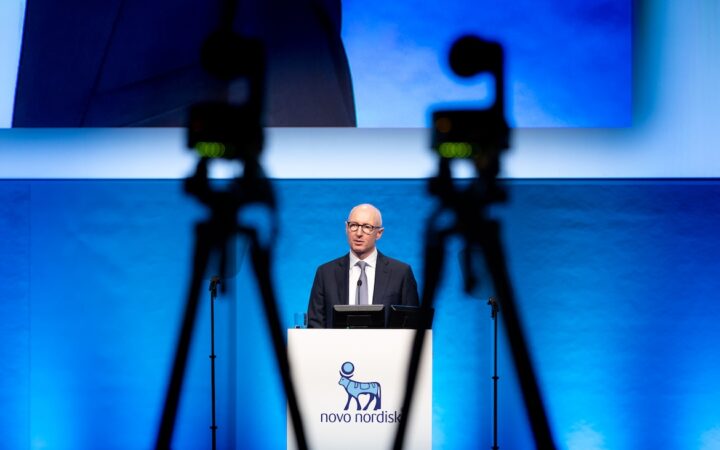
Novo Nordisk announced a strategic partnership with OpenAI aimed at accelerating its drug discovery pipeline through advanced artificial intelligence, marking a significant step in the pharmaceutical industry’s push toward data-driven innovation.
Novo Nordisk and @OpenAI partner to transform how medicines are discovered and delivered. Read more here:https://t.co/JJoSqHmOzA pic.twitter.com/pZeoWz1Eld
— Novo Nordisk (@novonordisk) April 14, 2026
The collaboration will enable Novo Nordisk to leverage AI models to process and analyze complex biological and clinical datasets, with the goal of identifying promising drug candidates more efficiently. The Danish drugmaker, best known for its diabetes and obesity treatments, is seeking to shorten development timelines and improve success rates in early-stage research.
Financial terms of the agreement were not disclosed, but the initiative underscores increasing investment across the healthcare sector in AI technologies as companies compete to bring next-generation therapies to market faster.
AI Integration Targets Faster and More Precise Drug Development
At the core of the partnership is the use of advanced machine learning models to uncover patterns in large-scale datasets that would be difficult to detect through traditional research methods. This includes genomic data, clinical trial results, and molecular structures.
Novo Nordisk said the collaboration will focus on improving target identification and validation two of the most critical and time-consuming stages in drug development. By enhancing these processes, the company aims to increase the probability of clinical success and reduce costly late-stage failures.
The move reflects a broader industry trend, as pharmaceutical companies increasingly turn to AI to streamline R&D workflows. As previously covered, firms across the sector have been investing heavily in AI platforms to improve efficiency, reduce development costs, and gain a competitive edge in bringing innovative treatments to market.
Executives highlighted that AI-driven insights could significantly accelerate timelines, potentially shaving years off traditional drug development cycles that typically span more than a decade and cost upwards of $2 billion per successful drug.
Market Implications Highlight Growing AI Investment in Healthcare
The partnership signals Novo Nordisk’s intent to remain at the forefront of innovation amid intensifying competition in the global pharmaceutical market. Investors have closely watched the company’s ability to sustain growth beyond its blockbuster weight-loss and diabetes drugs.
Shares of Novo Nordisk have been supported by strong demand for its GLP-1 treatments, but long-term valuation increasingly depends on the company’s pipeline strength and ability to diversify its portfolio.
By integrating AI into its research processes, Novo Nordisk is positioning itself to enhance productivity and potentially unlock new therapeutic areas, including rare diseases and complex chronic conditions.
The deal also reflects a broader convergence between technology and healthcare, with AI emerging as a critical driver of future growth. Companies that successfully deploy AI at scale could gain significant advantages in speed, cost efficiency, and innovation.
For investors, the collaboration highlights both opportunity and execution risk. While AI offers transformative potential, outcomes remain uncertain, and measurable returns may take years to materialize.
Still, the move reinforces a clear industry direction: pharmaceutical companies are increasingly betting on AI not just as a tool, but as a foundational component of next-generation drug development strategies.