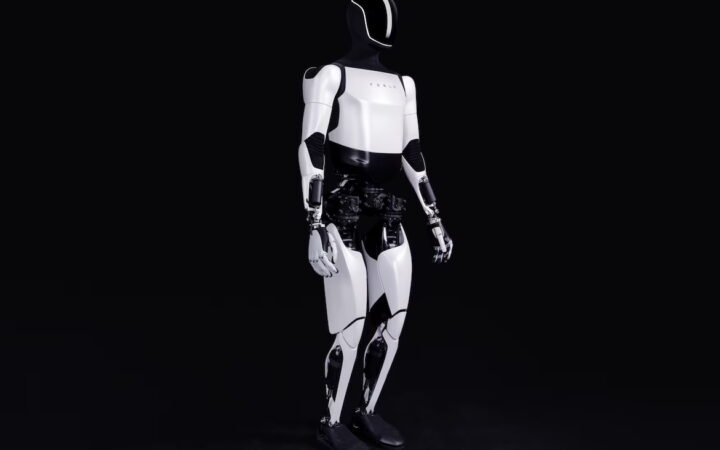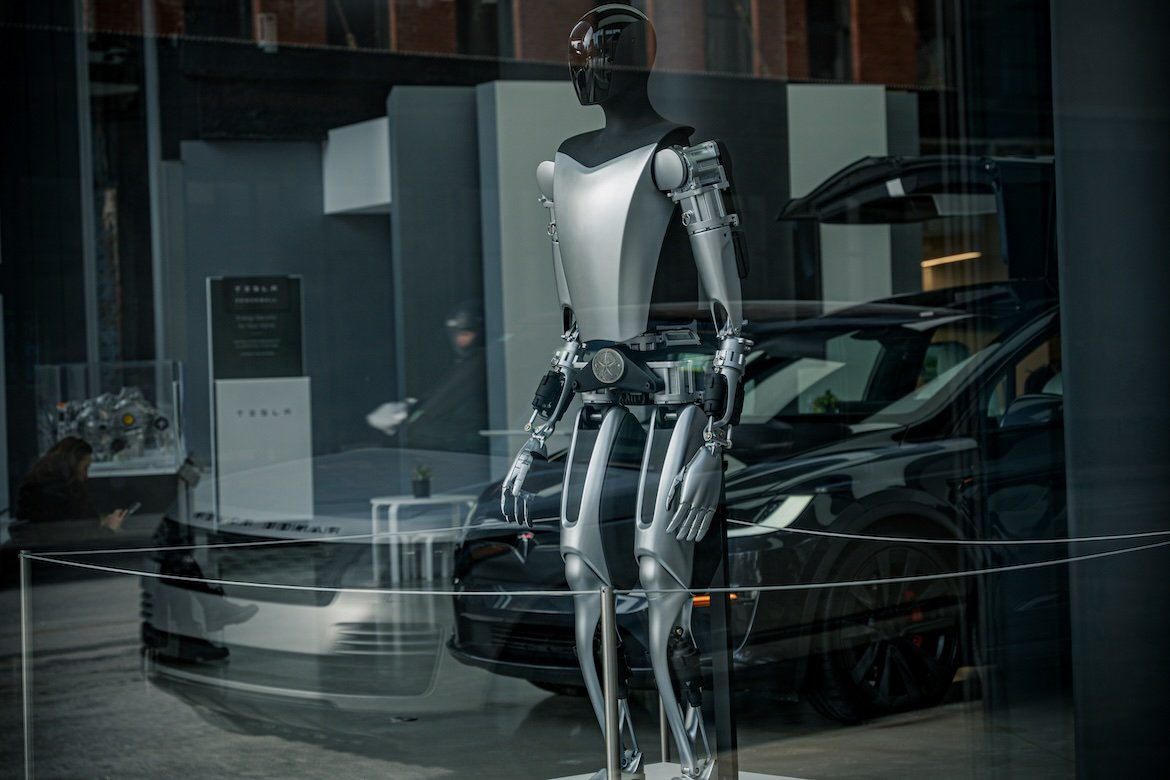

Elon Musk has ignited a fresh wave of speculation about Tesla’s humanoid robot strategy after posting a new video showcasing multiple Optimus units performing an array of real-world tasks. The clip features robots acting as construction workers, medical staff, police officers, kitchen assistants, martial artists and even poker players. Musk offered no commentary alongside the footage, leaving analysts and observers to interpret the message.
— Elon Musk (@elonmusk) November 21, 2025
The post arrives amid Musk’s repeated claims that Optimus could reshape labor markets by taking over routine physical work. He has previously argued that humanoid robots could eliminate poverty by enabling a universal high income through ultra-high productivity. The latest video appears intended to reinforce the scale of that vision.
Growing Ambitions for Tesla’s Robotics Program
Musk has long framed robotics as one of Tesla’s most important long-term growth drivers, stating that Optimus could ultimately surpass all other divisions in value. According to earlier comments, he expects future robots to perform tasks ranging from manufacturing to healthcare support, serving as general-purpose labor in households and workplaces.
Reports have also suggested that Tesla is preparing to ramp up development substantially. Outlets such as Wired have previously indicated that Musk aims to begin producing large numbers of robots as early as late 2026, positioning Tesla for mass deployment once the technology matures. The new video supports the narrative that Tesla is accelerating real-world testing and public messaging.
The range of roles depicted – spanning safety, service, construction and entertainment – signals that Tesla is positioning Optimus not merely as a factory assistant but as a multi-sector platform. This aligns with Musk’s stated goal of building robots capable of understanding and acting across complex, dynamic environments.
Economic, Market and Workforce Implications
The rise of humanoid automation has significant implications for global labor markets. If Tesla succeeds in deploying Optimus at scale, industries such as logistics, healthcare support, security services and food preparation could see rapid transformation. Economists note that such technology could increase productivity but also raise questions about job displacement and income distribution.
Investors are watching closely. If a commercially viable Optimus emerges, it could reshape Tesla’s revenue mix, potentially expanding the company beyond automotive and energy into industrial robotics – a sector expected to grow sharply as companies automate to cut costs and fill labor shortages.
Still, major uncertainties remain. The capabilities shown in promotional videos don’t necessarily reflect readiness for mass deployment. Safety, regulation, costs and real-world reliability remain major hurdles. Analysts say Tesla must demonstrate consistent performance outside controlled environments before Optimus can scale meaningfully.
As Musk continues to preview the future of humanoid automation, the latest video serves as both a signal of ambition and a reminder that the competition in AI-driven robotics is intensifying.