Key Notes
- Intel shares fell more than 9% in a November 2 intraday snapshot, leaving them approximately 50% below their October 2 close.
- The decline extends Friday’s 28.6% selloff after Intel forecast lower Q4 revenue and a sharp sequential margin decline.
- Strong server demand contrasts with weaker PC purchases and continuing losses in the foundry business.
Intel Corp. (NASDAQ: INTC) fell more than 9% on Monday, November 2, extending its post-earnings selloff and leaving the stock worth roughly half its price a month earlier. Investors continued to reassess the chipmaker’s recovery after a fourth-quarter forecast that pointed to lower revenue and a sharp sequential decline in margins.
Shares traded at $59.73, down 9.18%, in a Yahoo Finance quote timestamped 20:48 UTC. That was an intraday reading before the 21:00 UTC US closing bell, rather than a final closing price.
The latest decline followed Friday’s 28.6% fall to $65.76. Compared with the October 2 close of $119.33, Monday’s snapshot represented a loss of about 50%. Those consecutive declines have made the outlook for Intel’s PC business, manufacturing operations and server supply more pressing than the strength of its latest reported quarter.
A Month of Losses Deepens
The one-month comparison captures two stages of the retreat. Intel was already falling through much of October before its October 29 earnings release triggered another steep repricing. Its shares closed at $92.07 that Thursday, then lost more than a quarter of their value in the following session.
Monday’s move therefore compounds a much larger fall already recorded before the weekend. From Thursday’s close to the latest verified Monday quote, the cumulative decline was approximately 35%, calculated from the share prices rather than by adding the two daily percentage changes.
The roughly 50% loss through November 2 is also different from Intel’s return for the October calendar month. The comparison here begins at the October 2 close and includes Monday’s additional fall. Historical price data provides the reference closes.
Why the Q4 Outlook Matters
Intel’s October 29 results showed third-quarter revenue of $16.5 billion, up 21% from a year earlier, and adjusted earnings of $0.52 a share. The company’s adjusted EPS beat expectations, as we previously reported. The disappointment centered on what comes next.
For the fourth quarter, Intel forecast revenue of $15 billion–$16 billion and adjusted EPS of $0.25. The $15.5 billion revenue midpoint would be about 6% below the preceding quarter, while the adjusted earnings forecast is less than half the third-quarter figure.
Intel also projected an adjusted gross margin of 38%, compared with 44.1% in the third quarter. That 6.1 percentage-point decline helps explain why rising annual sales have not prevented a sharp share-price reaction: investors are assessing how much profit the next dollar of revenue will generate.
PC Weakness Meets Strong Server Demand
The company’s latest quarterly filing describes diverging conditions across its businesses. Client demand weakened from the first half as more expensive components, particularly memory, tighter IT budgets and inventory discipline weighed on purchases. Intel expects those pressures to intensify in the fourth quarter and continue into 2027.
Its data-center business faces a different constraint. Demand for some server products exceeds available supply, with substrate and other component shortages limiting deliveries. Strong AI infrastructure spending therefore does not translate automatically into unrestricted shipment growth.
That split appears in the segment results: data-center and AI revenue rose 78% to $7.3 billion, while client computing and physical AI revenue fell 5% to $8.1 billion. The stronger server business must offset a softer client market while Intel works to expand supply.
The Manufacturing Recovery Remains Unfinished
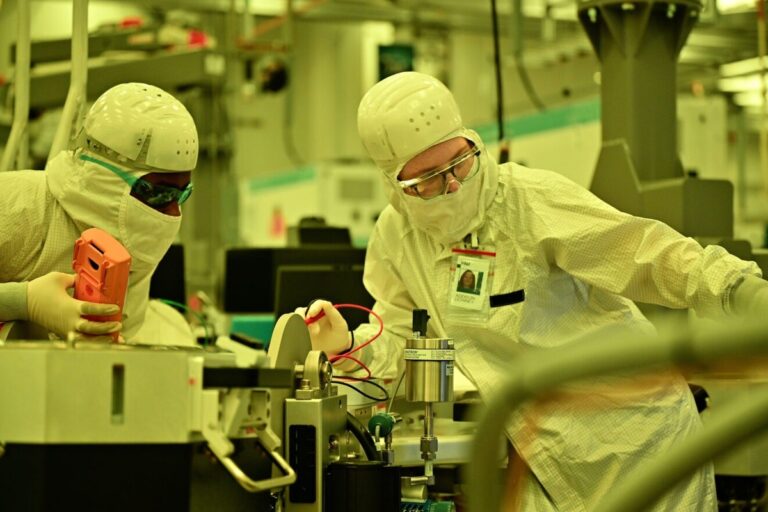
Intel’s foundry operation adds another challenge. It posted a third-quarter operating loss of approximately $1.85 billion. Its $6.7 billion segment revenue includes internal transactions and should not be treated as a separate pool of external customer sales.
The filing says substantially all foundry activity still supports Intel’s own products. Converting process-development progress into a broader external customer business remains a longer-term task, while factory investment requires spending well before the eventual return is known.
The stock’s latest fall follows the broader chip selloff we covered Friday. For Intel, the immediate tests are more specific: whether PC demand stabilizes, server constraints ease and margins recover from the weaker fourth-quarter forecast. The price decline shows how much investors have reduced their expectations; it does not establish when those operating pressures will turn.