Deprecated: rtrim(): Passing null to parameter #1 ($string) of type string is deprecated in /home/u752143311/domains/marketspeaker.com/public_html/wp-includes/formatting.php on line 2829
Deprecated: rtrim(): Passing null to parameter #1 ($string) of type string is deprecated in /home/u752143311/domains/marketspeaker.com/public_html/wp-includes/formatting.php on line 2829
A re-circulating case from Texas shows how Joan R. Ginther, a PhD statistician, won the lottery four times by exploiting structural flaws and statistical patterns – not luck – accumulating $21 million in legal winnings.
By Oleg PetrenkoUpdated
3 mins readA resurfacing Texas case highlights how Joan R. Ginther - a statistician with a PhD - legally won the lottery four times by identifying structural flaws and statistical patterns rather than relying on luck, ultimately amassing $21 million in winnings. Photo: Oleg Petrenko / MarketSpeaker
A viral story has resurfaced about Joan R. Ginther, a Stanford-educated statistician who won the Texas lottery four times between 1993 and 2008, collecting a combined $21 million. Her extraordinary run – $5.4 million, then $2 million, then $3 million, and finally a $10 million jackpot has reignited debate over whether lottery randomness is as foolproof as advertised.
Ginther did not credit luck. Instead, she relied on advanced probability theory, the mathematics of distribution patterns, and insights into how scratch-off algorithms and ticket batches were manufactured. Her approach, entirely legal, quietly challenged long-held assumptions about unpredictability in state-run lotteries.
While the story originally drew attention in 2011, its resurgence today reflects growing public interest in data-driven decision-making – particularly as more individuals turn to analytics for investing, gaming, and risk management.
How a Statistician Turned Lottery Design Into a Probability Puzzle
Scratch-off lotteries are not fully random. Payouts are preallocated to specific batches, distribution centers, and retail clusters. According to past interviews with statisticians who studied the Ginther case, she appears to have analyzed the underlying structure rather than individual ticket odds.
Ginther held a PhD in statistics from Stanford University, specializing in probability models. Public records suggest she focused on identifying predictable issuance cycles, payout clustering, and the statistical “noise” created by manufacturing processes that unintentionally signaled where winning tickets might be concentrated.
Instead of buying occasional tickets, Ginther purchased strategically – only during windows when her calculations indicated a higher-than-normal likelihood of encountering a top-rated ticket batch. Former professors noted that, based on her background, she had the expertise to spot flaws invisible to typical players.
Her wins were spread across more than a decade, indicating not repeated luck but repeated detection of structural misalignments in the lottery’s design.
The Case Still Resonates Today
The resurgence of Ginther’s story underscores a broader point about financial behavior: intelligence, analysis, and disciplined execution often outperform intuition, both in lotteries and in markets.
The episode exposed vulnerabilities within lottery systems, prompting regulators to increase transparency around ticket distribution and payout algorithms. It also demonstrated that “games of chance” can behave more like “games of incomplete information,” where those who understand the mechanics gain a measurable advantage.
For consumers, the takeaway extends beyond lotteries. In investing and personal finance, relying on structured analysis – rather than emotion or randomness – can dramatically shift outcomes. Ginther’s approach mirrors modern quantitative investing: identifying overlooked inefficiencies, applying mathematical rigor, and executing consistently when probabilities favor a meaningful edge.
Her story remains one of the clearest real-world examples of how analytical thinking can legally outperform systems assumed to be governed by luck alone.
Goldman Sachs says China’s yuan is roughly 25% undervalued on a trade-weighted basis and is likely to appreciate more than current 2026 forward pricing suggests.
By Oleg PetrenkoUpdated
2 mins readGoldman Sachs estimates that China’s yuan is about 25% undervalued on a trade-weighted basis and is poised to strengthen more than 2026 forward markets currently imply. Photo: Rob / Unsplash
Goldman Sachs says China’s yuan is trading far below its fair value, estimating the currency is about 25% undervalued when measured against economic fundamentals such as stable prices, balanced trade flows and long-term growth potential. The bank called the yuan one of its “highest conviction” global currency trades and said market pricing for 2026 does not reflect the strength it expects.
According to Goldman’s modeling, the yuan’s optimal exchange rate is materially higher than current levels, implying forward markets are discounting too much structural weakness in China’s economy and underestimating potential policy support. The bank expects appreciation beyond what existing contracts signal for the coming two years.
Goldman Says the Yuan Is Mispriced
The bank’s analysis focuses on China’s underlying external accounts, which remain broadly stable despite headline concerns about slowing growth. As previously covered, Chinese authorities have leaned on targeted stimulus, currency management and credit support to stabilize activity. Goldman argues that these measures, alongside still-solid export competitiveness, point to a fundamentally healthier exchange-rate outlook than markets currently assume.
The yuan’s softness in recent years has been shaped largely by diverging monetary policy between China and the United States, heavy capital outflows from global funds and concerns surrounding China’s property downturn. But Goldman’s models suggest the current level overshoots the degree of justified depreciation.
The bank also sees room for Beijing to lean toward currency stability as part of broader economic management, particularly if deflationary pressures ease and domestic demand slowly recovers. That backdrop, Goldman says, strengthens the case for a medium-term rebound.
What a Yuan Rebound Would Mean for Markets
A stronger yuan could reshape capital flows across Asia and influence near-term currency dynamics for regional peers. It may also help ease imported cost pressures for Chinese manufacturers, potentially supporting margins as supply chains continue normalizing. For global investors, renewed yuan appreciation would alter relative return expectations for emerging-market currencies and could dampen dollar strength in select trade pairs.
Still, risks remain. China’s growth outlook is uncertain, property-sector stress persists, and global financial conditions may tighten again if inflation proves sticky. Goldman notes that these factors could slow the pace of appreciation, even if the long-term path looks stronger.
For now, the bank maintains the yuan is materially undervalued and expects a meaningful re-pricing as confidence gradually returns. How aggressively policymakers guide the currency in 2026 will be central to whether that outlook materializes.
SpaceX’s decision to move toward a long-anticipated IPO has reignited expectations for a global listings rebound, potentially unlocking as much as $2.9 trillion in delayed public offerings.
By Oleg PetrenkoUpdated
3 mins readSpaceX’s upcoming IPO is rekindling expectations that as much as $2.9 trillion in delayed global listings could return to the market amid improving sentiment. Photo: SpaceX / Unsplash
SpaceX’s expected move toward a public listing is reshaping sentiment across global capital markets, reigniting hopes that a long-frozen IPO pipeline worth an estimated $2.9 trillion could finally begin to thaw. The potential offering from Elon Musk’s space company would be one of the most highly anticipated listings in years and is already prompting renewed interest from private companies that delayed going public amid volatile markets and high interest rates.
A SpaceX IPO – likely centered around its satellite internet unit, Starlink – is being viewed by bankers and investors as a possible turning point for the broader new-issuance market. After two years of subdued activity, risk appetite is improving, valuations are stabilizing, and global exchanges are preparing for a more active 2026.
Why SpaceX’s Move Matters for Global Issuance
For much of the past three years, companies across sectors have postponed listings amid elevated borrowing costs, geopolitical uncertainty and uneven market liquidity. As previously covered, only a small share of mega-valuations actually reached public markets during this period, creating one of the largest IPO backlogs in decades.
SpaceX, valued privately at more than $200 billion, carries a level of investor credibility and demand that few companies can match. Bankers say its IPO could reset pricing expectations, encourage institutional buyers back into large-scale offerings, and act as a “confidence catalyst” for tech and industrial issuers waiting on the sidelines.
In addition, Starlink’s recurring-revenue profile – a rarity among space-sector firms – could help broaden investor appetite for next-generation infrastructure companies. Some analysts also note that Musk’s growing discipline around separating SpaceX and Starlink reporting structures signals genuine intent to pursue a listing rather than simply test investor sentiment.
Reopened IPO Market For Investors
A successful SpaceX IPO could unlock a broader revival in global equity issuance, with analysts estimating that as much as $2.9 trillion in private-company valuations are effectively “IPO-ready” once conditions stabilize. Sectors with the largest pent-up supply include artificial intelligence, semiconductors, defense technology, energy transition, and advanced logistics.
For investors, a renewed listings cycle could improve portfolio diversification after a period dominated by mega-cap tech performance. It may also provide liquidity opportunities for private-market investors who have been constrained by longer exit timelines.
Still, a full reopening is not guaranteed. Markets remain sensitive to inflation data, central bank signaling, and geopolitical risks. A mispriced or poorly received SpaceX IPO would risk dampening enthusiasm rather than accelerating it. But for now, sentiment appears to be shifting: equity desks report increased outreach from late-stage startups, and several large issuers are preparing filings for early 2026.
If SpaceX moves ahead as expected, the listing could become one of the most consequential market events of the decade – and a bellwether for whether global IPO markets are truly ready to reopen.
The Federal Reserve is expected to issue a third straight rate cut while warning that further easing may be limited, as officials remain split over slowing job growth and stubborn inflation.
By Oleg PetrenkoUpdated
3 mins readThe Federal Reserve is poised to deliver a third consecutive rate cut but is likely to caution that additional easing may be constrained, with policymakers divided over weakening labor data and persistent inflation pressures. Photo: Joshua Woroniecki / Unsplash
The Federal Reserve is widely expected to deliver its third consecutive interest-rate cut today, lowering the benchmark federal funds rate to 3.50%–3.75%. But policymakers are preparing to pair the move with a message that additional easing is far from assured. A divided Federal Open Market Committee is attempting to balance rising concerns over labor-market weakness with inflation that remains stuck above the central bank’s 2% target.
A growing split has emerged inside the Fed between officials who believe more cuts are needed to prevent deeper job-market deterioration and those who argue policy has already eased enough, risking renewed inflation pressures. That tension has given rise to what markets are now calling a “hawkish cut” – a rate reduction delivered alongside guidance that further moves may be on hold.
Why the Fed Is Likely to Opt for a Hawkish Cut
Officials appear to be converging on a compromise: provide modest support to the softening labor market while signaling that policymakers want to pause and evaluate incoming data before taking additional action.
Former Fed monetary-affairs director Bill English said the most probable outcome is “a cut accompanied by a statement making clear the committee may be done for now.” He expects Chair Jerome Powell to emphasize that further adjustments will require clear evidence the economy is evolving as forecast.
The updated dot plot, which reveals each participant’s rate expectations, will be closely scrutinized for signs of internal dissent. The October meeting saw two formal “no” votes one arguing cuts were too aggressive, the other pushing for more easing. Analysts expect similar disagreements this time, along with several “soft dissents” reflected in diverging rate projections.
Recent economic data gives ammunition to both sides of the debate. Hiring slowed notably in October, with 218,000 fewer hires and a 73,000 uptick in layoffs, according to the Bureau of Labor Statistics. Yet inflation, measured by the Fed’s preferred gauge, is still running at 2.8% annually, well above target.
Former Cleveland Fed President Loretta Mester expects one more rate cut but warned that inflation risks remain too elevated for the Fed to fully pivot toward easing. “Policy must stay somewhat restrictive to maintain downward pressure on inflation,” she said.
Market Implications and What to Watch Next
Investors will not just focus on the rate decision but also on signals regarding balance-sheet policy. As previously covered, the Fed indicated it would soon halt “quantitative tightening,” ending the runoff of maturing Treasurys and mortgage securities. Some analysts now expect the committee to take the next step – resuming modest bond purchases to stabilize funding markets, though not at levels associated with full-fledged quantitative easing.
Powell’s tone in the press conference will shape market reaction, especially if he highlights internal disagreement or stresses that further cuts will require convincing evidence of weakening activity or disinflation. Goldman Sachs economists expect the statement to revive language referencing “the extent and timing of additional adjustments,” implying a higher bar for future easing.
For now, markets appear confident about Wednesday’s cut but less certain about what follows. With inflation still sticky and labor trends weakening, investors will be parsing every word for clarity on whether this meeting marks a pause or simply a waypoint.
Spot silver reached $60 per ounce for the first time ever, propelled by tight supplies and growing demand. The surge is drawing fresh scrutiny as supply shortages, rising industrial demand, and speculative flows reshape silver’s traditional role.
By Oleg PetrenkoUpdated
2 mins readSpot silver hit $60 per ounce for the first time, driven by tightening supply and rising demand. The rally is drawing renewed attention as shortages, expanding industrial use, and speculative inflows increasingly redefine silver’s traditional market role. Photo: Scottsdale Mint / Unsplash
Spot silver climbed to $60 per ounce on Tuesday, its highest level ever, as tightening global supply and resilient demand pushed the metal into uncharted territory. The milestone underscores how structural shortages and new technological uses have propelled silver far beyond traditional trading ranges.
The rally builds on months of strong price momentum, with silver increasingly moving in tandem with other high-flying commodities rather than its historical role as a safe-haven metal. Prices have risen sharply as investors and industrial buyers compete for dwindling inventories.
Drivers Behind Silver’s Breakout
Silver’s surge reflects a combination of chronic supply constraints and broad demand growth. Global mine output has stagnated over the past decade, particularly in key producing regions, while available inventories in major vaults have fallen steadily.
Industrial demand remains a powerful catalyst. Silver is critical in solar panels, advanced electronics, battery technologies, and components tied to artificial intelligence and automation. The expansion of electric vehicles – many of which require significantly more silver per unit than gas-powered cars – continues to tighten the market.
Investor flows are adding further momentum. With expectations of future monetary easing and volatility in broader markets, funds and retail buyers have increased allocations to precious metals. As previously covered, silver has outperformed even gold this year as speculative interest accelerates.
Market Impact and What Comes Next
Silver’s break above $60 raises new questions about sustainability and future volatility. While structural demand trends support higher prices, such rapid appreciation heightens the risk of sharp reversals if supply conditions ease or macro policy shifts.
Industrial users may face rising cost pressures, prompting some to consider substitution or efficiency improvements. For investors, silver’s transformation into a high-beta commodity means returns may come with heightened swings compared to traditional safe-haven behavior.
Market participants will be watching for any signs of relief in supply, including changes in mining output or movement in global inventories. Without such relief, the market could remain tight well into next year, but the higher prices rise, the greater the risk of abrupt corrections.
The Bank for International Settlements says gold’s 60% surge alongside record-setting equities marks an unusual pattern that may signal speculative excess across major markets.
By Oleg PetrenkoUpdated
3 mins readThe BIS says the simultaneous surge in gold and equities - an uncommon market pattern - could reflect rising speculative pressure across asset classes. Photo: Sergei Starostin / Pexels
Gold’s dramatic rebound this year is drawing heightened scrutiny from global regulators, with the Bank for International Settlements warning that the metal’s behavior increasingly resembles speculative trading rather than safe-haven demand. The BIS said the simultaneous surge in gold and stocks – a pattern not seen in at least 50 years – raises the possibility that both markets may be entering bubble-like territory.
Spot gold has jumped roughly 60% year-to-date, putting it on track for its strongest annual performance since 1979. At the same time, global equity benchmarks continue to hit fresh highs, powered largely by momentum in artificial-intelligence and technology stocks. That parallel rise is unusual, as gold typically rallies when equities weaken, not when risk appetite is expanding across asset classes.
Why the BIS Sees a Shift in Gold’s Role
The BIS noted that gold’s rally is no longer behaving like a response to market anxiety or geopolitical risk, but instead mirrors patterns of speculative positioning. Analysts said investors appear to be treating gold more as a high-beta trade tied to liquidity conditions rather than as a hedge against volatility.
The surge has continued despite limited stress indicators, suggesting that central-bank buying, leveraged commodity inflows, and widespread enthusiasm for AI-driven market gains are reinforcing each other. As previously covered, liquidity and sentiment have been major drivers of asset performance this year, and the BIS said those same dynamics now appear to be spilling into the precious-metals complex.
The institution also highlighted that traditional valuation anchors for gold – such as real yields, inflation expectations, and currency dynamics —-have played a smaller role in recent months. Instead, the price trajectory resembles momentum-driven markets where positioning, not fundamentals, sets the tone.
Investor Risks and Market Outlook
The BIS warned that when gold and equities rally together, portfolio hedges become less effective, increasing the likelihood of simultaneous drawdowns if sentiment shifts. For investors relying on gold as ballast against equity volatility, the metal’s evolving behavior may reduce diversification benefits.
Equity markets also face heightened scrutiny as valuations broaden beyond AI-linked megacaps, raising concerns about whether liquidity support and momentum trading have pushed prices beyond fundamentals. If expectations for monetary easing change or if earnings momentum weakens, both gold and equities could be vulnerable to abrupt corrections.
The BIS did not forecast an imminent downturn but said the current alignment of asset prices shows “unusual and potentially destabilizing” characteristics. Analysts expect volatility to pick up into 2026 as markets test whether gold’s rapid ascent can persist without a clear macro catalyst.
The EU fined Elon Musk’s X €120 million for misleading verification practices, prompting sharp criticism from U.S. officials who accuse Europe of unfairly targeting American tech companies.
By Oleg PetrenkoUpdated
3 mins readThe EU has imposed a €120 million fine on Elon Musk’s X over allegedly misleading verification practices, triggering strong pushback from U.S. officials who say Europe is singling out American tech firms. Photo: Kelly Sikkema / Unsplash
The European Union has issued a €120 million fine against Elon Musk’s social platform X, claiming its paid blue-check system misleads users and fails to meaningfully verify account identities. The move sparked a swift backlash from senior U.S. officials, escalating tensions over transatlantic tech regulation
EU regulators said X’s pay-to-verify model exposes users to impersonation risks and manipulation, arguing the platform presents the blue badge as a trust indicator while conducting only minimal checks. Officials also said X failed to provide required ad transparency and limited researcher access to platform data – both obligations under the bloc’s Digital Services Act (DSA).
U.S. leaders responded forcefully, accusing Brussels of unfairly targeting American technology firms for political and economic reasons.
Why the EU Imposed the Fine – and Why the U.S. Is Pushing Back
The European Commission said X’s subscription-based verification system “deceives users,” warning that the lack of meaningful identity checks heightens exposure to fraud, impersonation, and coordinated influence operations. Regulators emphasized that the decision reflects the DSA’s new enforcement teeth, marking the first major action under the rules since they took effect.
In addition to the blue-badge concerns, the Commission cited failures around advertising disclosures and X’s refusal to grant researchers access to public data – a core transparency requirement meant to help academics track disinformation, bots, and platform harms.
U.S. responses were immediate and unusually direct. Federal Communications Commission Chair Brendan Carr accused the EU of “taxing Americans” to subsidize its own regulatory ambitions, saying Europe is penalizing X simply for being a successful U.S. platform. Vice President JD Vance argued the fine was politically motivated and framed it as punishment for X’s refusal to censor speech.
Social media analysts say the political reaction shows the fine is more than a compliance dispute – it is becoming a proxy battle over competing regulatory philosophies between Washington and Brussels.
What Comes Next for X Under EU Rules
The ruling requires X to outline how it will bring its verification, advertising disclosures, and data-access practices into compliance or face additional periodic penalties. EU officials said the platform has “undermined users’ rights and evaded accountability,” adding that deceptive interface design and opaque ad systems “have no place in the EU market.”
The decision heightens pressure on Musk, who reshaped verification after acquiring the platform in 2022. The paid model initially aimed to boost revenue, reduce bots, and elevate paying users in replies, but critics warned it would create more misleading accounts – the very concern now central to the EU’s case.
Experts note that X’s verification system diverges sharply from industry norms, where identity checks are typically tied to proof of authenticity rather than subscription tiers. They say the platform’s system made it a clear early target as the EU begins formal enforcement of deceptive design practices under the DSA.
With additional investigations across multiple platforms underway, regulators signaled that X may be the first of many enforcement actions – not the last.
Yieldstreet has rebranded as Willow Wealth after disclosing $41 million in new real estate defaults, bringing total investor losses to at least $208 million. The firm is repositioning toward third-party private market funds amid rising scrutiny over past performance.
By Oleg PetrenkoUpdated
3 mins readWillow Wealth - formerly Yieldstreet - unveiled another $41 million in real estate defaults, pushing confirmed investor losses to at least $208 million. Photo: Oleg Petrenko / MarketSpeaker
Yieldstreet has adopted a new name, Willow Wealth, as the private-markets investment platform seeks to distance itself from a troubled past marked by mounting investor losses and defaulted real estate projects. The rebranding comes as the firm disclosed another $41 million in losses tied to properties in Houston and Nashville, raising the total to at least $208 million.
The firm also removed 10 years of historical performance data from public view, including a chart showing that its real estate investments had produced annualized returns of negative 2% from 2015 to 2025.
Willow Wealth said the shift is part of a broader strategy change, moving from proprietary deals toward distributing private market funds managed by firms including Goldman Sachs and Carlyle Group.
Why Yieldstreet’s Rebrand Is Happening Now
The new losses add to a growing list of defaults on funds originally marketed as offering higher returns and lower volatility through private assets. As previously covered, investors had already absorbed $89 million in marine-loan losses disclosed in September and another $78 million earlier this year.
Analysts say the rebrand underscores the reputational damage Yieldstreet accumulated as returns deteriorated. Boston University finance professor Mark Williams said the firm “had to change their name,” adding that removing performance metrics “makes it harder to uncover their poor performance.”
Internal documents show that several high-profile real estate investments struggled to meet revenue targets amid rising borrowing costs. One newly revealed default involves two funds tied to a 268-unit Nashville apartment building, where investors were told their equity is expected to be wiped out entirely.
Willow Wealth attributes these failures to the Federal Reserve’s 2022 interest-rate hiking cycle, which made floating-rate debt significantly more expensive to service. The company maintains the troubled deals represent a small portion of its overall portfolio.
At the same time, the firm is trying to reposition itself as a distributor of institutional-grade private funds. These products, however, carry high fees – with all-in annual costs often ranging between 3.3% and 6.7% per fund, far above typical ETF fees below 0.2%.
For Investors
The rebrand raises fresh questions about transparency in private markets, where investors rely heavily on fund managers for disclosures and updates. Willow Wealth says removing its historical return data reflects its pivot toward external managers, but critics argue that customers now have less visibility into performance at a time when losses continue to climb.
For investors still locked into underperforming or defaulted deals, the name change provides little relief. Nine of the 30 real estate investments reviewed since August are now in default – a roughly 30% failure rate that far exceeds typical private-credit default expectations.
The firm says it will continue to communicate deal-level updates and believes its new strategy offers stronger long-term prospects. But the episode underscores the risks ordinary investors face as private markets become more accessible, especially as regulators weigh rules around allowing such assets in retirement accounts.
As retail demand for alternatives grows, the Willow Wealth saga may become a cautionary tale on balancing access with appropriate oversight.
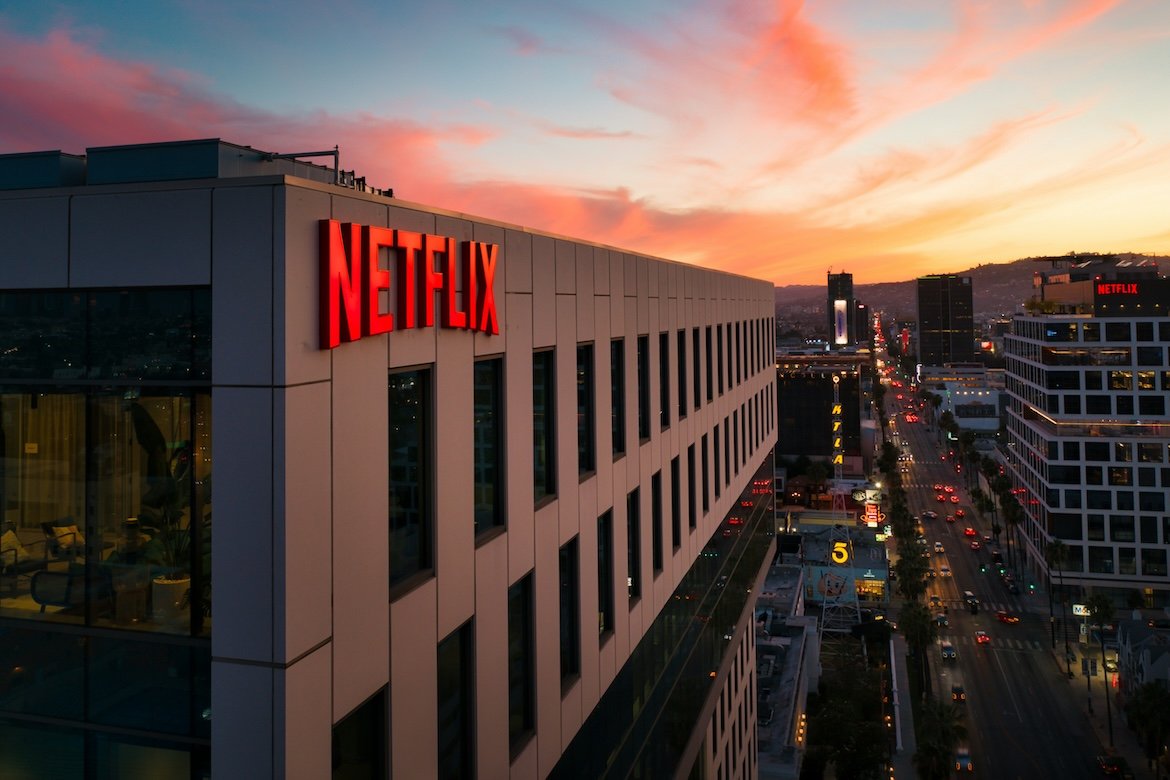
Netflix has agreed to buy Warner Bros. Discovery for $27.75 per share in a deal valuing the transaction at $82.7 billion. The acquisition includes the Warner Bros. film studio and HBO Max, while WBD’s TV networks will be spun off separately.
By Oleg PetrenkoUpdated
3 mins readNetflix has struck a deal to acquire Warner Bros. Discovery for $27.75 per share, giving the transaction a total value of $82.7 billion. The purchase covers the Warner Bros. film studio and HBO Max, while WBD’s television networks will be carved out into a separate entity. Photo: Oleg Petrenko / MarketSpeaker
Netflix announced on Friday that it has reached a definitive agreement to acquire Warner Bros. Discovery (WBD) in a transaction valued at $27.75 per share, or approximately $82.7 billion in total enterprise value. The decision concludes one of the most competitive auctions in recent media history, with bids previously submitted by Paramount Skydance and Comcast.
Under the terms, Netflix will acquire WBD’s iconic Warner Bros. film studio and its streaming platform HBO Max. WBD will continue with its planned separation of its traditional TV networks – including CNN and TNT – which will be spun out into a standalone company before the deal closes.
The acquisition is expected to be completed no earlier than the third quarter of 2026, pending regulatory approval and the completion of WBD’s network spinoff.
Shares of Netflix slipped about 3% in premarket trading following the announcement. WBD shares edged down 1%, while Paramount Skydance declined approximately 2%. Comcast shares were flat.
Why Netflix Is Making Its Biggest Bet Yet
The acquisition marks a pivotal expansion for Netflix as it looks to reinforce its already dominant position in global streaming and secure one of the industry’s richest content libraries. The Warner Bros. studio brings with it decades of film franchises and production capabilities, while HBO Max offers a catalog of premium series and a strong brand identity.
As previously covered, the battle for streaming market share has intensified as consolidation accelerates. Netflix’s move signals confidence in its financial strength and its ability to integrate large-scale media operations – something it has never attempted at this magnitude.
The bidding process itself unfolded rapidly. Paramount Skydance and Comcast were initially considered frontrunners, but Netflix ultimately delivered what insiders described as the “cleanest” and most compelling offer, combining liquidity with strategic alignment.
The deal structure – cash and stock – also underscores Netflix’s willingness to use its market valuation as leverage to secure transformative assets.
What the Acquisition Means for Streaming and Investors
If approved, the merger would create the most expansive content powerhouse in entertainment, positioning Netflix as both a dominant streamer and a major Hollywood studio operator. The addition of Warner Bros. and HBO Max dramatically expands Netflix’s content pipeline and intellectual property portfolio.
However, the transaction also raises questions about regulatory scrutiny. U.S. antitrust authorities have increasingly focused on market concentration in streaming and entertainment distribution. The companies indicated that the deal timeline anticipates a thorough review.
For investors, the acquisition introduces both upside potential – through expanded production capacity and subscription growth – and execution risks. Integrating a legacy studio, a major streaming platform, and a global workforce will require significant operational planning.
Market reaction to the announcement was cautious, with shares across the media sector mostly lower in premarket trading. Investors may be weighing the long-term strategic value of the acquisition against concerns about debt financing, integration complexity, and regulatory headwinds.
As the industry shifts toward fewer, larger players, Netflix’s move signals that the race for premium content is entering a new phase of consolidation and competitive intensity.
The number of dollar billionaires worldwide rose by 287 over the past year, reaching 2,919 individuals as total global billionaire wealth expanded 13% to $15.8 trillion.
By Oleg PetrenkoUpdated
2 mins readThe global billionaire population grew by 287 over the past year, bringing the total to 2,919, while their combined wealth climbed 13% to $15.8 trillion. Photo: Rebecca Leitner / Unsplash
The global billionaire population grew sharply over the past year, with the number of dollar billionaires rising by 287 as of April 2025, according to new research from UBS. The increase marks one of the largest annual expansions ever recorded in the bank’s long-running wealth study, second only to the 416 new billionaires added in 2021 during the post-pandemic market surge.
This year’s additions bring the total number of billionaires worldwide to 2,919, comprising 2,545 men and 374 women. Their combined net worth climbed 13% year over year to $15.8 trillion, reflecting both market gains and rising valuations across private and public assets.
Drivers Behind the Record Wealth Expansion
UBS analysts attribute the surge in billionaire numbers to a combination of strong equity markets, rapid advances in technology and AI-related industries, and a broad rebound in private company valuations. As previously covered, global asset prices have risen significantly in 2025 amid improving risk sentiment and high investor appetite for growth sectors.
The continued concentration of wealth creation in tech, financial services, and industrial innovation has also fueled new billionaire entries. Several regions saw notable increases, with Asia and North America contributing the largest share of new ultra-wealthy individuals.
UBS noted that the pace of billionaire creation this year surpassed all previous periods except 2021, a year defined by extraordinary monetary stimulus and exceptional gains in speculative assets. By contrast, 2025’s growth stems from more diversified sources, including manufacturing, AI infrastructure, biotechnology, and luxury consumer brands.
Implications for Global Markets and Policymakers
The sharp rise in billionaire wealth comes at a time when inequality is increasingly central to economic policy debates. Governments worldwide are discussing wealth taxes, capital gains changes, and broader reforms to address widening income gaps – a trend likely to intensify as ultra-high-net-worth wealth reaches new records.
For markets, the expanding pool of billionaire capital may continue to drive investment into private equity, venture funding, and large-scale AI and infrastructure projects. UBS research shows that wealth concentration tends to support long-term capital formation but also heightens scrutiny on systemic risks tied to asset bubbles and liquidity imbalances.
Investors are watching closely whether the momentum in wealth creation can sustain itself in 2026, especially as central banks weigh future interest-rate paths and global growth shows signs of divergence. The report suggests that billionaire wealth is likely to continue rising but at a slower pace if market volatility increases.
Chinese EV maker Lixiang has introduced Livis smart glasses priced at ¥1,999, offering hands-free vehicle controls, built-in cameras, and an AI assistant as the company expands into consumer tech.
By Oleg PetrenkoUpdated
3 mins readLi Auto launches smart glasses Livis to extend reach of its AI capabilities. Photo: Lixiang
Chinese automaker Lixiang has entered the consumer electronics market with the launch of its Livis smart glasses, a wearable device designed to integrate directly with the company’s vehicles. The glasses, released in China at a retail price of ¥1,999 (about ¥21,800), allow drivers to control multiple car functions hands-free and feature an onboard AI assistant and first-person video recording capabilities.
The product marks Lixiang’s latest effort to expand its ecosystem beyond electric vehicles and into AI-driven hardware. The company plans to roll out the glasses globally through its partnership network with optical brand Zeiss.
Livis smart glasses connect wirelessly to Lixiang vehicles, enabling commands such as requesting the car to exit a parking space, opening the trunk, or adjusting interior climate settings before entering the cabin. The device also includes Sony-built cameras for capturing first-person video and supports up to 19 hours of battery life for daily use.
Driving Lixiang’s Wearable Strategy
Lixiang is looking to differentiate itself in a crowded Chinese EV market by building a broader technology ecosystem similar to strategies seen from competitors integrating software, mobile apps, and smart home systems. Smart glasses add another layer of user interaction at a time when automakers are racing to merge AI with the vehicle experience.
The built-in AI assistant is one of the device’s core features, designed to enable hands-free commands for both vehicle management and general information tasks. As previously covered, EV manufacturers globally are accelerating AI investments to improve the user interface, automation, and convenience.
Lixiang’s decision to include Sony’s first-person camera sensors also targets consumers seeking mixed-reality or lifestyle-driven wearables. The 19-hour battery specification positions the device competitively against early AI-enabled wearables released this year.
Expansion Outlook
Lixiang’s entry into wearables signals the broader trend of EV makers positioning themselves as consumer-tech platforms, not just automakers. While China remains the initial launch market, the company’s planned global distribution through Zeiss partners suggests strong international ambitions.
For investors, the move reflects rising convergence across automotive, AI, and personal electronics. If Livis gains traction, it could strengthen Lixiang’s brand beyond vehicles and create new revenue streams that are less cyclical than auto sales.
However, the global smart-glasses segment remains highly competitive, with major players in Asia and the U.S. pushing aggressively into AI wearables. Lixiang must also navigate regulatory challenges in markets where camera-equipped devices face privacy restrictions.
Still, the combination of EV integration, AI assistance, and a relatively accessible ¥1,999 price point gives the company a notable foothold as wearables evolve into everyday control devices for connected mobility.
Transcend has suspended SSD manufacturing after losing access to NAND chips from Samsung and SanDisk, leaving the company without supply for months and signaling deeper strain in the consumer storage market.
By Oleg PetrenkoUpdated
3 mins readNAND supply tightens globally, forcing Transcend to freeze SSD output. The shortage underscores how AI-driven demand is reshaping chip allocations. Photo: Agnes Lai / Wikimedia
Transcend has suspended all SSD production and shipments after losing access to NAND flash chips from major suppliers Samsung and SanDisk, marking one of the most severe supply disruptions the consumer storage market has seen in years. According to company communications sent to clients, NAND deliveries stopped in October, leaving Transcend without the essential components required to build its solid-state drives.
The stoppage stems from a dramatic shift in chip allocation by Samsung and SanDisk. Both suppliers have redirected large volumes of NAND inventory away from consumer electronics and toward AI infrastructure, hyperscale data centers, and enterprise-grade storage systems – segments experiencing record demand in 2025.
As a result, Transcend said it will be unable to fulfill SSD orders for at least three to five months, warning partners that meaningful supply normalization may not arrive until 2026. Industry distributors have already reported significant price spikes due to constrained availability.
The SSD Shortage Emerged
Samsung and SanDisk, two of the world’s largest NAND producers, have been under mounting pressure to serve AI clusters, cloud providers, and enterprise customers requiring massive amounts of high-performance storage. As previously covered, chipmakers across multiple categories – GPUs, DRAM, and specialty semiconductors – have prioritized AI-related demand, squeezing out lower-margin retail buyers.
For NAND flash, the pivot has been even more pronounced. Data centers are rapidly expanding to support generative AI workloads, while cloud operators are rebuilding storage fleets to keep pace with multi-petabyte training datasets. Compared to consumer SSDs, enterprise orders are larger, more predictable, and far more profitable, incentivizing suppliers to reallocate inventory.
Transcend, which relies heavily on third-party NAND rather than in-house fabrication, is particularly vulnerable to such shifts. With suppliers halting consumer-grade shipments entirely, the company has effectively been cut off from the market.
Industry sources say NAND spot prices have surged sharply since October, with some distributors lifting quotes by double-digit percentages in a matter of weeks. That volatility made it impractical for Transcend to continue sourcing components at scale.
Market Impact
The production freeze underscores how deeply AI-driven demand is reshaping global semiconductor supply chains. For consumers and PC makers, the immediate consequence is higher SSD prices throughout 2025, especially in entry-level and midrange segments where Transcend has been a key supplier.
Retail inventories are expected to tighten further in the coming months, and other consumer-focused storage brands may face similar shortages if suppliers continue prioritizing enterprise customers. Analysts warn that the mismatch between AI infrastructure demand and NAND manufacturing capacity could persist well into next year.
Transcend told clients it expects supply conditions to improve only in 2026, when expanded NAND production from major manufacturers begins to come online. Until then, the company will remain dependent on the timing and volume of resumed shipments from Samsung and SanDisk.
For investors, the disruption highlights the increasing bifurcation of the memory market – with AI and data center demand driving record profitability for chipmakers, while traditional consumer electronics manufacturers bear the cost of constrained supply.
Microsoft pushed back against a report claiming it reduced growth targets for its AI products, even as multiple sales teams reportedly missed aggressive goals for Azure’s Foundry platform.
By Oleg PetrenkoUpdated
3 mins readThe company disputed reports that it lowered AI sales quotas following missed Foundry targets, saying overall AI quotas remain unchanged. Photo: Ed Hardie / Unsplash
Microsoft pushed back on Wednesday against a report suggesting the company lowered growth targets for its artificial intelligence software sales after many sales teams failed to meet those goals last fiscal year. Shares fell more than 2% in early trading before recovering partially, reflecting investor sensitivity to Microsoft’s AI revenue trajectory.
A spokesperson said the company did not reduce sales quotas or growth targets, countering claims that Microsoft had eased expectations following lagging performance across certain units. The report, citing internal sources, claimed the shortfall centered on Azure Foundry, an enterprise platform designed to help companies build and manage autonomous AI agents.
“The Information’s story inaccurately combines the concepts of growth and sales quotas, which shows their lack of understanding of the way a sales organization works and is compensated,” Microsoft’s spokesperson said in a statement. “Aggregate sales quotas for AI products have not been lowered, as we informed them prior to publication.”
Foundry has been positioned as a key part of Microsoft’s enterprise AI strategy, enabling organizations to deploy agents that can autonomously execute multi-step workflows. Despite broad enthusiasm for AI tools across the industry, adoption inside traditional corporations has progressed more slowly than expected.
Internal Misses Highlight Uneven Enterprise AI Adoption
According to the report, fewer than 20% of salespeople in one major U.S. Azure division hit the 50% Foundry growth target. Another unit reportedly failed to meet a more aggressive expectation to double Foundry sales, leading to the quota being reset at a lower level. Microsoft said the article conflated targets and quotas, adding that aggregate AI quotas remain unchanged for the fiscal year.
The company emphasized that it had already communicated this internally before the report was published. The clarification underscores the distinction between adjusting expectations within individual business units versus altering broader corporate targets.
While enterprise AI demand continues to expand, the pace of real-world deployment has been uneven. The report cited examples of companies facing technical challenges integrating AI agents into legacy systems, reflecting a broader industry pattern where interest is high but operational rollouts remain complex.
Major AI platform providers – including OpenAI, Google, Anthropic, Salesforce, and Amazon – have all introduced tools designed to help companies build AI agents. Yet many businesses are still testing early-stage pilots, waiting for clearer ROI, or navigating integration hurdles before committing to full-scale adoption.
Stock Reaction Reflects Investor Focus on AI Growth
Microsoft’s strong AI positioning has been a central factor in its recent stock performance, with investors closely watching momentum across Azure and related enterprise AI services. Even a temporary suggestion of slower-than-expected uptake can heighten scrutiny, given Microsoft’s leadership role and the broader market’s reliance on AI-driven growth.
Despite the brief pullback, analysts noted that Microsoft’s long-term AI strategy remains intact, supported by its cloud footprint, developer ecosystem, and deep integration of AI capabilities across its product stack.
For now, the company is working to reinforce confidence that its AI targets remain ambitious and unchanged – even as adoption patterns vary across customer segments and internal sales teams adjust to the rapid evolution of enterprise AI demand.
Prada has finalized its $1.4 billion purchase of Versace, bringing the iconic fashion house under its umbrella after years of pursuit and securing full regulatory approval.
By Oleg PetrenkoUpdated
3 mins readPrada finalizes purchase of fashion rival Versace for $1.4 billion. Photo: Oleg Petrenko / MarketSpeaker
Prada has officially completed its long-anticipated acquisition of Versace in a deal valued at approximately $1.4 billion, closing one of the luxury sector’s most significant transactions of the year. The Italian fashion group confirmed the purchase after receiving all regulatory approvals, marking the beginning of a new chapter for both storied houses.
The agreement, first signed in April, transfers Versace from its previous owner, U.S.-based Capri Holdings. The sale followed Capri’s failed attempt to merge with Tapestry, a deal blocked by antitrust regulators. For Prada, the acquisition represents a strategic win in a courtship that insiders say stretched back several years.
Lorenzo Bertelli, son of founders Miuccia Prada and Patrizio Bertelli, has said he will assume the role of executive chairman at Versace when integration is complete. Bertelli noted that discussions with Versace date back to the COVID-19 period and restarted quickly after Capri’s canceled tie-up.
The $1.375 billion all-cash deal strengthens Prada Group’s portfolio, placing Versace’s bold, glamorous identity alongside Prada’s minimalist aesthetic and Miu Miu’s youth-oriented branding. The company has signaled plans to revitalize Versace after uneven performance in recent years, positioning the brand for a new growth phase under Italian ownership.
Capri Holdings said proceeds from the sale will be used to reduce debt and streamline its remaining operations, which include Michael Kors and Jimmy Choo.
Versace’s creative director Donatella Versace publicly endorsed the acquisition, marking the announcement with a tribute to her late brother and brand founder, Gianni Versace. Sharing an archival photograph of Gianni and Miuccia Prada, she wrote that the day carried both symbolic and emotional weight as the brand entered the Prada family.
Prada Pursued Versace
Prada’s move underscores the accelerating consolidation within the global luxury sector, where scale, supply chain efficiency, and brand diversification have become competitive imperatives.
Versace brings a globally recognized name, a deep heritage, and strong potential for revitalization. Prada has long viewed the label as a natural complement to its portfolio, offering stylistic contrast and cross-market appeal. As previously covered, demand for high-end fashion has rebounded unevenly in the post-pandemic era, elevating the importance of brand strength and operational resilience.
The acquisition also bolsters Prada’s position against larger European luxury conglomerates, particularly LVMH and Kering, which have expanded aggressively through high-profile purchases.
Luxury Markets and Investors
For the luxury industry, the takeover signals renewed confidence in brand-led expansion and Italian craftsmanship. Prada plans to focus on operational integration, retail optimization, and product refinement to restore Versace’s momentum. Analysts expect increased investment in accessories, leather goods, and high-margin categories.
Investors view the acquisition as a strategic bet on long-term synergies between the brands, though the near-term focus remains on execution and restructuring. Capri Holdings, meanwhile, gains financial breathing room as it reorients its business, while Prada positions itself for greater global influence.
The combined group is now one of the most prominent Italian-led forces in global luxury — a rarity in an industry dominated by French conglomerates — and could influence further consolidation trends across Europe.
Netflix has reportedly made a largely cash offer to acquire Warner Bros. Discovery in a deal valued at roughly $59 billion, positioning the streaming giant to gain control of HBO, CNN, and the Warner Bros. film studio.
By Oleg PetrenkoUpdated
3 mins readNetflix makes cash offer to buy Warner Bros. Discovery. Photo: Venti Views / Unsplash
Netflix is advancing negotiations to acquire Warner Bros. Discovery in a deal estimated at about $59 billion, marking what could become one of the most consequential media mergers in years. The streaming leader has reportedly submitted a predominantly cash offer as Warner Bros. Discovery moves through the second phase of its formal sale process.
Sources say Netflix is working on a bridge loan worth tens of billions of dollars to fund the potential acquisition, which would add HBO, CNN, the Warner Bros. film studio, and Discovery’s unscripted catalog to its content empire. With more than 280 million global subscribers, the company is seeking to solidify its position as the dominant force in global entertainment.
Warner Bros. Discovery put itself up for sale in October after receiving multiple unsolicited proposals, shelving an earlier plan to split the business into separate streaming/studio and cable divisions. The company had initially been courted by Paramount, now under the control of the Ellison family following a high-profile takeover. Paramount’s CEO David Ellison made several bids before CEO David Zaslav initiated the broad auction.
According to people familiar with the discussions, other interested bidders include Comcast, parent of NBCUniversal, raising the stakes in what has become a competitive and high-profile fight for one of Hollywood’s most iconic studios.
Why Netflix Is Pursuing the Deal Now
Netflix’s interest signals its drive to fortify content ownership as streaming competition intensifies and production costs rise. Gaining control of HBO, Warner Bros. Studios, and Discovery’s extensive library would significantly expand Netflix’s premium content footprint while reducing licensing costs.
The acquisition would also secure franchises such as “Harry Potter,” “Batman,” and high-performing HBO originals – assets that could bolster subscriber retention and international growth.
Industry insiders note that the deal could dramatically accelerate Netflix’s shift from a streaming-first platform into a vertically integrated entertainment group rivaling Disney. As previously covered, Netflix has sought to expand its production capabilities amid rising content budgets across Hollywood.
However, the move is expected to face heavy regulatory examination. U.S. antitrust officials have signaled increased scrutiny of large media consolidations, and Netflix’s dominance in streaming makes the deal particularly sensitive. Analysts say approvals may hinge on whether regulators believe the merger could restrict theatrical releases or reduce consumer choice.
High-profile industry figures have already voiced concerns. Director James Cameron recently said such a takeover would be “a disaster,” arguing that Netflix’s strategy could further reduce the number of major films receiving traditional cinema releases.
What the Proposed Merger Means for Hollywood and Investors
If completed, the transaction would reshape the U.S. media landscape by combining the world’s largest streaming platform with one of Hollywood’s most storied content libraries. Analysts say the deal could accelerate consolidation across the entertainment sector, pressuring rivals to scale through acquisitions or partnerships.
For Warner Bros. Discovery, the sale offers a path out of years of financial strain tied to debt, shifting cable revenues, and expensive streaming investments. The company’s market value has hovered near $59 billion as it navigates structural industry challenges.
Investors in both companies are watching closely, as the transaction could reshape long-term earnings profiles. Netflix would take on significant financing obligations but could unlock powerful cost efficiencies through content integration. Warner Bros. Discovery shareholders, meanwhile, could see a premium if a bidding contest develops between Netflix, Comcast, and other potential suitors.
More details are expected in the coming days as talks advance and financing structures finalize.
Join our list to receive latest Blockchain, Crypto & Fintech news:
WordPress database error: [Table 'u752143311_Kem9N.wp_coingecko_coins' doesn't exist]
            SELECT coins.*, meta.post_id as post_id
            FROM `wp_coingecko_coins` coins
            INNER JOIN wp_postmeta meta ON (meta.meta_key = 'wpcf-coin-main-tag' AND meta.meta_value = coins.slug )
            ORDER BY market_cap_usd
            DESC LIMIT 9

 By Oleg Petrenko
Updated
3 mins read
By Oleg Petrenko
Updated
3 mins read