Deprecated: rtrim(): Passing null to parameter #1 ($string) of type string is deprecated in /home/u752143311/domains/marketspeaker.com/public_html/wp-includes/formatting.php on line 2829
Deprecated: rtrim(): Passing null to parameter #1 ($string) of type string is deprecated in /home/u752143311/domains/marketspeaker.com/public_html/wp-includes/formatting.php on line 2829
Oracle stock surged after the company agreed to join an investor consortium set to operate TikTok’s U.S. business, boosting optimism around cloud revenue growth and strategic relevance in geopolitics-driven tech deals.
By Oleg PetrenkoUpdated
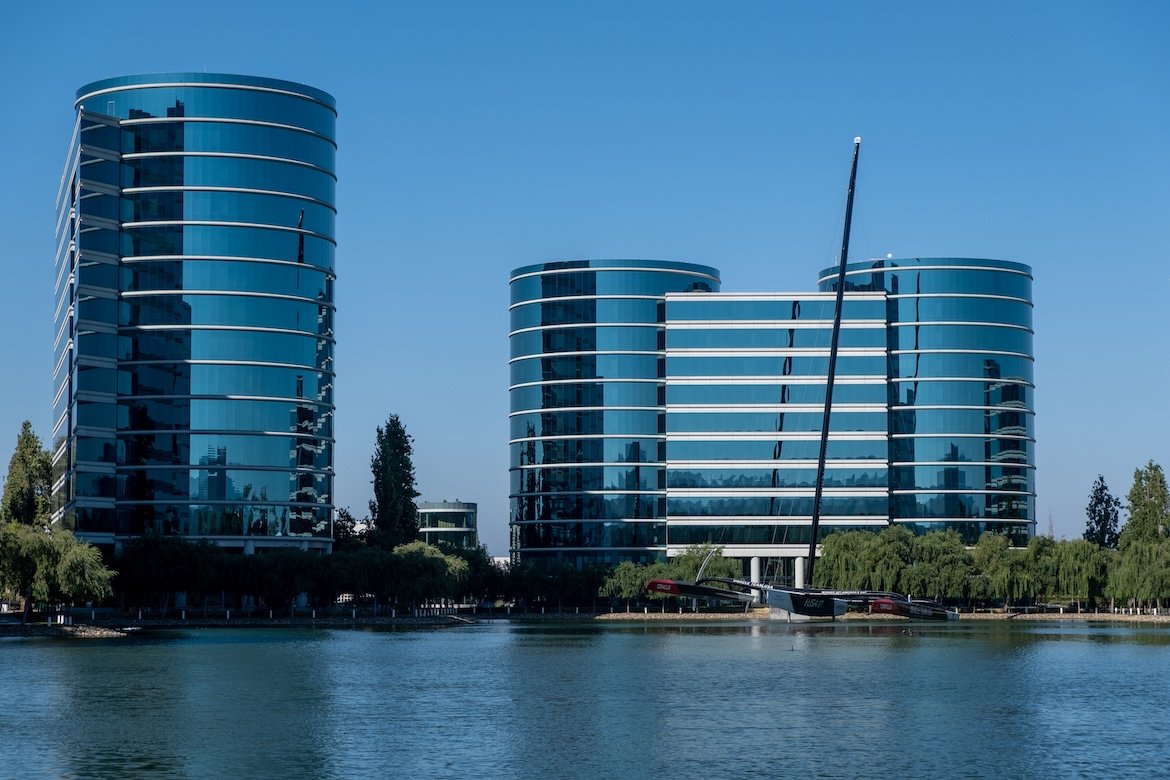
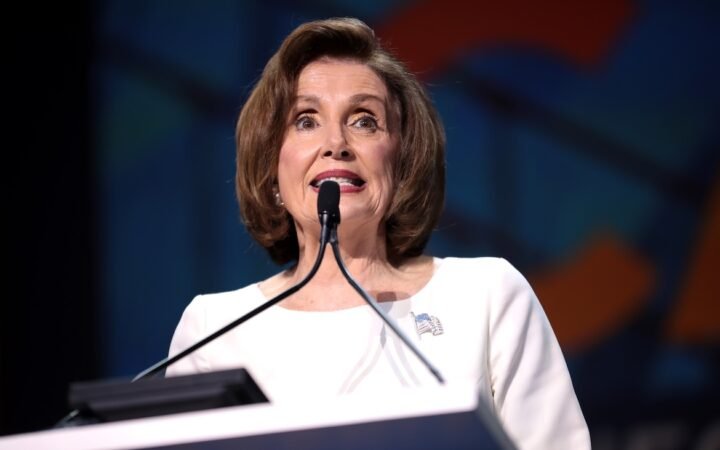
2 mins readOracle shares jumped after the company agreed to participate in an investor group overseeing TikTok’s U.S. operations, lifting expectations for stronger cloud revenues and a larger strategic role in geopolitically sensitive tech deals. Photo: Gregory Varnum / Wikimedia
Oracle shares jumped 7% after the company confirmed it has joined an investor group preparing to operate TikTok’s U.S. business, a move that immediately lifted investor sentiment and highlighted Oracle’s growing role at the intersection of cloud infrastructure and geopolitics.
The rally reflects market confidence that the deal could strengthen Oracle’s cloud services business while deepening its ties with one of the world’s most influential social media platforms. The announcement also comes amid renewed political pressure in Washington over TikTok’s ownership and data security concerns tied to China.
Oracle Is Involved in the TikTok U.S. Deal
Oracle’s participation builds on an existing relationship with TikTok, as the company already provides cloud infrastructure services for the platform’s U.S. user data. By joining the investor consortium, Oracle positions itself not only as a technology supplier but also as a strategic stakeholder in TikTok’s American operations.
The move aligns with broader efforts to address U.S. regulatory demands that TikTok’s domestic business operate independently from its Chinese parent, ByteDance. Political momentum has intensified under former President Donald Trump’s renewed calls to limit Chinese influence over critical digital platforms used by millions of Americans.
For Oracle, the deal offers more than political alignment. As previously covered, the company has been aggressively expanding its cloud business to compete with hyperscalers, and TikTok represents a high-volume, data-intensive client. Greater involvement could translate into longer-term infrastructure contracts and higher recurring revenue.
Market Impact
Investors responded quickly, pushing Oracle shares up 7% in a single session as expectations grew that the partnership could accelerate cloud revenue growth and enhance Oracle’s competitive positioning. The move also helped offset recent concerns about enterprise IT spending and cloud pricing pressure.
Still, risks remain. The structure of TikTok’s U.S. operations, regulatory approvals, and potential political shifts could all affect the deal’s long-term viability. Analysts also note that managing such a high-profile asset could expose Oracle to increased regulatory scrutiny and reputational risk.
Looking ahead, markets will watch for clarity on governance, data control, and the financial terms of the arrangement. Any confirmation of expanded cloud workloads or guaranteed long-term contracts could further support Oracle’s valuation, while setbacks in negotiations may reverse some of the recent gains.
Artificial intelligence is emerging as a major environmental burden, with new research estimating massive electricity consumption, water use, and carbon emissions tied to global data centers in 2025.
By Oleg PetrenkoUpdated
3 mins readArtificial intelligence is increasingly straining the environment, with new research pointing to enormous power demand, water consumption, and carbon emissions from global data centers in 2025. Photo: NASA / Unsplash
Artificial intelligence is rapidly becoming one of the most resource-intensive technologies on the planet, according to new research highlighting the sector’s growing environmental footprint. In 2025 alone, AI systems are estimated to have consumed electricity and water on a scale comparable to a major global metropolis, intensifying concerns about emissions, transparency, and long-term sustainability.
Researchers estimate that AI-related computing generated up to 80 million metric tons of carbon dioxide emissions this year – roughly equivalent to the annual emissions of New York City. At the same time, global data centers supporting AI workloads are believed to have used as much as 760 billion liters of water, primarily for cooling high-performance servers.
AI’s Resource Appetite Is Accelerating
The surge in energy and water use is being driven by explosive growth in large language models, image generators, and AI-powered enterprise tools. Training and running these systems requires dense clusters of GPUs operating around the clock, pushing data centers to consume electricity at unprecedented rates.
Cooling has emerged as a critical bottleneck. As servers grow more powerful, operators increasingly rely on water-intensive cooling systems to prevent overheating. This has led to rising strain on local water supplies, particularly in regions already facing scarcity.
A major challenge for researchers is the lack of transparency. Large technology companies do not disclose detailed breakdowns of how much electricity or water their AI operations consume. As a result, scientists are forced to estimate usage based on partial data, infrastructure capacity, and industry benchmarks.
Experts warn that this opacity makes it difficult to assess the true environmental cost of AI or to design effective policy responses. As previously covered, calls are growing for standardized reporting requirements tied to energy use and emissions from data centers.
Means for Markets and Policy
The environmental impact of AI is increasingly intersecting with regulation, investment decisions, and public policy. Governments are under pressure to balance AI-driven economic growth with climate commitments, while utilities face rising demand from hyperscale data centers competing with households and industry.
For investors, sustainability concerns could become a material risk factor for major technology firms. Higher energy costs, water restrictions, or carbon pricing could raise operating expenses and complicate expansion plans for AI infrastructure.
Looking ahead, analysts say mitigation will require a combination of more efficient chips, alternative cooling technologies, renewable energy integration, and clearer disclosure standards. Without such measures, experts warn that unchecked AI expansion could trigger environmental stress severe enough to reshape how and where future data centers are built.
Tech entrepreneur and biohacker Bryan Johnson claims artificial intelligence and experimental medicine could make human immortality achievable within 15 years, despite unresolved risks.
By Oleg PetrenkoUpdated
2 mins readBryan Johnson says AI-driven medicine and radical biohacking could make human immortality possible by 2039, though cancer and side effects remain major risks. Photo: Katriece Ray / Wikimedia
Bryan Johnson, a tech entrepreneur turned high-profile biohacker, believes humanity could reach functional immortality by 2039, powered by artificial intelligence, advanced therapies, and aggressive self-experimentation. Johnson, known for spending millions annually to slow his biological aging, says AI will soon act as a “chief physician,” optimizing human health beyond current medical limits.
Johnson argues that the convergence of AI diagnostics, personalized medicine, and regenerative technologies could dramatically extend human lifespan. However, he openly acknowledges that the path toward immortality is still riddled with “bugs,” including elevated cancer risks and severe unintended side effects.
AI as the Core Driver of Radical Longevity
At the center of Johnson’s thesis is the belief that AI systems will soon outperform human doctors in diagnosing, predicting, and preventing disease. He envisions AI continuously monitoring biological data, testing treatment strategies, and updating interventions in real time to keep the human body in a near-optimal state.
Johnson has already put parts of this vision into practice. His routine includes constant biometric tracking, experimental drug regimens, and the use of AI tools to evaluate medical decisions. He has also conducted controversial experiments, including blood plasma exchanges and the use of lab-grown organ clones to test therapies before applying them to his own body.
According to Johnson, today’s medicine is reactive, while AI-powered healthcare will become predictive and preventative. That shift, he argues, is what makes radical life extension plausible within the next two decades.
Risks, Ethics, and the Limits of Biology
Despite his optimism, Johnson concedes that major biological and ethical hurdles remain. Accelerating cell regeneration and suppressing aging mechanisms could unintentionally increase the likelihood of cancer or other life-threatening conditions. He describes these dangers as unresolved engineering problems rather than insurmountable barriers.
Critics argue that Johnson’s approach reflects a broader Silicon Valley mindset that treats the human body like software – something to be debugged, optimized, and upgraded. Medical experts warn that aggressive experimentation, even with AI guidance, carries risks that are not fully understood and may not scale safely to the wider population.
There are also questions about access and inequality. Even if extreme longevity becomes possible, it may initially be available only to the ultra-wealthy, potentially widening global health disparities.
Still, Johnson insists that pushing boundaries is necessary. In his view, immortality is no longer science fiction but an engineering challenge – one that AI, biotechnology, and bold experimentation could solve sooner than many expect.
Nvidia is preparing to scale back production of its GeForce RTX 50 graphics cards as surging memory and storage prices dampen consumer upgrade demand, particularly in key Asian markets.
By Oleg PetrenkoUpdated
3 mins readNvidia is set to cut GeForce RTX 50 output as higher RAM and SSD prices curb PC upgrade demand, with the impact most visible across major Asian markets. Photo: NVIDIA GeForce United Kingdom / Facebook
Nvidia is preparing to reduce production of its next-generation GeForce RTX 50 graphics cards, responding to weaker-than-expected consumer demand driven by sharply rising prices for key PC components such as memory and solid-state drives.
According to industry sources in Asia, Nvidia is aiming to prevent excess inventory by tightening supply, particularly in China, where shipments of RTX 50 GPUs could decline by 30% to 40% compared with the first half of 2025. The adjustment is expected to affect Nvidia’s most popular mid-range models first, including the RTX 5070 Ti and RTX 5060 Ti, both equipped with 16 gigabytes of video memory.
Rising Costs Are Slowing Consumer Upgrades
The planned production cut comes as the broader PC hardware market faces renewed cost pressures. Prices for DRAM and NAND flash memory have climbed significantly in recent months as suppliers redirect capacity toward data centers and artificial intelligence infrastructure, where margins are higher and demand remains robust.
As previously covered, memory manufacturers have increasingly prioritized enterprise and AI customers, reducing availability for consumer electronics. The resulting price increases have made full system upgrades more expensive, prompting many gamers and PC enthusiasts to delay purchases rather than absorb higher total build costs.
Market participants say Nvidia is acting preemptively to avoid a repeat of past cycles where oversupply led to steep discounts and channel inventory corrections. By controlling output, the company aims to support pricing discipline across its retail partners while aligning shipments more closely with actual end-user demand.
This cautious stance contrasts with Nvidia’s data center business, where demand for AI accelerators continues to outstrip supply. However, consumer GPUs remain sensitive to macroeconomic conditions, household budgets, and component pricing, making supply management critical.
Implications for the GPU Market and Investors
A pullback in RTX 50 production could have mixed implications for the broader graphics card market. In the near term, tighter supply may help stabilize prices and prevent sharp markdowns, particularly for mainstream models that drive the bulk of unit sales. For consumers, that could mean fewer promotional discounts but better availability balance over time.
For Nvidia, the move signals a more disciplined approach to its gaming segment as it increasingly relies on AI-driven growth elsewhere. While gaming remains an important revenue stream, it no longer dominates the company’s valuation narrative, which is now heavily tied to data centers and AI infrastructure spending.
Investors will be watching closely to see whether the slowdown in consumer GPU demand proves temporary or structural. If memory prices remain elevated into 2026, prolonged weakness in PC upgrades could weigh on the gaming segment, even as Nvidia’s overall earnings remain supported by enterprise demand.
The situation also underscores a broader shift in the semiconductor industry, where capital and capacity are flowing decisively toward AI workloads, sometimes at the expense of traditional consumer markets.
Executives at Elon Musk’s xAI have discussed the possibility that artificial general intelligence could surpass human capabilities as early as 2026, according to an internal account.
By Oleg PetrenkoUpdated
3 mins readExecutives at Elon Musk’s xAI have privately raised the prospect that artificial general intelligence could exceed human-level abilities as early as 2026, according to an internal source. Photo: Nahrizul Kadri / Unsplash
xAI executives are privately entertaining the possibility that artificial general intelligence, or AGI, could exceed human-level intelligence as soon as 2026, according to an insider familiar with internal discussions at the company.
The remarks, attributed to Elon Musk during a closed-door meeting, suggest a far more aggressive timeline for AGI than many public forecasts. AGI refers to a theoretical form of artificial intelligence capable of understanding, learning, and applying knowledge across the full range of intellectual tasks humans can perform, rather than operating within narrow, predefined domains.
The disclosure adds to mounting debate across Silicon Valley and global markets about whether recent advances in large-scale AI models are pushing the industry closer to a decisive technological inflection point.
Why xAI Sees AGI Arriving Faster
xAI was founded with the explicit goal of building advanced AI systems that can reason, adapt, and generalize across domains. People familiar with the company’s internal discussions say Musk has pointed to rapid gains in model reasoning, tool use, and autonomous decision-making as evidence that AGI may emerge sooner than expected.
Recent breakthroughs in multi-modal AI systems, long-context reasoning, and agent-based models have fueled this optimism. Industry benchmarks increasingly show AI outperforming human experts in coding, data analysis, and complex problem-solving tasks. Within xAI, leadership reportedly views these trends as compounding rather than linear.
Musk has previously warned that AI development is accelerating faster than regulatory frameworks and safety protocols. Internally, executives are said to be focused not only on capability gains, but also on alignment and control mechanisms that could prevent unintended consequences once systems approach or surpass human-level intelligence.
As previously covered, Musk has repeatedly argued that AGI represents both the greatest opportunity and the greatest existential risk facing humanity.
Implications for Markets, Policy, and Society
If AGI were to materialize on a 2026 timeline, the implications would be profound for labor markets, productivity, national security, and capital allocation. Entire categories of knowledge work could be automated at unprecedented speed, reshaping employment patterns and corporate cost structures.
For investors, expectations of near-term AGI could accelerate capital flows into AI infrastructure, data centers, advanced chips, and software platforms, while raising questions about long-term valuations across traditional industries. Policymakers would also face mounting pressure to define governance frameworks for systems capable of autonomous reasoning and decision-making.
At the same time, skepticism remains widespread. Many researchers argue that current AI systems, while powerful, still lack genuine understanding, self-directed learning, and robust generalization. They caution that extrapolating recent progress into firm AGI timelines risks overstating near-term capabilities.
Still, the fact that leading AI labs are openly discussing human-level AGI within the next two years highlights how dramatically expectations have shifted. Whether or not the 2026 target proves realistic, the conversation itself signals that the race toward general intelligence is entering a decisive phase.
OpenAI has rolled out ChatGPT Images, a next-generation image generation and editing model that significantly improves speed, precision, and visual consistency, while remaining free for all users.
By Oleg PetrenkoUpdated
3 mins readOpenAI has introduced ChatGPT Images, a new image generation and editing model that delivers faster performance, greater accuracy, and more consistent visuals, while remaining free to use for all users. Photo: OpenAI / X
OpenAI has introduced ChatGPT Images, its most powerful image generation and editing system to date, positioning the tool as a major upgrade for creatives, marketers, and product teams. Built on a new underlying model, the release marks a significant step toward making advanced visual creation as seamless and flexible as text-based AI tools.
Introducing ChatGPT Images, powered by our flagship new image generation model.
– Stronger instruction following
– Precise editing
– Detail preservation
– 4x faster than before
The new image generator is now available to all ChatGPT users at no cost, expanding access to capabilities that previously required specialized design software. OpenAI says the model delivers cleaner outputs, stronger prompt understanding, and more reliable visual consistency across edits.
A leap in speed, precision, and creative control
ChatGPT Images generates visuals up to four times faster than the previous model, significantly reducing iteration time for users working under tight deadlines. More importantly, OpenAI has improved the system’s ability to follow complex prompts, allowing for precise adjustments to poses, lighting, clothing, and backgrounds without disrupting the overall composition.
The model is designed to preserve fine details such as facial features, object structure, artistic style, and spatial relationships. Textures, lighting gradients, and small visual elements appear sharper and more coherent, addressing common issues that plagued earlier AI image generators.
OpenAI has emphasized that the tool functions as a “neural Photoshop,” enabling selective edits rather than forcing users to regenerate entire images. This makes it possible to refine visuals incrementally, a critical feature for professional workflows in design, branding, and user interface development.
Implications for creators, businesses, and AI competition
The release underscores OpenAI’s strategy of embedding advanced creative tools directly into ChatGPT, reducing reliance on external software and lowering barriers for non-technical users. Designers, marketers, social media managers, and UI/UX teams can now produce and refine visuals within a single AI-driven environment.
The move also intensifies competition in the generative AI space, where rivals are racing to offer faster, more controllable multimodal models. By making ChatGPT Images free, OpenAI is signaling confidence in scale and ecosystem lock-in rather than short-term monetization.
For businesses, the tool has the potential to compress production cycles, reduce outsourcing costs, and democratize access to high-quality visual assets. As previously covered, OpenAI has increasingly focused on practical, workflow-oriented AI products rather than experimental demos.
With ChatGPT Images, OpenAI is betting that image creation and editing will become a core everyday AI use case, much like writing and coding, further blurring the line between creative software and conversational AI.
Elon Musk has become the first individual in history to surpass a $600 billion net worth after a major increase in SpaceX’s valuation, pushing his fortune to unprecedented levels.
By Oleg PetrenkoUpdated
3 mins readElon Musk has made history by becoming the first person to exceed a $600 billion net worth, driven by a sharp rise in SpaceX’s valuation that propelled his wealth to record levels. Photo: Gage Skidmore / Wikimedia
Elon Musk has crossed a historic financial milestone, becoming the first person ever with a net worth exceeding $600 billion, following a dramatic jump in the valuation of SpaceX. The increase underscores both the scale of private market enthusiasm for space technology and Musk’s growing dominance among global billionaires.
The wealth surge comes after SpaceX completed a tender offer earlier this month that valued the company at approximately $800 billion, doubling its valuation from August. Musk owns an estimated 42% of the rocket maker, and the revaluation added roughly $168 billion to his personal fortune, lifting his estimated net worth to around $677 billion.
Why SpaceX Is Driving Musk’s Wealth Surge
SpaceX has rapidly become the centerpiece of Musk’s fortune, overtaking his holdings in Tesla as his most valuable asset. At the current valuation, Musk’s stake in SpaceX alone is estimated at about $336 billion. The company’s growth has been fueled by strong demand for launch services, the expansion of its satellite business, and expectations of long-term government and commercial contracts.
The tender offer also revived speculation around a future initial public offering. SpaceX is targeting an IPO as early as 2026, with internal discussions pointing to a potential valuation of up to $1.5 trillion. If achieved, such a listing could push Musk into trillionaire territory, a level of wealth never before reached.
As previously covered, private-market valuations in high-growth technology sectors have rebounded sharply, reflecting renewed investor appetite for large-scale innovation platforms with global reach.
Broader Implications for Markets and Wealth Concentration
Musk’s wealth surge highlights a broader trend of extreme wealth concentration driven by private technology companies. While public markets remain volatile, private valuations for dominant platforms have accelerated, often disconnected from near-term profitability.
Tesla remains a significant part of Musk’s portfolio, with his roughly 12% stake valued at about $197 billion. Additional upside remains possible through a controversial long-term compensation plan approved by shareholders, which could grant Musk substantial additional equity if Tesla meets aggressive performance targets over the next decade.
The milestone has reignited debate around executive compensation, private-market transparency, and the growing gap between ultra-wealthy founders and the broader economy. Analysts note that while such valuations reflect optimism around future technologies, they also increase systemic exposure to a small number of individuals and companies.
With SpaceX’s IPO plans advancing and Tesla pursuing ambitious growth goals, Musk’s financial trajectory continues to challenge historical benchmarks for personal wealth, reshaping discussions around capital markets and economic power.
Volkswagen will close its Dresden factory, marking the first shutdown of a German plant in the automaker’s 88-year history, as energy costs, trade pressures, and falling competitiveness hit the industry.
By Oleg PetrenkoUpdated
2 mins readVolkswagen is set to shut its Dresden plant, marking the first closure of a German factory in the automaker’s 88-year history, as high energy costs, trade headwinds, and weakening competitiveness weigh on the industry. Photo: Volkswagen / X
Volkswagen is set to close its Dresden automobile plant, marking the first shutdown of a production facility in Germany in the company’s 88-year history. The move underscores the growing strain on Europe’s largest economy as manufacturers grapple with higher costs, weaker demand, and shifting global trade dynamics.
The Dresden factory, once a symbol of German engineering prowess, produced up to 200,000 vehicles annually at its peak. Its closure represents not only a milestone for Volkswagen but also a broader signal of the challenges facing Germany’s industrial sector.
Economic and Energy Pressures Mount
Volkswagen cited a combination of economic and energy-related factors behind the decision. Germany’s loss of access to inexpensive energy has sharply increased production costs, squeezing margins across energy-intensive industries such as automotive manufacturing.
These pressures have been compounded by a broader economic slowdown and declining competitiveness. Volkswagen has already reduced its workforce significantly, with approximately 35,000 jobs cut as part of wider restructuring efforts. The Dresden shutdown is seen as a continuation of that cost-cutting drive rather than an isolated decision.
Trade developments have also weighed on the outlook. Additional U.S. tariffs on European-made vehicles have added to export challenges, while the knock-on effects of sanctions on Russia have disrupted traditional energy and supply relationships. As previously covered, Germany’s manufacturing sector has struggled to adapt quickly to this new operating environment.
Implications for Germany’s Industrial Model
The closure raises broader questions about the future of Germany’s export-driven industrial model. Long reliant on affordable energy, stable trade ties, and high-value manufacturing, the country now faces a recalibration as global supply chains fragment and geopolitical risks rise.
For Volkswagen, the move reflects a strategic shift toward concentrating production in more cost-efficient locations while accelerating investment in electrification and digitalization. However, analysts warn that continued plant closures could erode Germany’s role as the core manufacturing hub of Europe.
Investors and policymakers alike are watching closely. The shutdown may intensify calls for government support measures, including energy price relief and industrial policy reforms, aimed at restoring competitiveness. Without structural changes, economists caution that similar decisions could follow across other manufacturers.
The Dresden plant’s closure stands as a stark reminder that even the most established industrial champions are not immune to prolonged economic and energy shocks.
Apple CEO Tim Cook earns more in seven hours than the average American makes in a year, underscoring the growing divide between executive compensation and household income.
By Oleg PetrenkoUpdated
3 mins readApple CEO Tim Cook makes more in just seven hours than the typical U.S. worker earns in an entire year, highlighting the widening gap between executive pay and household incomes. Photo: Tim Cook / X
Apple Chief Executive Officer Tim Cook’s compensation has once again drawn attention to the scale of income inequality in the United States, after new comparisons showed he earns more in just seven hours than the average American makes in an entire year.
Based on Apple’s latest disclosed compensation figures, Cook received nearly $75 million in total pay last year, including salary, stock awards, and incentives. By contrast, the typical U.S. worker earns roughly $62,000 annually. At that pace, Cook effectively matches an average annual salary before the workday is even over.
The disparity becomes even more striking when translated into everyday purchases. Cook earns enough in just over 20 minutes to buy a $3,000 MacBook Pro, and less than eight minutes to afford a $1,100 iPhone Pro. In roughly two days of work, his compensation equals the price of an average U.S. home, currently estimated at around $439,000.
Executive Pay vs. Household Income
Cook’s compensation reflects Apple’s continued financial strength, with the company generating hundreds of billions of dollars in annual revenue and maintaining one of the largest market capitalizations globally. Apple’s board has repeatedly argued that Cook’s pay aligns with shareholder interests, as the bulk of his compensation is tied to long-term stock performance and operational targets.
Still, the comparison highlights a broader trend across corporate America. Executive pay has risen sharply over the past several decades, while wage growth for many workers has struggled to keep pace with inflation, housing costs, and healthcare expenses. Studies consistently show that CEO-to-worker pay ratios have expanded significantly, particularly in large technology firms.
Supporters of high executive compensation argue that leading a global company like Apple involves extraordinary responsibility, strategic decision-making, and accountability to investors. Critics counter that the scale of the gap reflects structural imbalances in how value is distributed across the economy.
Broader Implications for Inequality Debate
The timing of the renewed scrutiny comes as policymakers and economists debate income inequality, labor market resilience, and the sustainability of consumer spending. While unemployment remains relatively low, many households face affordability pressures, particularly in housing and education.
High-profile pay comparisons, such as Cook’s, often reignite discussions around executive compensation governance, tax policy, and corporate responsibility. Some shareholders and advocacy groups have pushed for greater transparency and restraint, while others focus on tying pay more closely to long-term performance and workforce outcomes.
As previously covered, technology leaders have increasingly become symbols in the broader conversation about wealth concentration in the digital economy. Cook’s earnings are not unusual among top executives, but they offer a stark illustration of how far compensation at the top has diverged from the experience of the average worker.
Google has begun testing real-time speech translation in Google Translate using its Gemini AI model, enabling live conversations through any wireless headphones across more than 70 languages.
By Oleg PetrenkoUpdated
3 mins readGoogle has started testing a Gemini-powered real-time speech translation feature in Google Translate, allowing live multilingual conversations through any wireless headphones in over 70 languages. Photo: Google / X
Google is taking a major step toward frictionless global communication by introducing real-time speech translation that works with any wireless headphones. The new feature, powered by the company’s Gemini artificial intelligence model, is currently being tested on Android devices in the United States, India, and Mexico, with support for more than 70 languages.
Plus, we’re rolling out a beta version of live translation that brings real-time, natural-sounding translations to your headphones with the help of Gemini’s native speech-to-speech translation capabilities. 🎧 See everything that’s new in Google Translate ↓…
The update allows users to hear live translations directly through Bluetooth headphones during conversations, removing the need to constantly look at a phone screen. Google says the goal is to make multilingual communication feel more natural and continuous, especially in everyday scenarios such as travel, work meetings, and casual interactions.
Google Is Expanding Real-Time Translation
The move highlights Google’s strategy to differentiate itself through platform-agnostic AI tools rather than hardware exclusivity. Unlike Apple’s approach, where similar real-time translation features are limited to a small number of AirPods models, Google’s solution works across virtually all wireless headphones.
By leveraging Gemini, Google has improved speech recognition accuracy, context awareness, and response speed, making translations feel closer to real conversations rather than delayed interpretations. The system processes spoken input, translates it in real time, and delivers the output audio with minimal lag.
This broader compatibility could give Google a significant advantage in global markets, particularly in regions where users rely on a wide variety of affordable wireless audio devices. It also reinforces Google Translate’s position as one of the most widely used language tools worldwide.
What It Means for Users and the AI Race
For consumers, the feature lowers barriers to cross-language communication without requiring new hardware purchases. Google has confirmed that a wider global rollout is planned, along with an iOS version expected in 2026, which would extend the feature beyond the Android ecosystem.
From a competitive standpoint, the update underscores how AI is reshaping consumer software. Real-time translation is no longer a niche capability but a core feature in the race to build everyday AI assistants. As previously covered, Google has been rapidly integrating Gemini across its products, from search to productivity tools, positioning AI as a foundational layer rather than an add-on.
If widely adopted, real-time translation through common headphones could change how people interact across borders, reducing language barriers in both professional and personal settings. It also raises the bar for rivals, who may face pressure to offer similarly open and scalable solutions.
A 20-year-old Canadian lottery winner declined a $1 million lump-sum payout in favor of a guaranteed $1,000 weekly lifetime annuity, a choice financial experts say offers long-term stability and protection from impulse spending.
By Oleg PetrenkoUpdated
3 mins readA 20-year-old Canadian lottery winner turned down a $1 million lump-sum payment and instead chose a guaranteed $1,000 weekly annuity for life - a move financial experts say provides greater long-term security and reduces the risk of impulsive overspending. Photo: Loto-Québecy / X
A 20-year-old Canadian woman who won the “Gagnant à Vie” lottery has chosen to forgo a $1 million lump-sum payout and instead receive $1,000 per week for life, a decision that has captured widespread attention for its unusually disciplined financial approach. The lifetime annuity, which equals $52,000 per year before taxes, will surpass the $1 million option in just under two decades and will continue generating income indefinitely.
The winner told officials she opted for the lifetime income structure to secure a more stable financial future, including saving for a home, rather than facing the pressure and risks that often accompany sudden wealth. Her decision stands in contrast to the common narrative of young lottery winners quickly spending their windfalls, a pattern well-documented by financial planners.
Why the Winner Passed on $1 Million Upfront
The “Gagnant à Vie” lottery allows winners to choose between a lump sum or guaranteed ongoing weekly payments. While the $1 million upfront appears more dramatic, financial advisers say the lifetime annuity offers several structural advantages – especially for someone at the very start of adulthood.
Experts note that a 20-year-old receiving $1,000 per week for life is effectively locking in an income stream that could total several million dollars over the long term, depending on life expectancy. For many young winners, the annuity acts as a guardrail, reducing the risk of overspending and providing built-in budgeting discipline.
Advisers also point to the rising cost of housing in Canada. A consistent income floor, they argue, may improve the winner’s ability to qualify for future mortgages, plan for recurring expenses, and avoid the rapid depletion of a lump-sum payout.
Financial Planning Implications and Long-Term Benefits
The decision reflects a broader trend in personal finance: younger generations increasingly prioritize reliable income over large, one-time windfalls. Annuity-based lottery payouts have historically been most appealing to older winners planning for retirement, but financial planners say today’s economic uncertainty has made guaranteed cash flow more attractive to younger adults as well.
Structured payouts also mitigate behavioral risks. Research cited by planners shows that lump-sum winners are far more likely to exhaust their funds within a decade, often due to emotional spending or poor investment decisions. By contrast, annuities enforce pacing and leave room for future financial learning without jeopardizing the entire prize.
For this winner, the guaranteed weekly payments could serve as a long-term savings engine, a down-payment strategy for homeownership, and a buffer against inflation or unexpected expenses. With decades ahead of her, the annuity may ultimately deliver significantly more lifetime value than the lump-sum option she declined.
Warren Buffett will step down as CEO of Berkshire Hathaway at year-end, with Vice Chairman Greg Abel set to assume leadership in 2026 as the conglomerate enters a new era after decades under Buffett’s direction.
By Oleg PetrenkoUpdated
3 mins readWarren Buffett will transfer the CEO role at Berkshire Hathaway to Greg Abel in 2026, marking a pivotal leadership transition for the $1 trillion conglomerate. Photo: Oleg Petrenko / MarketSpeaker
Berkshire Hathaway is preparing for a historic leadership handover as Warren Buffett steps down as chief executive on January 1, 2026. Greg Abel, who oversees Berkshire’s non-insurance operations, will assume the CEO role, becoming the first successor to lead the conglomerate after Buffett’s nearly 60-year tenure.
Buffett, who will remain chairman, transformed Berkshire Hathaway from a struggling textile mill into a diversified conglomerate valued at more than $1 trillion, with major holdings spanning energy, transportation, insurance, manufacturing, and a sizable equity portfolio. His investment philosophy and public presence helped shape Berkshire into one of the most closely watched companies in the world.
Why Abel’s Succession Matters
Greg Abel, 63, is widely regarded as a disciplined operator with decades of experience running energy and infrastructure businesses. His ascent to CEO reflects Berkshire’s preference for continuity and long-term stewardship. Investors see him as a steady hand capable of maintaining Berkshire’s decentralized governance model while managing an increasingly complex portfolio of businesses.
The transition also marks a cultural shift. Buffett has long been the face of Berkshire – writing annual letters studied by investors globally and setting the tone for capital allocation. Abel is expected to bring a more structured leadership approach, with analysts anticipating clearer communication around strategy, investment priorities, and the deployment of Berkshire’s large cash reserves.
Recent internal reorganizations signal a company preparing for generational change. New leadership appointments across insurance, aviation, and financial operations are designed to support Abel as he moves into the top role. While Buffett retains significant voting influence due to his share structure, day-to-day decision-making will increasingly fall to Abel.
Implications for Berkshire and Investors
The succession comes at a time when Berkshire’s ability to outperform broad market indexes has naturally slowed due to its size. Many investors believe Abel’s operational expertise may drive efficiency improvements in core businesses, particularly in energy and transportation, where cost discipline and regulatory strategy play key roles.
However, the market will closely watch how Berkshire handles capital allocation – an area long synonymous with Buffett’s judgment. The company’s substantial cash position, evolving competitive landscape, and growing investor calls for transparency all raise new expectations for the post-Buffett era.
Shareholders broadly view the transition as orderly and well-planned, consistent with Buffett’s longstanding commitment to succession clarity. The key challenge ahead will be maintaining the trust Berkshire built under Buffett while guiding the company through a more complex economic and regulatory environment.
OpenAI unveiled GPT-5.2, its new flagship model designed for agents, automation, and advanced coding tasks, with expanded reasoning controls and a higher API price point.
By Oleg PetrenkoUpdated
3 mins readOpenAI introduced GPT-5.2, its new flagship model built for agents, automation, and advanced coding workflows, featuring upgraded reasoning controls and a higher API cost. Photo: Emiliano Vittoriosi / Unsplash
OpenAI has introduced GPT-5.2, a next-generation flagship model aimed at high-performance enterprise AI, advanced coding, and autonomous agent workflows. The system is now available through the API at a premium price of $1.75 per million input tokens, up from $1.25 for the standard GPT-5 model. The higher pricing underscores the company’s push toward more powerful, specialized models built for production-grade workloads.
The launch expands OpenAI’s capabilities across reasoning, tool use, and multimodal processing while also supporting one of the largest API context windows currently available. Developers are positioning the upgrade as a significant step forward for complex automation, technical workflows and real-world decision-making systems.
Breakthroughs in Reasoning, Coding and Agent Performance
OpenAI says GPT-5.2 delivers its strongest reasoning performance to date and is the first model to outperform human experts in real-task benchmarks, including achieving a 70% win rate in the GDPval evaluation, a test of applied business problem-solving.
The model introduces a refined reasoning parameter, enabling developers to dial cognitive depth up or down depending on the workload. Low settings prioritize speed and cost efficiency, while high settings expand the model’s analytic capabilities for multi-step or highly technical problems.
GPT-5.2 also sets a new standard in software development tasks. The model is especially strong in front-end development, 3D programming, and code patch generation, improving accuracy and reducing the need for human review. Additionally, its tool-use performance reaches 98.7% accuracy in complex chained operations, reinforcing OpenAI’s emphasis on agentic workflows that can manage APIs, execute tasks, and self-correct.
A 400,000-token context window further allows GPT-5.2 to operate across large codebases, extensive reports, data rooms, and multi-document reasoning tasks. The model ships with knowledge updated through August 2025, narrowing the recency gap for enterprise users who rely on factual accuracy.
Implications for Enterprise AI and Developer Adoption
For businesses, GPT-5.2 represents a shift toward models capable of automating high-skilled tasks traditionally performed by analysts, coordinators, and technical specialists. The upgrade enhances the model’s ability to generate presentations, spreadsheets, and executive-level reports, positioning it as a tool for streamlining white-collar workflows at scale.
The pricing increase suggests OpenAI anticipates strong demand among enterprise clients who prioritize capability over cost, similar to early adoption trends seen with GPT-4 and GPT-5. Companies evaluating automation strategies may find GPT-5.2 better aligned with complex, decision-heavy workloads than earlier generations.
Developers also gain expanded multimodal capabilities and native code patch support, allowing the model to interact more naturally with integrated development environments and structured version-control systems. Combined with the improved tool-use accuracy, these features could accelerate adoption in software engineering, modeling, and product development pipelines.
With competition intensifying across frontier AI, GPT-5.2 positions OpenAI to retain its lead in agentic systems – a category viewed by many in the industry as a key battleground for next-generation AI platforms.
European markets slipped on Thursday as the Swiss National Bank kept rates at 0% and investors digested the Federal Reserve’s latest quarter-point cut alongside signals that further easing may prove difficult.
By Oleg PetrenkoUpdated
3 mins readEuropean stocks edged lower on Thursday as the Swiss National Bank held interest rates at 0% and investors absorbed the Fed’s latest quarter-point cut, paired with warnings that additional easing may be harder to justify. Photo: Conceptuel / Wikimedia
European equities opened slightly lower on Thursday after the Swiss National Bank held its benchmark interest rate at 0% and global investors continued to parse the U.S. Federal Reserve’s latest policy move. The Stoxx 600 slipped around 0.1% in early trading as markets evaluated a widening gap in monetary paths across major economies.
The Swiss central bank said inflation had eased more than expected, allowing policymakers to keep rates unchanged. Despite signs of global resilience – including stronger-than-anticipated third-quarter output – officials warned that U.S. tariffs and elevated trade uncertainty remain a drag on global momentum.
The decision arrived less than 24 hours after the Federal Reserve delivered its third consecutive 25-basis-point rate cut, lowering the federal funds rate to 3.5%–3.75%. Fed Chair Jerome Powell described the policy stance as “well-positioned” to observe incoming data, while noting that inflation pressures continue to be influenced by U.S. trade measures. With only three policy meetings left in Powell’s term, attention is now shifting toward how President Donald Trump’s next appointee may shape future decision-making.
Fed Signals Tougher Road Ahead for Further Cuts
Investors are debating how much further the Fed can ease given persistent inflation, mixed labor-market indicators, and tariff-driven cost pressures. Powell reiterated that progress on inflation has slowed, even as hiring cools and layoff signals have begun to rise.
Economists expect the central bank to approach further cuts cautiously. As previously covered, Fed officials have been increasingly divided over the pace of policy normalization – a dynamic that is likely to continue into early 2026. Analysts highlighted that additional easing may require clearer evidence of weakening activity or sharper disinflation.
The Swiss National Bank’s stance contrasts with ongoing uncertainty in the U.S., as stable inflation conditions have allowed Switzerland to maintain a 0% policy rate without signaling near-term adjustments. The divergence adds another layer to global rate expectations as central banks navigate differing domestic pressures.
Europe Looks to ECB and BOE Decisions Next Week
Eyes now turn to the European Central Bank and the Bank of England, both set to announce policy decisions on Dec. 18. Economists broadly expect the ECB to hold steady, viewing the bloc’s inflation path as largely neutral and the easing cycle as complete for now. Analysts say the Fed’s cut is unlikely to influence the ECB’s near-term stance.
Despite subdued growth, some strategists see signs of improvement ahead. Outlooks for 2026 have brightened as Germany prepares for major infrastructure and defense-focused spending initiatives. Defense stocks have been standout performers this year, with the Stoxx 600 Aerospace & Defense Index up 52% year-to-date. Shares of Rheinmetall gained 1.3% following reports of renewed acquisition interest in rival KNDS.
Oracle shares tumbled more than 11% after quarterly revenue fell short of expectations, triggering a broader pullback in AI-linked stocks including Nvidia and AMD. The weak top-line results weighed on futures and reignited concerns over the durability of enterprise AI spending.
By Oleg PetrenkoUpdated
2 mins readOracle shares fell more than 11% after the company missed quarterly revenue estimates, sparking a wider sell-off in AI-related stocks such as Nvidia and AMD. Photo: Oracle / Facebook
Oracle Corp.’s shares plunged more than 11% on Wednesday after the company reported quarterly revenue that missed Wall Street expectations, triggering a sharp sell-off across artificial intelligence–linked equities. The disappointing results rattled confidence in enterprise AI demand, a cornerstone of the sector’s 2025 market rally.
Oracle posted revenue of $16.06 billion, falling short of the $16.21 billion consensus estimate. Earnings, however, were stronger than expected at $2.26 per share, well above analyst forecasts of $1.64. Despite the profit beat, investors focused squarely on the softer sales figure, which pointed to slower-than-hoped-for cloud and AI workload adoption.
U.S. equity futures slipped about 1% following the report, reflecting broader caution toward AI-driven growth narratives.
Oracle’s Miss Triggered a Sector-Wide Pullback
Oracle has been aggressively positioning itself as a key infrastructure provider for AI training and inference workloads, partnering with firms such as Nvidia and CoreWeave. As previously covered, AI infrastructure demand has been a critical support for the sector’s soaring valuations.
But Wednesday’s report suggested that enterprise budgets may be tightening, or that AI-related revenue is materializing more slowly than expected. For a market priced for rapid acceleration, even a narrow revenue miss can influence sentiment.
Nvidia and AMD, two bellwether semiconductor names, each slipped roughly 1% in early trading. AI cloud provider CoreWeave, which relies heavily on hyperscaler and enterprise demand, also saw pressure.
Analysts noted that Oracle’s results come at a delicate moment for AI markets, with investors debating whether 2025’s explosive capex cycle is sustainable. Any sign of slowing customer uptake reinforces concerns about overcapacity or delayed monetization.
Market Implications
The reaction underscores how tightly interconnected AI infrastructure stocks have become. Even companies with minimal direct exposure to Oracle are now sensitive to signals about enterprise software and cloud spending trends.
The immediate question for investors is whether this is a one-off disappointment or an early indication that AI demand is normalizing. Upcoming earnings from other cloud and chip companies will offer additional clarity.
For now, the market appears to be re-pricing near-term growth expectations while maintaining confidence in longer-term AI infrastructure spending. The durability of that narrative will hinge on whether revenue acceleration returns in upcoming quarters.
Join our list to receive latest Blockchain, Crypto & Fintech news:
WordPress database error: [Table 'u752143311_Kem9N.wp_coingecko_coins' doesn't exist]
            SELECT coins.*, meta.post_id as post_id
            FROM `wp_coingecko_coins` coins
            INNER JOIN wp_postmeta meta ON (meta.meta_key = 'wpcf-coin-main-tag' AND meta.meta_value = coins.slug )
            ORDER BY market_cap_usd
            DESC LIMIT 9
 By Oleg Petrenko
Updated
2 mins read
By Oleg Petrenko
Updated
2 mins read