The United States has announced new restrictions on the import of Chinese-made humanoid and quadruped robots, marking another escalation in the technology rivalry between Washington and Beijing. The measures, introduced by the Federal Communications Commission (FCC), block the approval of new robot models entering the U.S. market on national security grounds, with Chinese manufacturers expected to be the primary targets.
According to U.S. officials, the restrictions are designed to reduce cybersecurity risks associated with internet-connected robots capable of collecting images, audio, location data, and other sensitive information. The administration argues that advanced robotic systems could potentially be exploited for surveillance, data collection, or interference with critical infrastructure, making them a national security concern. The rules apply to new product models, while previously authorized devices are generally unaffected unless regulators decide to revoke existing approvals.
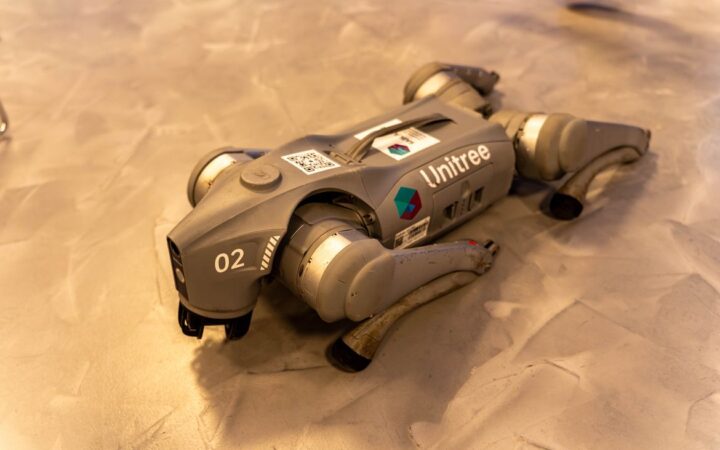
The biggest commercial impact is expected to fall on Unitree Robotics, one of China’s fastest-growing robotics companies and a global leader in humanoid robots. Unitree has rapidly expanded its international presence with relatively low-cost humanoid and quadruped robots and is estimated to account for roughly one-fifth of the global humanoid robotics market. The company has also been viewed as one of Tesla’s most significant emerging competitors in the sector.
The restrictions are likely to benefit U.S.-based robotics developers, including Tesla, Figure AI, and other domestic manufacturers. By limiting competition from Chinese suppliers, the policy could provide American companies with greater opportunities to expand sales and establish themselves in what many analysts expect to become one of the next major AI-driven industries. However, some experts caution that U.S. robotics startups currently rely on portions of the global supply chain dominated by Chinese manufacturers, meaning the restrictions could also increase costs and slow product development.
China has strongly criticized the decision, calling it protectionist and warning of possible retaliatory measures. The move follows a broader series of U.S. technology restrictions targeting Chinese semiconductors, AI hardware, drones, and telecommunications equipment, reflecting Washington’s strategy of reducing dependence on Chinese technology in strategically important sectors.
The latest action underscores how humanoid robotics has become the newest front in the global AI race. As governments increasingly view advanced robots as both commercial products and strategic technologies, geopolitical considerations are expected to play an increasingly important role in determining which companies gain access to key international markets.