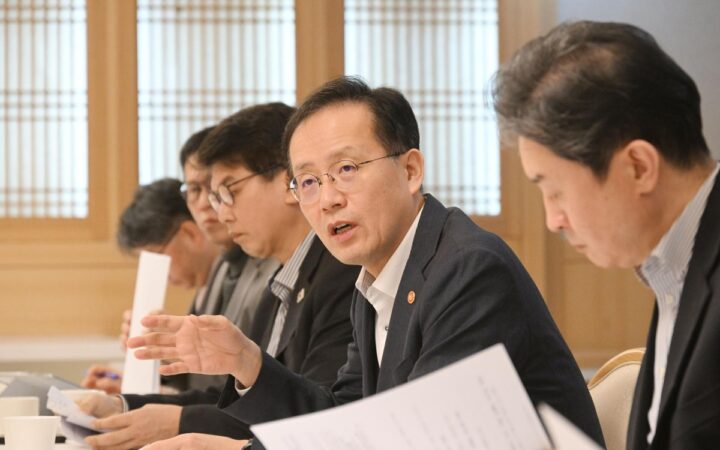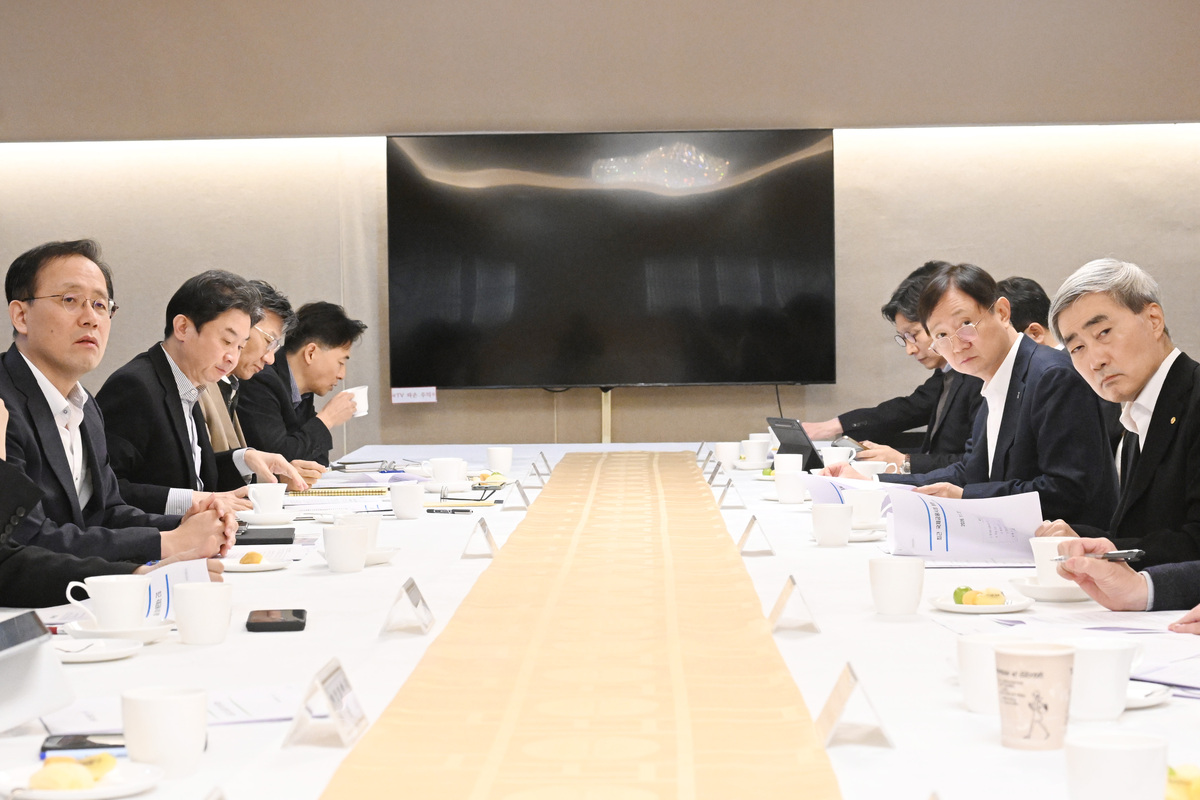
South Korea is preparing its stock-market stabilization fund for immediate deployment if conditions warrant, the Ministry of Finance and Economy announced Sunday. Finance Minister Lee Hyoung-il held an emergency meeting with the central bank governor and top financial regulators ahead of Monday’s market reopening. The decision starts preparations; it does not announce that the fund has begun buying shares.
The KOSPI closed Friday at 4,869.96, down 5.21% for the session. That left the benchmark 46.6% below its June 22 record close of 9,114.55. The losses followed an Asian selloff as investors reassessed AI-related stocks.
Authorities will ease daily limits on listed companies’ share-buyback orders for three months from November 24, with the Financial Services Commission scheduled to approve the change Monday. The Financial Supervisory Service and Korea Exchange will also intensively monitor illegal short selling for three months. The package does not impose a general short-selling ban.
Regulators will scrutinize margin lending, unsettled trades and forced liquidations to limit cascading selling, while strengthening surveillance of false rumors and market manipulation. Officials cited uncertainty over AI profitability and financing, U.S. data-center rules and semiconductor export controls, but said longer-term AI growth expectations remained valid and cautioned against panic selling.
Actual deployment would be the first since the 2008 financial crisis, according to earlier reporting by The Korea Times. Funds were also arranged in 2020 and 2022 without being deployed. Sunday’s announcement specifies neither a deployment date nor an amount to be invested.
Disclaimer: MarketSpeaker content is provided for informational and educational purposes only and does not constitute financial or investment advice. Investing involves risk, including the possible loss of principal. Verify information independently and consult a qualified professional before making financial decisions.