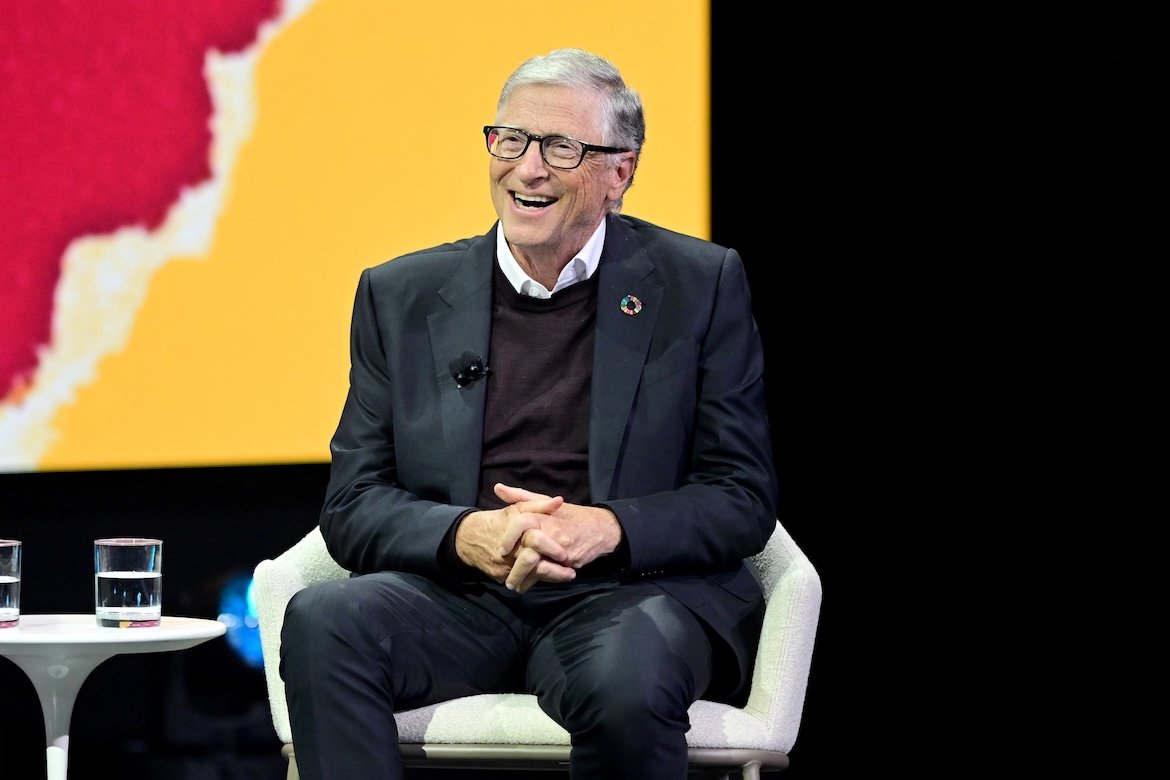

Billionaire philanthropist and Microsoft co-founder Bill Gates says artificial intelligence could fundamentally reshape the global workforce, reducing the standard workweek to just two days within the next decade. Speaking at recent public appearances, Gates described AI’s rapid progress as both “profound and unsettling,” predicting it will replace humans in most routine and complex jobs.
He said the next technological era, which he calls one of “free intelligence,” could solve widespread shortages in sectors like healthcare and education but would also raise deep questions about how people spend their time and what roles remain distinctly human.
“It’s kind of profound because it solves all these specific problems – like we don’t have enough doctors or mental health professionals, but it brings with it so much change,” Gates said. “What will jobs be like? Should we just work two or three days per week?”
The Future of Work in an AI Economy
Gates envisions a world where artificial intelligence handles most production, logistics, and service tasks. In that scenario, humans might focus on creativity, leisure, and social interaction rather than traditional labor. “We’ll decide, like baseball – we won’t want to watch computers play baseball, so there will be things we reserve for ourselves” – he said.
While Gates framed the transition as inevitable, he acknowledged uncertainty over how governments, economies, and individuals will adapt. “It’s very profound and even a little bit scary, because it’s happening very quickly, and there’s no upper bound” – he said.
Companies experimenting with shorter workweeks are already seeing benefits. U.S. – based firm Exos reported a 24% boost in productivity and a 50% drop in burnout after shifting to a four-day schedule. In Japan, Tokyo introduced a four-day workweek for government employees to improve work-life balance and address overwork-related health issues.
Innovation, Inequality, and the Human Question
Not everyone views the AI revolution optimistically. AI pioneer Geoffrey Hinton, often called the “Godfather of AI,” has warned that unchecked automation could dramatically widen the wealth gap. He argues that while AI may boost global productivity, profits could disproportionately flow to corporations and the wealthy, leaving displaced workers behind.
“We’re talking about a huge increase in productivity,” Hinton said in a recent discussion. “Everybody ought to be better off, but actually it’s going to be the other way around.” He cautioned that growing inequality could create “fertile ground for extremism.”
Gates agrees that society must prepare for those challenges. While he celebrates AI’s potential to spark innovation, he emphasizes that technology alone cannot determine whether the coming changes improve human life. “It’ll take time, but I think we can shape it if we start now” – he said.
AI’s rise is redefining work, wealth, and purpose and the question may no longer be whether machines can replace human labor, but how humans choose to adapt once they do.