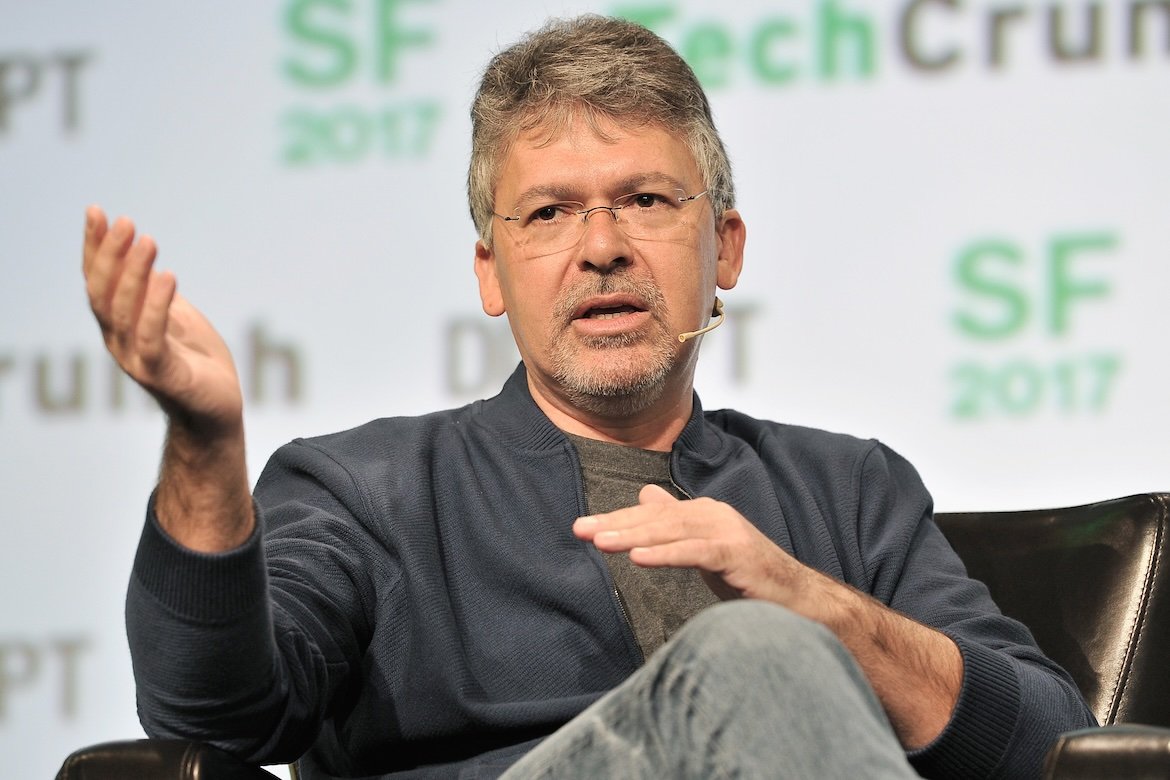

Apple announced a major leadership shift in its artificial intelligence division, confirming that John Giannandrea, the company’s long-time head of AI, will step down and serve as an advisor before retiring this spring. Giannandrea joined Apple in 2018 after leading AI efforts at Google and played a key role in shaping Apple’s machine-learning strategy.
His successor will be Amar Subramanya, an AI researcher with leadership experience at Microsoft and Google’s DeepMind. Subramanya will become Apple’s vice president of AI and report to Craig Federighi, Apple’s software chief, who has increasingly taken a central role in the company’s AI strategy.
Why Apple Is Reshaping Its AI Leadership
Apple’s decision reflects intensifying pressure to accelerate its AI capabilities following a year in which analysts repeatedly warned that the company had fallen behind its largest technology peers. While Apple Intelligence was marketed as a major leap forward, its rollout was met with mixed reviews, and a redesigned Siri – one of its most anticipated features – was delayed until 2026 due to development challenges.
Industry analysts note that Apple’s approach remains distinct from companies such as Microsoft, Google, and Meta, which have spent tens of billions of dollars building cloud-based AI infrastructure to support large-scale generative models. Apple continues to prioritize on-device processing, an approach that reduces reliance on cloud computing but also limits the speed at which the company can train and deploy advanced models.
By appointing Subramanya and shifting several AI-related teams under software chief Craig Federighi, Apple aims to bring stronger technical alignment across its AI efforts. Subramanya will lead teams focused on foundation models, AI research, and safety protocols, while other groups previously reporting to Giannandrea will now fall under the chief operating officer and services leadership.
Apple has said it is “significantly increasing” its AI spending, and CEO Tim Cook emphasized that Federighi has already been playing an important role in the development of a more personalized Siri expected next year.
Apple and Investors
For investors, the leadership overhaul is a sign that Apple recognizes the urgency of strengthening its AI strategy ahead of a new wave of hardware competition. Apple’s shares are up 16% this year, but they have trailed other major technology companies whose valuations surged on the back of major AI investments and high-growth data center buildouts.
The shift also comes at a time when new AI-focused hardware categories are emerging. Former Apple design chief Jony Ive recently sold his hardware startup for billions, with plans to collaborate with OpenAI on next-generation consumer devices—an initiative closely watched across the industry. Analysts say that while Apple continues to benefit from deep customer loyalty and its existing device ecosystem, rival firms are moving quickly to define what next-generation AI hardware could look like.
Apple’s updated AI leadership structure signals a more unified strategy as the company works to deliver stronger capabilities across its devices. With Subramanya now in charge and Federighi expanding his oversight, the company is seeking to regain momentum in a market where speed of execution increasingly defines competitive advantage.