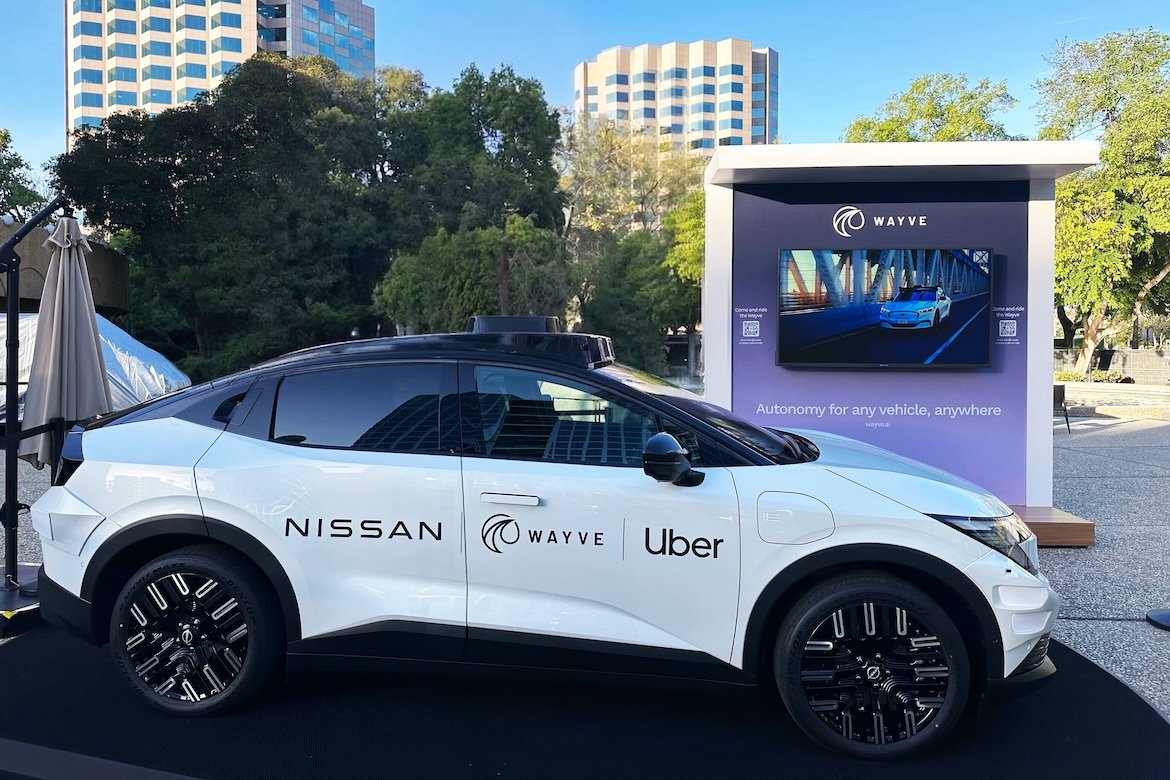
Autonomous driving startup Wayve has secured fresh funding from semiconductor giants AMD, Qualcomm, and Arm, highlighting growing industry momentum behind AI-driven vehicle technology.
We’re announcing a $60M extension to our Series D from @AMD, @Arm and @QualcommVenture, bringing together partners across the automotive compute stack to simplify integration and accelerate time-to-market of our AI Driver across ADAS and automated driving systems worldwide.… pic.twitter.com/mDiXGbnVXG
— Wayve (@wayve_ai) April 15, 2026
While financial terms of the investment were not disclosed, the participation of leading chipmakers signals strong confidence in Wayve’s approach to building self-driving systems powered by end-to-end artificial intelligence models. The company is focused on developing software that enables vehicles to learn from real-world driving data rather than relying solely on pre-mapped environments.
The funding comes at a time when competition in the autonomous driving space is intensifying, with both established automakers and technology firms racing to commercialize scalable self-driving solutions.
Chipmakers Align With AI-Centric Autonomous Driving Strategy
Wayve’s approach differs from traditional autonomous systems by using machine learning models trained on vast datasets collected from urban driving environments. This allows vehicles to adapt dynamically to complex and unpredictable road conditions.
For AMD, Qualcomm, and Arm, the investment represents a strategic move to expand their presence in the fast-growing automotive AI market. Each company plays a critical role in supplying the chips and architectures required to power next-generation driverless systems.
The partnership could enable tighter integration between Wayve’s software and the underlying hardware, improving performance, efficiency, and scalability. This is particularly important as autonomous vehicles require significant computational power to process sensor data in real time.
As previously covered, semiconductor companies have been increasingly targeting the automotive sector as a key growth area, driven by rising demand for advanced driver-assistance systems and fully autonomous capabilities.
Wayve has already been testing its technology on public roads in cities such as London and San Francisco, positioning itself as a contender in the global race toward commercialization.
Market Implications Point to Expanding AI and Automotive Convergence
The investment underscores a broader trend: the convergence of artificial intelligence, semiconductors, and transportation.
Investors view autonomous driving as a long-term growth opportunity, with the potential to reshape mobility, logistics, and urban infrastructure. However, the path to commercialization remains complex, with regulatory hurdles, safety concerns, and high development costs.
For chipmakers, backing companies like Wayve offers exposure to future demand for high-performance computing in vehicles, a market expected to grow significantly over the next decade.
At the same time, competition remains intense. Major players including Tesla, Alphabet’s Waymo, and traditional automakers continue to invest heavily in autonomous technologies.
The success of Wayve’s AI-first approach will depend on its ability to scale its models across diverse environments and demonstrate consistent safety performance.
For markets, the deal reinforces investor appetite for AI-driven innovation across sectors, particularly where software and hardware integration can unlock new commercial opportunities.
As the autonomous driving race evolves, partnerships between chipmakers and software developers are likely to play a critical role in shaping the industry’s future trajectory.