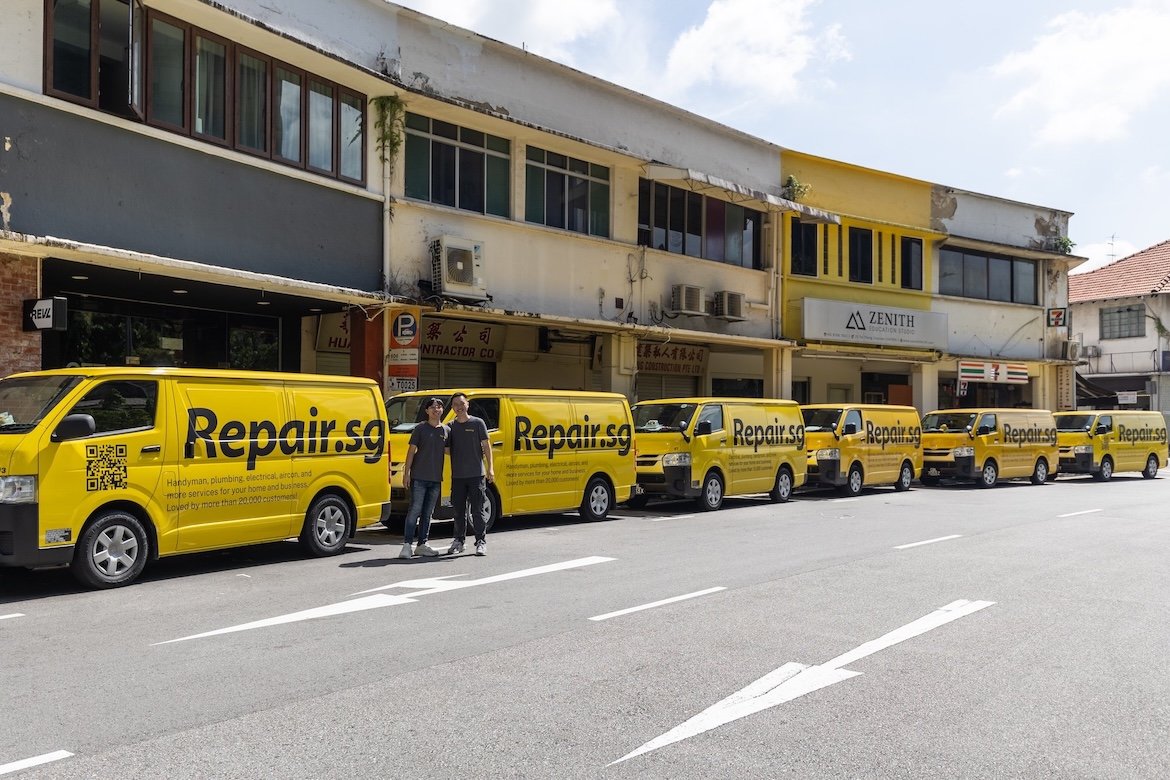

At 16 years old, all Zames Chew spent was 30 Singapore dollars – roughly $23 – to buy a domain name. Nearly a decade later, the Singapore-based handyman company he founded with his younger brother, Amos, generates 1.7 million Singapore dollars (about $1.3 million) in annual revenue and employs more than 20 people.
Repair.sg, a once-quiet side hustle built between classes and late-night customer messages, is now on track to reach around $2.3 million in revenue next year, according to company financials reviewed by CNBC Make It.
The path was far from conventional. The Chew brothers originally imagined white-collar careers. But a simple search for a household repair service in 2016 – and finding no reliable online options – sparked an idea that sent their lives in an entirely different direction.
How a Teen Project Became a Fast-Growing Business
The early days of Repair.sg were defined by long hours, little pay, and a DIY education in licensing and technical expertise. While still in school, the brothers fit jobs between classes, often waking up at 4 a.m. to respond to customer messages. They repaired lights, fixed furniture, and took almost any job offered.
What outsiders didn’t see, Zames says, was the substantial training behind such work. Electrical repair, plumbing, and installation services require certifications, safety protocols, and specialized knowledge – far more than “just grabbing a screwdriver.”
For seven years, the business teetered on the edge of survival. The brothers say they lacked structure, priced jobs poorly, and accepted clients they later realized they should have declined. But in 2021, they formally committed to scaling the company and chose not to attend university, pouring all their time into the business.
That decision marked a turning point. Repair.sg’s revenue accelerated, staffing expanded, and operational processes matured. What began as a side project gradually evolved into a polished, high-demand service business.
A Generation Rewrites the Blue-Collar Narrative
The Chew brothers are part of a wider trend: more young adults are looking beyond traditional white-collar paths and embracing skilled trades or entrepreneurship. Yet stigma persists. Zames recalls customers telling them directly that “blue-collar work is for people who didn’t make it.” For years, the brothers hid their business out of insecurity.
Today, those doubts have faded. Zames says the work provides clear value, generates strong income, and gives him the rare chance to build a company with his closest collaborator – his brother.
The journey reflects a broader shift happening globally: the reconsideration of skilled labor not as lesser work, but as a legitimate path to high earnings, autonomy, and long-term opportunity.