OpenAI is quietly developing a new social network and considering biometric identity verification to combat bots, according to Forbes. The platform may use Worldcoin’s iris-scanning Orbs or similar technologies to ensure users are real people.
By Benjamin Harper | Edited by Oleg Petrenko
Published:
Updated:
OpenAI is quietly working on a new social network and is weighing biometric identity verification as a way to curb bots, according to Forbes. The platform could rely on Worldcoin’s iris-scanning Orbs or similar tools to confirm that users are real people. Photo: Focal Foto / Wikimedia
OpenAI is developing a new social network and weighing the use of biometric identity verification to ensure that only real humans can join, according to Forbes. The initiative reflects growing concern over bot activity and synthetic accounts that increasingly dominate online platforms.
People familiar with the project say OpenAI is exploring tools such as the iris-scanning Orbs developed by Worldcoin, as well as other biometric methods including facial recognition. The goal is to create a “humans-only” network that sharply limits automated accounts and AI-generated personas.
Why OpenAI is targeting bots and fake users
The rise of generative AI has dramatically lowered the cost of creating convincing fake profiles, overwhelming social platforms with automated engagement, spam, and misinformation. Analysts say the problem has reached a tipping point, with bots now shaping discourse rather than merely disrupting it.
OpenAI’s leadership has reportedly grown concerned that existing moderation tools are no longer sufficient. As previously covered, AI systems are now capable of generating realistic text, images, and even video at scale, making traditional bot-detection techniques increasingly ineffective.
By tying accounts to biometric identifiers, OpenAI aims to establish a strong proof-of-personhood system. Worldcoin’s Orb technology scans a user’s iris to create a unique digital identity, while alternative approaches could rely on device-based biometrics such as Apple’s Face ID.
Supporters argue that such systems could restore trust and authenticity to online interactions, particularly as AI-generated content becomes indistinguishable from human output.
Implications for privacy, platforms, and tech regulation
The concept of a biometric social network raises immediate privacy and regulatory questions. While OpenAI has emphasized that any biometric data would be encrypted and anonymized, critics warn that centralized identity systems could introduce new risks if misused or breached.
From a market perspective, the move would place OpenAI in direct competition with established social media platforms struggling to contain bots and fake engagement. A verified-only network could appeal to users seeking more credible conversations, as well as to advertisers wary of paying for artificial traffic.
For regulators, the project may intensify debates around digital identity, data protection, and the role of private companies in managing verification infrastructure. Governments globally are already grappling with how to regulate biometric data and AI-driven identity systems.
If successful, OpenAI’s approach could redefine how online platforms verify users in an era dominated by artificial intelligence. Rather than relying on moderation after the fact, biometric verification would attempt to prevent synthetic participation at the entry point.
Whether users are willing to trade anonymity for authenticity remains an open question. But as bot-driven activity continues to erode trust across the internet, OpenAI’s experiment signals a growing belief that proof of humanity may become a core feature of the next generation of social platforms.
Southwest Airlines reported a sharp improvement in fourth-quarter performance and outlined broad strategic changes aimed at boosting profitability. Management said the initiatives are already translating into stronger financial momentum heading into 2026.
By Sophia Reynolds | Edited by Oleg Petrenko
Published:
Updated:
Southwest Airlines posted a strong improvement in its fourth-quarter results and detailed a wide-ranging strategic shift designed to lift profitability. Management said the changes are already driving stronger financial momentum as the company heads into 2026. Photo: Jeffry Surianto / Pexels
Southwest Airlines delivered an upbeat message to investors in its fourth-quarter earnings call, pointing to a combination of operational, commercial, and structural changes that are beginning to improve financial performance. The carrier reported a notable profit rebound in the quarter and said it expects the benefits of its strategy overhaul to build through 2026.
Executives described the period as a turning point for the airline after several challenging years marked by rising costs, operational disruptions, and uneven demand recovery. While management acknowledged that transformation efforts are still underway, confidence was high that the company is now on a more durable earnings trajectory.
Why Southwest is changing its playbook
Management said the financial improvement reflects a broad reassessment of how the airline operates and competes. Key initiatives include tighter cost discipline, more flexible scheduling, and changes to fare structures designed to better capture demand across different customer segments.
Southwest has also been refining its network and capacity deployment, focusing on routes with stronger yield potential while reducing exposure to underperforming markets. As previously covered, U.S. airlines have increasingly shifted toward profitability-focused growth rather than pure capacity expansion, a trend Southwest is now embracing more explicitly.
On the revenue side, the company highlighted progress in ancillary offerings and loyalty engagement, areas that historically played a smaller role in its business model. Executives said these adjustments are helping narrow the gap with rivals that generate a higher share of revenue beyond ticket sales.
What the outlook means for investors
The tone of the earnings call contrasted sharply with more cautious commentary from earlier quarters. Management said the combined impact of pricing discipline, operational efficiency, and improved demand visibility is expected to support stronger margins and cash generation in 2026.
For investors, the renewed optimism suggests Southwest may be closing the performance gap with other major U.S. carriers that have already restored profitability. Analysts noted that while execution risks remain, the airline’s balance sheet strength and brand loyalty provide a solid foundation for the turnaround.
The company also indicated that capital allocation priorities are shifting toward strengthening long-term competitiveness rather than simply managing short-term volatility. That includes continued investment in fleet efficiency and technology, alongside a focus on maintaining financial flexibility.
More broadly, Southwest’s results add to evidence that the U.S. airline sector is entering a more stable phase after years of disruption. While fuel costs, labor expenses, and economic uncertainty remain key variables, management’s confidence suggests the worst of the post-pandemic adjustment may be over.
Looking ahead, investors will be watching whether Southwest can sustain momentum as industry capacity grows and competitive pressures intensify. If the outlined changes continue to translate into earnings growth, the airline’s fourth-quarter performance could mark the beginning of a longer-term recovery.
SpaceX is in talks to merge with Elon Musk’s artificial intelligence startup xAI ahead of a planned public offering, according to Reuters. The deal could pave the way for the largest IPO in history and significantly boost Musk’s personal wealth.
By Sophia Reynolds | Edited by Oleg Petrenko
Published:
Updated:
SpaceX is reportedly in discussions to merge with Elon Musk’s artificial intelligence startup xAI ahead of its planned public listing, according to Reuters. The move could set the stage for the largest IPO ever and substantially increase Musk’s personal wealth. Photo: Official SpaceX Photos / Wikimedia
SpaceX is holding talks about a potential merger with xAI ahead of its planned initial public offering, according to people familiar with the matter cited by Reuters. The discussions underscore Elon Musk’s ambition to combine two of his most strategically important ventures into a single platform before taking it public.
If completed, the transaction would significantly reshape the structure of SpaceX’s IPO, which is already expected to be the largest in history. The merger could dramatically increase the company’s valuation and further consolidate Musk’s control over a business spanning space, communications, and artificial intelligence.
Why SpaceX is considering a merger with xAI
The talks reflect growing convergence between SpaceX’s satellite infrastructure and xAI’s artificial intelligence ambitions. SpaceX operates Starlink, the world’s largest satellite internet network, which generates vast amounts of data and provides global connectivity – a valuable asset for training and deploying advanced AI systems.
As previously covered, Musk has repeatedly emphasized that future technological leadership will be defined by the integration of AI with physical infrastructure. Folding xAI into SpaceX could create a vertically integrated company combining launch services, satellite communications, data generation, and AI model development under one corporate umbrella.
Sources say the discussions remain preliminary, and there is no certainty a deal will be finalized. However, the timing ahead of a public listing suggests a strategic effort to present investors with a broader and more ambitious growth narrative.
What it means for the IPO and Musk’s wealth
SpaceX is widely expected to pursue an IPO in the second half of 2026, with private market estimates already placing its valuation near $1.5 trillion. A merger with xAI could push that figure significantly higher, potentially cementing the offering as the largest IPO ever conducted.
For Musk personally, the implications are substantial. Analysts say combining SpaceX and xAI would concentrate ownership of two high-growth assets into a single publicly traded entity, potentially doubling his net worth if markets assign premium valuations to the merged business.
From an investor perspective, the deal could redefine how SpaceX is valued. Rather than being seen primarily as a launch and satellite company, the merged entity could be framed as a hybrid space-and-AI platform, competing not only with aerospace firms but also with leading technology and artificial intelligence companies.
At the same time, the move carries risks. Integrating two capital-intensive businesses with distinct cost structures and regulatory challenges could complicate financial disclosures and governance ahead of an IPO. Investors may also question whether the combined entity can deliver profitability at scale while sustaining massive investment requirements.
Still, the talks signal Musk’s willingness to pursue bold structural changes to maximize long-term value. If the merger proceeds, it would mark one of the most consequential corporate combinations in modern tech history and set the stage for an IPO that could redefine global equity markets.
Silver has fallen nearly 38% from its recent peak in just two days, triggering warnings from analysts who point to extreme technical signals. Despite the sharp selloff, the metal still closed the month higher, extending a nine-month rally.
By Nathan Cole | Edited by Oleg Petrenko
Published:
Updated:
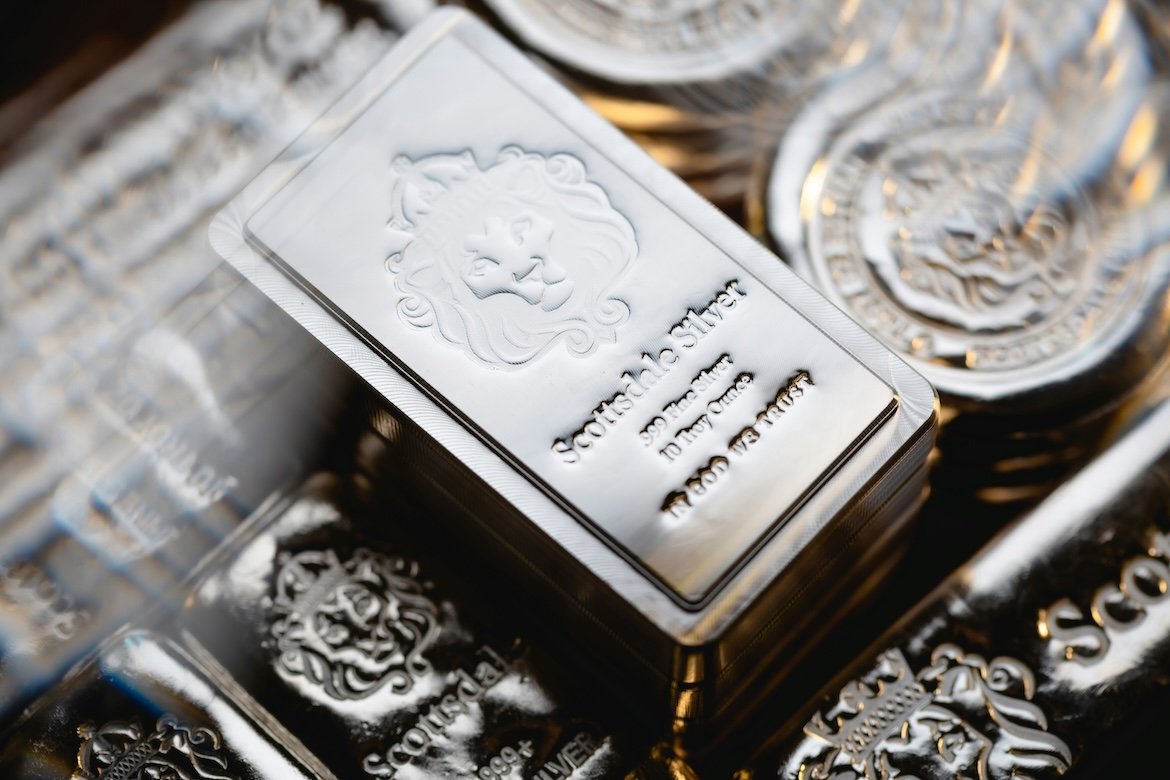
Silver has dropped almost 38% from its recent high in just two days, prompting analyst warnings as extreme technical indicators flash red. Despite the abrupt selloff, the metal still finished the month higher, marking a ninth consecutive monthly gain. Photo: Scottsdale Mint / Unsplash
Silver has entered what analysts describe as a historically dangerous zone after suffering a dramatic collapse from recent highs. Over the past two days alone, silver has fallen roughly 36–38% from its peak price of $122 to around $78, marking one of the most abrupt selloffs in the metal’s modern history.
The speed of the decline has rattled traders and revived comparisons with past boom-and-bust cycles. At one point during intraday trading, silver plunged by nearly 39%, the largest intraday drop ever recorded. The violent move highlights the extreme volatility now gripping precious metals markets.
Yet despite the turmoil, silver ended the month with a gain of approximately 19%, extending its winning streak to nine consecutive months – a rare and conflicting signal for investors.
Why technical indicators are flashing red
Analysts point to silver’s monthly relative strength index as a key warning sign. Prior to the selloff, the monthly RSI surged to 95, the second-highest reading in more than 60 years of data. Such levels indicate extreme overbought conditions and have historically preceded major market reversals.
This level has appeared only twice in modern history. In the 1979–1980 silver bubble, the monthly RSI climbed above 90 before prices ultimately collapsed by nearly 90% from their peak. A similar pattern emerged during the 2009–2011 rally, when RSI reached extreme levels and silver later fell roughly 65% from its high to the eventual low.
In both cases, the initial sharp decline did not mark the bottom. Prices continued to correct well after the first wave of selling, as speculative positioning unwound and liquidity thinned.
Analysts say the current setup closely resembles those prior episodes, raising the risk that the recent plunge may represent only the first phase of a broader correction.
What the volatility means for investors
The current episode presents a paradox. On one hand, silver has just suffered the largest intraday drop in its history and erased more than a third of its value in days. On the other, it remains firmly in an uptrend on a longer-term basis, having posted nine consecutive monthly gains.
For investors, the message is mixed but clear on risk. Extreme upside momentum has given way to equally extreme downside volatility, suggesting that leverage and speculative excess have reached destabilizing levels.
While long-term fundamentals such as industrial demand and macro uncertainty may continue to support silver, analysts warn that technical damage of this magnitude often requires time to heal. Further downside and prolonged consolidation are common after such historic RSI extremes.
As previously covered, modern precious metals markets are increasingly influenced by derivatives, algorithmic trading, and crowded positioning, amplifying both rallies and selloffs. That dynamic raises the likelihood of continued sharp swings in the weeks ahead.
Whether silver ultimately stabilizes near current levels or retraces further will depend on how quickly speculative positions are cleared and whether physical demand can absorb the shock. What is clear, analysts say, is that this episode is already one for the history books and one that investors will be studying for decades.
Gold experienced its most extreme trading session on record as more than $3 trillion in market value vanished within an hour before a massive rebound. Analysts say volatility exceeded levels seen during the 2008 financial crisis.
By Nathan Cole | Edited by Oleg Petrenko
Published:
Updated:
Gold markets endured one of the most dramatic trading sessions on record, with $3.2 trillion erased in less than an hour before a swift rebound clawed back much of the loss. Analysts said volatility surpassed levels seen during the 2008 financial crisis. Photo: Reuters / X
Gold endured the most volatile trading day in its history, according to analysts, as extraordinary price swings erased and restored trillions of dollars in market value within hours. The episode underscored the intensity of stress gripping global markets and highlighted how even traditional safe-haven assets are now subject to extreme turbulence.
Between 9:30 a.m. and 10:25 a.m. U.S. time, gold’s market capitalization plunged by an estimated $3.2 trillion – equivalent to roughly $58 billion per minute. The rapid selloff stunned traders and briefly rattled broader commodities markets.
What followed was an equally dramatic reversal. From 10:25 a.m. through the close of the U.S. session at 4:00 p.m., gold clawed back approximately $2.3 trillion in market value, ending the day far off its lows but still deeply volatile.
Why gold saw unprecedented volatility
Analysts attribute the extreme moves to a convergence of thin liquidity, heavy derivatives positioning, and heightened macro uncertainty. As previously covered, gold has attracted massive inflows in recent months amid currency weakness, central bank buying, and fears over financial stability, leaving the market vulnerable to sudden, amplified swings.
The initial collapse was likely intensified by forced liquidations, margin calls, and algorithmic selling once key technical levels were breached. With positioning crowded on the long side, even modest triggers were enough to spark a cascade of sell orders.
The sharp rebound suggests strong underlying demand. Buyers quickly stepped in as prices fell, viewing the drop as an opportunity rather than a signal of deteriorating fundamentals. Central bank accumulation and strategic long-term investors are believed to have played a role in stabilizing the market.
What the scale of the swings means for markets
Over a span of just 6.5 hours, the total amplitude of gold’s market value swings exceeded three times the entire market capitalization of Bitcoin. The comparison highlights how traditional assets can now experience volatility once associated almost exclusively with cryptocurrencies.
Analysts noted that intraday volatility surpassed levels recorded during the 2008 global financial crisis, a benchmark long considered the gold standard for market stress. The episode raises questions about liquidity resilience, risk management practices, and the growing influence of leveraged trading in commodities markets.
For investors, the day served as a stark reminder that gold is no longer immune to violent price action, even as it retains its role as a core defensive asset. While long-term demand drivers remain intact, short-term swings may continue to be severe as markets digest shifting monetary and geopolitical signals.
Looking ahead, traders will closely monitor futures positioning, margin requirements, and central bank activity. If volatility remains elevated, regulators and exchanges may face pressure to reassess safeguards designed to contain extreme price moves.
Analysts say this session is likely to be remembered for decades – not just for its scale, but for what it revealed about the evolving structure of global markets, where even the oldest safe havens can move with unprecedented force.
Gold has surpassed U.S. government bonds in central bank reserves for the first time in at least two decades, according to analysts. The shift underscores gold’s rising role as the primary defensive asset in the global financial system.
By Benjamin Harper | Edited by Oleg Petrenko
Published:
Updated:
Gold has overtaken U.S. government bonds in central bank reserves for the first time in at least 20 years, analysts say, highlighting its growing role as the leading defensive asset in the global financial system. Photo: Andrzej Barabasz / Wikimedia
Gold has overtaken U.S. government bonds in central bank reserves for the first time in at least 20 years, marking a major realignment in global reserve management, according to analysts. The value of gold held in official reserves has climbed to roughly $5 trillion, surpassing the $3.9 trillion held in U.S. Treasuries.
The shift reflects growing unease over currency stability, sovereign debt levels, and geopolitical risk, prompting central banks to favor assets with no counterparty risk. Analysts describe the move as a defining moment for the global financial system, signaling gold’s return as the cornerstone defensive reserve asset.
The milestone comes amid extreme volatility in precious metals markets and heightened scrutiny of traditional safe havens.
Why central banks are prioritizing gold
Central banks have accelerated gold purchases over recent years as part of diversification strategies aimed at reducing reliance on dollar-denominated assets. As previously covered, concerns over sanctions exposure, rising fiscal deficits, and long-term inflation risks have driven reserve managers to reassess portfolio composition.
Gold’s appeal lies in its physical nature and independence from any single issuer. Unlike government bonds, it carries no default risk and is not directly tied to monetary policy decisions. These characteristics have become increasingly attractive as global debt levels rise and confidence in fiat currencies weakens.
The shift away from U.S. Treasuries also reflects changing perceptions of liquidity and safety. While Treasuries remain highly liquid, analysts note that their real returns have been eroded by inflation and rising interest rate volatility, diminishing their traditional role as the ultimate reserve asset.
What the volatility says about market stress
Despite gold’s growing importance in reserves, the market has not been immune to sharp swings. In one recent episode, gold prices erased nearly $3 trillion in market value within a single hour, highlighting the scale of positioning and the speed at which capital now moves across asset classes.
The magnitude of that move was comparable to the entire capitalization of the global cryptocurrency market, underscoring how even the most established assets can experience crypto-like volatility in modern markets.
Analysts say such turbulence reflects thin liquidity during periods of intense demand, combined with large derivatives exposure and algorithmic trading. While short-term price shocks may persist, they argue that central bank demand provides a structural backstop for gold over the longer term.
For investors, the reserve shift sends a clear signal about the evolving hierarchy of safe assets. Gold is no longer merely a hedge on the margins of portfolios but is increasingly viewed as a core component of global financial stability.
Looking ahead, analysts expect gold’s role in reserves to remain elevated, particularly if geopolitical tensions and fiscal uncertainty persist. The displacement of U.S. Treasuries marks a historic change – one that could reshape capital flows and reserve strategies for years to come.
Microsoft shares plunged as much as 12% in a single session after earnings revealed soaring AI infrastructure costs and heavy reliance on OpenAI-linked cloud contracts. The drop marked one of the company’s sharpest declines since 2020.
By Sophia Reynolds | Edited by Oleg Petrenko
Published:
Updated:
Microsoft shares fell by as much as 12% in a single trading session after earnings highlighted soaring AI infrastructure costs and a heavy dependence on OpenAI-related cloud contracts. The selloff marked one of the company’s steepest declines since 2020. Photo: Coolcaesar / Wikimedia
Shares of Microsoft tumbled as much as 12% in a single trading session, marking one of the company’s steepest one-day declines since 2020. The selloff followed the release of earnings that intensified investor concerns over ballooning artificial intelligence infrastructure costs and the scale of Microsoft’s exposure to OpenAI.
The sharp drop wiped tens of billions of dollars off Microsoft’s market capitalization and dragged on broader technology indices. Investors reacted negatively to disclosures showing that a significant portion of the company’s future cloud revenue is tied to a single AI partner.
Why Microsoft’s results spooked the market
At the center of the selloff were Microsoft’s rapidly rising capital expenditures related to AI. The company has been investing aggressively in data centers, specialized chips, and energy-intensive infrastructure to support AI workloads, particularly those linked to OpenAI models hosted on Azure.
According to the report, roughly 45% of Microsoft’s future cloud contracts – valued at an estimated $625 billion – are associated with OpenAI-related services. While the figure underscores Microsoft’s leadership in AI-driven cloud computing, it also raised alarms about customer concentration risk and long-term margin pressure.
As previously covered, Big Tech companies are facing growing scrutiny over whether massive AI investments can translate into sustainable profits. In Microsoft’s case, analysts warned that returns on AI spending may take years to materialize, while costs are hitting earnings immediately.
What the selloff means for investors
The market reaction reflects a broader reassessment of AI optimism across technology stocks. Microsoft has been viewed as one of the clearest beneficiaries of the AI boom, but the latest results suggest that monetization may lag far behind capital deployment.
For investors, the heavy reliance on OpenAI introduces both upside and risk. While OpenAI remains a dominant force in generative AI, its own financial profile – marked by large losses and ongoing funding needs – adds uncertainty to Microsoft’s long-term cloud revenue visibility.
The selloff also highlights sensitivity to scale. With Microsoft already among the world’s most valuable companies, incremental growth must be substantial to justify continued valuation premiums. Any indication that margins could compress or growth could become more volatile tends to be amplified in market reactions.
Looking ahead, investors will focus on whether Microsoft can broaden its AI customer base beyond OpenAI, improve efficiency in infrastructure spending, and demonstrate clearer pathways to AI profitability. Until then, volatility in the stock may persist as markets recalibrate expectations around the true cost of artificial intelligence leadership.
Tesla will discontinue production of its Model S and Model X vehicles and convert its Fremont factory to manufacture Optimus humanoid robots. Elon Musk said the transition will begin in the second quarter, with long-term output targeted at up to one million robots annually.
By Sophia Reynolds | Edited by Oleg Petrenko
Published:
Updated:
Tesla plans to end production of its Model S and Model X vehicles and retool its Fremont factory to manufacture Optimus humanoid robots. Elon Musk said the transition will start in the second quarter, with long-term production aimed at up to one million robots per year. Photo: Tesla
Tesla will discontinue production of its flagship Model S and Model X vehicles and repurpose its Fremont, California, factory to manufacture humanoid robots, marking one of the most dramatic strategic shifts in the company’s history. Chief executive Elon Musk said Tesla plans to complete the final production of the two models as early as the second quarter before retooling the facility.
Musk described the move as a “transition to the future,” signaling Tesla’s intention to pivot away from low-volume premium vehicles toward what it views as a far larger long-term opportunity in robotics. Once fully converted, the Fremont plant is expected to produce up to one million Optimus humanoid robots per year.
The decision underscores Tesla’s evolving identity, positioning the company less as a traditional automaker and more as an artificial intelligence and robotics firm.
Why Tesla is pivoting away from Model S and X
Model S and Model X were instrumental in establishing Tesla as a premium electric vehicle brand, but their relative importance has diminished over time. Compared with mass-market models such as the Model 3 and Model Y, the two vehicles account for a small share of Tesla’s overall deliveries while requiring complex and costly production processes.
Musk has repeatedly argued that Tesla’s future value lies in scalable technologies built on artificial intelligence rather than in incremental vehicle upgrades. As previously covered, Tesla has been investing heavily in AI training, autonomous systems, and robotics, with Optimus positioned as a core pillar of that strategy.
By reallocating Fremont – one of Tesla’s most advanced manufacturing sites – to robotics, the company is prioritizing capacity for products it believes can achieve far greater unit volumes and margins over time. The goal of producing up to one million robots annually reflects Musk’s view that humanoid robots could ultimately outnumber cars in economic importance.
What the shift means for investors and markets
For investors, the announcement reinforces Tesla’s long-term bet on non-automotive revenue streams. While the end of Model S and X production removes two iconic products from Tesla’s lineup, their financial contribution has been modest relative to the company’s broader operations.
The pivot also raises execution risks. Scaling humanoid robot production to industrial levels presents significant technical and regulatory challenges, and commercial demand for such robots remains largely unproven. Analysts note that while the opportunity is potentially enormous, timelines and profitability are uncertain.
At the same time, the move could reshape how markets value Tesla. If investors increasingly view the company as a robotics and AI platform rather than a carmaker, valuation frameworks may shift accordingly, placing greater emphasis on future optionality rather than near-term vehicle margins.
Looking ahead, attention will focus on Tesla’s progress in deploying Optimus in real-world applications and on whether the Fremont conversion proceeds on schedule. Musk’s vision marks a bold departure from conventional automotive strategy – one that could redefine Tesla’s role in global technology markets if successful.
Gold surged above $5,600 per ounce for the first time in history following the Federal Reserve’s latest remarks, while silver broke past $120. The precious metals rally has delivered returns that far outpace equity markets.
By Sophia Reynolds | Edited by Oleg Petrenko
Published:
Updated:
Gold climbed above $5,600 per ounce for the first time ever after the Federal Reserve’s latest comments, with silver also breaking through $120. The surge in precious metals has produced gains that significantly outperform equity markets. Photo: Zlaťáky.cz / Pexels
Gold surged above $5,600 per ounce for the first time on record following the latest policy signals from the Federal Reserve, triggering another wave of buying across precious metals markets. The move extended gold’s already historic rally and reinforced its status as one of the strongest-performing assets of the year.
Silver followed with even greater momentum. Prices climbed above $120 per ounce for the first time ever, capping a dramatic surge that has reshaped relative performance across asset classes. Over the past month alone, silver has gained roughly 68%, drawing intense attention from traders and institutional investors alike.
The sharp moves came immediately after the Fed’s comments, which markets interpreted as supportive of looser financial conditions and continued currency pressure.
Supercharged metals
Investors reacted swiftly to the Fed’s tone, which reinforced expectations that policymakers are willing to tolerate softer financial conditions to support growth. As previously covered, precious metals tend to benefit when real yields fall and confidence in fiat currencies weakens.
Gold’s rally reflects its role as a monetary hedge in an environment of elevated debt, policy uncertainty, and declining trust in cash holdings. The break above $5,600 marked a psychological milestone, triggering momentum-driven buying and fresh inflows from both institutional and retail investors.
Silver’s outsized gains highlight its dual role as both a monetary and industrial metal. Strong demand, thin liquidity, and speculative positioning amplified the move, turning silver into one of the most volatile and profitable trades in global markets over the past month.
What the performance means for investors
The scale of silver’s rally is particularly striking in comparative terms. In just 29 days, silver has delivered returns roughly four times greater than the total gain of the S&P 500 over all of 2025, underscoring a dramatic shift in relative asset performance.
For investors, the surge signals a decisive rotation away from traditional equity benchmarks and toward real assets. Precious metals are no longer acting as defensive hedges alone but are increasingly driving portfolio returns in their own right.
At the same time, the speed of the gains introduces significant volatility risks. Analysts caution that crowded positioning and rapid price appreciation could lead to sharp pullbacks, even as long-term fundamentals remain supportive.
Looking ahead, markets will continue to focus on central bank guidance, currency movements, and liquidity conditions. If policy expectations remain favorable, gold and silver could retain their momentum but the extreme nature of recent moves suggests that price swings may remain intense.
The U.S. dollar fell to a new four-year low after Donald Trump said he was unconcerned about its decline, triggering a broad rally in commodities and risk assets. Gold, silver, and equity futures surged ahead of a closely watched Federal Reserve decision.
By Sophia Reynolds | Edited by Oleg Petrenko
Published:
Updated:
The U.S. dollar slid to a fresh four-year low after Donald Trump said he was unconcerned about the currency’s weakness, setting off a broad rally across commodities and risk assets. Gold, silver, and equity futures jumped as markets positioned ahead of a closely watched Federal Reserve decision. Photo: Marcos Figueroa / Unsplash
The U.S. dollar slid to a new four-year low after President Donald Trump said he was not concerned about the currency’s decline, accelerating a broad-based rally across global asset markets. The move extended the dollar’s recent weakness and reinforced investor appetite for real and risk assets ahead of a pivotal Federal Reserve policy decision.
The decline in the dollar index marked another leg down after what has already been its worst annual performance since 2017. Currency traders interpreted Trump’s remarks as a signal of continued tolerance for dollar weakness, adding momentum to selling pressure already driven by expectations of easier monetary policy.
As the greenback fell, markets quickly shifted into what investors described as a “risk-on” and “real-asset” trade.
Dollar weakness is fueling asset gains
The dollar’s slide has acted as a powerful tailwind for commodities. Gold jumped roughly 3% on the session, while silver surged about 9%, extending its recent streak of outsized gains. A weaker dollar typically boosts dollar-denominated assets by making them cheaper for non-U.S. buyers and by reinforcing their role as stores of value.
Equity markets also reacted strongly. Futures tied to the S&P 500 climbed above the 7,000 level, signaling expectations of fresh record highs when U.S. markets open. As previously covered, dollar weakness has increasingly been interpreted as supportive for asset prices, particularly when paired with expectations of looser financial conditions.
Investors appear to be betting that policymakers will prioritize growth and market stability over currency strength. Trump’s comments reinforced that perception, encouraging capital to rotate out of cash and into assets that benefit from reflationary dynamics.
What investors are watching next
Attention is now squarely on the Federal Reserve, which is set to announce its latest policy decision later today. Markets are bracing for signals that could validate or challenge the current rally, particularly guidance on interest rates and balance sheet policy.
If the Fed leans dovish, analysts say the dollar could face further downside pressure, potentially extending gains in commodities and equities. Conversely, any indication of concern about financial conditions or inflation could introduce volatility after the sharp moves already seen.
For asset holders, the dollar’s decline has effectively turned into a windfall. Rising prices across metals and equities have boosted portfolio values, reinforcing the view that holding cash is increasingly unattractive in the current environment.
Looking ahead, sustained dollar weakness could reshape global capital flows, support commodity markets, and keep risk assets elevated. Whether this momentum continues will depend heavily on how the Federal Reserve frames its policy outlook and whether political tolerance for a weaker dollar remains intact.
Gold futures surged past $5,300 per ounce for the first time on record, capping a 21% rally in just one month. Analysts say investor focus is shifting from cryptocurrencies toward precious metals as gold’s market value soars.
By Nathan Cole | Edited by Oleg Petrenko
Published:
Updated:
Gold futures climbed above $5,300 per ounce for the first time ever, completing a 21% surge over the past month. Analysts say investors are increasingly turning away from cryptocurrencies and rotating into precious metals as gold’s market value continues to rise. Photo: Zlaťáky.cz / Pexels
Gold futures surged above $5,300 per ounce for the first time in history, extending a powerful rally that has reshaped global asset markets in early 2026. Prices have climbed roughly 21% over the past month alone, underscoring an extraordinary acceleration in demand for the precious metal.
The move has coincided with a dramatic expansion in gold’s total market capitalization. Since the start of 2026, the value of all above-ground gold has risen by an estimated $6 trillion, highlighting one of the fastest increases in wealth concentration into a single asset class on record.
Analysts say the scale and speed of the rally signal a profound shift in investor behavior.
Why gold demand is surging
Market strategists point to mounting macroeconomic uncertainty and declining confidence in fiat currencies as key drivers behind gold’s breakout. As previously covered, persistent dollar weakness, elevated geopolitical risk, and concerns over long-term monetary stability have pushed investors toward assets with intrinsic value.
Another notable development is the change in market narrative. Traders increasingly report that discussions once dominated by cryptocurrencies are now focused on gold and silver. The rotation reflects waning appetite for highly volatile digital assets and renewed interest in metals viewed as more reliable stores of value during periods of systemic stress.
Silver has also benefited from the trend, though gold has taken center stage due to its scale, liquidity, and role in central bank reserves. Futures positioning data suggest both institutional and speculative investors have been building exposure aggressively over recent weeks.
What the surge means for markets
The $6 trillion increase in gold’s capitalization this year alone eclipses the entire market value of Nvidia, currently estimated at around $4.6 trillion. The comparison underscores how rapidly capital has shifted into gold relative to even the world’s largest public companies.
For investors, the rally reinforces gold’s status as a dominant macro asset rather than a defensive allocation. Such rapid price appreciation, however, also raises questions about sustainability and near-term volatility, particularly if positioning becomes crowded or policy signals change.
From a broader market perspective, gold’s ascent may continue to pressure alternative assets. As capital concentrates in precious metals, cryptocurrencies and high-risk growth assets could face ongoing headwinds, especially if liquidity tightens or risk aversion deepens.
Looking ahead, traders will monitor central bank signals, currency movements, and geopolitical developments for clues on whether gold’s momentum can be sustained. While short-term pullbacks remain possible, the scale of the current move suggests that gold has firmly reclaimed a central role in global portfolios.
Tether has accumulated roughly 140 tonnes of physical gold worth about $23 billion, making it the world’s largest private holder of the metal. The stablecoin issuer is buying up to two tonnes per week as it positions itself as a gold-backed financial powerhouse.
By Nathan Cole | Edited by Oleg Petrenko
Published:
Updated:
Tether has built a stockpile of roughly 140 tonnes of physical gold valued at about $23 billion, making it the largest private holder of the metal globally. The stablecoin issuer is acquiring up to two tonnes a week as it positions itself as a gold-backed financial heavyweight. Photo: Oleg Petrenko / MarketSpeaker
Tether has emerged as the world’s largest private holder of gold, amassing an estimated 140 tonnes of the precious metal with a market value of roughly $23 billion. The scale and pace of the accumulation place the stablecoin issuer ahead of nearly all central banks in annual gold purchases, underscoring a dramatic shift in how major crypto firms manage reserves.
According to people familiar with the strategy, Tether is currently acquiring between one and two tonnes of gold per week. Over the past year alone, the company bought more than 70 tonnes – more than almost every central bank globally, with the notable exception of Poland, which officially added 102 tonnes to its reserves.
All of Tether’s gold is held in physical form, stored in Switzerland inside a former nuclear bunker equipped with a multi-layered security system.
Why Tether is stockpiling gold
Tether’s aggressive gold buying reflects a broader strategy to diversify away from traditional financial assets and reinforce confidence in its balance sheet. The company issues the world’s largest stablecoin, USDT, and manages tens of billions of dollars in reserves backing its tokens.
Chief executive Paolo Ardoino has openly compared Tether’s role to that of a central bank, arguing that the firm is effectively becoming one of the world’s largest “gold central banks.” The comparison underscores how the company views gold as a strategic anchor in an era of rising currency volatility and geopolitical risk.
The timing is notable. As previously covered, the U.S. dollar has been under sustained pressure, with weakening confidence in fiat currencies driving renewed interest in hard assets. Against that backdrop, Tether’s gold strategy mirrors the behavior of sovereign reserve managers rather than that of a typical private company.
By holding physical bullion instead of paper claims, Tether is also reducing counterparty risk. The decision to store gold in Switzerland – a jurisdiction long associated with neutrality and asset security – further reinforces that positioning.
Markets and the crypto industry
Tether’s ascent as the largest private gold holder highlights a growing convergence between crypto finance and traditional reserve management. While stablecoins were originally framed as purely digital instruments, Tether’s strategy suggests that credibility at scale increasingly depends on tangible, real-world assets.
For the gold market, sustained weekly purchases of up to two tonnes by a single private entity represent a meaningful source of structural demand. Combined with continued central bank buying, this could provide long-term support for prices, particularly if currency volatility persists.
The move may also intensify regulatory and market scrutiny. Comparing a private company to a central bank raises questions about transparency, governance, and systemic importance – especially given Tether’s role in global crypto liquidity.
At the same time, Tether’s strategy could influence competitors. Other stablecoin issuers and crypto firms may face pressure to demonstrate similarly robust reserve backing, potentially accelerating a broader shift toward hard assets within the digital finance ecosystem.
If current trends continue, Tether’s gold accumulation may be remembered as a defining moment – one in which a crypto-native firm adopted central-bank-style reserve behavior, reshaping perceptions of both stablecoins and gold’s role in the modern financial system.
Nancy Pelosi carried out a sweeping overhaul of her investment portfolio, aggressively rotating from direct equity holdings into long-dated call options across major technology stocks. The moves signal a more leveraged and concentrated exposure to Big Tech through 2027.
By Sophia Reynolds | Edited by Oleg Petrenko
Published:
Updated:
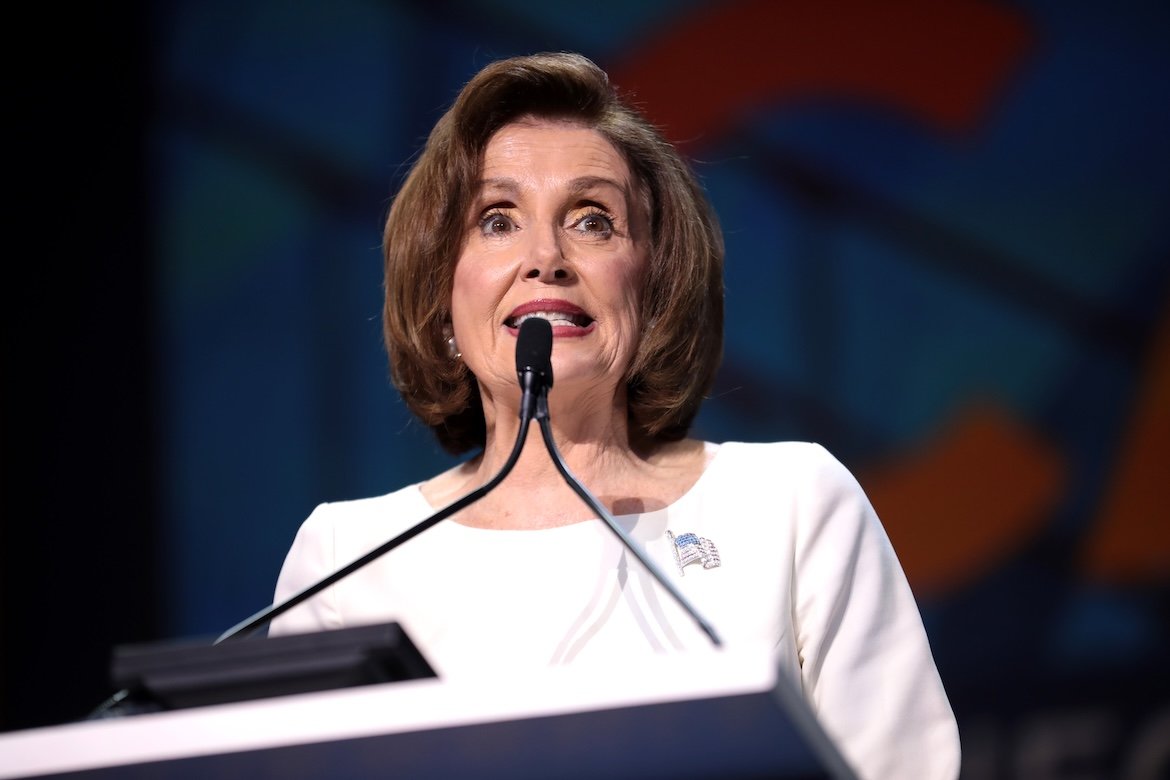
Nancy Pelosi undertook a broad restructuring of her investment portfolio, shifting away from direct stock holdings toward long-dated call options in major technology companies. The changes point to a more leveraged and focused exposure to Big Tech extending through 2027. Photo: Gage Skidmore / Wikimedia
Nancy Pelosi has carried out a significant restructuring of her investment portfolio, sharply increasing her use of options while reducing direct equity exposure across several major technology companies. The changes, disclosed in recent filings, show a clear shift toward long-dated call options and strategic reallocation among leading U.S. stocks.
The moves span some of the largest names in the technology sector, including Alphabet, Amazon, Apple, and Nvidia. The restructuring also includes sales and option exercises in several non-tech holdings, underscoring a broad repositioning rather than isolated trades.
Why Pelosi is leaning into options
In Alphabet, Pelosi exercised 50 call options with a $150 strike price, adding 5,000 shares, while simultaneously purchasing 20 additional $150 call options expiring on January 15, 2027. At the same time, 7,704 Alphabet shares were transferred into a donor-advised fund, reducing taxable exposure.
A similar strategy was applied to Amazon. Pelosi exercised 50 call options at a $150 strike price, acquiring 5,000 shares, sold 20,000 shares outright, and purchased 20 new $150 call options with the same January 2027 expiration. The pattern suggests a deliberate replacement of equity holdings with leveraged exposure through options.
Apple saw one of the largest equity reductions. Pelosi sold 45,000 shares and transferred an additional 28,200 shares into a donor-advised fund, while opening 20 call option positions with a $100 strike price expiring in January 2027. The trades significantly lowered direct ownership while preserving upside participation.
In Nvidia, Pelosi exercised 50 call options at an $80 strike price, adding 5,000 shares, sold 20,000 shares, and bought 20 call options at a $100 strike price with a January 2027 expiration. As previously covered, Nvidia has been one of the most closely watched stocks amid the artificial intelligence boom, making the continued exposure notable.
What the portfolio overhaul signals
Beyond Big Tech, Pelosi sold 5,000 shares of PayPal, exercised 50 call options in Tempus AI at a $20 strike price, acquiring 5,000 shares, and exercised 50 call options in Vistra at a $50 strike price. She also sold 10,000 shares of Disney and purchased 25,000 shares of AllianceBernstein.
Additionally, Pelosi received 776 shares of Versant Media along with cash following its separation from Comcast.
For investors, the portfolio overhaul highlights a strategic preference for optionality and leverage rather than outright ownership. Long-dated call options allow exposure to upside while limiting capital at risk, though they also introduce time decay and volatility sensitivity.
The scale and coordination of the trades are likely to attract renewed attention to congressional investing practices. Market participants often scrutinize Pelosi’s disclosures for directional signals, particularly in technology stocks, though analysts caution that options-based strategies can reflect tax planning and portfolio mechanics as much as market conviction.
Taken together, the reshuffle points to a calculated bet on continued strength in select growth stocks, but with risk managed through structure rather than scale.
Silver surged to a record $117 per ounce before pulling back toward $110, capping one of the most volatile episodes in precious metals history. Analysts say trillions of dollars in value shifted hands within hours, marking a defining moment for commodities markets.
By Nathan Cole | Edited by Oleg Petrenko
Published:
Updated:
Silver jumped to a record $117 per ounce before retreating toward $110, closing one of the most volatile episodes ever seen in precious metals. Analysts say trillions of dollars in market value moved within hours, making it a defining moment for commodities markets. Photo: Kallemax / Wikimedia
Silver and gold markets experienced historic turbulence over the past 24 hours, with price swings of a scale rarely seen in global commodities trading. Silver surged to a new all-time high of $117 per ounce, jumping roughly 16% in a single day, before retreating modestly to around $110 in the following session.
The dramatic move capped an extraordinary period of volatility that rippled across precious metals markets. In a span of just 90 minutes, an estimated $1.7 trillion in combined market capitalization was briefly wiped out, according to market estimates cited by analysts tracking futures and derivatives flows.
The intensity of the swings immediately drew comparisons to major systemic market events, underscoring how quickly sentiment can shift in tightly supplied commodities.
Silver and gold saw historic volatility
The most striking moves were concentrated in silver. Over a roughly 14-hour period, silver’s implied market value swung by nearly $2 trillion. Prices first added about $500 billion in market capitalization, then erased approximately $950 billion, before rebounding by another $500 billion. The magnitude of these fluctuations was comparable to the entire market capitalization of Bitcoin, highlighting the scale of the shock.
Analysts point to a combination of thin liquidity, heavy speculative positioning, and intense demand for physical metals as key drivers. As previously covered, silver has been under pressure from both surging industrial demand and constrained supply, leaving the market vulnerable to outsized moves when positioning becomes crowded.
Gold also experienced sharp intraday swings, reinforcing the broader theme of stress across real assets. The volatility suggests that investors are aggressively repositioning amid concerns over currency stability, inflation risk, and declining confidence in traditional cash holdings.
Market participants noted that algorithmic trading and derivatives amplification likely accelerated the price action, particularly as key technical levels were breached in rapid succession.
For markets and investors
The extreme turbulence has sent a clear signal about the fragility of liquidity in commodities markets during periods of intense demand. While silver ultimately pulled back from its peak, the speed and scale of the moves have raised questions about risk management and price discovery mechanisms.
For investors, the episode underscores both the appeal and the danger of commodities during macroeconomic stress. Silver’s rapid ascent reinforces its role as a high-beta alternative to gold, but the violent reversals highlight the potential for sudden losses even amid strong long-term fundamentals.
Analysts say this episode is likely to be studied for years, both for its sheer size and for what it reveals about modern market structure. The comparison to bitcoin-scale valuations shifting within hours illustrates how traditional assets can now exhibit volatility once associated primarily with cryptocurrencies.
Looking ahead, traders will closely monitor positioning data, physical demand indicators, and policy signals that could either stabilize prices or trigger further swings. While near-term direction remains uncertain, few doubt that this moment has already secured a place in market history.
Binance is considering reviving stock trading through tokenized equities, four years after shutting the product down in 2021. The move could give global users exposure to U.S. shares while operating outside direct U.S. regulatory oversight.
By Sophia Reynolds | Edited by Oleg Petrenko
Published:
Updated:
Binance is weighing a return to stock trading via tokenized equities, four years after discontinuing the product in 2021. The initiative could allow global users to gain exposure to U.S. shares while operating beyond direct U.S. regulatory oversight. Photo: Vadim Artyukhin / Unsplash
Binance is considering a return to stock trading on its platform, revisiting a product it shut down in 2021 amid mounting regulatory pressure. According to people familiar with the matter, the crypto exchange is exploring the reintroduction of tokenized equities that mirror the performance of U.S.-listed stocks.
If revived, the offering would allow users outside the United States to gain exposure to American shares through blockchain-based tokens rather than direct ownership. The initiative would mark a significant strategic shift for Binance as major crypto platforms seek to expand beyond digital assets into traditional financial markets.
Binance is revisiting tokenized equities
Binance originally suspended its tokenized stock products in 2021 after regulators in several jurisdictions raised concerns about investor protection and licensing requirements. At the time, authorities questioned whether such tokens constituted securities and whether crypto exchanges were authorized to offer them.
Since then, demand for hybrid financial products has grown. Large crypto exchanges increasingly view tokenized equities as a way to bridge traditional markets and digital infrastructure. As previously covered, tokenization allows assets to trade around the clock, settle instantly, and reach investors in regions where access to U.S. markets is limited.
Industry participants say the renewed interest is also driven by regulatory fragmentation. By structuring products that operate outside U.S. jurisdiction, exchanges may offer exposure to American stocks without falling directly under U.S. securities laws. This effectively creates a “parallel stock market” that functions beyond the reach of U.S. regulators.
Implications for markets and regulation
A return of tokenized stocks on Binance would have far-reaching implications for both crypto and equity markets. For investors, such products offer a new way to access U.S. equities using crypto wallets, potentially lowering barriers related to brokerage accounts, trading hours, and cross-border restrictions.
However, regulators are likely to scrutinize the move closely. Tokenized stocks raise unresolved questions around custody, shareholder rights, transparency, and market integrity. Critics argue that replicating equity performance without direct ownership could expose investors to additional risks, particularly during periods of volatility.
For traditional exchanges and brokers, the development could represent growing competition from crypto-native platforms. If tokenized equities gain traction, they may pressure legacy market infrastructure to accelerate modernization efforts, including shorter settlement cycles and broader international access.
Looking ahead, Binance’s decision could signal a broader shift across the industry. As crypto exchanges search for new growth avenues amid tighter oversight of digital assets, tokenized versions of traditional securities may become a central battleground between innovation and regulation.
Join our list to receive latest Blockchain, Crypto & Fintech news:
WordPress database error: [Table 'u752143311_Kem9N.wp_coingecko_coins' doesn't exist]
            SELECT coins.*, meta.post_id as post_id
            FROM `wp_coingecko_coins` coins
            INNER JOIN wp_postmeta meta ON (meta.meta_key = 'wpcf-coin-main-tag' AND meta.meta_value = coins.slug )
            ORDER BY market_cap_usd
            DESC LIMIT 9