TSMC Shares Hit Record High as Taiwan Eases Investment Limits

TSMC shares reached a record high after Taiwan eased single-stock investment caps, boosting demand from institutional funds.

By Daniel Wright | Edited by Oleg Petrenko Published:
TSMC Shares Hit Record High as Taiwan Eases Investment Limits
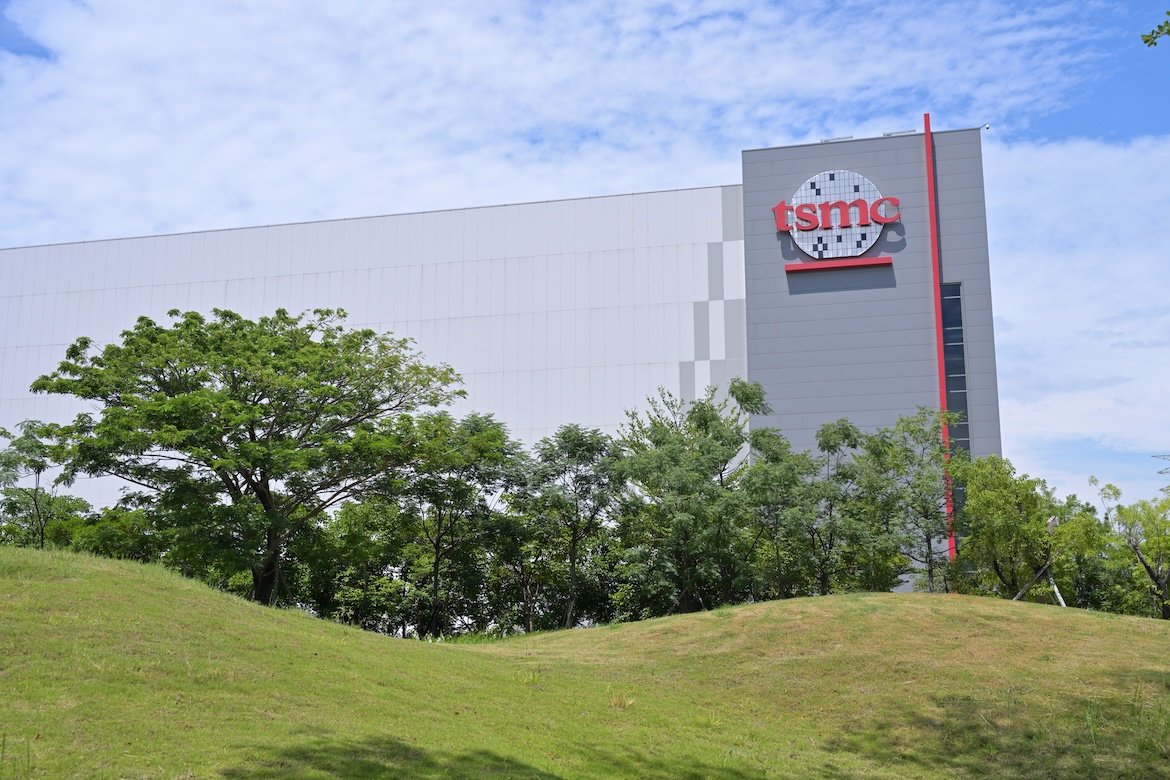
TSMC shares hit a record high after Taiwan relaxed single-stock investment caps, driving increased demand from institutional funds. Photo: 4300streetcar / Wikimedia

Shares of Taiwan Semiconductor Manufacturing Company climbed to a record high after regulators eased restrictions on how much institutional funds can invest in a single stock, unlocking additional demand for one of the world’s most valuable chipmakers.

The rally follows a strong earnings report, with TSMC posting a 58% year-over-year increase in first-quarter profit, driven by robust demand for advanced chips used in artificial intelligence and high-performance computing.

The policy change allows funds greater flexibility to allocate capital to top-performing companies, a move that has disproportionately benefited large-cap leaders like TSMC.

Policy Shift Boosts Institutional Demand for Chip Giant

Taiwan’s decision to relax single-stock investment caps is expected to channel more capital into leading domestic companies, particularly those with strong growth prospects and global relevance.

TSMC, as the dominant contract chip manufacturer globally, stands out as a primary beneficiary, given its critical role in supplying advanced semiconductors to major technology firms.

The easing of limits effectively removes a structural constraint that previously capped exposure, enabling funds to increase their positions in high-conviction names.

As previously covered, regulatory changes can have a significant impact on capital flows, particularly in markets where institutional allocation rules play a key role in shaping demand.

The move also reflects broader efforts by Taiwan to strengthen its capital markets and support key industries such as semiconductors.

Market Implications Highlight AI-Driven Semiconductor Strength

The surge in TSMC shares underscores continued strength in the semiconductor sector, fueled by rising demand for AI-related hardware.

Investors are increasingly focused on companies that provide the infrastructure for AI development, including advanced chip manufacturing and design.

TSMC’s strong earnings performance reinforces its position as a core beneficiary of this trend, with sustained demand from clients across cloud computing, data centers, and consumer electronics.

At the same time, the record-high valuation raises questions about how much of the AI-driven growth is already priced into the stock.

For markets, the development highlights a key theme: policy support and structural demand are converging to drive momentum in the semiconductor sector.

TSMC’s performance will continue to serve as a benchmark for investor sentiment toward the broader AI and technology ecosystem.


Microsoft Plans First Voluntary Buyouts Covering Up to 7% of U.S. Workforce

Microsoft is introducing its first voluntary buyout program, targeting up to 7% of its U.S. workforce as part of broader efficiency efforts.

By Emma Clarke | Edited by Oleg Petrenko Published:
Microsoft Plans First Voluntary Buyouts Covering Up to 7% of U.S. Workforce
Microsoft is rolling out its first voluntary buyout program, covering up to 7% of its U.S. workforce as part of broader efficiency efforts. Photo: Angel Bena / Pexels

Microsoft is planning its first-ever voluntary employee buyout program, offering exit packages to eligible U.S. workers as part of a broader push to streamline operations and manage costs.

The program could affect up to 7% of the company’s U.S. workforce and will be available to employees at the senior director level and below whose combined age and years of service total at least 70.

The move marks a shift in Microsoft’s workforce strategy, as the company looks to balance ongoing investments in artificial intelligence with operational efficiency.

Buyout Program Targets Cost Control Amid AI Spending

The voluntary buyout initiative reflects increasing pressure on major technology companies to control costs while maintaining aggressive investment in AI infrastructure and development.

Microsoft has been ramping up spending on data centers, cloud computing, and AI platforms, positioning itself as a leader in enterprise AI solutions.

By offering voluntary exits instead of mandatory layoffs, the company aims to reduce headcount in a more controlled and less disruptive manner.

As previously covered, tech firms have increasingly turned to workforce optimization strategies as they scale AI investments and adjust to shifting market conditions.

The eligibility criteria suggest the program is focused on more experienced employees, potentially reshaping the company’s workforce composition over time.

Market Implications Highlight Big Tech Efficiency Focus

The announcement underscores a broader trend across Big Tech, where companies are prioritizing cost discipline alongside long-term growth initiatives.

Investors have generally responded positively to such measures, viewing them as a way to protect margins and improve capital allocation.

At the same time, the move signals that even highly profitable companies like Microsoft are reassessing staffing levels in response to changing technological and economic dynamics.

Analysts note that voluntary programs may reduce reputational risks compared to layoffs, while still achieving meaningful cost savings.

For markets, the development reinforces a key theme: the AI investment cycle is reshaping corporate strategies, driving both innovation and structural changes in workforce management.

Microsoft’s approach will be closely watched as an example of how companies navigate the balance between growth and efficiency in the evolving tech landscape.

OpenAI Launches GPT-5.5 With Focus on Agentic Coding and Efficiency Gains

OpenAI released GPT-5.5 with improved efficiency and a focus on agentic coding, though higher pricing reflects its expanded capabilities.

By Daniel Wright | Edited by Oleg Petrenko Published:
OpenAI Launches GPT-5.5 With Focus on Agentic Coding and Efficiency Gains
OpenAI launched GPT-5.5 with enhanced efficiency and a focus on agentic coding, while higher pricing reflects its expanded capabilities. Photo: OpenAI

OpenAI has unveiled GPT-5.5, its latest model designed with a strong focus on agentic coding and real-world productivity, as competition intensifies in the rapidly evolving artificial intelligence market.

The new model introduces improved efficiency, requiring fewer tokens to deliver high-quality outputs, a key metric for developers and enterprises seeking to optimize performance and cost.

However, the pricing has increased, with API costs set at approximately $5 per million input tokens and $30 per million output tokens. The Pro tier is priced significantly higher at $30 and $180 respectively, reflecting the model’s enhanced capabilities.

Efficiency Gains and Coding Focus Drive Product Upgrade

GPT-5.5 is positioned as a model built for “real work”, with enhanced capabilities in coding, scientific research, and enterprise-level tasks.

A major improvement lies in its ability to achieve better results with fewer tokens, which can reduce computational overhead and improve overall system efficiency despite higher per-token pricing.

The emphasis on agentic coding reflects a broader industry trend, where AI systems are increasingly expected to operate autonomously across complex workflows rather than simply generate text.

The model is available to a wide range of users, including subscribers to Plus, Pro, Business, and Enterprise plans, signaling OpenAI’s intent to scale adoption across both individual and corporate segments.

As previously covered, AI developers are racing to improve both performance and efficiency as demand for large-scale deployment continues to grow.

Market Implications Highlight Pricing Power and Competitive Pressure

The launch underscores OpenAI’s strategy to balance technological advancement with monetization, as it continues to invest heavily in infrastructure and model development.

Higher pricing suggests confidence in the model’s value proposition, particularly for enterprise users willing to pay for improved performance and reliability.

At the same time, competition remains intense, with companies like Google and Anthropic advancing their own models and pushing innovation across the sector.

For investors and industry observers, the key question is whether efficiency gains can offset rising costs and drive broader adoption.

The focus on agentic capabilities also signals a shift toward AI systems that can perform tasks independently, potentially transforming productivity across industries.

GPT-5.5’s rollout reinforces a central theme in the AI market: innovation is accelerating, but so are the economic and competitive stakes shaping the future of the industry.

Tesla Begins Cybercab Production in Texas Without Volume Limits

Tesla has started Cybercab production in Texas without volume restrictions, signaling a major step in scaling its autonomous vehicle strategy.

By Oleg Petrenko Published:
Tesla Begins Cybercab Production in Texas Without Volume Limits
Tesla has begun Cybercab production in Texas without volume limits, marking a key step in scaling its autonomous vehicle strategy. Photo: Tesla / X

Tesla has officially begun production of its Cybercab autonomous vehicle in Texas, marking a significant milestone in its push to scale robotaxi services without traditional volume constraints.

The company confirmed that production is underway despite ongoing delays in fully unsupervised driving capabilities, with executives indicating that the program is moving forward under a self-certification framework.

Notably, the Cybercab is not subject to the U.S. National Highway Traffic Safety Administration’s typical 2,500-vehicle exemption cap, allowing Tesla to scale production more aggressively.

Self-Certification Approach Enables Faster Scaling

Tesla’s decision to rely on self-certification allows it to bypass certain regulatory limitations that typically restrict the number of autonomous vehicles deployed during early testing phases.

This approach could significantly accelerate the rollout of its robotaxi fleet, particularly if the company is able to demonstrate safety and reliability at scale.

The Cybercab is designed as a purpose-built autonomous vehicle, with no traditional driver controls, reflecting Tesla’s long-term vision of fully driverless transportation.

As previously covered, Tesla has been positioning its robotaxi strategy as a core growth driver, aiming to generate recurring revenue through ride-hailing services.

The launch in Texas builds on earlier deployments in cities such as Austin, reinforcing the state as a central hub for Tesla’s autonomous vehicle development.

Market Implications Highlight Growth Potential and Regulatory Risks

The start of production without volume limits is likely to be viewed as a bullish signal by investors, indicating that Tesla is moving closer to large-scale commercialization of its autonomous platform.

However, the reliance on self-certification also raises regulatory and safety concerns, particularly as authorities continue to evaluate frameworks for autonomous vehicles.

Competition in the robotaxi space is intensifying, with players such as Waymo and other technology firms advancing their own driverless solutions.

For investors, the key question is whether Tesla can successfully scale its Cybercab network while navigating regulatory scrutiny and maintaining safety standards.

The development underscores a broader market theme: autonomous driving remains one of the most high-stakes and potentially transformative segments within the AI and mobility landscape.

Tesla’s progress in this area will be closely watched as an indicator of how quickly robotaxi services can transition from pilot programs to mainstream adoption.

Anthropic Tops $1 Trillion on Secondary Markets, Overtakes OpenAI Valuation

Anthropic is trading at a $1 trillion valuation on secondary markets, surpassing OpenAI and highlighting shifting investor sentiment in AI.

By Daniel Wright | Edited by Oleg Petrenko Published:
Anthropic Tops $1 Trillion on Secondary Markets, Overtakes OpenAI Valuation
Anthropic is valued at around $1 trillion on secondary markets, surpassing OpenAI and reflecting shifting investor sentiment in the AI sector. Photo: Oleg Petrenko / MarketSpeaker

Anthropic is being valued at approximately $1 trillion on secondary markets, surpassing OpenAI and marking a significant shift in investor sentiment within the artificial intelligence sector.

Shares of Anthropic on platforms such as Forge Global have surged sharply, pushing the company’s implied valuation well above its most recent funding round just three months ago, when it was valued at around $380 billion.

In contrast, OpenAI is currently trading at an estimated $880 billion on the same secondary market, only slightly above its last primary funding valuation.

Secondary Market Surge Reflects Changing AI Leadership Narrative

The sharp increase in Anthropic’s valuation underscores growing investor confidence in the company’s positioning within the AI ecosystem.

Secondary markets often act as an early signal of shifting sentiment, particularly for high-profile private companies where access to shares is limited.

Anthropic’s rapid valuation expansion suggests strong demand for exposure to its AI models and infrastructure, as investors look for alternatives to more established players.

As previously covered, capital has been flowing aggressively into AI companies, driving valuations higher across both public and private markets.

The divergence between Anthropic and OpenAI valuations may reflect differences in perceived growth potential, strategic partnerships, and product positioning.

Market Implications Highlight Intensifying Competition in AI

The development highlights how quickly leadership dynamics in the AI sector can shift as companies compete for talent, capital, and technological breakthroughs.

Investors are increasingly evaluating firms not just on current capabilities, but on long-term scalability and monetization potential.

The rise of secondary market valuations also reflects limited access to primary funding rounds, pushing investors to seek exposure through alternative channels.

However, analysts caution that secondary market pricing can be more volatile and less transparent than traditional funding rounds.

For markets, the shift underscores a broader theme: the AI race is entering a new phase where valuation leadership is fluid and closely tied to investor expectations.

Anthropic’s surge past the $1 trillion mark signals both the scale of opportunity in AI and the intensity of competition shaping the sector’s future.

FTX Portfolio Could Have Reached $114 Billion Had Assets Not Been Liquidated

FTX’s investment portfolio could be worth $114 billion today if assets hadn’t been sold during its 2022 collapse, driven by massive gains in AI and tech holdings.

By David Sinclair | Edited by Oleg Petrenko Published: Updated:
FTX Portfolio Could Have Reached $114 Billion Had Assets Not Been Liquidated
FTX’s investment portfolio could be valued at around $114 billion today if its assets hadn’t been liquidated during the 2022 collapse, fueled by sharp gains in AI and tech holdings. Photo: Oleg Petrenko / MarketSpeaker

FTX’s investment portfolio could have been worth approximately $114 billion today had its assets not been liquidated following the company’s collapse in 2022, according to estimates based on current valuations.

At the time of its bankruptcy, administrators moved quickly to sell off holdings to repay creditors, effectively locking in losses and forfeiting exposure to what has since become one of the strongest rallies in technology and artificial intelligence assets.

The missed upside highlights the dramatic surge in valuations across AI, crypto, and private tech companies over the past two years.

AI and Tech Holdings Drove Massive Hypothetical Gains

A significant portion of the unrealized gains would have come from investments in artificial intelligence and high-growth technology companies.

Anthropic alone would account for approximately $82.3 billion of the total, reflecting a roughly 165x increase in value. SpaceX holdings could be worth around $15 billion, representing a 75x gain.

Other positions include Cursor at an estimated $3 billion an extraordinary 15,000x return along with Robinhood at $4.9 billion (8x) and Genesis Digital at $3.5 billion (3x).

FTX also held a substantial position in Solana, now valued at approximately $5.1 billion, reflecting a 27x increase since the liquidation period.

As previously covered, the AI boom has driven unprecedented capital inflows into both public and private markets, significantly boosting valuations across the sector.

Market Lessons Highlight Timing and Forced Liquidation Risks

The case underscores the impact of forced liquidation during periods of market stress, where assets are often sold at depressed valuations to meet immediate obligations.

While the strategy helped repay creditors, it eliminated exposure to long-term growth themes that later delivered outsized returns.

Analysts note that such scenarios are common in financial crises, where liquidity pressures override investment horizons.

For investors, the example reinforces the importance of balance sheet resilience and risk management, particularly in volatile markets.

At the same time, the scale of the hypothetical gains reflects broader market dynamics, including the rapid expansion of AI valuations and the recovery of risk assets following the downturn.

The FTX case serves as a stark illustration of how timing, leverage, and liquidity constraints can significantly influence long-term investment outcomes.