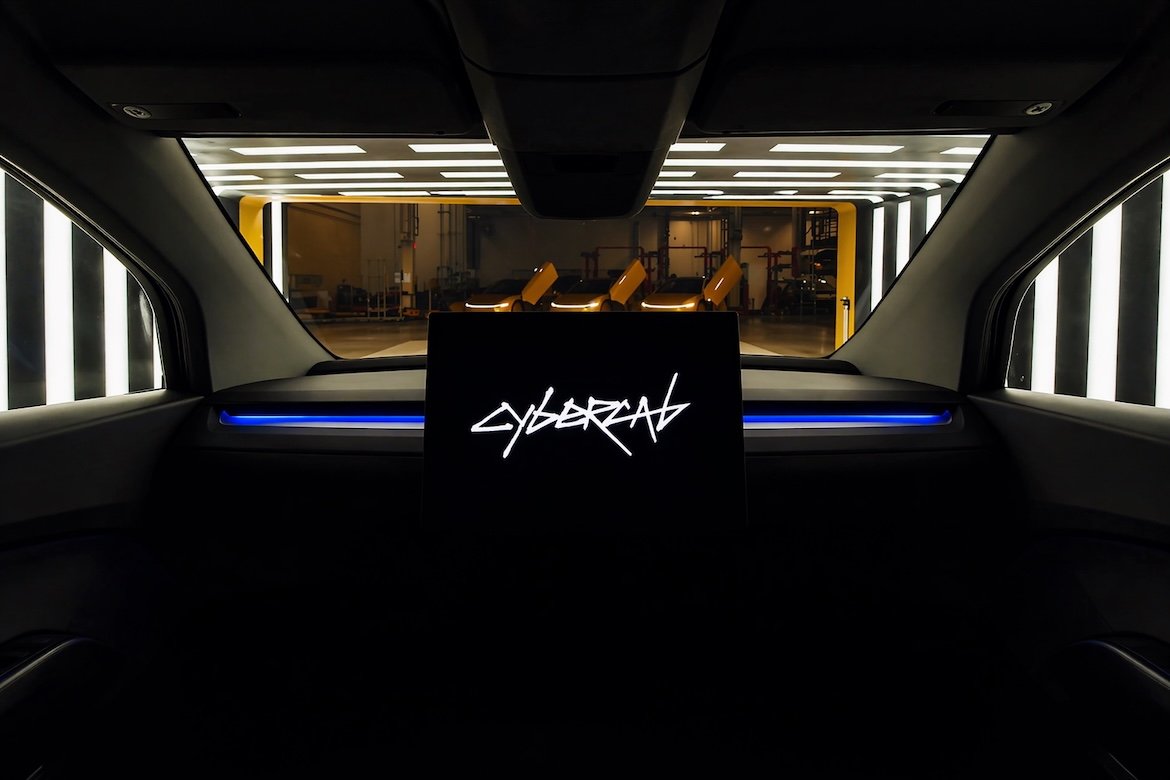
Tesla has officially begun production of its Cybercab autonomous vehicle in Texas, marking a significant milestone in its push to scale robotaxi services without traditional volume constraints.
The company confirmed that production is underway despite ongoing delays in fully unsupervised driving capabilities, with executives indicating that the program is moving forward under a self-certification framework.
Purpose-built for autonomy
Cybercab in production now at Giga Texas pic.twitter.com/Y9qG3KyWBa
— Tesla (@Tesla) April 23, 2026
Notably, the Cybercab is not subject to the U.S. National Highway Traffic Safety Administration’s typical 2,500-vehicle exemption cap, allowing Tesla to scale production more aggressively.
Self-Certification Approach Enables Faster Scaling
Tesla’s decision to rely on self-certification allows it to bypass certain regulatory limitations that typically restrict the number of autonomous vehicles deployed during early testing phases.
This approach could significantly accelerate the rollout of its robotaxi fleet, particularly if the company is able to demonstrate safety and reliability at scale.
The Cybercab is designed as a purpose-built autonomous vehicle, with no traditional driver controls, reflecting Tesla’s long-term vision of fully driverless transportation.
As previously covered, Tesla has been positioning its robotaxi strategy as a core growth driver, aiming to generate recurring revenue through ride-hailing services.
The launch in Texas builds on earlier deployments in cities such as Austin, reinforcing the state as a central hub for Tesla’s autonomous vehicle development.
Market Implications Highlight Growth Potential and Regulatory Risks
The start of production without volume limits is likely to be viewed as a bullish signal by investors, indicating that Tesla is moving closer to large-scale commercialization of its autonomous platform.
However, the reliance on self-certification also raises regulatory and safety concerns, particularly as authorities continue to evaluate frameworks for autonomous vehicles.
Competition in the robotaxi space is intensifying, with players such as Waymo and other technology firms advancing their own driverless solutions.
For investors, the key question is whether Tesla can successfully scale its Cybercab network while navigating regulatory scrutiny and maintaining safety standards.
The development underscores a broader market theme: autonomous driving remains one of the most high-stakes and potentially transformative segments within the AI and mobility landscape.
Tesla’s progress in this area will be closely watched as an indicator of how quickly robotaxi services can transition from pilot programs to mainstream adoption.