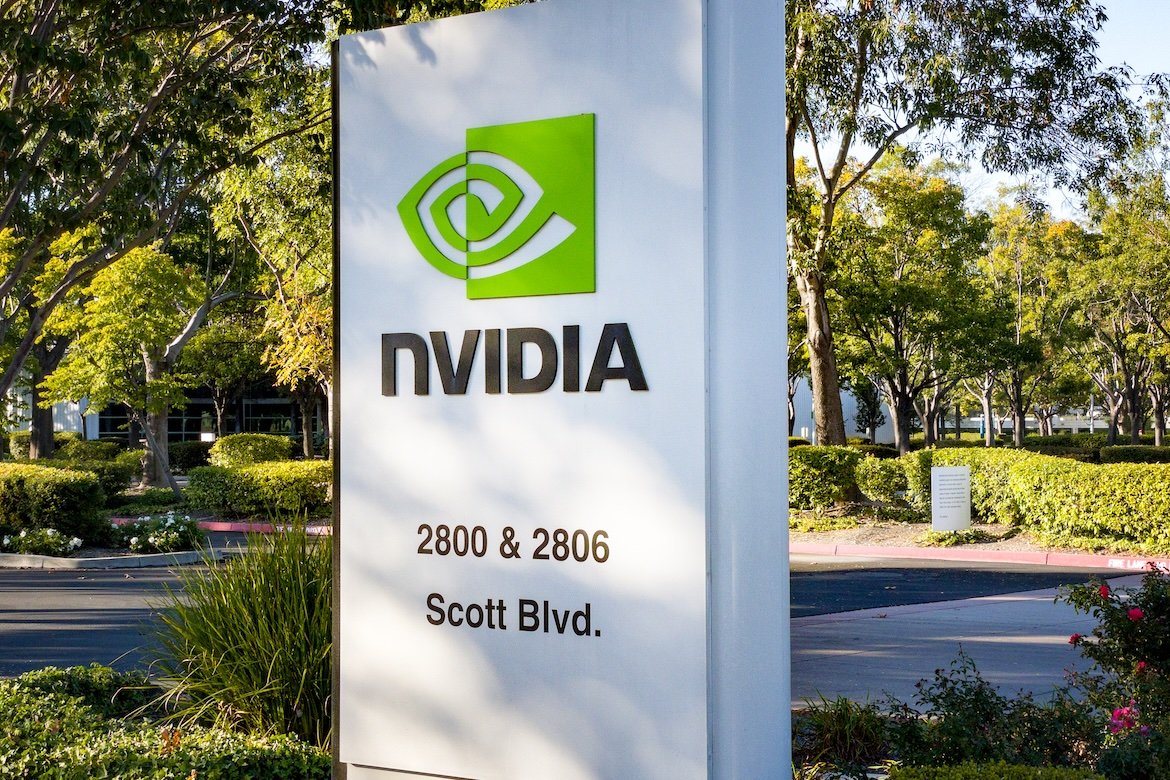

Nvidia posted record fourth-quarter revenue of $68.1 billion, a 73% increase from a year earlier, as demand for artificial intelligence infrastructure continued to surge. Net income climbed 94% year over year to $43 billion, significantly surpassing analyst expectations and reinforcing Nvidia’s dominance in the AI hardware market.
The results highlight the scale of the AI-driven capital expenditure cycle, with hyperscale cloud providers and enterprise customers continuing to invest heavily in high-performance computing capacity. Nvidia’s earnings not only exceeded consensus forecasts but also extended its streak of outsized quarterly beats during the AI boom.
AI Data Center Demand Powers Growth
The company’s data center segment once again accounted for the majority of revenue growth. Demand for advanced GPUs used in training and deploying large language models remained robust, supported by sustained investment from major cloud platforms and AI startups.
Management emphasized that AI infrastructure spending remains in its early stages. As previously covered, the global buildout of AI capacity is expected to span multiple years, with Nvidia positioned at the center of that expansion.
Gross margins remained elevated, reflecting strong pricing power and favorable product mix. Analysts noted that few companies at Nvidia’s scale are able to sustain both rapid top-line growth and expanding profitability simultaneously.
The company also highlighted continued strength in networking and AI software ecosystems, reinforcing its strategy of integrating hardware, systems, and software into a unified platform.
Investor Reaction and Market Implications
Investors responded positively to the report, viewing the results as validation that AI spending has not meaningfully slowed despite broader market volatility. The earnings beat provided support not only to Nvidia shares but also to the broader semiconductor and AI supply chain sectors.
With revenue up 73% and profits up 94%, Nvidia’s growth trajectory remains exceptional relative to the broader technology industry. The scale of earnings — $43 billion in a single quarter — underscores how central the company has become to the global AI ecosystem.
However, analysts caution that expectations remain elevated. As AI-related valuations stretch across markets, Nvidia faces increasing scrutiny regarding sustainability of growth rates and potential competitive pressures from rivals.
For now, the company’s performance suggests that AI demand remains structurally strong. If capital expenditures by major technology companies continue at current levels, Nvidia may remain one of the primary beneficiaries of the ongoing AI investment cycle.
The quarter reinforces a broader market narrative: while concerns about an AI bubble persist, Nvidia’s financial results continue to provide concrete evidence of real revenue, real profits, and sustained demand at unprecedented scale.