Key Notes
- Nvidia, IBM and Fermilab plan a shared quantum-classical research platform.
- New Vera racks combine 192 CPUs and target commercial availability in early 2027.
- The partners disclosed no financial value for the quantum collaboration.
Nvidia (NASDAQ: NVDA) and IBM (NYSE: IBM) plan to build a quantum-classical research platform with Fermilab, bringing Nvidia’s accelerated computing systems together with IBM quantum hardware to tackle obstacles to practical quantum computing.
The November 16 announcement accompanied a separate expansion of Nvidia’s Vera CPU platform into rack-scale high-performance computing. Those racks are expected to reach customers through hardware partners in early 2027, giving the chipmaker a nearer-term commercial product alongside the longer research effort.
A Shared Testbed for Quantum Computing
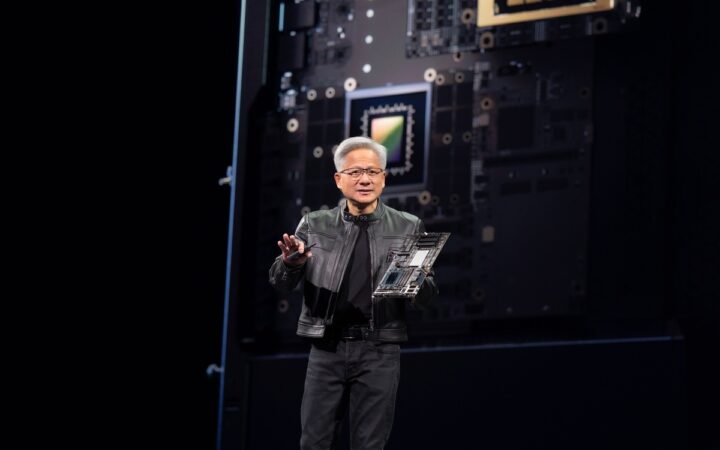
The proposed co-design platform would combine Nvidia DGX B200 systems with IBM quantum computers, including its Nighthawk processor. Researchers would use that environment to develop error-correction techniques and study how quantum and classical processors can work together.
Error correction is essential because quantum information is fragile. Classical computers must interpret measurements and identify errors quickly enough to help keep a quantum calculation on track.
Nvidia says a new decoder in its CUDA-Q error-correction software delivers up to 13,000 times faster decoding on a quantum error-correction research workload. That benchmark concerns the decoder, rather than the speed of an entire quantum computer.
Fermilab’s initial work would examine communication between quantum modules, including errors and delays in those connections. Particle and nuclear physics are among the intended applications. A later phase would incorporate superconducting-cavity hardware developed at the laboratory.
The partners are also extending Slurm, software used to schedule work on supercomputers, so quantum processors can be managed alongside CPUs and GPUs. IBM is contributing its quantum resource-management interface.
Vera CPU Racks Target Scientific Workloads
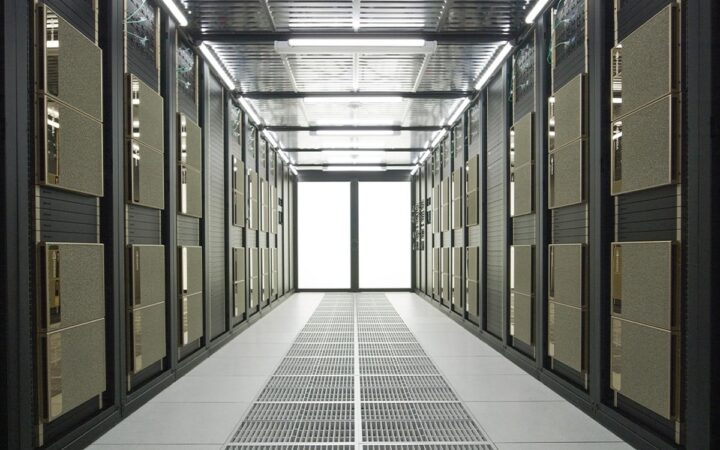
The new Vera rack configuration combines 192 CPUs with Nvidia’s Quantum-X800 InfiniBand networking in a liquid-cooled design. It offers more than 200 terabytes per second of aggregate peak memory bandwidth, targeting workloads such as climate modeling, weather forecasting and molecular dynamics.
Nvidia said the German Climate Computing Center, DKRZ, has selected Vera for its HLRE-5 supercomputer alongside GB200 systems. That deployment is expected in early 2028, after the first commercial Vera racks become available.
What the Announcements Mean for Nvidia and IBM
For Nvidia shareholders, Vera expands the company’s CPU offering for scientific computing. The processor already has a role in its OpenShell architecture, where it runs AI agents and their tools. The HPC racks put it to work on a different class of computing problems.
IBM would bring quantum hardware and software to the shared research platform. Neither company disclosed a financial value for the collaboration or a revenue forecast tied to it.
The two projects have different milestones: Vera rack deliveries are expected in early 2027, while the quantum partnership first needs to establish a shared testbed and demonstrate that modular systems can communicate reliably.