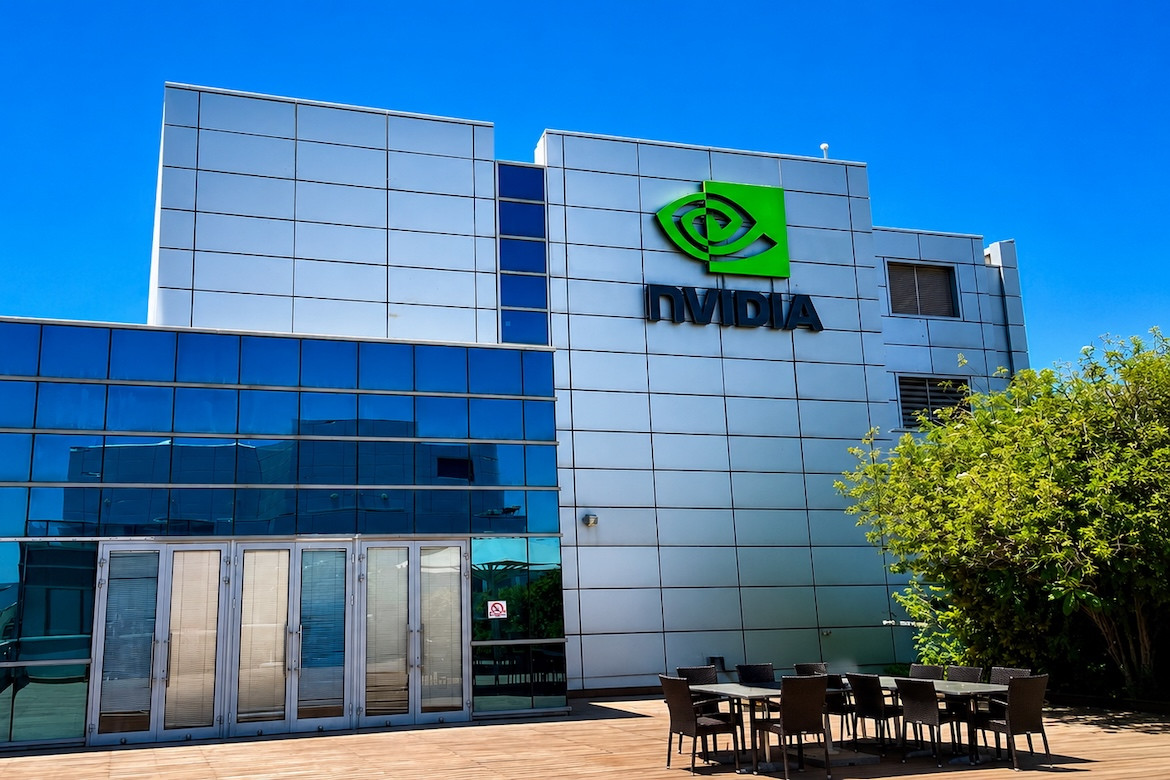
Nvidia is now viewed by debt markets as a safer borrower than the U.S. government, according to credit default swap pricing.
The company’s five-year CDS recently traded around 38 basis points, slightly below U.S. sovereign CDS levels near 40 basis points, suggesting investors perceive Nvidia’s default risk as lower than that of the federal government.
The development reflects extraordinary confidence in Nvidia’s financial position as the company continues benefiting from the global AI boom.
One of the Strongest Balance Sheets in the World
Nvidia entered fiscal 2026 with approximately $8.5 billion in total debt and roughly $10.6 billion in cash, while generating nearly $100 billion in free cash flow.
Analysts say the combination of enormous profitability, strong liquidity, and limited leverage has created one of the strongest corporate balance sheets globally.
The company has become the primary beneficiary of surging demand for AI infrastructure, supplying critical chips used across data centers, cloud computing platforms, and artificial intelligence systems.
Its financial strength has expanded alongside a historic increase in revenue, earnings, and market capitalization driven by AI investment spending.
Some analysts note that even under extreme downside scenarios, Nvidia would likely remain among the world’s most profitable companies.
Markets Treat Nvidia as a Strategic Infrastructure Asset
The CDS market increasingly reflects a view that Nvidia has evolved beyond a traditional semiconductor company into a critical provider of global AI infrastructure.
Investors continue treating the company as one of the most strategically important businesses in the technology sector due to its dominance in AI accelerators and computing platforms.
Analysts caution that CDS pricing reflects perceived credit risk rather than equity valuation, meaning strong credit quality does not necessarily imply a stock is undervalued.
Still, Nvidia’s position below U.S. sovereign CDS levels highlights the exceptional confidence investors currently have in its financial durability.
The broader takeaway is that artificial intelligence has transformed Nvidia into not only one of the world’s most valuable companies, but also one of the most trusted borrowers in global capital markets.