Netflix Walks Away From Warner Bros. Discovery Deal as Paramount Wins $111B Bid

Netflix exited its months-long pursuit of Warner Bros. Discovery after Paramount Skydance submitted a higher $31-per-share offer. Netflix shares jumped more than 10% as investors welcomed the decision and a $2.8 billion breakup fee.

By Emma Clarke | Edited by Oleg Petrenko Published:
Netflix Walks Away From Warner Bros. Discovery Deal as Paramount Wins $111B Bid
Netflix ended its months-long bid for Warner Bros. Discovery after Paramount Skydance put forward a higher $31-per-share offer. Shares of Netflix rose more than 10% as investors applauded the move and the $2.8 billion breakup fee. Photo: Oleg Petrenko / MarketSpeaker

Netflix has withdrawn from its months-long effort to acquire Warner Bros. Discovery after the target’s board determined that a revised offer from Paramount Skydance was superior. Paramount’s bid of $31 per share ultimately prevailed, valuing the transaction at approximately $111 billion.

Netflix declined to raise its offer above $27.75 per share, opting instead to step away from the bidding process. The decision triggered a sharp rally in Netflix shares, which surged more than 10% intraday as investors reacted positively to the company’s capital discipline.

Under the terms of the agreement, Netflix will receive a $2.8 billion breakup fee, cushioning the financial impact of abandoning the deal.

Why Netflix stepped back

The acquisition would have significantly expanded Netflix’s content library and studio assets, potentially strengthening its competitive position in the global streaming wars. However, analysts say the escalating price tag raised concerns about valuation, integration risk, and balance-sheet strain.

By refusing to overpay, Netflix signaled a shift toward financial prudence after years of aggressive expansion across original content and international markets. As previously covered, investors have grown more sensitive to large-scale media mergers amid rising interest rates and shifting consumer demand.

The board of Warner Bros. Discovery determined that Paramount Skydance’s revised $31-per-share proposal offered greater value to shareholders, effectively ending Netflix’s pursuit.

Market participants interpreted Netflix’s withdrawal as a disciplined move that preserves capital flexibility rather than a strategic setback.

Implications for streaming and media markets

The outcome reshapes the competitive landscape in global media. Paramount Skydance’s successful $111 billion bid positions it as a dominant force in studio and streaming assets, potentially intensifying competition across film, television, and direct-to-consumer platforms.

For Netflix, the rally in shares suggests investors prefer organic growth and selective partnerships over large, debt-heavy acquisitions. The $2.8 billion breakup fee further strengthens its liquidity position, providing additional resources for content investment or shareholder returns.

The deal also underscores how consolidation in the media industry remains active, even as valuations fluctuate. Streaming platforms continue to seek scale and intellectual property to defend margins and subscriber growth in a saturated market.

Looking ahead, analysts expect Netflix to refocus on subscriber expansion, advertising-tier growth, and international penetration rather than transformative M&A. The episode may mark a turning point in how the company approaches strategic acquisitions.

For now, the market’s message is clear: discipline over dominance. By walking away, Netflix avoided a costly bidding war and investors rewarded the decision.

Nvidia Posts Record $68.1 Billion Q4 Revenue as AI Demand Drives 94% Profit Surge

Nvidia reported record fourth-quarter revenue of $68.1 billion, up 73% year over year, as artificial intelligence demand continued to fuel explosive growth. Net income surged 94% to $43 billion, well above analyst expectations.

By Sophia Reynolds | Edited by Oleg Petrenko Published:
Nvidia Posts Record $68.1 Billion Q4 Revenue as AI Demand Drives 94% Profit Surge
Nvidia reported record fourth-quarter revenue of $68.1 billion, up 73% year over year, as AI demand fueled explosive growth. Net income jumped 94% to $43 billion, far exceeding analyst expectations. Photo: Will Buckner / Wikimedia

Nvidia posted record fourth-quarter revenue of $68.1 billion, a 73% increase from a year earlier, as demand for artificial intelligence infrastructure continued to surge. Net income climbed 94% year over year to $43 billion, significantly surpassing analyst expectations and reinforcing Nvidia’s dominance in the AI hardware market.

The results highlight the scale of the AI-driven capital expenditure cycle, with hyperscale cloud providers and enterprise customers continuing to invest heavily in high-performance computing capacity. Nvidia’s earnings not only exceeded consensus forecasts but also extended its streak of outsized quarterly beats during the AI boom.

AI Data Center Demand Powers Growth

The company’s data center segment once again accounted for the majority of revenue growth. Demand for advanced GPUs used in training and deploying large language models remained robust, supported by sustained investment from major cloud platforms and AI startups.

Management emphasized that AI infrastructure spending remains in its early stages. As previously covered, the global buildout of AI capacity is expected to span multiple years, with Nvidia positioned at the center of that expansion.

Gross margins remained elevated, reflecting strong pricing power and favorable product mix. Analysts noted that few companies at Nvidia’s scale are able to sustain both rapid top-line growth and expanding profitability simultaneously.

The company also highlighted continued strength in networking and AI software ecosystems, reinforcing its strategy of integrating hardware, systems, and software into a unified platform.

Investor Reaction and Market Implications

Investors responded positively to the report, viewing the results as validation that AI spending has not meaningfully slowed despite broader market volatility. The earnings beat provided support not only to Nvidia shares but also to the broader semiconductor and AI supply chain sectors.

With revenue up 73% and profits up 94%, Nvidia’s growth trajectory remains exceptional relative to the broader technology industry. The scale of earnings — $43 billion in a single quarter — underscores how central the company has become to the global AI ecosystem.

However, analysts caution that expectations remain elevated. As AI-related valuations stretch across markets, Nvidia faces increasing scrutiny regarding sustainability of growth rates and potential competitive pressures from rivals.

For now, the company’s performance suggests that AI demand remains structurally strong. If capital expenditures by major technology companies continue at current levels, Nvidia may remain one of the primary beneficiaries of the ongoing AI investment cycle.

The quarter reinforces a broader market narrative: while concerns about an AI bubble persist, Nvidia’s financial results continue to provide concrete evidence of real revenue, real profits, and sustained demand at unprecedented scale.

AI Disruption Fears Trigger Selloff in U.S. Software Stocks

U.S. software stocks are tumbling in 2026 as investors fear sudden AI breakthroughs could render established products obsolete. The sector’s slide has accelerated despite steady earnings, with major names posting double-digit losses.

By Sophia Reynolds | Edited by Oleg Petrenko Published: Updated:
AI Disruption Fears Trigger Selloff in U.S. Software Stocks
U.S. software stocks are sliding in 2026 as investors worry that sudden AI breakthroughs could make established products obsolete. The downturn has gained momentum despite stable earnings, with several major companies posting double-digit declines. Photo: Scott Beale / Wikimedia

A growing theme in U.S. markets is the fear of an unexpected shock from artificial intelligence a sudden breakthrough that could undermine established software businesses almost overnight. Investors are increasingly selling shares of software makers amid concerns that new AI-native competitors could render long-standing products obsolete.

The selloff has intensified even in cases where earnings remain relatively stable, suggesting the pressure is driven less by fundamentals and more by forward-looking disruption risk.

Recent volatility was highlighted by a sharp decline in shares of IBM, which fell heavily in the latest session, adding to mounting anxiety across the sector.

Why investors are dumping software stocks

Since the start of 2026, several major U.S. software companies have seen steep declines. Snowflake is down about 28%, Intuit has dropped roughly 46%, Salesforce is off 33%, Autodesk has fallen 26%, and Workday is down around 40%.

Bloomberg reports that investors continue to unload software stocks regardless of earnings updates, underscoring the depth of skepticism surrounding the sector.

Market participants increasingly worry that an AI startup could launch a new product capable of rapidly displacing legacy platforms that took years and millions of dollars to develop. With generative AI tools evolving quickly, barriers to entry in certain software categories appear lower than before.

As previously covered, the AI boom has shifted investor focus toward infrastructure providers and chipmakers, while application-layer software firms face questions about defensibility and pricing power.

Warnings of structural risk

The concerns are not limited to traders. Nassim Nicholas Taleb, author of The Black Swan, has warned that parts of the software sector could face bankruptcy risk if AI dramatically alters competitive dynamics. Taleb argues that rapid technological shifts can create nonlinear outcomes, catching even established companies off guard.

Analysts say the core issue is unpredictability. In the past, software cycles unfolded gradually, allowing incumbents time to adapt. Today, with AI development accelerating globally, disruption can emerge from virtually anywhere – across geographies, industries, and business models.

This perceived fragility has led investors to reassess valuations that once reflected high recurring revenue and strong customer lock-in. Even profitable firms are being repriced as markets factor in potential long-term erosion.

For now, the software sector remains under pressure as investors grapple with a new paradigm: in the age of AI, competitive threats can materialize faster and with greater force than ever before. Whether these fears prove justified or excessive will depend on how quickly incumbents adapt and whether the next breakthrough truly reshapes the landscape.

Finland’s IQM to Go Public at $1.8 Billion, Among Europe’s First Listed Quantum Firms

Finland-based IQM is set to go public at a $1.8 billion valuation, becoming one of Europe’s first listed quantum computing companies. The move marks a milestone for the region’s emerging deep-tech sector.

By Sophia Reynolds | Edited by Oleg Petrenko Published: Updated:
Finland’s IQM to Go Public at $1.8 Billion, Among Europe’s First Listed Quantum Firms
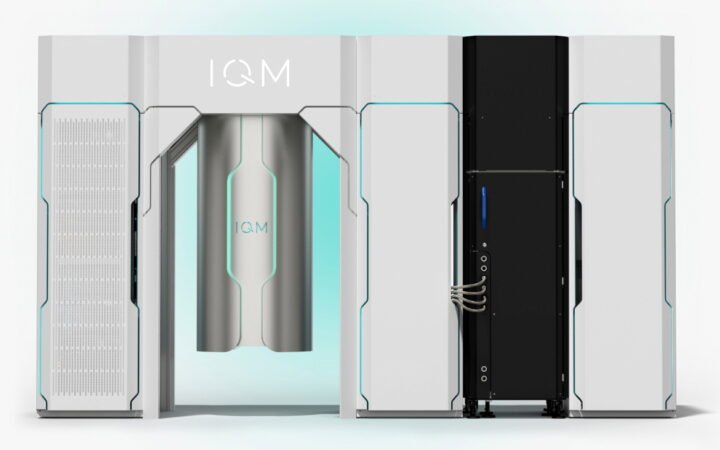
Finland’s IQM is preparing to go public at a $1.8 billion valuation, positioning itself among Europe’s first listed quantum computing firms. The listing represents a significant step forward for the region’s growing deep-tech industry. Photo: IQM Quantum Computers / X

IQM is set to become one of Europe’s first publicly listed quantum computing companies in a transaction valuing the firm at approximately $1.8 billion. The move represents a significant milestone for Europe’s deep-tech ecosystem, as investors increasingly look beyond artificial intelligence to next-generation computing technologies.

The Finnish company, headquartered in Helsinki, has positioned itself as a leading developer of superconducting quantum processors. Its public debut signals growing confidence in the commercial potential of quantum computing, a field long regarded as promising but capital-intensive and technically complex.

The listing comes amid renewed investor interest in frontier technologies as capital flows broaden beyond AI infrastructure and semiconductor plays.

Why IQM’s listing matters for Europe

Europe has historically lagged behind the United States and China in commercializing breakthrough computing technologies. IQM’s public market entry could help close that gap by providing regional investors with direct exposure to quantum innovation.

The $1.8 billion valuation reflects expectations that quantum computing will eventually transform industries such as pharmaceuticals, materials science, cryptography, and complex logistics. While practical, large-scale quantum applications remain in development, companies like IQM are focused on building the hardware foundation needed to scale.

As previously covered, quantum computing has attracted increasing government and institutional backing across the European Union. Public listing could give IQM greater access to capital markets, supporting research, talent acquisition, and industrial partnerships.

Investor outlook and sector risks

Despite the enthusiasm, quantum computing remains a long-term investment theme with substantial uncertainty. Revenues across the sector are still limited, and profitability timelines remain unclear. Investors are effectively betting on future breakthroughs rather than near-term cash flow.

Analysts note that the valuation positions IQM among Europe’s most prominent deep-tech listings, potentially paving the way for additional quantum startups to explore public markets. However, volatility may be high given the early-stage nature of the technology.

The transaction also underscores a broader shift in market appetite. After years dominated by software and AI narratives, investors are increasingly willing to fund hardware-heavy innovation with extended development horizons.

If successful, IQM’s listing could mark the beginning of a new chapter for European technology markets — one in which quantum computing moves from laboratory ambition to publicly traded reality.

EPAM Plunges 20% After Outlook Disappoints, Worst Performer in S&P 500

Shares of EPAM Systems fell 20% after the IT services firm issued a cautious 2026 outlook, overshadowing better-than-expected quarterly results. The drop marked the worst performance in the S&P 500 for the session.

By Sophia Reynolds | Edited by Oleg Petrenko Published: Updated:
EPAM Plunges 20% After Outlook Disappoints, Worst Performer in S&P 500
EPAM Systems shares sank 20% after the IT services company released a cautious 2026 forecast that overshadowed stronger-than-expected quarterly results. The decline made it the worst-performing stock in the S&P 500 for the day. Photo: epamsystems / Instagram

EPAM Systems shares plunged 20% in one of the steepest single-day declines in the S&P 500 after the company’s latest earnings report failed to reassure investors. While fourth-quarter results exceeded management’s own outlook, the company’s guidance for 2026 weighed heavily on sentiment.

The sharp drop made EPAM the worst-performing stock in the S&P 500 for the session. The selloff compounded earlier weakness, with shares already down 18% year-to-date before the earnings release.

Strong quarter overshadowed by cautious outlook

EPAM reported fourth-quarter and full-year 2025 results that management said surpassed expectations. Revenue and margins came in ahead of prior guidance, reflecting continued demand for digital transformation and artificial intelligence-related services.

However, investors focused on the company’s 2026 forecast, which signaled a more challenging operating environment. Management cited shifting client spending patterns toward AI initiatives and a modest headwind tied to a major NEORIS customer. Analysts said the tone of the outlook suggested limited near-term acceleration in growth.

As previously covered, software and IT services stocks have faced heightened scrutiny in 2026 as investors reassess valuations amid AI-driven disruption. In such an environment, even minor signs of weakness in guidance can trigger outsized reactions.

AI opportunity meets market skepticism

Like many of its software and services peers, EPAM has been integrating artificial intelligence into its offerings and helping clients implement AI-driven projects. While management emphasized long-term opportunity, markets appear increasingly impatient for tangible revenue acceleration.

Barron’s noted that in a sector under intense pressure, investors are unforgiving when earnings guidance falls short of elevated expectations. The market’s reaction reflects a broader repricing across software names, where optimism around AI is being tempered by concerns about execution and margin stability.

The 20% slide underscores how quickly sentiment can turn in the current environment. Despite beating quarterly expectations, EPAM’s cautious outlook proved decisive in shaping investor response.

Looking ahead, analysts say the company’s ability to convert AI-related demand into sustained growth will be critical in stabilizing the stock. Until clearer signs of reacceleration emerge, volatility in the shares may remain elevated.

U.S. Stocks Stage Sharp Intraday Reversal After Hundreds of Billions Swing

U.S. equities experienced a dramatic intraday reversal, wiping out hundreds of billions of dollars before recovering nearly the same amount within hours. Major indices swung from losses of more than 1% to solid gains by the close.

By Sophia Reynolds | Edited by Oleg Petrenko Published: Updated:
U.S. Stocks Stage Sharp Intraday Reversal After Hundreds of Billions Swing
U.S. equities staged a sharp intraday turnaround, erasing hundreds of billions of dollars in market value before regaining nearly the same amount within hours. Major indices moved from losses of more than 1% to firm gains by the end of the session. Photo: Markus Spiske / Pexels

The U.S. stock market experienced a sharp intraday reversal, with hundreds of billions of dollars in market capitalization erased and then largely restored within a matter of hours. The dramatic swings highlighted heightened volatility and fragile investor sentiment across major indices.

Early in the session, selling pressure pushed broad benchmarks lower, briefly intensifying fears of a deeper correction. However, buyers returned aggressively, triggering a rapid recovery that reversed most of the losses.

The scale of the moves underscores how quickly capital is rotating in and out of risk assets in the current environment.

How the major indices swung

The S&P 500 initially fell about 1%, wiping out roughly $600 billion in market value. It later reversed course, rising approximately 1.1% and adding back around $650 billion.

The Nasdaq dropped as much as 1.34% earlier in the session, erasing about $536 billion before rebounding 1.43%, restoring roughly $540 billion in capitalization.

The Dow Jones Industrial Average slid 1.13%, destroying about $258 billion in value, then climbed 1% to recover approximately $240 billion.

Meanwhile, the Russell 2000 declined 1.31%, removing around $40 billion, before rising 1.36% and adding back roughly $42 billion.

What the volatility signals

Such rapid reversals reflect a market environment driven by short-term positioning and algorithmic flows rather than clear fundamental shifts. As previously covered, periods of elevated uncertainty often produce exaggerated intraday swings as traders react quickly to headlines and technical levels.

The sharp bounce suggests that dip-buying appetite remains strong despite earlier weakness. Investors appear willing to step in when losses accelerate, preventing broader downside momentum from taking hold.

At the same time, the magnitude of the intraday destruction and recovery highlights the fragility of sentiment. With markets trading near historically elevated valuations, small shifts in risk perception can translate into large capitalization swings.

For investors, the session serves as a reminder that volatility remains elevated, even when daily closing levels appear relatively stable. The ability of indices to recover losses may reinforce confidence in the short term, but analysts caution that continued choppiness is likely as markets digest macroeconomic signals and corporate earnings.

As capital continues to move rapidly across asset classes, such intraday reversals may become more common – underscoring the importance of risk management in a market defined by speed and scale.