Key Notes
- Lyft reported $1.82 billion in third-quarter revenue, below forecasts, while adjusted EBITDA rose 47% to a record $203.9 million.
- Legal, tax and regulatory matters reduced revenue by $69.1 million and contributed to a $9.7 million GAAP net loss.
- The company plans to expand its Nashville Waymo fleet by year-end and expects fourth-quarter gross bookings of $5.74 billion to $5.94 billion.
Lyft Inc. (Nasdaq: LYFT) shares fell after the ride-hailing company missed third-quarter revenue expectations and reported a net loss, even as adjusted EBITDA reached a record. The company also plans to expand its Waymo robotaxi fleet in Nashville before year-end, adding another test of its push into autonomous transport.
Revenue rose 8% to $1.82 billion, below the $1.92 billion consensus forecast. Adjusted EBITDA, which excludes several expenses included in reported earnings, increased 47% to $203.9 million, ahead of the $192.7 million estimate. Lyft’s results covered the three months ended September 30.
Shares traded at $16.43 at 5:14 p.m. Eastern on November 5, about 7.9% below their $17.84 regular-session close, according to Yahoo Finance data. That followed a 4.8% decline during the trading day; the after-hours move was an additional loss.
Revenue Charge Clouds Record Bookings
The revenue shortfall needs some unpacking. Lyft recorded $117.9 million of effects from legal, tax and regulatory reserve changes and settlements, including $69.1 million that reduced revenue. Without that reduction, revenue would have been $1.891 billion, still below the $1.92 billion forecast.
Management said the charges included its California agreement, announced October 1, resolving litigation over driver classification between 2016 and 2020, before Proposition 22 took effect. The company excluded these amounts from its adjusted earnings measures.
The underlying platform continued to grow. Lyft’s earnings presentation showed the following quarterly results:
- Gross bookings: $5.617 billion, up 17% from a year earlier.
- Completed rides: 273.5 million, up 10%.
- Active riders: 31.6 million, also up 10%.
Bookings measure the value of transactions flowing through the platform, including applicable taxes, tolls and fees but excluding driver tips. They are much larger than Lyft’s own revenue. The quarter included TBR’s chauffeur operations and a full quarter of Freenow, while premium services and higher average bookings per ride also supported growth.
Adjusted Profit Improves Despite Net Loss
Lyft reported a GAAP net loss of $9.7 million, or 3 cents a share, compared with net income of $46.1 million a year earlier. Its adjusted EBITDA margin, measured against gross bookings, rose to 3.6% from 2.9%. Those figures describe different aspects of the business: the improved adjusted result does not erase the reported loss.
Lower insurance costs per ride helped. Management attributed the improvement partly to California insurance reform, growth in smaller markets and Canada, and favorable developments in its insurance portfolio. Cost of revenue fell to $871.4 million from $927.2 million, although sales and marketing spending rose sharply.
Cash generation held up as well. Operating cash flow reached $328.4 million, while free cash flow was $294.7 million, up from $277.8 million. Lyft repurchased about $50 million of shares during the quarter and still expects roughly $500 million of buybacks for 2026.
The mixed report follows a similar distinction between strong overall activity and softer individual metrics at Uber (NYSE: UBER). As we reported, its third-quarter bookings beat expectations, but Mobility bookings and total trips came in below forecasts.
Waymo Expansion Builds on Nashville Launch
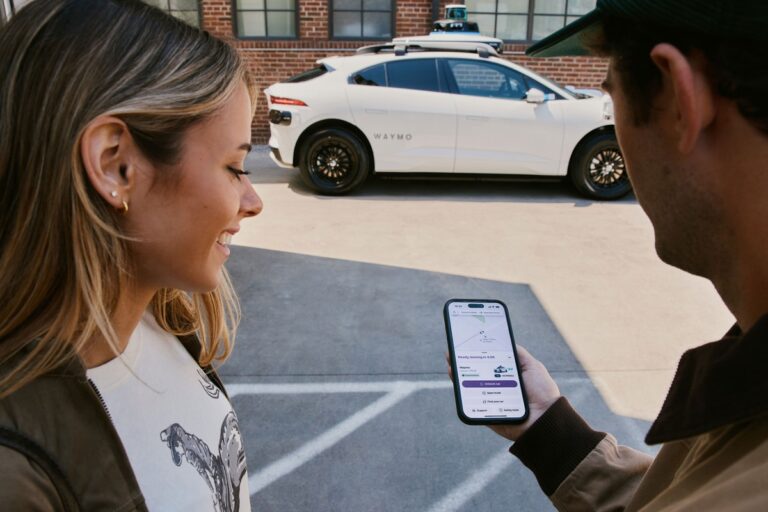
In its prepared remarks, Lyft said it expects to significantly increase its deployed autonomous fleet in Nashville by year-end, including Waymo’s latest Ojai vehicles. It did not specify a fleet-size target.
This is an expansion of an operating service. Lyft began matching Nashville passengers with Waymo vehicles in September, and opened its permanent 80,000-square-foot autonomous-vehicle depot in October. Subsidiary Flexdrive services the fleet, which takes bookings through both the Waymo and Lyft apps.
That arrangement gives Lyft work beyond finding passengers: charging, cleaning, maintenance and scheduling help keep vehicles available when demand rises. Management said early-morning servicing suits Nashville’s late-night demand, and expects more than 85 full-time employees behind the depot by 2027. Airport rides are also due to become available through the Lyft app.
Q4 Outlook Puts Growth and Costs in Focus
For the fourth quarter, Lyft forecast gross bookings of $5.74 billion to $5.94 billion, representing annual growth of 13% to 17%. It expects adjusted EBITDA of $188 million to $213 million, with a bookings-based margin of 3.3% to 3.6%. The respective midpoints are $5.84 billion and $200.5 million.
Management expects North American ride growth to accelerate again, but insurance costs should increase modestly from the third quarter after an October renewal. That leaves some pressure on margins even as bookings rise.
A new subscription provides another route to repeat business. Lyft launched Lyft Go on November 5, offering a $9.99 monthly plan with DashPass and 8% back in Lyft Credits on eligible rides. A $4.99 Core plan offers 5% back for use on Lyft. Credits are rewards toward future spending, rather than cash refunds.
The immediate task is to turn the larger rider base into steadier earnings while funding those offers and the autonomous fleet. Lower insurance costs helped this quarter; the next one will show how much of that benefit survives a higher insurance bill and another round of investment in growth.