Deprecated: rtrim(): Passing null to parameter #1 ($string) of type string is deprecated in /home/u752143311/domains/marketspeaker.com/public_html/wp-includes/formatting.php on line 2829
Deprecated: rtrim(): Passing null to parameter #1 ($string) of type string is deprecated in /home/u752143311/domains/marketspeaker.com/public_html/wp-includes/formatting.php on line 2829
Apple introduced the iPhone Pocket, a limited-edition wearable accessory priced at $149.95 for the short strap and $229.95 for the long version, blending premium design with everyday practicality.
By Oleg PetrenkoUpdated
2 mins readApple’s new iPhone Pocket, the limited-edition wearable combines style and practicality in a luxury strap design. Photo: Apple
Apple has announced the iPhone Pocket, a limited-edition wearable accessory that merges high fashion with everyday practicality. The device, described as “a beautiful way to wear and carry your iPhone,” features a sleek strap system that allows users to wear their iPhone hands-free – much like a designer crossbody or wrist accessory.
Unveiled on Tuesday through Apple’s official newsroom, the iPhone Pocket is positioned as both a functional tool and a style statement, aligning with Apple’s growing focus on lifestyle design. The launch comes as the company continues to expand its accessory ecosystem beyond traditional tech products.
Design, Functionality, and Collaboration
The iPhone Pocket features premium materials, including fine leather and recycled aluminum connectors, and is available in multiple finishes that match the iPhone 16 lineup. The strap can be adjusted or detached, offering flexibility for users who want to alternate between wearable and standard use.
Apple described the product as a “fusion of technology and personal expression,” highlighting its collaboration with leading fashion designers to bring the concept to life. Early editions are expected to launch in select Apple Stores and online boutiques, with production limited to several thousand units.
Analysts view the iPhone Pocket as a strategic extension of Apple’s growing portfolio of wearable and lifestyle accessories, which already includes Apple Watch bands, AirPods cases, and Vision Pro headgear components.
Market Position and Consumer Appeal
The launch signals Apple’s continued exploration of the intersection between luxury fashion and technology, a space increasingly occupied by brands seeking to blend form and function. By introducing the iPhone Pocket, Apple aims to reach consumers who value design as much as device performance – especially in urban markets and among younger demographics.
While priced as a premium accessory, Apple said the Pocket emphasizes practical convenience, allowing users to carry their phones securely while reducing the need for traditional bags or pockets. Analysts say the move could help strengthen Apple’s brand in the luxury segment while generating high-margin accessory revenue.
The iPhone Pocket will be available in limited quantities starting November 15, with select versions co-branded by renowned designers. Apple described the launch as “a celebration of movement, individuality, and the art of carrying what connects us.”
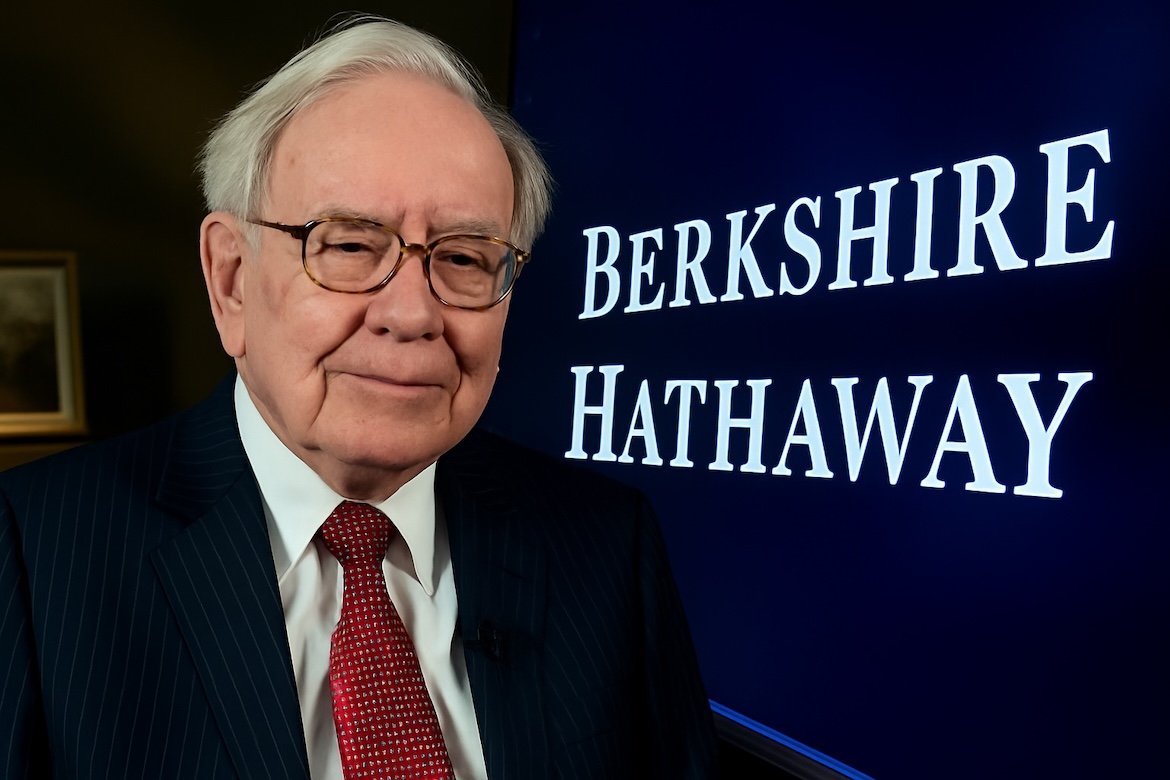
Warren Buffett announced he will no longer write Berkshire Hathaway’s annual shareholder letters, marking the end of a 60-year tradition as he accelerates his philanthropic plans and prepares to hand leadership to Greg Abel.
By Oleg PetrenkoUpdated
2 mins readWarren Buffett - the legendary investor will no longer write his famed shareholder letters, signaling the closing of a historic chapter in corporate America. Photo: USA International Trade Administration / Wikimedia
Legendary investor Warren Buffett announced that he will no longer personally write the annual shareholder letters for Berkshire Hathaway, ending one of the most iconic traditions in financial history. Buffett revealed his decision in a note to shareholders, calling it “time to step into quiet mode” after nearly six decades of reflections on investing, markets, and management philosophy.
Since 1965, Buffett’s letters have gone far beyond corporate reporting – they became essential reading for investors, economists, and business schools worldwide. Known for their mix of wit, wisdom, and financial insight, the letters chronicled not just Berkshire’s performance but also Buffett’s views on capitalism, risk, and long-term value creation. Many of his principles, such as “buying wonderful companies at fair prices” and “being fearful when others are greedy,” became cornerstones of modern investing thought.
Succession and Philanthropy Plans Accelerate
The announcement comes as Buffett, now 95, continues to transfer his $149 billion fortune to philanthropic foundations run by his children. Recent filings show he converted 1,800 Class A Berkshire shares into 2.7 million Class B shares, a step that facilitates charitable donations and smooths estate planning.
At the same time, Berkshire Hathaway confirmed that Greg Abel, vice chairman for non-insurance operations, will take over as CEO in 2026, while Buffett will remain as board chairman. Abel’s upcoming leadership marks a historic transition for a company long synonymous with its founder.
Financially, Berkshire remains in robust shape. The conglomerate’s cash pile hit $382 billion in the third quarter, while operating profit rose 34% year over year. Shares are up about 10% in 2025, driven by strong insurance underwriting and steady gains across its industrial and energy holdings.
The End of an Era for Investors
Buffett’s decision to stop writing signals the close of an extraordinary communication legacy that shaped investor education for generations. Analysts say his letters, which combined storytelling with financial rigor, helped define shareholder transparency in modern corporate culture.
As Berkshire prepares for its next chapter, Buffett’s focus now turns to legacy and philanthropy and ensuring that the principles he built the firm on endure beyond his lifetime. “The next decade belongs to the team,” he wrote. “My part is nearly done.”
For investors, it marks both a sentimental farewell and a reminder of Berkshire’s enduring strength – a company still guided by the philosophy of patience, prudence, and purpose.
The Chan Zuckerberg Biohub, founded by Mark Zuckerberg and Priscilla Chan, announced a new initiative merging artificial intelligence, biology, and computing to accelerate breakthroughs in health and disease research.
By Oleg PetrenkoUpdated
2 mins readMark Zuckerberg’s Chan Zuckerberg Biohub has unveiled a large-scale AI-powered research initiative aimed at developing virtual cells and immune systems to accelerate scientific breakthroughs. Photo: Mark Zuckerberg / Facebook
The Chan Zuckerberg Biohub, founded by Mark Zuckerberg and Priscilla Chan, has unveiled a groundbreaking research initiative designed to integrate artificial intelligence, biology, and advanced computing. The project’s mission is to radically accelerate fundamental discoveries in health and disease treatment by making AI a central component of the scientific process.
“Ten years ago, we launched CZI, and we’re proud of what we’ve built – especially Biohub, where we believe we’ve made our biggest impact,” Zuckerberg said in a statement. “Now we’re fully focused on developing Biohub as the first research organization that unites cutting-edge AI and biology. We’re bringing together leading AI researchers, scientists, large-scale computing clusters, and the biggest datasets on human cells to create virtual cells and immune systems that will advance science.”
A New Era for AI-Driven Science
The expanded Biohub program will combine the latest AI models, computational biology, and cellular data mapping to simulate biological systems in unprecedented detail. The team aims to develop “virtual cells” and “virtual immune systems” capable of predicting how the human body reacts to disease or treatment – a milestone that could transform medical research and drug development.
Zuckerberg described the next decade as “deeply exciting,” expressing confidence that “some of humanity’s greatest scientific dreams are finally becoming achievable.” The initiative also marks one of the most ambitious efforts yet to apply foundation AI models directly to experimental science, enabling researchers to conduct virtual experiments before moving to physical labs.
The Biohub will partner with leading universities and biomedical institutions to accelerate progress and ensure open access to data where possible. The effort underscores CZI’s long-term vision to merge AI-powered computation with life sciences to speed up discovery cycles and reduce the cost of research.
Impact and Industry Context
The move signals how technology and life sciences are increasingly converging. Analysts see the Chan Zuckerberg Biohub’s program as part of a broader shift among research institutions and tech firms to apply AI in molecular biology and healthcare innovation. With competition rising from companies like DeepMind, Insilico Medicine, and Recursion, the Biohub initiative represents a philanthropic yet highly strategic investment in the future of biocomputing.
If successful, the program could redefine how new drugs are discovered, diseases are treated, and biological processes are understood – potentially shrinking the timeline between hypothesis and medical breakthrough from years to months.
Chinese camera maker Insta360 gifted employees solid gold keyboard keys as annual bonuses, with one ‘spacebar’ key alone worth about $45,000, symbolizing recognition and stability amid market volatility.
By Oleg PetrenkoUpdated
2 mins readChinese camera maker Insta360 awarded employees solid gold keyboard keys as annual bonuses - including a 'spacebar' key valued at around $45,000 - as a gesture of recognition and stability in uncertain times. Photo: Oleg Petrenko / MarketSpeaker
Chinese tech company Insta360, based in Shenzhen, has once again turned workplace recognition into a glittering spectacle. For the fourth consecutive year, the company rewarded top-performing employees with solid gold keyboard keys, each crafted as a personalized bonus. The heaviest key – a spacebar – is valued at approximately $45,000 (₽3.7 million), reflecting both gold’s price surge and the firm’s commitment to long-term employee appreciation.
In total, Insta360 distributed 55 gold “keycaps” to its staff, marking the tradition as one of the most distinctive employee reward programs in China’s booming tech sector. Executives said the gesture is “not about wealth, but about meaning,” symbolizing stability, creativity, and recognition of staff contributions.
Symbolism Behind the Bonus
Insta360’s leadership described the initiative as an embodiment of the company’s culture: “Every keystroke turns stone into gold.” The gold keys are meant to inspire diligence and innovation, qualities that have defined the firm’s rise in the competitive camera and imaging market.
The company, best known for its 360-degree action cameras and AI-powered imaging technology, has seen strong growth in recent years thanks to global demand for creator tools and consumer drones. While gold prices have increased substantially in 2025, Insta360 said the bonuses are more symbolic than financial – a reminder that employee achievements are the foundation of the company’s success.
Employee Recognition in a Shifting Labor Market
The gold-key initiative also reflects a broader trend in China’s tech industry, where firms are emphasizing employee retention and morale amid economic uncertainty and talent competition. By tying recognition to something tangible and lasting like gold, Insta360 is reinforcing its image as a stable and forward-looking employer.
Analysts note that such creative reward programs can boost loyalty and productivity, especially in an environment where many tech companies face hiring slowdowns and profit pressures. As inflation and gold prices rise globally, Insta360’s symbolic gesture has inadvertently become even more valuable – both materially and motivationally.
Trump Media & Technology Group reported a third-quarter net loss of $54.8 million while holding 11,542 Bitcoin and expanding crypto assets, raising questions about its treasury strategy and operational model.
By Oleg PetrenkoUpdated
2 mins readTrump Media & Technology Group loss occurs despite holding a large Bitcoin treasury. Photo: The White House
Trump Media & Technology Group, the firm behind the social-platform Truth Social, reported a $54.8 million net loss for the third quarter of 2025, widening from a $19.3 million loss a year earlier. During the same period, the company disclosed holdings of 11,542 Bitcoin, and revealed it had realised $15.3 million in income from Bitcoin-options positions and posted unrealised gains of $33 million from over 746 million tokens of the Cronos blockchain asset.
Crypto Treasuries and Business Performance
The company began acquiring Bitcoin in late July 2025 and flagged a broader strategy to buy up to $1 billion of Cronos tokens. The strategy followed fundraising efforts that brought in $1.5 billion through equity and $1 billion via convertible bonds. Despite the large crypto treasury, revenue fell to $972,900 and shares remain down around 61 % year-to-date, reflecting investor skepticism about whether crypto holdings can compensate for weak core earnings.
Strategic Risks and Market Context
While the crypto-asset build-up reflects aggressive ambition, the widened loss and stalled revenue growth illustrate significant execution risk. Investors should monitor whether the company generates sustainable operating cashflow, effectively monetises its crypto holdings, and integrates digital-asset strategies without undermining media operations. With its business model bridging media and crypto, the firm faces complex regulatory, valuation and execution challenges.
In turn, the episode highlights how public companies that lean into crypto assets may still struggle if their core operations underperform. Digital-asset holdings don’t automatically translate into stable earnings or investor confidence.
J.P. Morgan argues that Bitcoin is undervalued compared to Gold on a risk-adjusted basis and estimates a fair price of about $170,000 for the cryptocurrency within 6-12 months.
By Oleg PetrenkoUpdated
2 mins readJ.P. Morgan’s analysis suggests Bitcoin remains undervalued when compared to gold in risk-adjusted terms. Photo: J.P. Morgan / Facebook
J.P. Morgan’s strategists now believe that Bitcoin is substantially undervalued compared with gold when adjusted for risk and volatility. They estimate Bitcoin’s fair price at around $170,000, implying an upside of more than 60% from current levels.
Their conclusion is based on a key metric: the volatility ratio between Bitcoin and gold has fallen to approximately 1.8×, meaning Bitcoin now requires 1.8 times more risk capital than gold to deliver similar returns. With Bitcoin’s market cap around $2.1 trillion versus gold’s private-sector holdings of about $6.2 trillion, J.P. Morgan reasons Bitcoin would need its market cap to increase by about 67% to match gold’s scale – hence the $170,000 target.
Drivers Behind the Shift
The report notes that October’s sharp crypto correction driven by record perpetual-futures liquidations and a major DeFi cyber-incident appears to have completed a phase of deleveraging. With leverage now more normalized, the bank argues that Bitcoin is better positioned to resume upward movement.
In addition, they point out that despite Bitcoin still trading below $105,000, its volatility has compressed relative to gold, contributing to the risk-adjusted valuation gap. Hedging interest, global inflation pressures and the adoption of crypto by institutions further support the bull-case for Bitcoin as a digital-asset hedge rather than speculative token.
Trading Insights and Future Scenarios
For crypto investors, J.P. Morgan’s view signals a potential entry point. If Bitcoin executes toward $170,000, investors buying near $102,000 now could capture over 60% upside. Key indicators to monitor include whether futures open interest falls further, how outflows/inflows in Bitcoin ETFs evolve and whether institutional adoption continues to accelerate.
Still, the path is not without risk. Broader macro conditions, including regulation, central-bank policy and global economic growth could derail Bitcoin’s momentum. If momentum stalls or leverage flows falter, Bitcoin may remain range-bound instead of executing the projected move.
As previously covered, the valuation of crypto assets is undergoing a transformation from speculative stories to analytically framed assets. J.P. Morgan’s model of Bitcoin-versus-gold underscores how traditional financial firms are now applying conventional valuation frameworks to digital assets.
Bernstein analysts say platforms like Polymarket and Kalshi are rapidly transitioning from niche experiments into legitimate financial products attracting institutional and Wall Street interest.
By Oleg PetrenkoUpdated
2 mins readBernstein analysts report that platforms such as Polymarket and Kalshi are evolving from niche experiments into recognized financial instruments drawing growing interest from institutional and Wall Street investors. Photo: Oleg Petrenko / MarketSpeaker
Prediction markets – once a small, experimental corner of crypto and retail speculation are rapidly entering mainstream finance, according to a new report from Bernstein Research. The firm highlighted that platforms such as Polymarket and Kalshi have seen exponential growth this year, both in volumes and institutional participation, signaling that event-based trading is maturing into a legitimate asset class.
Bernstein’s analysts estimate that prediction-market trading volumes have surged past $2 billion per week, with liquidity increasingly driven by professional traders and data-driven funds. What began as a niche retail phenomenon tied to political events has expanded into a broad ecosystem covering macroeconomic indicators, corporate outcomes, and sports results.
Why Prediction Markets Are Gaining Ground
Bernstein attributes the sector’s momentum to three key forces: regulatory developments, institutional adoption, and technological scalability. The CFTC’s ongoing reviews of event-contract frameworks, coupled with recent approvals for limited prediction-market operations in the U.S., have helped legitimize the space. Meanwhile, companies such as Gemini and Coinbase have explored derivatives-style prediction products, further blurring the line between speculative forecasting and traditional finance.
Institutional players are beginning to use these platforms for hedging, sentiment analysis, and probabilistic forecasting, according to the report. For instance, some hedge funds are experimenting with prediction-market data to inform macro positioning, while corporate treasuries and policy analysts view these markets as real-time indicators of crowd expectations.
Bernstein likened the current stage of prediction markets to the early growth phase of crypto derivatives a decade ago – nascent but increasingly impossible for major financial institutions to ignore.
Future Growth and Institutional Adoption
Looking ahead, Bernstein forecasts the total value of traded prediction contracts could quadruple within three years, surpassing $10 billion in annual volume. The analysts said that regulatory clarity and integration with traditional exchanges could accelerate adoption.
Still, challenges remain. The sector must balance compliance with its open-market ethos, mitigate manipulation risks, and ensure transparent liquidity mechanisms. Despite these hurdles, Bernstein’s report suggests the momentum behind prediction markets is “structural, not speculative,” implying they may soon be treated as a standard financial instrument within diversified portfolios.
For Wall Street, this evolution represents both a new source of price discovery and a potential shift in how markets interpret uncertainty – turning predictions into tradable probabilities.
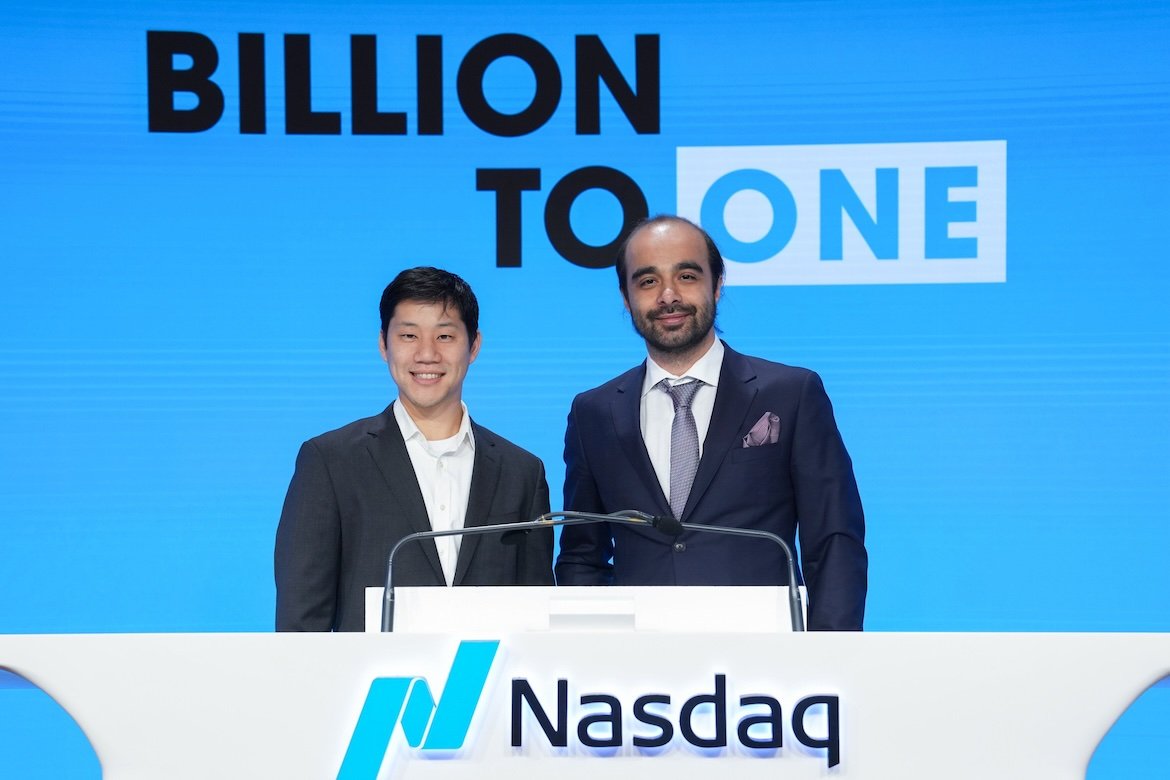
Molecular-diagnostics startup BillionToOne raised $273 million in an oversubscribed IPO, with shares jumping 67% at debut and valuing the company at around $4.4 billion.
By Oleg PetrenkoUpdated
2 mins readBillionToOne’s IPO, priced at $60 per share and raising $273 million, soared 67% in its Nasdaq debut, underscoring strong investor demand for high-growth biotech firms. Photo: NasdaqExchange / X
Biotech firm BillionToOne, based in Menlo Park, California, made a resounding market entrance this week, raising $273 million in its initial public offering and seeing its shares climb 67% on debut.
The company sold roughly 4.55 million shares at $60 per share, well above its expected range of $49 to $55. Its opening price reached approximately $100, pushing its valuation to around $4.4 billion.
Why the IPO Resonated
BillionToOne focuses on molecular diagnostic tests, including non-invasive prenatal screening and oncology blood work, using single-molecule sequencing technology.
Its rapid traction – revenues increased nearly 82% year-over-year in the first half of 2025 and gross profit more than doubled – captured investor interest as biotech and AI-adjacent firms regain favour. The strong surge reflects renewed IPO momentum after earlier market pullbacks and a thirst for high-growth companies in emerging healthcare segments.
The oversubscription and premium priced offering suggest investors view diagnostic innovation as a key thematic play in the next tech–healthcare wave. With major underwriters on board, BillionToOne’s execution left little room for investor hesitation, highlighting the potency of niche biotech stories in the current market climate.
For public-markets observers, BillionToOne’s debut offers several important take-aways. First, it signals that investors are willing to pay for growth even in firms that are not yet profitable provided the addressable market is large and the technology distinctive.
Second, the strong opening suggests the IPO window for biotech may be reopening, especially for companies operating at the intersection of diagnostics, genomics and data analytics.
However, risks remain. The company must scale commercial operations, navigate regulatory pathways and deliver on product pipelines. Investors will be watching for the speed of diagnostic adoption, margin expansion, and how the company manages capital discipline. Key metrics to monitor include test volumes, average reimbursement rates, and new market launches.
Overall, BillionToOne’s successful debut may embolden other healthcare-tech firms to go public, but it also raises the stakes: today’s high expectations leave little room for execution missteps.
Duolingo shares fell 27% after issuing weaker guidance for the fourth quarter, as the company prioritizes user growth and long-term initiatives over short-term monetization.
By Oleg PetrenkoUpdated
2 mins readDuolingo shares plunged 27% after the company issued weaker fourth-quarter guidance, shifting focus toward expanding its user base and long-term growth over immediate profits. Photo: appshunter.io / Unsplash
Shares of Duolingo plunged 27% after the language-learning platform delivered weaker-than-expected guidance for the current quarter, despite reporting stronger third-quarter revenues. The sharp selloff reflects investor concerns over the company’s pivot toward long-term growth and away from short-term profit maximization.
The Pittsburgh-based firm now expects fourth-quarter bookings between $329.5 million and $335.5 million, falling short of analysts consensus estimate of $344.3 million. Adjusted EBITDA is projected to come in between $75.4 million and $78.8 million, also below expectations of $80.5 million.
Strategic Shift Toward Long-Term Growth
CEO and co-founder Luis von Ahn said Duolingo has deliberately shifted investment priorities to build for the future. “We’ve made a slight shift over the last quarter in how we invest, and we’re investing a lot more in long-term things because we see that as such a big opportunity ahead of us,” von Ahn said.
The company’s recent strategy involves prioritizing user acquisition, platform expansion, and content innovation over short-term monetization metrics. Duolingo believes that investing in its product ecosystem now particularly in AI-driven personalization and course diversification will yield sustainable growth and retention over time.
While this approach supports Duolingo’s mission of global reach and education accessibility, it has raised investor concerns about near-term profitability. Analysts noted that the new guidance suggests slower revenue acceleration through the end of 2025.
User Metrics and Market Reaction
During the third quarter, Duolingo grew its paid subscribers to 11.5 million, slightly exceeding expectations of 11.38 million. However, the platform’s daily active users (DAUs) reached 50.5 million – short of the 51.2 million expected – while monthly active users (MAUs) came in at 135.3 million versus forecasts of 137.4 million.
Despite the strong subscriber growth, the weaker activity metrics reinforced fears that user engagement may be plateauing. Still, Duolingo’s leadership emphasized that engagement levels remain historically high, supported by growing interest in premium tiers and educational partnerships.
Investors reacted swiftly, sending the stock down to its lowest level in months. Market watchers said the selloff reflects skepticism that Duolingo’s long-term vision can sustain short-term earnings pressure.
Looking ahead, the company’s next few quarters will test whether its focus on scaling users and AI-driven product development can translate into a broader monetization rebound.
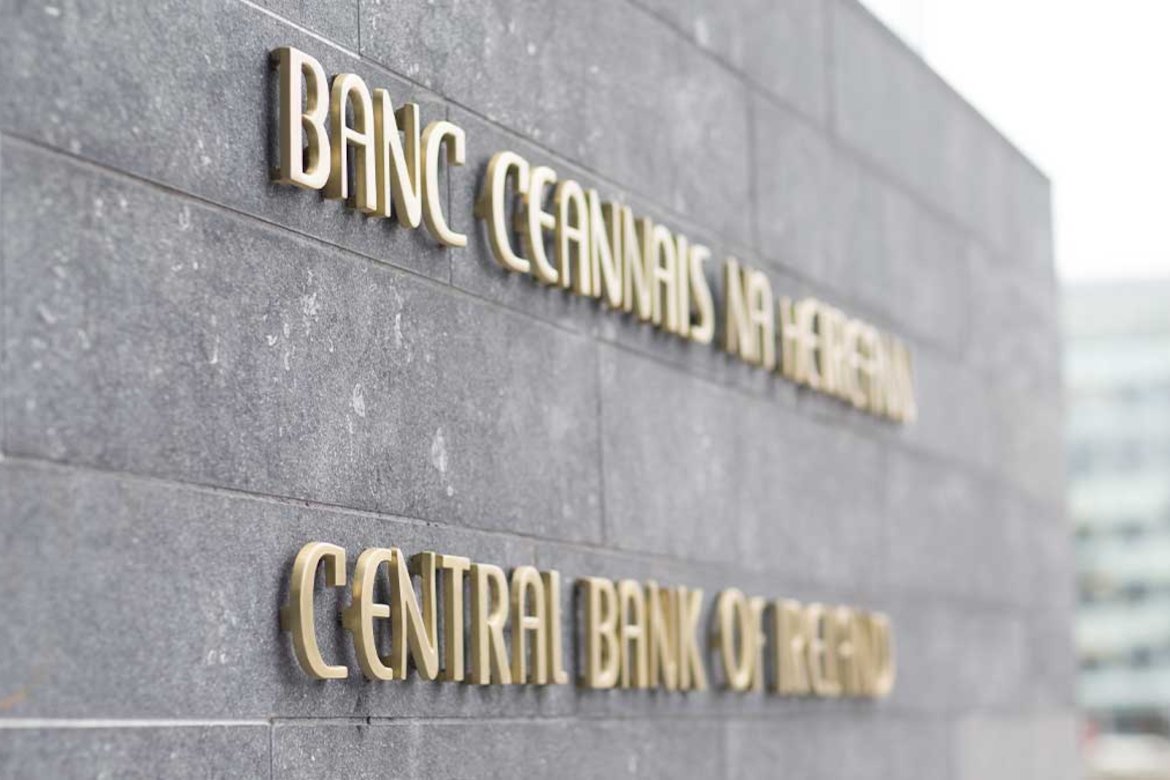
The Central Bank of Ireland imposed a €21.5-million penalty on Coinbase Europe after discovering that more than 30 million transactions were inadequately monitored from April 2021 to March 2023.
By Oleg PetrenkoUpdated
2 mins readThe crypto exchange faces heightened regulatory scrutiny after receiving an anti–money laundering fine from EU authorities, underscoring the tightening oversight of digital asset platforms across Europe. Photo: Central Bank of Ireland / X
Crypto exchange Coinbase Europe Limited has been fined €21.5 million by the Central Bank of Ireland after regulators found the company failed to properly monitor approximately 30.4 million transactions, worth an estimated €176 billion, over a 12-month span between 2021 and 2022. The enforcement marks the first major sanction by the Irish regulator in the crypto sector.
According to the settlement, Coinbase Europe admitted to three coding errors within its transaction-monitoring software that prevented five of its 21 monitoring scenarios from fully screening customer activity. Investigators found the firm also failed to apply internal controls and did not conduct additional monitoring of about 184,790 transactions.
Compliance Failures and Regulator Response
Regulators assert that the deficiencies allowed users to remain on the platform longer than they should have, without adequate review of their transaction activity.
During the review, Coinbase identified nearly 185,000 affected transactions, from which it filed 2,708 suspicious-transaction reports though the regulator noted it could not confirm whether these involved criminal offences.
Deputy Governor Colm Kincaid of the Central Bank emphasised that the “technical features” of crypto – anonymity and cross-border flows – underscore the need for rigorous compliance systems.
The fine was reduced from an initial €30.7 million following a settlement-discount scheme. Coinbase said it has since remediated the errors, enhanced test protocols and strengthened controls around its transaction-monitoring system.
Regulatory Lessons
For the crypto sector, the case underscores that regulatory bodies in Europe are increasingly treating digital-asset service providers like traditional financial institutions when it comes to anti-money-laundering and counter-terror-financing obligations. Firms operating in the region should heed this as a signal: compliance infrastructure lapses can trigger large penalties and compliance costs.
As previously covered, recent regulatory actions in the crypto space from EU framework updates to national enforcement reflect a shift toward higher accountability for firms that handle digital assets.
Market participants should monitor: whether similar enforcement actions follow in other jurisdictions, how crypto firms adjust their transaction-monitoring systems, and how regulatory clarity develops around cross-border crypto transactions.
Crypto wallet maker Tangem has rolled out the Tangem Pay virtual Visa card, enabling users to spend USDC stablecoin from their hardware wallet at millions of merchants worldwide while undergoing standard KYC.
By Oleg PetrenkoUpdated
2 mins readTangem has introduced the Tangem Pay virtual Visa card, allowing users to make purchases using the USDC stablecoin. Photo: Tangem / Facebook
Tangem has launched Tangem Pay, a virtual Visa card designed to connect directly with its self-custody hardware wallet and enable spending of USDC stablecoin at any merchant that accepts Visa. The product is developed in collaboration with payment infrastructure provider Paera and supports Apple Pay and Google Pay. The service is set to roll out in the U.S., Latin America and key Asia-Pacific regions starting late November, with European availability planned for 2026.
Self-Custody Payments With KYC Filings
The introduction of Tangem Pay represents a hybrid approach: while users retain full control over their hardware wallet (meaning Tangem has no access to their keys or funds), accessing the Visa-linked card requires user identification. Tangem’s CEO emphasized that KYC applies only to the card-balance account and not the wallet itself, meaning user identity is not tied to self-custody holdings. The firm says service will initially support payments via the Polygon network in USDC and is available in 42 jurisdictions at launch.
By marrying peer-to-peer crypto ownership with regulated payment rails, Tangem aims to serve users who demand true self-custody yet also expect modern debit-card utility. This dual model addresses longstanding friction points in crypto from off-ramp usability to identity compliance while protecting user sovereignty over private keys.
Crypto Payments Evolve
For the payments and crypto sectors, Tangem Pay marks a meaningful evolution. The product tightens the link between hardware-wallet independence and mainstream spendability, potentially driving higher crypto adoption among users seeking both autonomy and convenience. Successful execution could position Tangem as a leader in bridging the gap between wallets and everyday payments.
However, challenges loom. User adoption will depend on card-network acceptance, stablecoin support across networks, and navigating regulatory requirements in each jurisdiction. It remains unclear how the product will handle fiat conversions, network fees, and U.S. regulatory compliance around stablecoins. Key indicators to monitor: issuance numbers, regional roll-out pace, stablecoin volumes processed, and user retention. As previously covered, the world of crypto payments is shifting from speculative trading to real-world utility and Tangem’s launch may accelerate that shift.
United Airlines has introduced the MileagePlus Debit Rewards Card, enabling members to earn miles on everyday spending and savings balances – no credit check required.
By Oleg PetrenkoUpdated
2 mins readUnited Airlines has introduced the MileagePlus Debit Rewards Card with loyalty earnings. Photo: David Syphers / Unsplash
United Airlines has unveiled the MileagePlus Debit Rewards Card, its first loyalty-program debit card designed for mileage accumulation through spending and savings. Available now to United’s MileagePlus members in the U.S., the card is issued by Sunrise Banks (Member FDIC) in partnership with banking-tech platform Galileo Financial Technologies.
Everyday Banking with MileagePlus Perks
The card allows users to earn one MileagePlus mile for every $1 spent on United purchases and one mile for every $2 on all other eligible purchases. New cardmembers can earn a 10,000-mile bonus after making $500 in purchases within the first four months.
It also offers annual bonus miles – ranging from 2,500 to 70,000 – based on average daily account balances from $2,500 upward. Accounts maintaining an average daily balance of $2,000 or more enjoy a waived monthly fee ($4 for balances below the threshold). No credit check is required for card approval.
United says the card targets loyalty-program members who prefer debit-card simplicity over credit offerings, emphasizing that the product is ‘a natural next step’ in loyalty expansion. The move positions United alongside the few U.S. airlines now offering co-branded debit rewards options.
What It Means for Travelers and Savers
For frequent flyers and savings-minded members, the new debit card opens additional mileage-earning routes: not just spending but also holding balances. The savings-based bonus structure allows members to convert cash holdings into miles an uncommon pairing in aviation loyalty.
However, the rate of return is modest compared to many co-branded credit cards, so the new product appeals best to those seeking mileage rewards without credit-card qualification or annual-fee burdens.
For many card-eligible consumers who lack credit-card access, this debit-based rewards option may provide meaningful value. That said, the value-comparison needs scrutiny – some savings accounts or travel credit cards may yield higher effective returns for certain users.
China has secured its first foreign partner under its gold-custody scheme, with Cambodia agreeing to store reserves in China as Beijing expands its role in global bullion markets.
By Oleg PetrenkoUpdated
2 mins readCambodia agreeing to store reserves in China. Photo: Yana Hurska / Unsplash
China has achieved a milestone in its gold-custody strategy, with Cambodia becoming the first foreign government to move ahead with storing its reserves in Chinese vaults. The deal comes as Beijing extends its role in the global bullion ecosystem and challenges traditional custody hubs like London and New York.
Under the agreement, Cambodia will transfer part of its sovereign gold reserves into Chinabased vaults, leveraging the infrastructure managed through the Shanghai Gold Exchange and aligned state banks. Analysts say the move reflects China’s ambition to deepen its leverage over global reserve chains and reduce reliance on Western-dominated financial networks.
Strategic Shift in Gold Custody
The agreement signifies a key step in China’s broader financial strategy. By inviting foreign reserves into its custody vaults, China is positioning itself as an alternative to traditional bullion centres, offering storage tied to yuan-settled transactions and reduced exposure to dollar-based systems.
Lonely as it may be now in partner count, the Cambodia deal underlines the concept of ‘reserves beyond politics’ with China catering to nations seeking less exposure to Western banking and sanctions risk. Gold stored in China may be perceived as less subject to external freezing or geopolitical clamp-downs than assets held in traditional Western centres.
Reserve Diversification and Market Signals
For the global gold market, the deal further validates gold’s role beyond retail and jewellery demand to sovereign-reserve strategy. Central banks around the world continue to add gold, and China’s custody solution may prompt fresh reserve flows into bullion. If more governments follow Cambodia’s lead, gold demand could rise meaningfully, further tightening physical availability and supporting higher prices over time.
Key indicators to watch now include whether other countries formalise gold-transfer deals with China, how much gold moves into Chinese custody, and whether gold-price benchmarks reflect a shift in custody flows. The evolving scenario may mark the start of a new chapter in how global reserves are held and managed.
Crypto exchange Gemini is seeking U.S. derivatives approval to launch ‘Gemini Titan’, a prediction-market platform that would allow trading on outcomes ranging from sports and elections to economic data.
By Oleg PetrenkoUpdated
2 mins readTyler and Cameron Winklevoss announce Gemini’s plans for its prediction-contract platform 'Gemini Titan' at a crypto conference. Photo: Gemini / Instagram
Crypto exchange Gemini, founded by Tyler and Cameron Winklevoss, has filed with the Commodity Futures Trading Commission to launch a regulated platform called ‘Gemini Titan’, enabling trading in prediction-market contracts on real-world events. This move comes as weekly trading volumes in prediction-markets recently topped $2 billion, signalling a surge in institutional and retail interest.
Gemini’s pivot reflects an ambition to diversify beyond spot crypto-trading at a time when its core business faces headwinds. The company posted a net loss of $282 million in the first half of 2025, while its share price has dropped roughly 40% since its IPO. By entering the prediction-market sector, Gemini aims to tap into a burgeoning ecosystem where firms like Kalshi and Polymarket have already gained traction.
Prediction markets allow participants to trade contracts on the outcome of elections, earnings reports, sports games and macroeconomic data. For Gemini, the proposed exchange would position it directly against both crypto-native platforms and traditional venues. However, the initiative depends on obtaining regulatory approval, navigating a complex intersection of gaming and derivatives law, and differentiating its offering in a crowded field.
Regulatory Hurdles and Growth Prospects Ahead
For investors, Gemini’s initiative signals both opportunity and risk. If approved, Gemini Titan could become a new growth engine by broadening product-scope and increasing user engagement beyond standard exchange services. Key signals to monitor include: whether the CFTC grants Gemini the designated contract market status, how quickly the product launches, whether liquidity and user adoption follow, and how Gemini positions itself relative to competitors.
Yet major obstacles remain. Approval timelines are uncertain, and the legality of event-contract trading remains contested in various U.S. states. Additionally, delivering meaningful volume and profit will require overcoming significant hurdles in product design and regulatory tagging. The coming months will test whether Gemini’s prediction-market ambition becomes a scalable reality or another expansion that stalls amid regulatory complexity and competitive pressure.
Bitcoin fell below the $100,000 level amid rising liquidation pressure and ETF outflows, as analysts flag a potential descent toward $90,000 or lower.
By Oleg PetrenkoUpdated
2 mins readAnalysts see mounting risk of deeper Bitcoin weakness ahead. Photo: Worldspectrum / Pexels
Bitcoin (BTC) tumbled below the $100,000 mark, dropping to around $100,800 and marking its lowest level in four months. Driven by a surge in selling, large‐scale ETF outflows and thinning liquidity, the flagship cryptocurrency is now facing growing concern among analysts about further downside risk.
Why the Fall Is Happening
Multiple factors are driving Bitcoin’s recent slump. Liquidation maps show leveraged long positions near $100,000 are being unwound, and there is a liquidity gap down toward the $88,000 – $95,000 zone. Many traders had positioned around the $100,000 threshold expecting support, but with that failing to hold, sentiment has shifted. Additionally, analysts note that Bitcoin has fallen below its weekly 50‐day moving average before each major drawdown in history, raising technical red flags. Some speculate that the autumn liquidation—following a massive $20 billion wipeout earlier still reverberates through the market, as hedged funds press to cover losses and lock in reduced leverage. With volatility high and liquidity shallow, the risk of accelerated downside is elevated.
Future Scenarios
For investors, the current environment calls for caution. Important signals to monitor include whether Bitcoin can reclaim the $100,000 support level, whether ETF flows stabilise, and how quickly the next range of liquidity (around $88,000 – $95,000) is tested. If an additional sell-off hits, analysts suggest a deeper retracement could unfold. On the other hand, if Bitcoin reclaims key moving averages and liquidity improves, the current pullback could serve as a consolidation phase rather than a trend reversal. Either way, this episode underscores that even the largest crypto asset is susceptible to structural risks – leveraged positions, shallow liquidity and macro spill-ins can still trigger sharp corrections.
Join our list to receive latest Blockchain, Crypto & Fintech news:
WordPress database error: [Table 'u752143311_Kem9N.wp_coingecko_coins' doesn't exist]
            SELECT coins.*, meta.post_id as post_id
            FROM `wp_coingecko_coins` coins
            INNER JOIN wp_postmeta meta ON (meta.meta_key = 'wpcf-coin-main-tag' AND meta.meta_value = coins.slug )
            ORDER BY market_cap_usd
            DESC LIMIT 9

 By Oleg Petrenko
Updated
2 mins read
By Oleg Petrenko
Updated
2 mins read