Deprecated: rtrim(): Passing null to parameter #1 ($string) of type string is deprecated in /home/u752143311/domains/marketspeaker.com/public_html/wp-includes/formatting.php on line 2829
Deprecated: rtrim(): Passing null to parameter #1 ($string) of type string is deprecated in /home/u752143311/domains/marketspeaker.com/public_html/wp-includes/formatting.php on line 2829
Berkshire Hathaway agreed to acquire Occidental Petroleum’s OxyChem division for $9.7 billion in cash, marking Warren Buffett’s largest purchase since 2022.
By Oleg PetrenkoUpdated
3 mins readBerkshire executives announce the $9.7 billion acquisition of OxyChem, adding to its industrial holdings. Photo: Occidental Petroleum Corporation
Berkshire Hathaway has struck a $9.7 billion cash deal to acquire Occidental Petroleum’s petrochemical arm, OxyChem, in the conglomerate’s largest purchase in three years. The acquisition expands Warren Buffett’s industrial portfolio as Berkshire sits on a near-record cash pile of $344 billion.
Occidental shares fell more than 7% on Thursday following the announcement, reflecting investor recalibration as the Houston-based company focuses on debt reduction and shareholder returns.
Buffett’s latest move echoes his history of targeting stable, cash-generating businesses. OxyChem produces key materials for water treatment, health care, and other commercial sectors — industries that align with Berkshire’s preference for steady earnings and long-term demand visibility.
Debt Reduction and Strategic Focus
Occidental CEO Vicki Hollub said the sale will enable the company to use $6.5 billion of the proceeds to pay down debt, a move she described as pivotal for restoring investor confidence and restarting share repurchases.
“The problem has been getting our debt down faster, so this resolves the one outstanding issue,” Hollub said Thursday on CNBC’s Squawk Box. “Now we’re going to be able to start our share repurchase program again. This is the last step in our major transformation that we started 10 years ago.”
Berkshire, which already holds a 28.2% stake in Occidental as of June, remains a key strategic partner rather than an outright owner. Buffett, 95, has previously said he has no intention of taking full control of the oil producer.
Greg Abel, Berkshire’s vice chairman of non-insurance operations and Buffett’s designated successor, said OxyChem would become a new operating subsidiary. “We look forward to welcoming OxyChem,” Abel said in a statement, praising Hollub’s “commitment to Occidental’s long-term financial stability.”
The transaction, expected to close in the fourth quarter, follows Berkshire’s 2011 acquisition of Lubrizol for roughly $10 billion — its last major move in the chemicals industry.
What It Means for Investors and Buffett’s Legacy
The OxyChem acquisition comes as Berkshire’s cash reserves near all-time highs, signaling that Buffett continues to favor selective, capital-heavy investments over smaller stock purchases. The timing also aligns with his upcoming retirement as CEO at year-end, passing the reins to Abel in 2026.
For Occidental, the deal strengthens its balance sheet and positions it to resume stock buybacks, potentially lifting investor sentiment. Analysts view the divestiture as a pragmatic way to reduce leverage while maintaining core oil and gas operations.
Buffett’s involvement with Occidental dates back to 2019, when Berkshire provided $10 billion to finance the company’s purchase of Anadarko Petroleum in exchange for preferred shares and warrants. Hollub confirmed that as Occidental’s cash flow grows, it plans to begin redeeming Berkshire’s preferred stock in 2029 — which currently pays an 8% dividend.
As previously covered, Buffett’s investment strategy has leaned toward companies with predictable earnings and disciplined capital management — characteristics OxyChem fits squarely into.
The move underscores Buffett’s enduring influence on corporate dealmaking even as his era at Berkshire approaches its close.
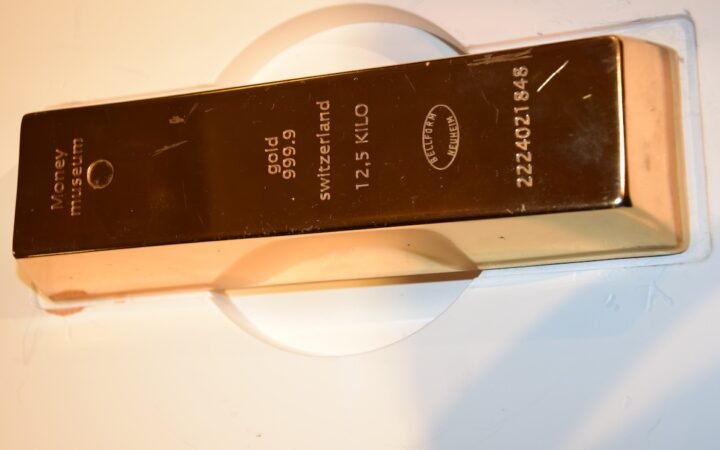
Gold surged to a record high above $3,800 per ounce Monday as investors rushed into safe haven assets amid fears of a U.S. government shutdown and growing expectations of Federal Reserve rate cuts.
By Oleg PetrenkoUpdated
2 mins readGold breaks past $3,800/oz as investor concern over U.S. shutdown and rate cut odds intensifies. Photo: Zlataky.cz / Pexels
Gold prices vaulted past $3,800 per ounce, setting a fresh record as markets digested worsening U.S. political risk and rising odds of interest rate cuts. The jump reflects a surge in safe-haven demand, particularly in light of growing fears that Congress might fail to avert a government shutdown.
The move was also underpinned by growing conviction that the Federal Reserve is likely to cut rates later this year. Softer inflation prints and a weaker U.S. dollar have stoked hopes that monetary easing is on the horizon, boosting the appeal of non-yielding assets like gold.
Fueling the Rally: Shutdown Fears and Rate Cut Sentiment
A looming U.S. government funding deadline has added urgency to the bullish case. With no funding bill secured yet, the risk of a shutdown is front of mind for many investors—and that political uncertainty favors safe-haven flows.
At the same time, markets see a strong chance of a rate cut in October or December. The latest inflation data have shown signs of cooling, supporting the view that the Fed could pivot. In this environment, gold becomes more attractive because lower rates reduce the opportunity cost of holding a non-interest-bearing asset.
The weaker dollar has amplified the effect. As the greenback falls, gold becomes cheaper for holders of other currencies, increasing foreign demand. That dynamic has helped push prices even higher.
What’s Next: Risks, Pullbacks, and Sustaining Momentum
While the rally has momentum, it’s not without risk of pullbacks. Profit-taking at record levels is always a possibility, especially if Fed officials deliver hawkish remarks or if unexpected economic data surprises.
Analysts caution that sustaining this run will depend on continued weak economic signals, further dovish tilts from the Fed, and political developments in Washington. A shutdown or serious budget impasse could exacerbate volatility—or reverse sentiment abruptly.
Investors will also monitor key indicators such as upcoming job reports, consumer spending, and inflation gauges. If the data align with dovish expectations, gold could push even further, potentially targeting $3,850 or beyond. But if those metrics surprise on the upside, the metal could see corrections as markets reprice rate expectations.
President Trump says a 100% tariff will apply to branded pharmaceutical imports from Oct. 1, unless the companies have begun building manufacturing plants in the U.S.
By Oleg PetrenkoUpdated
3 mins readTrump announces new tariff policy targeting branded drug imports unless U.S. manufacturing plants are under construction. Photo: The White House
President Donald Trump said the U.S. will apply a 100% tariff on branded and patented pharmaceutical products entering the country beginning October 1, a dramatic escalation of his push to bring drug manufacturing back home. The duty will not apply to companies that are already constructing plants in the United States — including projects that have broken ground or are under active construction.
Trump framed the move as an incentive rather than a punishment, arguing it would accelerate reshoring. Branded pharmaceuticals are typically sold under trade names and protected by intellectual property, preventing generic competition until patent protections expire.
Tariffs as Catalyst and Risk
Supporters of the plan say it could jolt companies into building U.S. facilities at a time when imports of pharmaceuticals have more than doubled over the past decade. But health policy experts warn the policy may also backfire. Drug manufacturing often involves highly specialized inputs sourced globally, and any sudden disruption can ripple through the supply chain.
Leigh Purvis, a prescription drug policy principal at AARP, said before the announcement that such tariffs could “tip some generic drugs into unprofitability,” forcing manufacturers to pull products from the market and risking shortages. Industry groups have also warned the duties could divert funds away from research and development.
Swiss and European drugmakers are already reviewing their exposure. Roche recently broke ground on a new North Carolina facility that could qualify for an exemption. Novartis and other multinationals have signaled they are evaluating whether existing investments meet the administration’s threshold.
Companies Brace for Impact
Large U.S. pharmaceutical firms have begun adjusting their plans. Johnson & Johnson this spring unveiled a four-year, $55 billion program to expand its domestic manufacturing, research and technology footprint.
In April, the company projected about $400 million in tariff-related costs for 2025, mostly tied to medical device products, noting that estimate did not yet include the impact of a pharmaceutical-specific levy. Pfizer and several peers have also started booking charges tied to earlier rounds of tariffs.
J&J Chief Executive Joaquin Duato warned that drug tariffs could undermine supply stability. He said the zero-tariff policy on pharmaceuticals exists to minimize shortages and argued that tax incentives would be a more effective tool to boost U.S. production of drugs and medical devices.
Analysts say not all firms are equally exposed. TD Cowen’s Steve Scala wrote that Eli Lilly, Bristol Myers Squibb and AbbVie are relatively better positioned because they already operate major U.S. plants, including facilities producing active pharmaceutical ingredients. Companies more reliant on overseas sites, he said, may face a tougher adjustment if Trump’s 100% duty takes effect.
Premium travel rewards cards now carry annual fees topping $500. With careful use of credits and perks, cardholders can still come out ahead.
By Oleg PetrenkoUpdated
3 mins readAmex Platinum Cards now cost $895 annually and include expanded travel, dining and business benefits with access to over 1,550 lounges. Photo: American Express
Two of the biggest names in premium credit cards are asking customers to pay more. American Express has raised the annual fee on both its U.S. Consumer and Business Platinum Cards to $895, while JPMorgan Chase lifted the fee on its Sapphire Reserve to $795, up from $550.
“There is really nothing like Platinum Membership — we offer more value than ever, and with the scale of our lounge, dining and hotel programs, we make it easy for our Card Members to access this value,” said Howard Grosfield, Group President of U.S. Consumer Services at American Express. “Platinum delivers unmatched benefits, unforgettable experiences, and world-class service — powered by our award-winning digital capabilities.”
The changes mark one of the most aggressive pricing shifts in the market. Chase’s 45% increase came in June; Amex’s new rate takes effect immediately for new cardholders and at renewals beginning December 2, 2025 for Business Platinum and January 2, 2026 for Consumer Platinum.
With such steep fees, cardholders are now under growing pressure to extract full value. Issuers are responding by layering in more credits, travel perks, and lifestyle benefits — but the math becomes critical.
Raymond Joabar, Group President of Global Commercial Services at Amex, stressed that the Business Platinum card “reflects how business owners work today, offering easy-to-use cash flow management tools and No Preset Spending Limit designed to help them run and grow their companies with confidence.”
Higher Fees, More Perks
To support the $895 price tag, Amex highlights expanded travel and dining credits, new business tools, and its extensive lounge network. U.S. Consumer and Business Platinum Card Members have access to more than 1,550 airport lounges, including 30 Centurion Lounges, plus Resy benefits at top restaurants and guaranteed late check-out at over 1,800 Fine Hotels + Resorts properties.
Chase is also reworking its Sapphire Reserve benefits. Beyond the higher fee, it is adding new credits and perks in dining, hotels and travel while adjusting bonus earning rates and authorized user fees. The bank says the expanded package is designed to deliver significantly more value for frequent travelers.
Chase says the redesigned Sapphire Reserve includes over $2,700 in annual value, with enhanced point multipliers on travel purchases, a more flexible $500 annual “The Edit” hotel credit, a $250 hotel credit for select prepaid bookings, continued access to lounge networks, and new lifestyle perks such as $300 in dining credits and expanded entertainment benefits. Authorized user fees will climb from $75 to $195, and new applicants will pay $795 immediately.
What Cardholders Should Consider
The fee hikes push these cards firmly into the ultra-premium category, making it essential for cardholders to maximize every credit and perk to offset the cost. For heavy travelers or small-business owners, the richer packages may still pencil out. For occasional users, the new pricing underscores the need to reassess whether these cards fit their spending habits.
Other issuers are also tweaking benefits. Earlier this year, Capital One announced that starting in February customers using its $395 Venture X Rewards and Venture X Business cards will no longer be able to bring guests to lounges free of charge.
As premium cards edge closer to $900 annual fees, the pressure is on for issuers to keep delivering tangible value — and for consumers to use it.
The U.S. government will phase out nearly all paper Social Security payments by September 30, 2025, requiring recipients to switch to direct deposit or prepaid debit cards.
By Oleg PetrenkoUpdated
2 mins readThe Social Security Administration will end most paper check payments by Sept. 30, 2025, requiring recipients to switch to electronic deposit or prepaid card. Photo: Social Security / X
Starting September 30, 2025, nearly all Social Security payments will be issued electronically, as the U.S. government phases out most paper checks. The change affects those still receiving benefits by paper method, who must transition to alternative payment systems.
Less than 1% of current Social Security recipients still use paper checks. The Social Security Administration is alerting those beneficiaries and encouraging them to enroll in direct deposit or use a prepaid debit option known as the Direct Express card.
What Recipients Need to Do
Beneficiaries who currently receive checks must act before the end of the month to avoid disruptions. Most can update payment preferences via their existing Social Security account portal. Those without a bank account can opt for the Direct Express prepaid card alternative.
The SSA also allows exemptions in limited circumstances, such as when banking access is unavailable or due to severe hardship. In those cases, paper checks may still be issued, but only under strict criteria.
Impacts, Risks and Rationale
The move is part of a broader effort to modernize government payments, reduce administrative costs, and minimize risks associated with mailing checks – including theft, loss, or delay. Electronic payments are faster and more efficient to process.
Still, the transition carries potential pitfalls. Some vulnerable beneficiaries- particularly older adults, rural residents, and people without banking history- may struggle with the shift. If they miss the window to enroll, they risk late or missed payments.
Advocacy groups have pushed for thorough outreach and support during the changeover to ensure no one loses access to essential benefits. The SSA says it is proactively contacting paper check recipients via mail and notices enclosed with benefit payments.
As more federal disbursements shift to digital, the phase-out of paper checks could mark a significant shift in how the U.S. delivers public benefits.
President Trump’s new tax measure raises the SALT deduction cap to $40,000, with residents in states like New York and California seeing the biggest median savings.
By Oleg PetrenkoUpdated
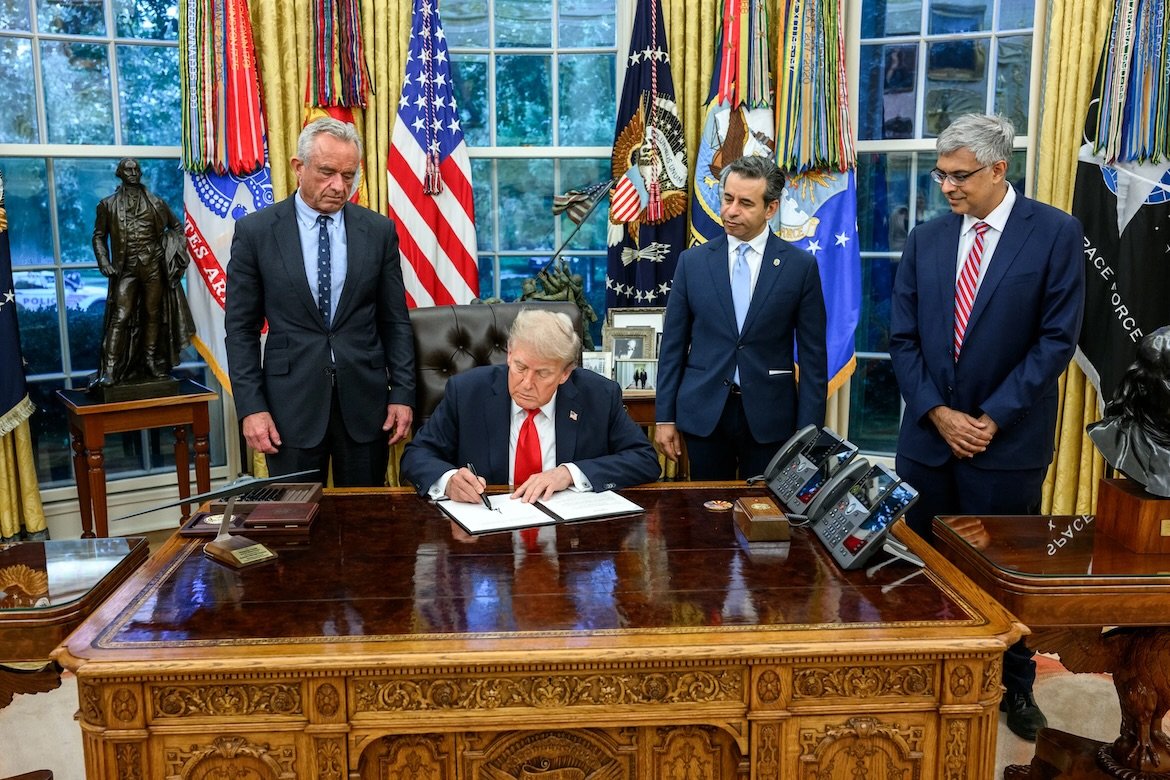
2 mins readPresident Donald Trump signs the One Big Beautiful Bill Act on the South Lawn of the White House, Friday, July 4, 2025, during the 4th of July picnic. Photo: Daniel Torok / Official White House
President Trump has signed into law an increase in the state and local tax (SALT) deduction cap, lifting it from $10,000 to $40,000 for many taxpayers. The measure is aimed at easing the burden for households in high-tax states while phasing out benefits for top earners above $500,000 in income.
The policy change gives new relief to millions of itemizers. But according to a Redfin analysis, the benefit varies sharply by state, underscoring how unevenly the expanded deduction will play out across the country.
Where the Biggest and Smallest Savings Are
Itemizers in certain states could see a far greater windfall from the higher cap. Redfin’s data shows the five states with the largest median savings from the new law are New York at about $7,092; California at $3,995; New Jersey at $3,897; Massachusetts at $3,835; and Connecticut at $3,133.
By contrast, some states will see only modest gains. The smallest median savings are expected in South Dakota at $1,033; Alaska at $1,052; Nevada at $1,090; Tennessee at $1,097; and New Hampshire at $1,101. This disparity reflects differences in property taxes, state income taxes and how many residents itemize deductions.
Tax experts note the new cap is still subject to income thresholds, meaning many higher-earning households won’t capture the full benefit. Phaseouts begin at $500,000 and can drop back toward the old cap at $600,000 and above.
Political Context and Economic Impact
The uneven pattern of savings highlights the political dimension of the change. Republicans from high-tax states have long pressed to raise the SALT cap, arguing their constituents were unfairly penalized. By delivering a larger deduction in places like New York and California, Trump may gain goodwill in areas traditionally skeptical of his tax policies.
Critics, however, argue that raising the cap disproportionately helps wealthier homeowners and could incentivize states to raise taxes. They also warn of a hit to federal revenue.
For now, the law gives itemizers in high-tax states a substantial new write-off. How much that affects housing markets, migration trends and state budgets will become clearer as taxpayers adjust to the new rules.
Huawei has detailed a three-year campaign aimed at narrowing the technological gap with Nvidia, relying on scale, national strategy and integrated infrastructure rather than raw silicon supremacy.
By Oleg PetrenkoUpdated
2 mins readHuawei Rotating Chairman Eric Xu unveils the Atlas 960 SuperPoD and SuperCluster at Huawei Connect 2025, highlighting the company’s push in AI infrastructure. Photo: Huawei
Huawei Technologies Co. has announced an ambitious three-year strategy to close the gap with Nvidia in the fast-growing market for artificial intelligence chips. Rotating Chairman Eric Xu told attendees at Huawei Connect 2025 that the company will leverage its manufacturing scale, telecom infrastructure and government ties to accelerate progress.
The plan comes as China prioritizes self-reliance in semiconductors amid U.S. export controls. Huawei already produces AI chips under its Ascend brand but acknowledges they lag Nvidia’s in raw performance. By 2027, the firm aims to match or exceed Nvidia in real-world deployment across cloud, telecom and industrial applications.
Pivoting From Chip Power to System Scale
Rather than chasing Nvidia’s every technical advance, Huawei is emphasizing a system-wide approach. Executives say the company will integrate chips, networks and cloud services to offset performance deficits with scale, coordination and tailored architectures.
That strategy includes increasing wafer capacity, optimizing supply chains and embedding custom AI chips into Huawei’s vast telecom and enterprise platforms. By pairing hardware with its own infrastructure, Huawei expects to improve efficiency and lock in demand internally. It is also exploring heterogenous computing — mixing different processing units for specialized tasks — to achieve results that rival or surpass general-purpose chips.
Analysts view the approach as a pragmatic way to accelerate adoption even if Huawei’s chips remain behind on benchmarks. It also signals to policymakers that the company is aligning with national tech goals, potentially unlocking continued subsidies and favorable procurement.
Raising the Stakes in the Global AI Chip Race
Huawei’s timetable raises the stakes in an already intense competition. Nvidia, AMD and Intel are all racing to develop next-generation silicon, while startups such as Graphcore and Cerebras push niche AI accelerators. Catching Nvidia will require flawless execution, high yields and cost discipline.
Geopolitical risks add another layer. Export controls, sanctions and supply-chain disruptions could derail Huawei’s progress. At the same time, the company’s global footprint in telecom gives it a built-in customer base that few rivals can match.
For the broader AI ecosystem, Huawei’s plan shows how the battle for leadership is shifting from pure chip performance to full-stack integration. As previously covered, Microsoft, Google and other tech giants are investing heavily in AI infrastructure worldwide, underscoring how hardware, software and scale are converging into a single competitive front.
The New York Department of Taxation and Finance will send refund checks to over 8 million residents starting late September, with exact amounts based on 2023 income and filing status.
By Oleg PetrenkoUpdated
2 mins readMore than 8 million New Yorkers are slated to receive inflation refund checks beginning late September, with payments calibrated by 2023 income and filing status. Photo: Yuting Gao / Pexels
The New York Department of Taxation and Finance has committed to mailing inflation refund checks to over 8 million New Yorkers starting at the end of September. The initiative was first announced by Governor Kathy Hochul in May as a one-time payment meant to ease the impact of higher sales taxes due to inflation.
How much each person receives will depend on their 2023 adjusted gross income (AGI) and tax filing status. Those with lower incomes will get larger refunds per dollar of tax paid. Higher-income filers will still qualify under certain thresholds, but their benefit will taper.
Who Qualifies and How Much They Get
To receive a check, taxpayers must have filed a Form IT-201 as full-year residents in 2023 and not have been claimed as a dependent. The mailing is automatic — no application is required.
Refund levels vary by bracket and filing status. Single filers with lower AGIs will receive one amount; those married filing jointly will receive a higher threshold. Those in upper income tiers may see reduced benefits or none at all, based on the cutoff. The range spans from modest payments for lower earners to more substantial checks for joint filers with qualifying income.
Officials say the refunds will be sent over several weeks, with no mail order based on ZIP code or region. That means some recipients may see their checks before neighbors even in the same county.
Why This Matters and What to Watch
This inflation refund is among the most sweeping in New York’s recent tax history. For many households, even a few hundred dollars could meaningfully offset rising costs in energy, groceries or housing. For lower-income and middle-class New Yorkers, the extra cash may provide short-term relief.
Yet the success of the program hinges on equitable distribution and effective delivery. Those who moved but didn’t update addresses may miss the mailing. Also, variation in payment timing may frustrate recipients waiting through October and November.
As previously covered, state-level inflation relief efforts are becoming more common across the U.S. — but few match the scale New York is attempting. For now, residents should watch their mailboxes and double-check their 2023 return status to confirm eligibility.
The Federal Reserve lowered its benchmark rate by 0.25% to 4.00%–4.25%, its first step in a projected series of cuts as job growth slows and inflation stays high.
By Oleg PetrenkoUpdated
2 mins readChair Powell answers reporters’ questions at the FOMC press conference on September 17, 2025. The Fed’s 0.25% rate cut marks a shift toward easing as officials balance weaker jobs data with persistent inflation. Photo: Federal Reserve / X
The Federal Reserve approved a widely expected 0.25% rate cut at its September meeting, lowering the federal funds target range to 4.00%–4.25%. It was the central bank’s first step in what most policymakers see as a series of reductions before year-end.
The decision, backed by an 11-to-1 vote, was less contentious than anticipated. Newly appointed Governor Stephen Miran dissented, favoring a larger half-point cut, while Governors Michelle Bowman and Christopher Waller joined the majority for the quarter-point move.
Officials noted in their statement that economic activity has “moderated,” job gains have slowed and inflation “remains somewhat elevated.” The language underscored a shift in focus from fighting inflation to managing downside risks to employment.
Why the 0.25% Cut Matters
Chair Jerome Powell characterized the quarter-point reduction as “risk management,” saying the labor market is softening on both the supply and demand sides. He emphasized the move places monetary policy in a “more neutral” position, giving the Fed flexibility for future decisions.
The Fed’s dot plot showed a majority of participants expect two additional cuts this year, likely in October and December. One official projected as much as 1.25 percentage points in further reductions, but others prefer a slower pace.
Market Response and Political Backdrop
Financial markets reacted with mixed moves after the announcement. Stocks fluctuated as investors weighed the benefits of lower borrowing costs against concerns about the economy. Treasury yields slipped on shorter-term securities but edged up on longer maturities.
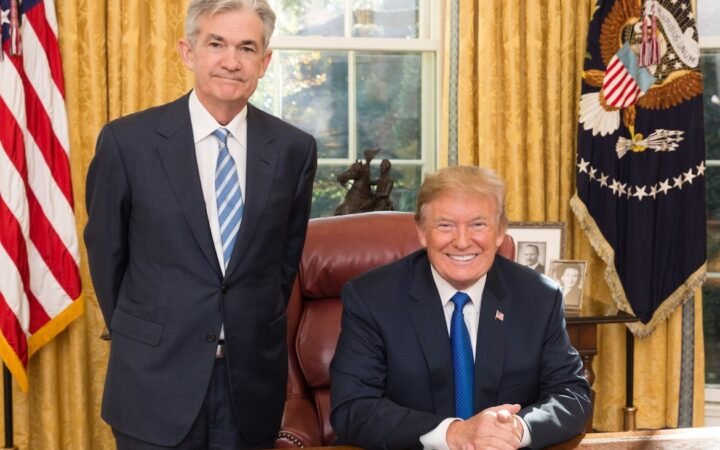
The rate cut followed months of public pressure from President Donald Trump, who has urged deeper reductions to support housing and lower government financing costs. Miran, a Trump appointee, has argued for even faster easing.
For households and businesses, the 0.25% cut offers immediate though modest relief on variable-rate debt. It also signals that the Fed now sees risks tilting more toward jobs than inflation. Investors will closely watch upcoming employment and price data to see if the Fed follows through with its projected easing path.
China has ordered major tech firms to stop buying Nvidia’s RTX Pro 6000D chips, prompting CEO Jensen Huang to express disappointment and highlight growing geopolitical risk.
By Oleg PetrenkoUpdated
2 mins readNvidia CEO Jensen Huang presents DGX Spark during a press event. Photo: Nvidia
China’s Cyberspace Administration has reportedly instructed major domestic tech firms – including ByteDance and Alibaba – to stop purchasing Nvidia’s RTX Pro 6000D chip and to cancel existing orders. The move sharply escalates Beijing’s effort to limit dependence on U.S. AI hardware.
Nvidia CEO Jensen Huang confirmed he was “disappointed” by the action, saying developers and regulators alike have complex agendas between China and the United States. He added that Nvidia can only “be in service of a market if the country wants us to be.”
Huang noted that over recent years Nvidia has guided analysts to exclude China from its financial forecasts due to export restrictions and regulatory uncertainty. The RTX Pro 6000D had been introduced under the assumption of a more stable China market, but the regulatory environment remains volatile.
Why This Ban Matters
The directive marks a sharper crackdown than earlier restrictions focused primarily on Nvidia’s H20 chip. The RTX Pro 6000D was designed specifically for China, reflecting earlier relaxation of export rules—but demand was reportedly lukewarm even before the ban.
China appears confident that its domestic chip makers have matured enough to offer competitive alternatives. Regulators have accused Nvidia of antitrust violations, particularly regarding its acquisition of Mellanox Technologies. The ban increases pressure on Nvidia to adjust strategy in one of its largest potential markets.
Impacts for Nvidia and Broader AI Ecosystem
Nvidia’s stock slipped slightly on news of the restriction. Investors are weighing how much revenue China accounts for, and how harder it will be to compete in markets dependent on export permissions.
For China, the move reinforces ongoing efforts to reduce reliance on U.S. AI hardware and promote homegrown technologies. Companies like Huawei, Cambricon, Baidu, and others are increasingly in the spotlight.
Regardless of these tensions, Nvidia remains active elsewhere. Huang just announced Nvidia’s participation in the U.K. AI infrastructure push one of several U.S. tech firms pledging multibillion-dollar investment in the UK market. As previously covered, Microsoft, Google and other tech giants have already committed £31B ($40B) to UK AI infrastructure.
The average U.S. FICO score slipped from 717 to 715 over the past year, marking its largest annual drop since the financial crisis, as more borrowers miss payments and student-loan delinquencies rise.
By Oleg PetrenkoUpdated
2 mins readThe average U.S. credit score, after more than a decade of steady gains, has now declined for the second consecutive year, according to new figures from FICO. Photo: Markus Winkler / Pexels
The average U.S. FICO credit score has declined from 717 to 715 over the past year, marking its second straight annual drop, according to a new report. The two-point fall is the steepest annual decline observed since the Great Recession, highlighting a worsening trend in consumer credit health.
Credit analysts point to rising credit utilization and an uptick in delinquent accounts – particularly among student loans – as chief culprits. As federal relief programs have ended, previously paused debts are starting to weigh on borrowers’ credit profiles again.
Key Drivers Behind the Drop
Consumers are increasingly carrying higher balances on credit cards, pushing utilization rates upward. Since credit utilization is a major component of score calculations, using more of your available credit tends to erode scores even if payments remain timely.
Meanwhile, the return of student loan reporting has exposed many borrowers to delinquency records that were previously shielded. Young adults, especially those in Generation Z, have been hit hardest, as many face income constraints while resuming payments.
Lenders and credit agencies are also seeing more late payments across auto, personal, and medical loans. Even as mortgage delinquencies remain low, rising trouble in other loan categories is introducing drag on average scores.
What This Means for Borrowers and Markets
For many consumers, a small drop in score may not change loan eligibility, but it can affect interest rates or credit offers—especially for those already on the margin. Some borrowers may find credit harder or more expensive to access.
The worsening credit landscape looms as a warning for lenders and policymakers. If the trend accelerates, it may signal broader stress in household finances. Observers will watch upcoming job and income data to see if defaults continue rising.
As previously covered, the decline in credit scores reflects broader financial strain among consumers, particularly in a higher interest-rate environment and with the resumption of federal student loan collections.
Major U.S. tech firms including Microsoft, Nvidia, Google and OpenAI have committed approximately £31 billion (about $40 billion) toward UK AI infrastructure, signaling a major boost to the country’s computing and innovation potential.
By Oleg PetrenkoUpdated
2 mins readJay Parikh, Executive Vice President of CoreAI, presents at Microsoft Build on May 20, 2025. Photo: Dan DeLong / Microsoft Corp.
U.S. tech giants have signaled plans to invest roughly £31 billion (about $40 billion) in the UK’s artificial intelligence and computing infrastructure in the coming years. The wave includes pact commitments for new data centres, AI supercomputing projects, and expansion of cloud capacity, timed with high-level diplomatic engagement between the U.S. and UK.
Microsoft is leading the spend, with its largest UK commitment to date, earmarking funds for both AI compute infrastructure and support for local operations. Nvidia, Google, OpenAI, CoreWeave and other firms are also on board, planning chip deployments, partnerships with UK-based cloud providers, and investment in growth-zones in regions like the Northeast.
What’s in the Pipeline
A flagship initiative under the announcements is “Stargate UK,” a project involving Nvidia, OpenAI, and Nscale aiming to build sovereign compute capacity via a supercomputer and tens of thousands of GPUs. Microsoft is partnering with Nscale for massive upgrades in cloud and data-centre infrastructure.
Another focus is the creation of new AI Growth Zones, which will benefit from favorable planning permissions, power infrastructure improvements and incentives to attract investment. Regions such as Blyth and Cobalt Park are named as early nodes, with plans for infrastructure build-out and job creation in tech, facilities, and construction.
Why This Matters and What Risks Remain
The investments could shift the UK’s positioning in AI from simply an adopter to a maker, enhancing its capacity for AI model training, innovation and cloud framework independence. Investors and local firms could benefit substantially, especially companies in the backend supply chain—data centres, chip fabricators, energy providers and cooling infrastructure.
Yet risks are nontrivial. Scaling up so many large-scale AI, cloud and compute projects depends heavily on planning approvals, energy supply (including clean energy), environmental impact, and workforce skills. Cost inflation and delays are possible. How quickly these high-cost commitments convert into working, competitive infrastructure will likely determine their ultimate impact.
Citigroup forecasts Ether could fall to about $4,300 by the end of 2025 under its base scenario, warning current price levels may be supported more by sentiment than fundamentals.
By Oleg PetrenkoUpdated
2 mins readEther’s outlook weakens as Citigroup warns of overvaluation and pressures from Layer-2 growth. Photo: Citigroup
Citigroup’s analysts estimate that Ether’s price will end the year around $4,300 in their base case forecast. They also outline a bullish scenario where Ether could rise to $6,400 and a bearish scenario where it falls to about $2,200.
The bank cautions that much of Ether’s recent strength may reflect investor enthusiasm rather than underlying usage metrics. A large share of growth has come from Layer-2 blockchains built atop Ethereum, but Citigroup assumes only about 30 percent of that activity passes through to the main Ethereum base layer.
Key Drivers of the Forecast
Network activity remains a crucial factor in Citi’s model. The bank points to increasing demand from applications like stablecoins and tokenization, which can drive usage fees and staking revenue. However, they believe that Ether’s current price exceeds what the base-layer activity would justify.
ETF flows are also part of the equation. While flows into Ether-based ETFs have been less than those into Bitcoin, Citi notes that they have an outsized impact per dollar on price moves. But such inflows are expected to remain relatively modest given Ether’s lower visibility with new investors and smaller market cap.
Risks and Scenarios to Watch
In a bullish scenario, further gains could come from stronger adoption, increasing transaction fees, and more robust usage of tokenization and stablecoin activity. Conversely, the bear case depends on macroeconomic headwinds, weakening equity markets, and slower-than-expected growth in Ethereum’s core activity levels.
Another risk is that the price could face correction if technical support levels fail. Investors will be watching metrics like base-layer transaction volume, staking yields, and fees. If market sentiment cools, those stronger supports may come into focus.
Standard Chartered’s innovation arm, SC Ventures, is planning a $250 million digital assets fund launching in 2026, with some backing expected from Middle Eastern investors.
By Oleg PetrenkoUpdated
2 mins readStandard Chartered aims to expand its presence in digital assets via SC Ventures’ new fund. Photo: Standard Chartered
Standard Chartered’s innovation and venture building unit, SC Ventures, is preparing to raise about $250 million for a new digital asset fund it expects to launch in 2026.
The bank has already signaled that some capital will come from investors in the Middle East. The move reflects growing interest in digital assets among global financial institutions and underscores SC Ventures’ push to lead in fintech-driven finance models.
The fund will focus on investments in digital assets broadly, especially in opportunities tied to the financial services sector. SC Ventures, which was established in 2018, has been incubating disruptive technologies and business models. This new fund adds to its growing portfolio of initiatives aimed at combining financial services with emerging tech.
Drivers of the New Fund Strategy
Part of SC Ventures’ motivation appears to be demand from high-net-worth and institutional investors in the Middle East, who have increasingly sought exposure to digital asset markets. The fund’s global orientation suggests Standard Chartered sees opportunities not just in its traditional banking markets, but also in fintech hubs and emerging digital finance ecosystems.
Another driver is the competitive pressure in financial services to offer new digital solutions, including crypto, tokenisation, and blockchain-enabled services. With fintech and digital assets evolving fast, having a dedicated investment vehicle allows SC Ventures to scale selectively, invest in infrastructure or startups, and partner in building next-generation finance platforms.
Potential Implications for Standard Chartered and the Sector
For Standard Chartered, launching this fund could help it anchor itself more firmly in the digital asset and fintech space, giving it early exposure to technologies that may reshape banking, payments, and capital markets.
It may also open new revenue streams if the investments perform well and if regulatory risk is managed properly. However, such funds carry considerable risk: regulatory uncertainty, volatility in digital asset markets, and competition from both established finance firms and nimble startups.
Broadly in the financial services sector, SC Ventures’ plan may signal that banks in Asia, the Middle East, and beyond are more willing to commit capital to digital asset tools and platforms. It could encourage similar funds or strategic arms at other banks to follow suit, especially in regions where fintech and blockchain regulation is evolving to become more permissive.
CoreWeave’s stock surged after revealing a $6.3 billion Nvidia agreement guaranteeing purchases of unsold cloud capacity through 2032.
By Oleg PetrenkoUpdated
2 mins readCoreWeave’s share rally highlights investor enthusiasm for its Nvidia-backed AI infrastructure. Photo: CoreWeave
CoreWeave’s stock moved sharply higher after the company disclosed a $6.3 billion agreement with Nvidia that effectively guarantees a buyer for any unsold cloud-computing capacity through April 13, 2032.
The announcement provided a major boost to investor sentiment, sending CoreWeave shares up about 7 percent in early trading as the market reacted to the reduced risk profile of the AI infrastructure provider.
The deal extends a partnership first established in April 2023 and formalizes Nvidia’s role as both a supplier of GPUs and a backstop customer. By securing this long-term commitment, CoreWeave gains a stronger footing to expand its AI-focused data centers in the U.S. and Europe, which already host some of the most in-demand Nvidia hardware for training and running large AI models.
Why the CoreWeave Stock Is Rallying
Investors view the Nvidia agreement as a powerful signal of confidence and stability. In a capital-intensive industry where utilization rates can make or break profitability, having Nvidia agree to buy unused capacity reduces the downside risk.
This addresses long-standing concerns about CoreWeave’s reliance on a small number of big customers, such as Microsoft and OpenAI, and offers a clearer path to predictable revenue growth.
The stock’s reaction also reflects broader enthusiasm for companies tied to AI infrastructure. As demand for computing power accelerates, markets are rewarding providers that can demonstrate both scale and financial safety nets. CoreWeave’s announcement gives investors a narrative of growth supported by a world-leading chipmaker.
Implications for CoreWeave and the AI Cloud Sector
This arrangement strengthens CoreWeave’s ability to plan capital spending and scale operations while protecting against underutilization. The company may be able to accelerate its build-out of data centers, knowing that Nvidia’s purchase commitment cushions the risks if customer demand takes longer to materialize.
For the wider AI cloud sector, the deal illustrates how major chip makers are becoming demand stabilizers as well as suppliers. If similar agreements spread, they could reshape competitive dynamics by favoring infrastructure providers able to secure long-term commitments from technology giants. Investors will be watching whether CoreWeave’s stock can sustain its gains as the company executes on this expansion strategy.
Join our list to receive latest Blockchain, Crypto & Fintech news:
WordPress database error: [Table 'u752143311_Kem9N.wp_coingecko_coins' doesn't exist]
            SELECT coins.*, meta.post_id as post_id
            FROM `wp_coingecko_coins` coins
            INNER JOIN wp_postmeta meta ON (meta.meta_key = 'wpcf-coin-main-tag' AND meta.meta_value = coins.slug )
            ORDER BY market_cap_usd
            DESC LIMIT 9

 By Oleg Petrenko
Updated
3 mins read
By Oleg Petrenko
Updated
3 mins read