Meta Shares Jump 7% After Debut of New AI Model Muse

Meta Platforms shares rose 7% after unveiling its new AI model Muse. The launch signals renewed momentum in the company’s artificial intelligence strategy.

By Sophia Reynolds | Edited by Oleg Petrenko Published: Updated:
Meta Shares Jump 7% After Debut of New AI Model Muse
Meta Platforms shares gained 7% after the unveiling of its new AI model Muse, signaling renewed momentum in the company’s artificial intelligence strategy. Photo: Dima Solomin / Unsplash

Meta Platforms shares climbed about 7% after the company unveiled its new artificial intelligence model, Muse, marking its first major AI release in over a year.

The launch comes as Meta intensifies its efforts to compete in the rapidly evolving AI landscape, where major technology firms are racing to deploy more advanced and efficient models.

Investors responded positively to the announcement, viewing it as a sign of renewed momentum in Meta’s AI strategy.

Muse Signals Strategic AI Push

Muse is described as a multimodal AI system capable of handling different types of data and performing more advanced reasoning tasks. The model is part of Meta’s broader initiative to develop what it calls “personal superintelligence,” aiming to integrate AI more deeply into consumer and enterprise applications.

The project is supported by Meta’s large-scale investments in AI infrastructure and research, including a multibillion-dollar commitment to next-generation computing systems. As previously covered, Meta has been increasing spending to compete with rivals in artificial intelligence, focusing on both model development and hardware capacity.

The debut of Muse suggests the company is accelerating its roadmap after a period of relative silence in major model releases.

Implications for Investors and Big Tech Competition

The stock’s reaction highlights how closely investors are tracking AI developments as a key driver of valuation in the technology sector.

A successful rollout of Muse could strengthen Meta’s competitive position against other leading AI players, particularly in areas such as advertising, social platforms, and enterprise tools. However, the company still faces challenges, including rising infrastructure costs and intense competition from peers investing heavily in AI. Analysts note that sustained gains will depend on Meta’s ability to translate technological advancements into revenue growth and user engagement.

Still, the launch reinforces a broader trend: artificial intelligence remains central to Big Tech’s growth narrative and investor sentiment. As competition intensifies, companies that demonstrate clear progress in AI development are likely to command stronger market confidence.


Interactive Brokers Eyes Expansion Into Prediction Markets

Interactive Brokers is exploring entry into prediction markets, betting on growing institutional demand. The move could reshape how event-based trading is integrated into mainstream finance.

By Daniel Wright | Edited by Oleg Petrenko Published: Updated:
Interactive Brokers Eyes Expansion Into Prediction Markets
Interactive Brokers is considering entering the prediction markets space, betting on rising institutional demand, a move that could reshape how event-driven trading integrates into mainstream finance. Photo: Oleg Petrenko / MarketSpeaker

Interactive Brokers is exploring a move into prediction markets, signaling a potential shift toward institutional adoption of event-based trading instruments.

Founder Thomas Peterffy said the firm sees prediction markets as a major future segment of financial markets, with the potential to evolve beyond niche platforms into widely used trading tools.

Currently, the space is dominated by platforms such as Polymarket and Kalshi, which focus largely on retail participation and speculative activity across elections, sports, and economic outcomes.

From Niche Curiosity to Institutional Tool

Interactive Brokers aims to help transform prediction markets into a more structured and professional segment of finance, appealing to institutional traders.

The firm believes these markets could become valuable instruments for hedging and forecasting real-world events, including economic data releases and geopolitical developments. As previously covered, interest in event-driven trading has grown alongside advances in data analytics and algorithmic strategies. Peterffy emphasized that for prediction markets to scale, they will need stronger infrastructure, clearer regulation, and broader participation from professional investors.

The company’s entry could accelerate that transition by bringing established trading technology and institutional credibility to the space.

Implications for Financial Markets

If successfully developed, prediction markets could expand the range of tradable instruments available to investors, blurring the line between financial assets and real-world outcomes.

Analysts say institutional involvement may increase liquidity and improve pricing efficiency, making these markets more reliable indicators of future events. At the same time, regulatory challenges remain a key hurdle, particularly in jurisdictions where event-based contracts face legal restrictions. For Interactive Brokers, the move represents an opportunity to position itself at the forefront of a potentially transformative market segment.

As competition intensifies across trading platforms, firms that successfully integrate new asset classes could gain a strategic advantage. The initiative also reflects a broader trend in financial markets, where innovation continues to reshape how investors access and trade risk.

Oil Prices Rebound as Iran Accuses U.S. of Ceasefire Breach

Oil prices resumed gains after Iran accused the U.S. of violating a ceasefire agreement. Renewed tensions are fueling concerns over supply disruptions.

By Nathan Cole | Edited by Oleg Petrenko Published:
Oil Prices Rebound as Iran Accuses U.S. of Ceasefire Breach
Oil prices resumed gains after Iran accused the U.S. of violating a ceasefire agreement. Renewed tensions are fueling concerns over supply disruptions. Photo: Maria Lupan / Unsplash

Oil prices moved higher again after Iran accused the United States of breaching elements of a fragile ceasefire agreement, reigniting concerns over the stability of global energy supplies.

The rebound follows a sharp selloff earlier in the week, when crude prices dropped after the announcement of a temporary two-week truce between the two countries. However, market sentiment quickly shifted as doubts emerged over the durability of the agreement and continued military activity in the region.

Fragile Ceasefire Fuels Market Volatility

Oil markets remain highly sensitive to developments in the Middle East, particularly around the Strait of Hormuz, a critical route for global energy shipments. Despite the ceasefire, ongoing tensions and conflicting signals from both sides have raised fears that disruptions could persist or worsen.

Brent crude and U.S. benchmark prices have already rebounded toward the $100 per barrel level after initially plunging on ceasefire news, reflecting persistent uncertainty. Analysts note that even temporary instability in the region can significantly impact oil flows, given that roughly one-fifth of global oil supply passes through the Hormuz corridor.

As previously covered, repeated attacks on energy infrastructure and shipping routes have amplified volatility across commodities markets.

Implications for Global Markets

The renewed rise in oil prices is adding pressure to global markets, particularly as higher energy costs feed into inflation and economic uncertainty.

Equities have shown signs of weakness alongside the latest moves in oil, while investors continue to rotate between risk assets and defensive positions.

Analysts warn that continued escalation or even the perception of instability could keep oil prices elevated in the near term. At the same time, the situation highlights how geopolitical developments are increasingly driving short-term price movements across commodities. For investors, the key risk remains the unpredictability of the conflict and the potential for sudden disruptions in supply chains.

With the ceasefire appearing fragile, markets are likely to remain volatile, with energy prices reacting quickly to any new developments.

U.S. Stocks Lose $650 Billion as Markets Brace for Trump Deadline

U.S. equities shed roughly $650 billion as investors react to an approaching Trump deadline. Rising oil prices and geopolitical uncertainty are weighing on markets.

By Daniel Wright | Edited by Oleg Petrenko Published: Updated:
U.S. Stocks Lose $650 Billion as Markets Brace for Trump Deadline
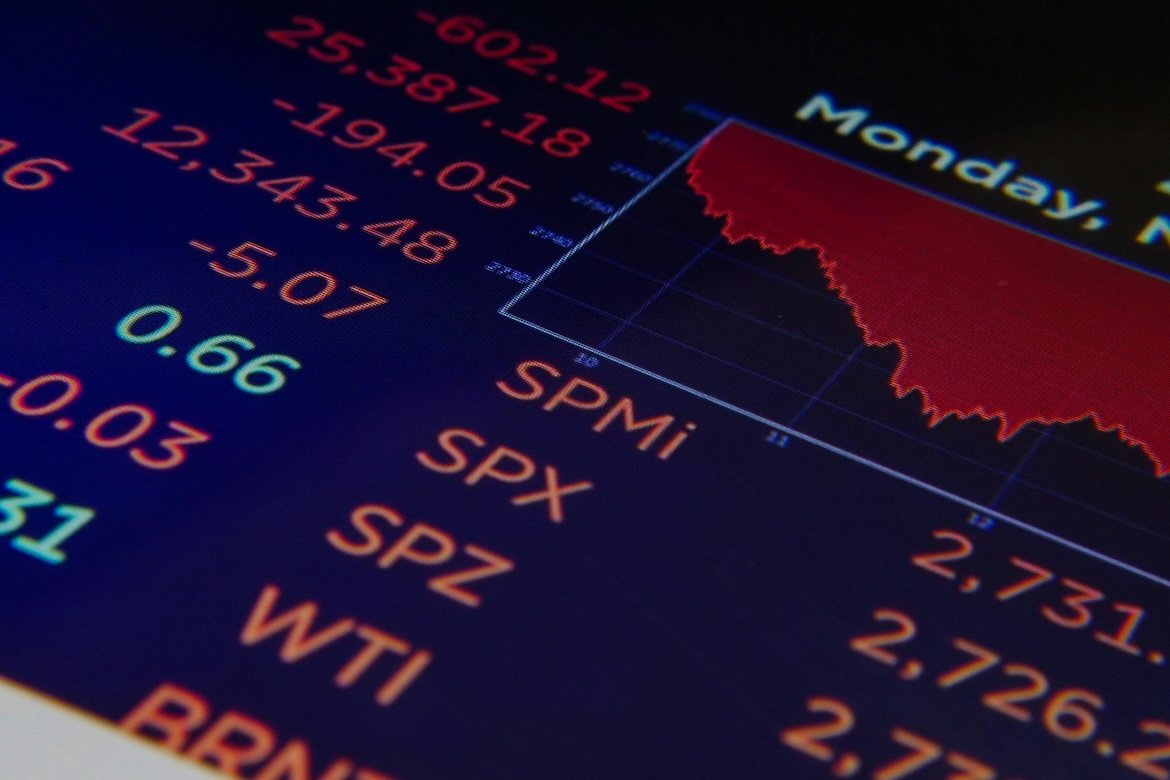
U.S. equities lost roughly $650 billion as investors reacted to an approaching Trump deadline, with rising oil prices and geopolitical uncertainty weighing on markets. Photo: Kindel Media / Pexels

U.S. equity markets lost approximately $650 billion in market value as investors moved to reduce risk ahead of a key geopolitical deadline tied to former President Donald Trump. The selloff comes amid heightened uncertainty, with less than 10 hours remaining before the deadline, intensifying volatility across global markets.

At the same time, oil prices surged above $117 per barrel, adding further pressure on equities and fueling inflation concerns.

Markets React to Rising Geopolitical Risk

Major U.S. indices declined across the board, reflecting a broad-based risk-off sentiment among investors.

The Nasdaq Composite fell 1.7%, erasing roughly $250 billion in market value, as technology stocks led the downturn. The S&P 500 dropped 1.1%, wiping out approximately $560 billion, while the Dow Jones Industrial Average declined 0.9%, losing about $200 billion.

As previously covered, geopolitical developments have increasingly driven short-term market movements, particularly when combined with rising energy prices. The spike in oil has heightened concerns over supply disruptions and the potential impact on global economic growth.

Implications for Investors

The combination of geopolitical uncertainty and surging energy costs is creating a challenging environment for investors. Higher oil prices can feed into inflation, potentially complicating monetary policy and weighing on corporate margins.

Analysts say markets are likely to remain volatile in the near term, particularly as investors await clarity on geopolitical developments. At the same time, sharp selloffs may present opportunities for long-term investors, depending on how events unfold.

For now, the focus remains on the upcoming deadline and its potential to trigger further market reactions. With risk sentiment fragile, global markets are expected to remain highly sensitive to new developments in the coming hours.

Global Copper Inventories Hit 23-Year High as Supply Surge Accelerates

Global copper inventories have climbed to a 23-year high, surpassing 1.02 million tonnes. The rapid buildup signals shifting dynamics in the commodities market.

By Nathan Cole | Edited by Oleg Petrenko Published: Updated:
Global Copper Inventories Hit 23-Year High as Supply Surge Accelerates
Global copper inventories have risen to a 23-year high, exceeding 1.02 million tonnes, signaling a significant shift in commodities market dynamics. Photo: Marcel Strauß / Unsplash

Global copper inventories have surged to 1.02 million tonnes across major exchanges, reaching their highest level in 23 years and underscoring a dramatic shift in global supply dynamics.

Stocks tracked across Comex, the Shanghai Futures Exchange, and the London Metal Exchange have doubled since September and risen by approximately 380% since 2024, marking one of the fastest increases on record.

The sharp accumulation comes amid heightened trading activity and changing expectations around industrial demand.

Supply Build Signals Market Imbalance

The rapid rise in inventories suggests a growing imbalance between supply and demand, with production outpacing consumption in key markets. On Comex alone, copper inventories reached a record 534,405 tonnes in early February, reflecting a significant influx of material into exchange-monitored warehouses.

Meanwhile, stockpiles tracked by the London Metal Exchange have increased for 27 consecutive days, the longest stretch of gains since 2009. As previously covered, copper is widely viewed as a barometer of global economic activity due to its critical role in construction, manufacturing, and energy infrastructure.

The surge in supply may indicate slowing industrial demand or anticipatory stockpiling ahead of potential market disruptions.

Implications for Prices and Global Markets

The buildup in inventories could place downward pressure on copper prices if demand fails to keep pace with supply growth.

For investors, the trend raises questions about the near-term outlook for industrial metals, particularly as global growth expectations remain uncertain. At the same time, structural demand drivers such as electrification, renewable energy, and infrastructure investment continue to support a longer-term bullish case for copper.

Analysts note that short-term oversupply does not necessarily undermine the metal’s strategic importance in the global energy transition. However, the scale and speed of the current inventory surge highlight increasing volatility in commodities markets.

If the trend persists, it could reshape pricing dynamics and influence investment flows across the broader metals sector.

Buffett Says Berkshire Made $100 Billion on Apple, Signals Readiness to Deploy Cash

Warren Buffett said Berkshire Hathaway has earned over $100 billion from its Apple investment. He signaled the firm is ready to deploy cash if markets decline.

By Sophia Reynolds | Edited by Oleg Petrenko Published:
Buffett Says Berkshire Made $100 Billion on Apple, Signals Readiness to Deploy Cash
Warren Buffett said Berkshire Hathaway has generated more than $100 billion from its Apple investment and indicated the firm is ready to deploy capital if markets decline. Photo: Oleg Petrenko / MarketSpeaker

Warren Buffett said Berkshire Hathaway has generated more than $100 billion in profits from its long-standing investment in Apple, which remains the firm’s largest holding despite partial sales in recent years.

Speaking in a televised interview, Buffett acknowledged that he sold a portion of the Apple stake earlier than he would have preferred, though he emphasized the investment’s overall success.

The comments come as Berkshire continues to manage a large cash position amid uncertain market conditions.

Cautious Strategy Amid Market Uncertainty

Buffett indicated that Berkshire is prepared to deploy significant capital if markets experience a meaningful downturn, signaling a readiness to take advantage of lower valuations.

The company has already allocated approximately $17 billion into U.S. Treasury bonds, reflecting a defensive positioning while waiting for more attractive opportunities. Investment decisions are increasingly being coordinated with CEO Greg Abel, as part of the firm’s long-term leadership transition.

As previously covered, Berkshire has maintained a disciplined approach to capital allocation, favoring patience over aggressive buying during periods of elevated valuations.

Buffett also addressed monetary policy, noting that while he is uncertain whether he would lower interest rates, he would prioritize controlling inflation and maintaining stability in the banking system.

Implications for Investors

Buffett’s remarks reinforce Berkshire’s dual strategy of caution and opportunism, balancing capital preservation with readiness to act when markets present compelling value.

For investors, the continued prominence of Apple in Berkshire’s portfolio highlights confidence in large-cap technology as a long-term investment.

At the same time, the buildup of Treasury holdings suggests ongoing concern about market conditions and valuation levels. Analysts say Berkshire’s positioning could allow it to move quickly in the event of market dislocations, potentially capturing outsized returns during periods of volatility. The comments also provide insight into how one of the world’s most closely watched investors views the current macroeconomic environment, particularly the role of interest rates and inflation.

As markets remain sensitive to policy shifts and geopolitical risks, Berkshire’s approach may serve as a benchmark for institutional investors navigating an uncertain landscape.