Goldman Sachs projects that SpaceX could increase its AI-related revenue by approximately 100 times by 2030, reaching an estimated $322 billion annually.
The forecast comes just days before Goldman Sachs is expected to play a leading role in SpaceX’s highly anticipated IPO process.
According to the projection, artificial intelligence could become one of the company’s most important long-term growth drivers alongside its satellite and aerospace businesses.
AI Becomes Central to the SpaceX Growth Story
Analysts believe SpaceX is increasingly positioning itself as both an aerospace company and an AI infrastructure provider.
The company has already disclosed significant investments in AI computing, large-scale data centers, and advanced chip manufacturing initiatives.
Goldman Sachs’ projection implies a dramatic expansion of SpaceX’s AI ecosystem over the coming years as demand for computing infrastructure continues accelerating globally.
Investors are closely evaluating how AI-related businesses could contribute to future revenue growth beyond the company’s traditional launch and satellite operations.
The forecast also highlights the growing importance of AI narratives in supporting valuations across public and private technology companies.
IPO Approaches as Expectations Rise
The report arrives ahead of what could become one of the largest IPOs in market history.
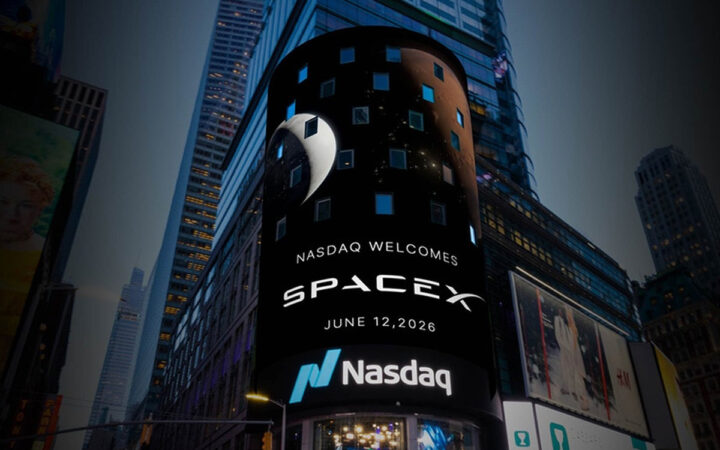
SpaceX is expected to seek a valuation of approximately $1.75 trillion when shares begin trading on Nasdaq.
Analysts note that aggressive long-term growth projections are becoming a key part of the investment thesis surrounding the company.
At the same time, some market observers caution that forecasts extending several years into the future remain highly speculative and depend on successful execution across multiple emerging businesses.
The broader takeaway is that investors are increasingly viewing SpaceX not only as a space company, but as a major future participant in the global AI infrastructure market.