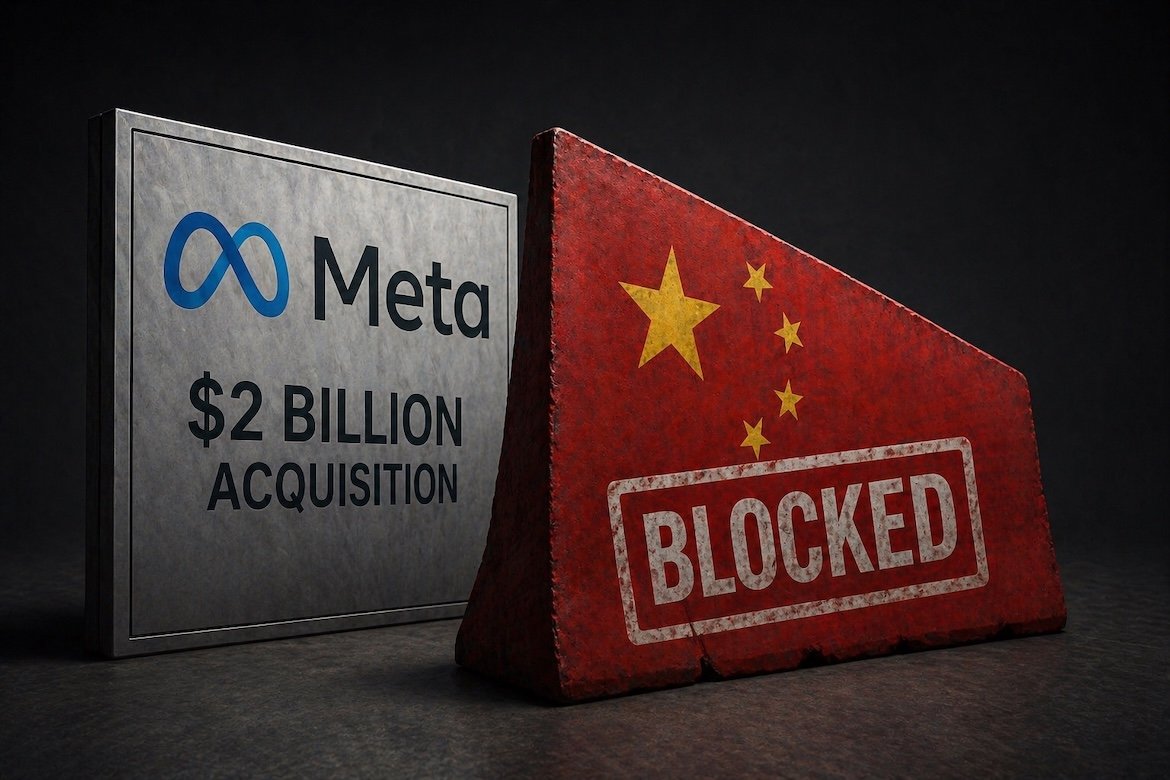

China has blocked Meta’s planned $2 billion acquisition of AI startup Manus, marking a significant regulatory intervention in a cross-border technology deal.
The decision reflects increasing scrutiny from Chinese authorities over foreign acquisitions involving companies with domestic ties, particularly in sensitive sectors such as artificial intelligence.
Manus, a Singapore-based startup with Chinese roots, had been seen as a strategic addition to Meta’s expanding AI capabilities.
Regulatory Concerns Intensify Around AI Deals
Chinese regulators have been tightening oversight of technology transactions, especially those involving data, advanced computing, and AI-related intellectual property.
The move to block the deal highlights concerns around data security, technological sovereignty, and the potential transfer of sensitive capabilities to foreign firms.
For Meta, the acquisition was expected to strengthen its position in the competitive AI landscape, where companies are racing to secure talent and technology.
As previously covered, governments globally are increasing regulatory scrutiny of AI and tech deals, reflecting the strategic importance of these assets.
The decision also underscores geopolitical tensions that continue to shape cross-border investment flows in the technology sector.
Market Implications Highlight Growing Deal Uncertainty
The blocked transaction adds to uncertainty for companies pursuing international expansion through acquisitions, particularly in regulated markets.
Investors may view the decision as a signal that regulatory risks are rising, potentially complicating future deal-making in AI and related industries.
For Meta, the setback could delay its efforts to expand its AI capabilities through external acquisitions, increasing reliance on internal development or alternative partnerships.
At the same time, the broader AI investment trend remains strong, with companies continuing to deploy capital despite regulatory headwinds.
For markets, the development reinforces a key theme: geopolitical and regulatory factors are playing an increasingly important role in shaping the trajectory of the global technology sector.
The outcome may influence how companies structure future deals, particularly those involving sensitive technologies and cross-border operations.