Deprecated: rtrim(): Passing null to parameter #1 ($string) of type string is deprecated in /home/u752143311/domains/marketspeaker.com/public_html/wp-includes/formatting.php on line 2829
Deprecated: rtrim(): Passing null to parameter #1 ($string) of type string is deprecated in /home/u752143311/domains/marketspeaker.com/public_html/wp-includes/formatting.php on line 2829
Amazon is preparing its largest corporate layoff to date, set to begin Tuesday and potentially affect up to 30,000 jobs, or roughly 10% of its corporate workforce.
By Oleg PetrenkoUpdated
2 mins readThe company’s announcement of up to 30,000 corporate job cuts signals a major strategic restructuring under CEO Andy Jassy. Photo: appshunter.io / Unsplash
Amazon is set to begin one of its largest workforce reductions ever, with sources indicating the company will cut up to 30,000 corporate roles starting Tuesday. This reduction represents about 10% of Amazon’s estimated 350,000 corporate employees and marks the company’s most significant layoff wave since late 2022.
The cuts are linked to Amazon’s broader initiative to streamline bureaucracy, adapt its structure for artificial-intelligence (AI) integration, and align resources with its evolving strategic priorities.
What’s Driving the Reduction
Amazon CEO Andy Jassy has previously warned that generative-AI tools and internal productivity efforts would reduce the need for certain corporate roles. The layoff plan is reportedly hitting departments such as Human Resources (People Experience and Technology, or PXT), Devices and Services, Operations, and Amazon Web Services (AWS).
Internal training for managers was conducted ahead of notification emails to staff, suggesting the cuts are structured and supported by the company’s internal change-management process. Amazon’s hiring for seasonal roles remains in motion, but its white-collar cost-base is being carefully recalibrated.
Implications, Risks & What to Watch
For Amazon, these cuts could free up capital to invest in growth areas such as cloud infrastructure, logistics automation and AI systems. The move may improve operational efficiency and support Amazon’s shift toward leaner corporate structures.
However, the scale of the job reductions elevates risks: morale and retention could suffer, and some functions may be understaffed during critical operational periods. The layoff wave also raises broader questions about job security in corporate tech during rapid-scale transformation.
Observers will focus on how the firm redeploys savings, whether worker transitions are handled with adequate support and how the business performs post-restructuring. The move may also accelerate talent migration into startup and AI-service markets, influencing Tech-sector employment dynamics.
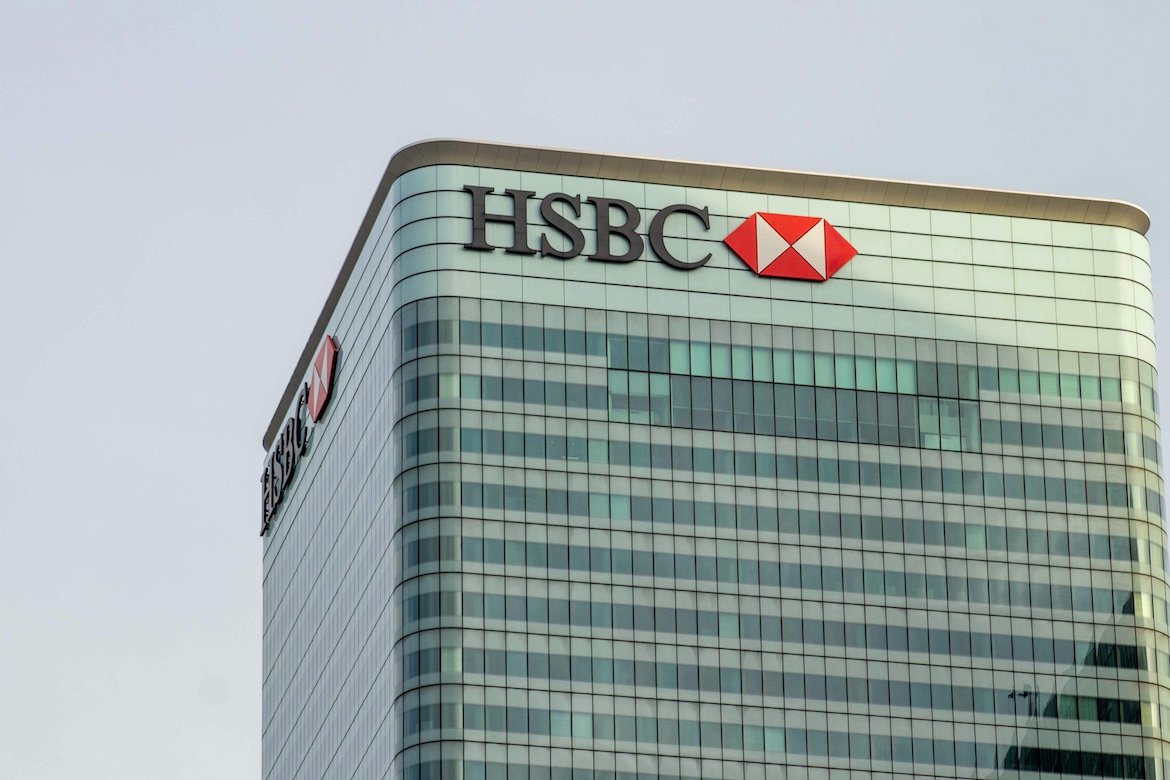
HSBC Holdings’ pretax profit dropped 14% in the third quarter following a $1.1 billion charge tied to the Bernard Madoff scandal, yet the bank raised its net interest-income forecast to $43 billion for 2025.
By Oleg PetrenkoUpdated
2 mins readThe bank’s third-quarter profits slid amid legal charges, but it raised its revenue outlook citing stronger interest income. Photo: Yusuf Miah / Pexels
HSBC, Europe’s largest lender, reported a 14% drop in third-quarter pretax profit to $7.3 billion, weighed by higher expenses and legal costs tied to the Bernard Madoff fraud case. Despite the decline, the results topped analyst expectations, driven by stronger lending income and a sharp rebound in wealth-management revenues.
Revenue for the quarter came in at $17.8 billion, ahead of the $17.05 billion consensus estimate compiled by the bank. Profit before tax also beat forecasts of $5.98 billion.
Stronger Income and Strategic Progress
HSBC’s net interest income (NII) rose 15% year-on-year to $8.8 billion, supported by higher interest rates in core markets. The bank now expects full-year banking NII of $43 billion or more in 2025, citing confidence in rate stability in the United Kingdom and Hong Kong.
The wealth division was a standout performer, with income surging 30% year-on-year to $2.68 billion, prompting the lender to forecast double-digit annual growth in fee and other income from the segment over the medium term.
Legal Charges and Hong Kong Expansion Plans
Operating expenses rose 24% from a year earlier, driven by $1.4 billion in legal provisions, including $1.1 billion set aside for potential payouts related to Madoff-linked claims. The charges will trim HSBC’s Common Equity Tier 1 (CET1) capital ratio by about 15 basis points, though the ratio remains comfortably above regulatory minimums.
The Madoff litigation dates back to a 2009 lawsuit by Herald Fund SPC against HSBC’s Luxembourg arm, seeking restitution for funds lost in the Ponzi scheme. The court recently upheld part of the claim, and HSBC said it plans to appeal further in Luxembourg.
Separately, the bank reaffirmed its plan to take its Hang Seng Bank subsidiary private, valuing it at about HK$290 billion ($37 billion). The move underscores HSBC’s long-term confidence in Hong Kong’s role as a leading financial hub, even as Hang Seng continues to face a 6.69% non-performing loan ratio amid property-sector stress.
Market Response and Outlook
Following the announcement, HSBC shares in Hong Kong rose 1.3%. Analysts said the results highlight the bank’s ability to offset legal headwinds with strong core-business growth and steady rate income.
Investors will now watch how HSBC balances its Asia-focused expansion with rising compliance and litigation costs. The bank’s ability to defend its capital base, control expenses, and sustain lending growth will determine whether the upbeat income outlook translates into stronger returns through 2025.
President Donald Trump has nominated Mike Selig to become the next chair of the Commodity Futures Trading Commission (CFTC), signaling an imminent shift in crypto regulation and agency leadership.
By Oleg PetrenkoUpdated
2 mins readMike Selig nomination to lead the CFTC highlights the agency’s growing role in crypto oversight. Photo: Tomasz Zielonka / Unsplash
President Donald Trump has nominated Mike Selig – current chief counsel for the Securities and Exchange Commission’s crypto task force to serve as chair of the Commodity Futures Trading Commission (CFTC). If confirmed, Selig will assume control of the agency precisely as lawmakers weigh granting the CFTC wider authority over digital-asset markets.
I am honored to be nominated by President Trump to serve as the 16th Chairman of the U.S. Commodity Futures Trading Commission. With the President’s leadership, a Great Golden Age for America’s Financial Markets and a Wealth of New Opportunities stand before us. I pledge to work… https://t.co/cO2vLBAv0z
Selig’s nomination follows the withdrawal of previous nominee Brian Quintenz, whose confirmation faltered amid lobbying and industry opposition. The move underscores the administration’s determination to align leadership at the derivatives regulator with its crypto-friendly agenda.
Why the Nomination Matters
Selig brings deep experience in both crypto and derivatives regulation. While at the SEC, he led efforts to coordinate oversight of digital-asset infrastructure and advised on investor-protection rules. His appointment signals the CFTC’s growing clout over assets like Bitcoin and Ether and may accelerate regulatory clarity for the $4 trillion-plus crypto market.
The nomination also reflects the White House’s push to recast the U.S. as a global hub for digital-asset innovation with the CFTC playing a central role. Selig’s crypto-industry background positions him to bridge financial-markets expertise with emerging Web-3 dynamics.
Implications, Risks & What to Watch
For the crypto sector, Selig’s nomination could accelerate formal rules, enforcement actions and broader market-structure reforms. Platforms and token issuers may face a tighter regime and clearer path to compliance both positive for institutional-grade adoption but demanding for emerging players.
Still, substantial risks remain. The Senate confirmation process may become a battleground, especially if questions on Selig’s past lobbying, policy positions or agency relationships arise. Further, rapid change at the CFTC could increase regulatory uncertainty for firms navigating a shifting rule-book.
Closely observed indicators include moves to expand the CFTC’s mandates, changes to derivatives rules covering digital assets, and any early statements from Selig on policy direction. As previously covered, leadership changes at major regulators often mark turning points for market structure and industry alignment Selig’s tenure may define how crypto evolves in the U.S. financial system.
Canada’s federal government is set to introduce a comprehensive regulatory regime for stablecoins in its next budget, signalling a structural shift toward digital-asset payment infrastructure.
By Oleg PetrenkoUpdated
2 mins readCanada prepares stablecoin regulation to modernise payments infrastructure. Photo:
Isabel Piñeiro / Unsplash
Canada is moving closer to establishing a national regulatory framework for stablecoins, with officials planning to include specific measures in the next federal budget. The proposed rules will define how stablecoin issuers can operate, establish reserve-backing standards, and align regulatory oversight across federal and provincial authorities.
While Canada currently classifies many digital-asset activities under securities and payments frameworks, the upcoming policy push marks the first time the country will articulate a standalone licensing and operational regime for fiat-pegged tokens.
Why the Regulation Is Happening
Regulatory momentum stems from rising retail and institutional use of stablecoins, especially in cross-border payments and digital-asset services. Canadian authorities, including the Bank of Canada, have acknowledged that the current payments infrastructure is outdated and fragmented, and that unregulated stablecoin activity poses both innovation opportunity and systemic risk.
The hybrid regulatory model in Canada split between federal and provincial jurisdictions has signalled significant coordination challenges. The new framework seeks to clarify which body will issue licences, enforce reserve-backing rules and monitor compliance, streamlining oversight for market participants.
Implications, Risks & Outlook
For fintech firms and crypto-asset issuers, the forthcoming regulation will provide much-needed clarity and operational legitimacy. A clear pathway to licence stablecoins may attract capital and infrastructure players to Canada’s digital-asset market.
On the flip side, stringent reserve requirements, governance standards and licensing costs could inhibit smaller issuers or decentralized models. Execution risk is high; delays or inconsistent application across provinces might spur regulatory arbitrage or offshore migration.
Key signals to watch include: draft legislation language in the federal budget, interaction with Canada’s payments law reform, and decisions on which federal agency will act as primary regulator. Additionally, how the rules interface with the U.S. GENIUS Act and Europe’s Markets in Crypto‑Assets Regulation will influence cross-border issuer strategy and capital flows.
As previously covered, stablecoins are moving from fringe crypto constructs to mainstream payment infrastructure. Canada’s upcoming framework may mark a turning point not only domestically but in how regulated fiat-pegged tokens are treated globally.
Tokyo-based fintech firm JPYC has launched Japan’s first yen-pegged stablecoin, backed by bank deposits and government bonds as the country races into the digital-asset era.
By Oleg PetrenkoUpdated
2 mins readJapan’s first regulated yen-pegged stablecoin kicks off to modernise payments. Photo: note thanun / Unsplash
Japanese fintech startup JPYC Inc. has issued the country’s first regulated stablecoin pegged to the yen, marking a major milestone in Japan’s digital-asset evolution. The token, also called JPYC, is backed one-to-one by bank deposits and Japanese Government Bonds (JGBs) and maintains a fixed 1:1 exchange rate with the yen.
JPYC aims to issue up to ¥10 trillion (about $66 billion) within the next three years as it targets both domestic and global users. Transaction fees are waived in the early phase to spur rapid adoption and drive network effects.
Why This Launch Matters
This development signals a seismic shift for Japan, a country traditionally dominated by cash and credit-card payments. JPYC delivers regulated digital-asset infrastructure aligned with Japan’s revised payment laws and positions the yen for on-chain settlement and remittance use.
The backing by bank deposits and JGBs offers reassurance around stability and redeemability traits that many stablecoin initiatives struggle to prove. For JPYC, the absence of fee-based revenue initially highlights its ambition for scale over margin. CEO Noritaka Okabe called the launch a “major milestone in the history of Japanese currency.”
Implications, Risks & What to Watch
For the global crypto and payments industry, JPYC’s debut elevates the yen as a potential on-chain settlement asset, and opens the door for decentralised USD/JPY trading pairs. Japan may attract crypto firms and infrastructure projects seeking regulated fiat-backed options.
However, hurdles remain. While institutional interest is reported, retail uptake may be slow given Japan’s conservative consumer behaviour. The company will need to deliver user-friendly flows, integration with local banking rails and clear regulatory compliance. Scalability also matters: failure to hit the issued-token targets could dampen momentum.
Key signals to monitor include how quickly JPYC secures corporate integrations, its redemption volume and whether it opens to global users. Also important: competition from the country’s top banks, which are preparing their own yen-pegged tokens, and how regulators respond to stablecoin growth.
As previously covered, stablecoin innovation is reaching deeper into regulated finance. Japan’s launch of its first yen-backed coin may herald a more structural shift in how currency and blockchain intersect.
Qualcomm announced a bold push into AI infrastructure with two new chips AI200 and AI250 targeting rack-scale data-center workloads and rivaling leaders like Nvidia and AMD.
By Oleg PetrenkoUpdated
2 mins readThe company’s entry into rack-scale AI-inference hardware with AI200 and AI250 marks a major strategic shift. Photo: Andrey Matveev / Pexels
Qualcomm is making a major strategic leap, announcing two forthcoming data-center chips the AI200 and AI250 which mark its move beyond traditional mobile semiconductors into the booming AI infrastructure market.
The AI200 is slated for release in 2026, followed by the more advanced AI250 in 2027, positioning Qualcomm to compete directly against heavyweights Nvidia and AMD. Shares shot up in early trade, reflecting investor excitement about the opportunity to tap generative-AI and inference growth.
Why Qualcomm’s Move Matters
Qualcomm’s new chips are designed specifically for AI inference workloads the rapid, large-scale use of pre-trained AI modelsrather than model training. This focus targets the high-volume demand for compute power in cloud and enterprise settings.
The AI200 and AI250 systems boast technical features aimed at cost and performance leadership: memory configurations of up to 768 GB per accelerator card, improved memory bandwidth and energy efficiency compared with legacy GPU architectures. By building full rack-scale solutions (cards plus accelerator racks), Qualcomm aims to deliver a lower total cost of ownership for enterprise customers.
Importantly, the move signals that Qualcomm is shifting from smartphone-centric chips to infrastructure-scale AI hardware a strategic reorientation driven by escalating demand for generative-AI compute. The company has also partnered with a major customer to deploy hundreds of megawatts of AI hardware starting in 2026, underscoring commitment to execution.
Implications, Risks & What to Watch
For the semiconductor sector, Qualcomm’s entry intensifies competition in an arena long dominated by Nvidia and AMD. If Qualcomm captures meaningful share, incumbent valuations may be challenged and pricing pressure could emerge across AI-hardware stacks.
However, execution risks are high. Delivering at rack scale, achieving software and framework compatibility, and securing customer contracts are all complex. Delays or design mis-steps would raise questions about Qualcomm’s ability to pivot effectively. Additionally, macro-economic risks higher costs, supply-chain tensions and slower enterprise spending could dampen demand for new infrastructure.
Key indicators to monitor include benchmark performance of the AI200/AI250 chips, initial customer roll-outs, pricing and margin visibility, and how quickly Qualcomm scales its server-hardware ecosystem. Also critical: how Nvidia and AMD respond whether via price cuts, feature upgrades or strategic alliances.
As previously covered, the shift of major tech players into data-center AI hardware marks the next frontier of competition and scale. Qualcomm’s ambitious entry is a major signal but the proof will be in delivery.
Western Union is testing stablecoin-based settlement systems for its global remittance operations, aiming to reduce costs, speed up transfers and leverage recent regulatory clarity.
By Oleg PetrenkoUpdated
2 mins readWestern Union tests stablecoin settlements to modernize global payments amid new crypto rules. Photo: Appshunter.io / Unsplash
Western Union is piloting stablecoin-based settlement systems across its global remittance network, targeting markets in Latin America and Africa to improve transfer speed, reduce reliance on correspondent banks and enhance capital efficiency. The initiative comes amid growing institutional interest in digital-asset infrastructure and more favourable regulatory frameworks for stablecoins.
Why the Move Matters
The pilot reflects Western Union’s strategic response to pressures from fintech competitors and evolving cross-border payment needs. Real-time settlement via stablecoins could significantly cut transaction times and costs especially in regions with volatile currencies or weak banking infrastructure.
The regulatory environment is also changing: recent laws and frameworks in the U.S. and Europe have clarified how fiat-backed tokens can be issued and used, reducing previous hurdles for mainstream firms.
Western Union’s CEO emphasised that the company sees stablecoins as an innovation opportunity, not a threat to its business model. By partnering with on-chain settlement platforms, the firm aims to expand its offering beyond traditional cash-in/cash-out, enabling customers to convert between fiat and stablecoins and store value in digital form where local banking access is limited.
Implications, Risks & What to Watch
For the remittance industry, this shift signals a broader transformation: traditional players embracing blockchain rails rather than competing solely on legacy systems. If pilots succeed, Western Union could offer faster, cheaper transfers at scale and tap into underserved corridors with significant growth potential.
Yet substantial risks remain. Stablecoin programs require robust liquidity, regulatory compliance, and custodial safeguards especially in jurisdictions with limited oversight.
Execution risk is elevated: settlement protocols must integrate with local banking systems, maintain convertibility, and manage FX exposure. There’s also a reputational dimension: any mishandled launch could damage trust in a sector built on reliability.
Key signals for investors and observers include how Western Union expands beyond pilot phases, whether it launches stablecoin wallets or in-house tokens, how it manages regulatory licensing across jurisdictions, and how cost savings translate into pricing or revenue growth.
As previously covered, the convergence of crypto-native infrastructure with legacy finance could reshape how money moves globally this pilot may be the tip of that iceberg.
A lobbying blitz by Binance and its founder Changpeng Zhao preceded the U.S. presidential pardon from Donald Trump, analysts say – highlighting the growing influence of crypto-industry connections in Washington.
By Oleg PetrenkoUpdated
2 mins readBinance CEO Changpeng 'CZ' Zhao was granted a full pardon by President Donald Trump. Photo: Binance / Facebook
Former Binance CEO Changpeng “CZ” Zhao was granted a full pardon by President Donald Trump, following a notable lobbying campaign in Washington that raised questions about the interplay between crypto-industry influence and executive clemency.
The lobbying effort is reported to have included six-figure payments to prominent firms linked to Trump’s inner circle and targeted White House counsel and Treasury lobbying.
Binance, the world’s largest crypto exchange, had previously settled with U.S. authorities committing billions in fines and accepting compliance oversight after Zhao pleaded guilty to violating anti-money-laundering laws. The pardon removes a major legal barrier for Zhao and opens speculation about Binance’s future U.S. strategy.
Lobbying Tactics and Political Implications
The lobbying initiative reportedly began months before the clemency was granted. Binance retained firms with direct access to Trump-related networks and invested substantial sums to shape the legal environment and secure executive relief. Some lobby firms were paid significant fees within short periods, drawing attention from regulators and Congress.
This case signals that the crypto industry is increasingly willing to deploy traditional political-influence tools to reverse regulatory outcomes. The pardon also revives questions about how political alignment, campaign support and financial backing may create advantages or perceptions of advantage for certain crypto firms.
Risks, Markets Implications & What to Watch
For Binance, the pardon may remove a critical obstacle to U.S. market re-entry and restore some of its appeal among institutional partners. However, the spectre of regulatory scrutiny remains. Observers will watch whether the U.S. Department of Justice or the Securities and Exchange Commission revisit fines, oversight obligations or freeze-outs tied to the company’s past misconduct.
In the broader crypto market, this development could embolden firms to invest heavily in Washington lobbying and regulatory maneuvering. It may also shift risk premia: tokens and platforms linked to Binance may see asset-flow effects, but such gains may be offset by reputational or legal backlash if regulators respond.
Key indicators to monitor going forward include changes in Binance’s U.S. licensing strategy, movements of its native token (BNB) and disclosures around campaign or lobbying expenditures. As previously covered, the crypto sector is not just about code and tokens anymore – political capital now competes with pure technology as a core asset.
AI-alpha is offering sharp research and curated updates on AI engineering and venture capital, positioning itself as a hub for data-driven insights in the tech sector.
By Oleg PetrenkoUpdated
2 mins readThe platform offers curated AI research and funding statistics for professionals. Photo: Steve Johnson / Unsplash
AI-alpha, a research and insights platform devoted to artificial intelligence engineering and venture-capital trends, has launched a new suite of curated content including monthly funding statistics, regional deployment analysis and case-studies of successful AI startups. The platform’s focus is on bridging the gap between AI exploration and real-world implementation.
Founded to provide “sharp AI insights” for investors, engineers and founders, AI-alpha covers topics such as “AI deployment rate versus exploration rate by country” and demographic adoption patterns of AI technologies. For example, one recent research piece found that younger generations are not the leading adopters of AI – challenging conventional wisdom in tech circles.
Platform Structure and Strategic Focus
AI-alpha organises its output across several categories: recent funding rounds in AI, global adoption comparisons, engineering best-practice guides and ecosystem playbooks. Among its October research pieces is a roundup of AI fundraising in September, and a country-level analysis tracking which nations are moving fastest from pilot AI projects to full deployment.
The platform emphasises “practical AI engineering, VC insights and analysis we believe in.” It targets professionals who need informed viewpoints on the intersection of technology development, venture capital flows and geopolitical competition in AI. AI-alpha suggests we are now in a phase where “software 3.0” – language as code is becoming mainstream, and the companies that win will be those who combine fast iteration, product-market fit and scalable infrastructure.
Implications, Risks & What to Watch
For investors and tech strategists, AI-alpha’s research signals that the next wave of value may come from companies that transition AI from research labs to production systems at scale. The distinctions between “exploration” (proof-of-concept) and “deployment” (live production) are increasingly critical in determining long-term winners.
However, risks remain. Many firms may be technically capable but lack business-model clarity or moats around adoption. The platform also warns against over-hyping generative-AI narratives without path to monetisation. Much like blockchain’s rapid hype-phase, AI may face “fade-out” risk if early promises do not translate into sustainable revenues.
Key signals to monitor include: global capital flows into AI infrastructure, country-level rates of live deployment, startup survival factors and interplay between AI funding and hardware capabilities. As previously covered, the architecture for the next decade is being built now and platforms like AI-alpha aim to shine a light on who gets ahead.
More African countries including Ghana, Kenya and Namibia are introducing legal frameworks to regulate cryptocurrencies, aligning with rising adoption and regional innovation.
By Oleg PetrenkoUpdated
2 mins readA map of Africa overlaid with digital-asset icons. African countries accelerate crypto regulation while investor adoption climbs. Photo: Nothing Ahead / Pexels
Governments across Africa are responding to a boom in cryptocurrency use by enacting or finalising legal frameworks to regulate digital assets. Nations such as Ghana, Kenya, Namibia, Nigeria and Mauritius are among those advancing laws that define licensing, consumer-protection and virtual-asset service-provider (VASP) obligations.
In Ghana, the central bank governor announced that draft legislation is advancing and could be passed by year-end, providing a clearer regulatory path for exchanges and token issuers. The move comes as nearly 9% of Ghana’s population – about 3 million people – already use crypto.
The Drivers Behind the Regulatory Shift
The rise in regulation reflects strong grassroots demand. Sub-Saharan Africa is now one of the fastest-growing regions for crypto adoption, driven by younger populations, limited traditional banking infrastructure and currency instability. Governments are responding with laws designed to balance innovation with risk management.
For example, Kenya’s Virtual Asset Service Providers Bill assigns licensing responsibilities to the central bank and capital-markets regulator, while Botswana’s Virtual Assets Act creates a two-step VASP approval framework under its non-bank financial regulator. These frameworks aim to offer clarity for companies and boost investor confidence.
Implications, Risks & What to Watch
The regulatory momentum could accelerate institutional-grade crypto services and market entry in Africa, potentially attracting global exchanges, payment platforms and blockchain firms. For users, clearer rules may reduce risk and increase access.
However, challenges remain. Regulation is uneven across countries and enforcement capacity is variable. Some frameworks remain in draft form, and uncertainty still pervades across jurisdictions. Risk-factors include reliance on outdated infrastructure, capital-flow vulnerabilities and the possibility of regulatory back-lash if crypto markets destabilise.
Looking ahead, key indicators will include how licences are awarded, the degree to which foreign platforms enter African markets, and how consumer education and protection evolve. The continent’s alignment of legal frameworks with rapid adoption could make it a significant frontier for crypto innovation – yet the execution will be critical.
As previously covered, Africa’s crypto landscape now hinges on regulation as much as retail adoption. This wave of laws may help transform speculative use into regulated growth – but only if frameworks are effective and inclusive.
Luxury automaker Ferrari is issuing a digital token allowing elite fans to participate in an auction for its Le Mans-winning 499P race car through its Hyperclub network.
By Oleg PetrenkoUpdated
3 mins readFerrari’s new token lets top fans bid on the Le Mans-winning 499P. Photo: Pascal Frei / Unsplash
Italian luxury carmaker Ferrari is entering the blockchain age with the launch of “Token Ferrari 499P”, a digital token designed to give its most exclusive fans access to bid on the Le Mans-winning 499P endurance race car. The token will be available exclusively to members of Ferrari’s Hyperclub a network of 100 elite clients who will be able to trade the token among themselves and participate in an auction tied to the 499P.
The initiative is part of Ferrari’s broader effort to connect with younger tech-rich buyers and to blend the physical prestige of its race-car heritage with the digital innovation of crypto-assets. The auction is scheduled to coincide with the start of the 2027 World Endurance Championship season.
What’s Behind the Move
Ferrari’s move reflects two parallel trends: the growing convergence of luxury brands and blockchain tokenisation, and the company’s ambition to deepen engagement with affluent, tech-savvy customers. By unlocking access to a historic race car via a token, Ferrari offers a unique collectible experience that bridges digital ownership and real-world access.
The project is being developed in partnership with Italian fintech firm Conio, which is handling token architecture and regulatory setup. Because the token serves both as a trading asset and a bidding right, it positions Ferrari at the intersection of luxury, blockchain and experiential asset-ownership.
For the Hyperclub members, the token provides status, access and a new dimension of participation in Ferrari’s legacy. For Ferrari, it’s an extension of its premium-brand DNA into the Web3 domain, a move timed when familiarity with crypto among elite collectors is increasing.
Implications, Risks & What to Watch
This token initiative could redefine how luxury brands create value and loyalty. If successful, it may pave the way for other high-end asset sales – race cars, art, fashion – via tokenised access and bidding rights. The blending of physical assets and digital tokens creates new pathways for both collectors and brands.
However, the structure also carries risk. Token-holders may face ambiguity around rights – whether their token conveys ownership in the car, bidding eligibility, or access only to auctions. Regulatory scrutiny is also high; European frameworks such as MiCA may require compliance, licensing and token-holder protections. Ferrari’s partner Conio is reportedly pursuing licensing in this area.
Going forward, key signals will include how the token is distributed, whether wider access beyond the Hyperclub is opened, how transparent the auction mechanics are and how secondary-market trading of the token is managed. For Ferrari, execution is critical: this initiative is as much brand innovation as it is a tech experiment.
Relai, the Swiss-based Bitcoin-only app, has obtained a MiCA license from France’s AMF, enabling it to operate as a regulated crypto-asset service provider across Europe.
By Oleg PetrenkoUpdated
2 mins readThe firm has secured a French MiCA licence, unlocking regulated Bitcoin services across Europe. Photo: Oleg Petrenko / MarketSpeaker
Swiss fintech start-up Relai, focused exclusively on Bitcoin, has gained approval from France’s financial regulator (AMF) under the European Union’s Markets in Crypto-Assets Regulation (MiCA). The licence grants Relai status as a regulated crypto-asset service provider (CASP) and clears the path for broader European operations.
Founded in Zurich in 2020, Relai enables users to buy, sell and save Bitcoin via a self-custody mobile wallet model. The certification represents one of the first MiCA licences granted to a Bitcoin-only company and underlines growing regulatory clarity in the European crypto ecosystem.
What the Licence Enables & Why It’s Meaningful
The MiCA authorisation allows Relai to process SEPA transfers, raise trading limits for Euro-based users and offer regulated crypto investment services throughout EU member states once passporting rules are finalised. Relai co-founder and CEO Julian Liniger called the development a “huge milestone” for Bitcoin adoption in Europe.
The licence is particularly significant because France, through its AMF, played a foundational role in drafting the MiCA framework. Obtaining French certification therefore gives Relai a strong regulatory foothold across the EU and positions it favourably among competitors.
Implications, Risks & Outlook
Relai’s new regulatory status marks a turning point for firms offering crypto access in Europe: operating under clear rules may attract more risk-averse retail users and institutional clients. The move may also challenge crypto platforms without full compliance credentials, pushing consolidation.
However, being first also brings responsibility. Relai must demonstrate robust compliance, custody practices and consumer protection – any misstep could undermine its lead. Furthermore, obtaining the licence is just one step – scaling in multiple jurisdictions will require localisation, infrastructure investment and ongoing regulatory engagement.
For market watchers, the licensing of a Bitcoin-only app under MiCA signals the crypto industry moving from informal innovation toward regulated service provision. Whether Relai can convert its regulatory milestone into market share and volume will be a key test for the sector.
JPMorgan Chase & Co. is reportedly preparing a program to allow institutional clients to use Bitcoin and Ethereum holdings as collateral for loans by the end of this year.
By Oleg PetrenkoUpdated
2 mins readThe bank’s forthcoming crypto-collateral programme signals deeper integration of digital assets into institutional finance. Photo: Mo Chan / Pexels
Investment-banking giant JPMorgan Chase is reportedly working on a new offering that would let its institutional clients pledge Bitcoin and Ethereum holdings as collateral for credit facilities. The initiative is set to launch by the end of this year and would mark a significant step in bridging digital assets with traditional finance.
Under the proposed programme, clients would deposit their Bitcoin or Ether with a third-party custodian, allowing JPMorgan to accept the tokens as security without placing them on the bank’s balance sheet.
Why This Move Matters
JPMorgan’s shift comes amid renewed institutional interest in crypto and mounting pressure on legacy banks to support digital-asset infrastructure. The bank had historically been cautious about Bitcoin and Ether, but recent regulatory clarity and market developments appear to have encouraged a rethink.
By accepting two of the largest cryptocurrencies as loan collateral, JPMorgan could offer clients new liquidity options, especially for hedge funds or asset-owners holding significant crypto positions who want to access cash without selling.
The timing reflects broader patterns: banks and financial institutions increasingly look to embed digital-asset tools into their product-offering, while tokenisation and asset-backed use-cases climb the agenda.
Implications, Risks & What to Watch
For crypto markets, JPMorgan’s plans could open a new demand channel and increase the attractiveness of Bitcoin and Ether for institutional investors. Collateralisation enables holders to retain upside while fundraising – a key inflection for crypto finance.
However, risks are substantial. Token yield volatility, custodian reliability, regulatory oversight, and counterparty credit risk all pose dangers in such a structure. If clients default, liquidating volatile crypto collateral could trigger losses and market stresses.
Regulators will be watching closely. Both banking and securities regulators may require stringent controls on custody, lending standards and adverse event-reporting. Any lapses could quickly set back broader integration of digital assets into banking.
Going forward, key indicators include how JPMorgan structures the programme, whether it expands to other cryptocurrencies or tokenised assets, and how pricing, haircuts and risk controls are managed. As previously covered, crypto’s march into institutional finance is accelerating, but its impact will depend on execution, not just intent.
The U.S. Consumer Price Index rose 3% year-over-year in September, maintaining pressure on household budgets and complicating the outlook for future interest-rate cuts.
By Oleg PetrenkoUpdated
2 mins readInflation rate hit 3.0% in September, lower than expected, CPI report shows. Photo: RDNE Stock project / Pexels
Consumer prices in the United States rose 3% over the twelve months ending September 2025, according to the latest figures from the Bureau of Labor Statistics (BLS). On a monthly basis, the overall index increased by 0.3%, down from 0.4% in August. Core inflation, which excludes volatile food and energy, also rose by 3% year-over-year.
The data arrived amid a partial U.S. government shutdown, yet the BLS prioritized release of the CPI report to enable the Social Security Administration to calculate next year’s cost-of-living adjustment.
Why Inflation Didn’t Cool as Expected
Despite prior signs of deceleration, inflation remained elevated in September. One key driver was a 4.1% rise in gasoline prices for the month, leading the energy component higher.
Food costs increased modestly (+0.2% monthly), but the annual increase for food stood at 3.1%, underscoring lingering pressure on household spending.
Shelter costs, typically a persistent inflation driver, recorded a slower monthly uptick – with owners’ equivalent rent rising 0.1%, its smallest gain since early 2021.
Economists noted that tariff pass-through effects, a firmer U.S. dollar, and continued wage growth contributed to sticky prices. The shutdown of government operations also complicates future data collection, raising concerns about the October inflation report.
Implications, Risks & What to Watch
For policymakers at the Federal Reserve, the data presents a mixed signal. On one hand, monthly increases have slowed; on the other, the 3% year-over-year pace remains above the Fed’s 2% target.
The Fed cut rates in September, and markets had anticipated further easing – but the persistence of inflation suggests any additional rate cuts may be delayed or smaller than expected.
For consumers and investors, the takeaway is that price-stability risks remain. A slowdown in shelter inflation offered some relief, but elevated fuel and import-sensitive goods continue to pose upside risks to headline inflation.
Upcoming indicators to watch include producer prices, wage growth, and the next CPI reading for October – particularly given data gaps caused by the government shutdown. If inflation reaccelerates, markets may reprice expectations for rate cuts and long-term bond yields could move higher.
As previously covered, inflation remains the central pivot for monetary policy – and while September’s figures show modest improvement, the fight against persistent price pressures is far from over.
Venture firm Andreessen Horowitz is raising about $10 billion to back AI, infrastructure and ‘American dynamism’ – doubling down on tech bets amid bullish crypto signals.
By Oleg PetrenkoUpdated
2 mins readAndreessen Horowitz is raising $10B to power the next wave of tech and crypto deals. Photo: Bernarde Andre / California Drywall
Venture capital heavyweight Andreessen Horowitz (a16z) is gearing up to raise roughly $10 billion in new capital to deploy across emerging and high-growth tech sectors. The planned funds will support later-stage startups, infrastructure plays, artificial-intelligence (AI) development and manufacturing/defence-tech under its “American dynamism” umbrella.
The breakdown includes approximately $6 billion earmarked for more mature companies, along with $1.5 billion each for AI applications and AI infrastructure funds, and more than $1 billion dedicated to its manufacturing and defence initiative.
Why the Massive Raise?
Andreessen Horowitz is responding to a surge in capital demand from AI, crypto and next-gen tech firms. Having already backed major names like OpenAI and xAI, the firm aims to deepen follow-on investments while also backing new leaders shaping infrastructure, chips and enterprise deployment.
The move signals that crypto is reaching maturity: the firm’s latest “State of Crypto 2025” report sees digital assets and blockchain infrastructure as integral to broader technology stacks – not just niche bets. With around $46 billion in committed capital and growing institutional influence, Andreessen is betting that the next wave of tech growth will require bigger funds and deeper pockets.
Implications, Risks & Outlook
For founders and investors, the planned $10 billion raise means larger check sizes and more competition for scale-stage equity. Tech entrepreneurs should expect tougher diligence, longer horizon bets and more focus on infrastructure and enterprise versus consumer apps.
However, risks are elevated. With valuations extended in many sectors, raising massive funds now may pressure returns if economic conditions soften or regulatory headwinds build. AI infrastructure is capital-intensive and long-cycle, increasing execution risk. Additionally, the firm’s push into defence and manufacturing via its American dynamism fund introduces complexity in sector, regulation and return timing.
From a crypto perspective, Andreessen’s optimism lends credibility to digital-asset infrastructure as fundable, investable territory. Still, token-market volatility, regulatory uncertainty and ecosystem fragmentation remain key watchpoints.
As previously covered, venture capital flows into tech are accelerating into “tech plus crypto plus infrastructure” stacks rather than standalone apps. With 2025 onward viewed as a critical era for institutionalization of crypto and tech systems, Andreessen’s raise could define how big tech, big money and big infrastructure converge in the coming decade.
Join our list to receive latest Blockchain, Crypto & Fintech news:
WordPress database error: [Table 'u752143311_Kem9N.wp_coingecko_coins' doesn't exist]
            SELECT coins.*, meta.post_id as post_id
            FROM `wp_coingecko_coins` coins
            INNER JOIN wp_postmeta meta ON (meta.meta_key = 'wpcf-coin-main-tag' AND meta.meta_value = coins.slug )
            ORDER BY market_cap_usd
            DESC LIMIT 9

 By Oleg Petrenko
Updated
2 mins read
By Oleg Petrenko
Updated
2 mins read