Adobe Announces $25 Billion Buyback as It Moves to Reassure Investors on AI Strategy

Adobe unveiled a $25 billion share buyback program as it seeks to boost investor confidence while expanding its AI-driven product suite.

By Oleg Petrenko Published:
Adobe announced a $25 billion share buyback program to bolster investor confidence while continuing to expand its AI-driven product lineup. Photo: Oleg Petrenko / MarketSpeaker

Adobe has announced a $25 billion share buyback program, signaling a strong commitment to returning capital to shareholders while addressing investor concerns over intensifying competition in artificial intelligence.

The repurchase authorization will run through April 2030, giving the company flexibility to execute buybacks over the coming years. The move comes as Adobe faces growing scrutiny over how effectively it can compete with emerging AI tools reshaping the creative software landscape.

Shares reacted modestly following the announcement, as investors weighed the impact of capital returns against long-term growth prospects in an increasingly competitive environment.

Buyback Aims to Support Valuation Amid AI Competition

The buyback program is widely seen as a strategic effort to stabilize Adobe’s stock and reinforce confidence in its underlying business model.

Companies often deploy share repurchases to signal that management views the stock as undervalued, while also improving earnings per share by reducing the number of outstanding shares.

Adobe’s move comes amid rising competition from AI-driven platforms that offer automated design, image generation, and content creation tools—areas that overlap with its core products.

In response, Adobe has been investing heavily in its own AI capabilities, including its Firefly platform, which integrates generative AI features across its Creative Cloud ecosystem.

As previously covered, the emergence of generative AI has disrupted traditional software models, forcing incumbents to adapt quickly to maintain market share.

Market Reaction Reflects Balance Between Growth and Capital Returns

The announcement highlights a broader tension facing technology companies: balancing investment in future growth with the need to deliver near-term shareholder returns.

While the $25 billion buyback provides immediate support for Adobe’s stock, investors remain focused on the company’s ability to monetize AI innovations and defend its competitive position.

Analysts note that Adobe continues to generate strong cash flow, providing the financial flexibility to fund both buybacks and ongoing AI development.

However, questions remain about pricing power and customer retention as lower-cost or free AI tools gain traction among users.

For investors, the key issue is whether Adobe can successfully integrate AI into its platform in a way that drives incremental revenue rather than cannibalizing its existing business.

The buyback underscores management’s confidence in the company’s long-term outlook, but also reflects the growing importance of AI as a defining factor in valuation and investor sentiment.

Condom Prices Could Rise 30% as Iran War Disrupts Supply Chains, Karex Warns

Condom prices could increase by up to 30% as the Iran war drives higher costs and disrupts supply chains, according to global producer Karex.

By Nathan Cole | Edited by Oleg Petrenko Published:
Condom prices may rise by up to 30% as the Iran war increases costs and disrupts global supply chains, according to leading producer Karex. Photo: Nataliya Vaitkevich / Pexels

Global condom prices could rise by as much as 30% as the Iran war drives up costs and disrupts supply chains, according to Karex, the world’s largest manufacturer of condoms.

The Malaysia-based company, which produces more than 5 billion units annually and supplies major brands such as Durex and Trojan, warned that geopolitical tensions are already impacting raw material costs, logistics, and currency dynamics.

The expected price increase highlights how the conflict is extending beyond energy markets into consumer goods, affecting even essential healthcare products.

Rising Costs and Supply Chain Disruptions Drive Price Pressure

Karex said the Iran war has contributed to higher transportation costs and increased volatility in raw material pricing, particularly for latex, a key input in condom production.

Energy prices, which influence manufacturing and shipping expenses, have also been affected by the conflict, adding further pressure on margins.

Currency fluctuations in emerging markets are compounding the issue, making imports more expensive and increasing overall production costs.

As previously covered, geopolitical tensions in the Middle East have had ripple effects across global supply chains, impacting industries far beyond oil and gas.

The company indicated that price adjustments may be necessary to offset rising costs, with increases potentially passed on to distributors and consumers.

Market Implications Highlight Broader Inflation Risks

The potential price surge underscores how geopolitical shocks can feed into broader inflationary pressures, even in sectors typically considered stable.

Higher prices for basic healthcare products could have wider social implications, particularly in developing markets where affordability is a key concern.

For investors, the development signals ongoing supply chain fragility and cost volatility, themes that have persisted across global markets in recent years.

Companies operating in consumer goods sectors may face similar challenges, balancing cost increases with pricing strategies in a sensitive demand environment.

The situation also reinforces a broader market trend: geopolitical risks are increasingly influencing pricing dynamics across a wide range of industries.

As the conflict evolves, analysts expect continued volatility in both commodity prices and downstream consumer goods, with potential implications for inflation and corporate margins globally.

Honeywell’s Quantinuum Confidentially Files for U.S. IPO

Quantinuum, Honeywell’s quantum computing unit, has confidentially filed for a U.S. IPO, signaling growing investor interest in next-generation computing.

By Daniel Wright | Edited by Oleg Petrenko Published: Updated:
Quantinuum, Honeywell’s quantum computing division, has confidentially filed for a U.S. IPO, highlighting rising investor interest in next-generation computing. Photo: Oleg Petrenko / MarketSpeaker

Quantinuum, the quantum computing unit backed by Honeywell, has confidentially filed for an initial public offering in the United States, marking a significant step toward bringing one of the sector’s leading players to public markets.

The confidential filing allows the company to move forward with IPO preparations while keeping key financial details private until later stages of the process. Timing and valuation have not yet been disclosed.

The move comes amid growing investor interest in quantum computing, as advances in artificial intelligence and high-performance computing drive demand for next-generation technologies.

Quantum Computing Push Gains Momentum Ahead of IPO Wave

Quantinuum is considered one of the more advanced players in the quantum computing space, focusing on both hardware and software solutions designed to solve complex computational problems.

The company has been positioning itself at the forefront of the industry, targeting applications in areas such as cybersecurity, materials science, and drug discovery.

Its backing by Honeywell provides both financial support and industrial expertise, strengthening its credibility in a sector that remains highly technical and capital-intensive.

As previously covered, quantum computing has increasingly attracted investor attention as a long-term growth opportunity, particularly as breakthroughs in AI and computing accelerate interest in alternative processing architectures.

The confidential IPO filing suggests that Quantinuum is seeking to capitalize on favorable market conditions, including strong demand for emerging technology listings.

Market Implications Highlight Rising Interest in Advanced Computing

The planned IPO underscores a broader trend of capital flowing into advanced computing sectors, including quantum technology, AI infrastructure, and semiconductors.

Investors are increasingly looking for exposure to next-generation technologies that could reshape industries over the coming decades.

However, the quantum computing sector remains in an early stage, with limited near-term revenue visibility and significant technical challenges still to overcome.

Analysts caution that valuations in the space may reflect long-term potential rather than immediate financial performance.

For markets, Quantinuum’s IPO will serve as a key test of investor appetite for quantum computing companies, particularly as part of a broader wave of technology listings expected in 2026.

The outcome could influence how future advanced computing firms approach public markets and capital raising strategies.

Nvidia and Google Partner to Build ‘AI Factories’ in Push for Physical and Agentic AI

Nvidia and Google announced a major partnership to develop AI infrastructure, combining hardware and software to advance ‘physical’ and agentic AI systems.

By Daniel Wright | Edited by Oleg Petrenko Published: Updated:
Nvidia and Google unveiled a major partnership to build AI infrastructure, integrating hardware and software to advance 'physical' and agentic AI systems. Photo: Oleg Petrenko / MarketSpeaker

Nvidia and Google have announced a sweeping partnership aimed at advancing both software and hardware capabilities in artificial intelligence, with a focus on building large-scale “AI factories” to support next-generation computing.

The collaboration combines Nvidia’s latest GPU architecture including Blackwell and Rubin systems with Google Cloud’s infrastructure and Gemini AI models, enabling enterprises to develop and deploy advanced AI applications at unprecedented scale.

The initiative reflects growing demand for integrated AI ecosystems, where computing power, software models, and cloud infrastructure work together seamlessly.

Partnership Targets Next Wave of AI Infrastructure

At the core of the partnership is the concept of “AI factories” – massive computing environments designed to train and deploy increasingly complex AI systems.

The companies said these systems will support both “agentic AI”, capable of autonomous decision-making, and “physical AI”, which integrates intelligence into real-world systems such as robotics and industrial automation.

Google Cloud will offer distributed infrastructure powered by Nvidia GPUs, including configurations that can scale to nearly one million Rubin GPUs, significantly expanding computing capacity for enterprise clients.

The partnership also integrates Nvidia’s AI software stack, including NeMo and Nemotron models, with Google’s Gemini platform, creating a unified environment for developers.

As previously covered, demand for AI infrastructure has surged globally, with companies investing heavily in data centers, chips, and software platforms to support the rapid growth of generative AI and automation technologies.

Market Implications Highlight Intensifying AI Infrastructure Race

The collaboration underscores intensifying competition in the AI infrastructure space, where major technology companies are racing to build end-to-end ecosystems.

Nvidia, already dominant in AI hardware, is expanding its reach into software and services, while Google continues to strengthen its cloud and AI offerings to compete with other hyperscalers.

For investors, the partnership signals continued momentum in capital spending on AI infrastructure, a key driver of growth for both companies.

At the same time, the scale of investment required raises questions about long-term returns, as companies commit billions of dollars to build out next-generation computing capabilities.

The concept of “AI factories” also reflects a shift toward industrial-scale AI deployment, moving beyond experimental use cases to full-scale integration across industries.

For markets, the deal reinforces a central theme: the AI race is increasingly about ecosystem dominance, with partnerships playing a critical role in shaping the competitive landscape.

Investors will be watching closely to see how quickly these initiatives translate into revenue growth and whether demand for AI infrastructure can sustain its current pace.

SpaceX Eyes $60 Billion Cursor Deal or $10 Billion Partnership Ahead of IPO

SpaceX is considering acquiring AI startup Cursor for $60 billion or pursuing a $10 billion partnership, as it expands its AI strategy ahead of a potential IPO.

By Daniel Wright | Edited by Oleg Petrenko Published:
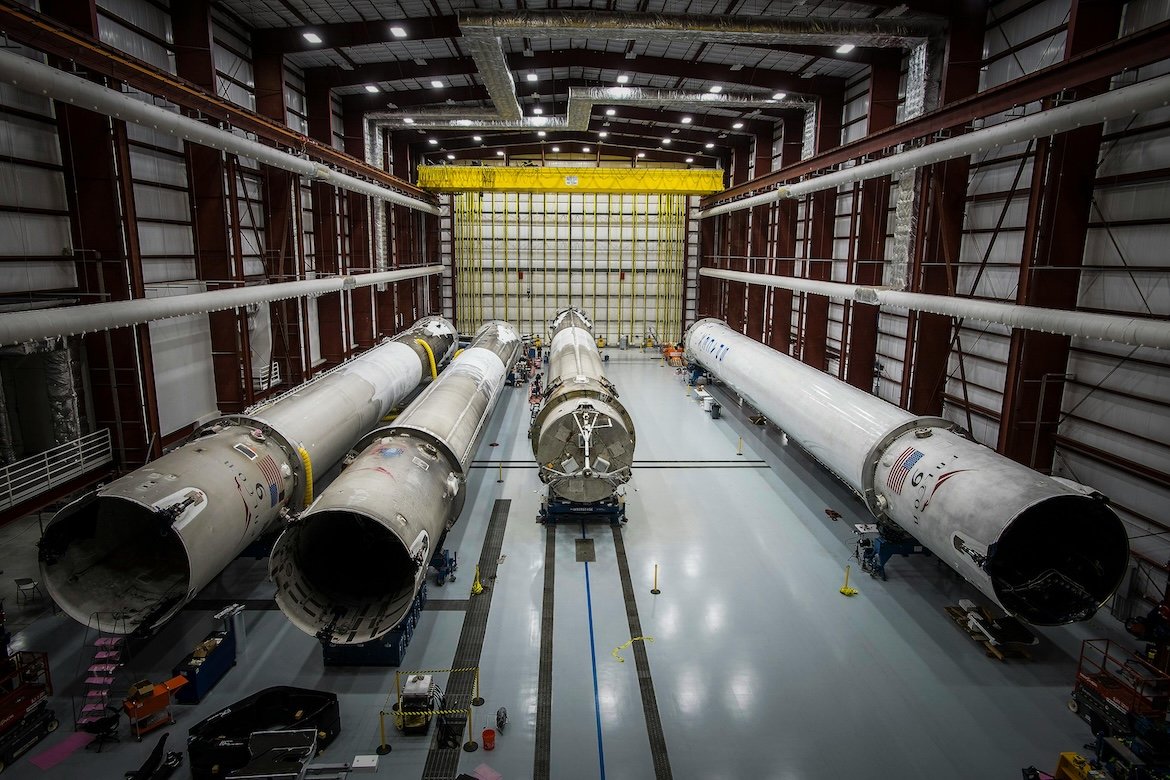
SpaceX is weighing a $60 billion acquisition of AI startup Cursor or a $10 billion partnership as it expands its AI strategy ahead of a potential IPO. Photo: SpaceX / Pexels

SpaceX is exploring a major expansion into artificial intelligence through a potential $60 billion acquisition of AI startup Cursor, or alternatively, a $10 billion strategic partnership if a full deal does not materialize.

The move comes as the company ramps up its positioning ahead of a widely anticipated initial public offering, signaling an aggressive push to integrate AI capabilities into its broader technology ecosystem.

SpaceX said it has secured the option to acquire Cursor later this year, while also outlining a fallback plan to invest billions into a partnership focused on joint development and collaboration.

AI Expansion Reflects Strategic Positioning Ahead of IPO

The potential deal underscores SpaceX’s ambition to deepen its presence in artificial intelligence, an area increasingly seen as critical to future growth across multiple industries.

Cursor, a coding-focused AI startup, has gained attention for its developer tools and AI-assisted programming capabilities, making it a strategic asset in the broader AI infrastructure landscape.

The initiative follows SpaceX’s earlier acquisition of xAI, Elon Musk’s AI venture, further consolidating its position in the sector. The integration process has already triggered organizational changes, with founding team members departing and the company undergoing internal restructuring.

As previously covered, AI has become a central theme driving valuations across both public and private markets, with companies seeking to secure strategic assets ahead of a wave of high-profile IPOs.

For SpaceX, combining AI with its existing capabilities in aerospace, satellite communications, and data infrastructure could unlock new revenue streams and enhance its technological edge.

Market Implications Highlight Intensifying AI Investment Race

The scale of the proposed deal highlights the intensifying competition among major technology players to secure leadership in artificial intelligence.

A $60 billion acquisition would rank among the largest tech deals in recent history, reflecting the premium investors and companies are placing on AI assets.

Even the alternative $10 billion partnership would represent a significant commitment, signaling strong confidence in the commercial potential of AI-driven development tools.

Investors are likely to view the move as a strategic effort to strengthen SpaceX’s long-term growth narrative ahead of its IPO, where AI exposure could play a key role in valuation.

However, analysts caution that large-scale acquisitions carry execution risks, particularly in integrating fast-growing startups into complex organizational structures.

For markets, the development reinforces a broader trend: AI is becoming a core battleground for capital allocation, with companies willing to deploy significant resources to secure competitive advantages.

The outcome of SpaceX’s plans with Cursor will be closely watched as a signal of how aggressively companies are positioning themselves in the next phase of the AI economy.

Trump Signals Potential Defense Deal With Anthropic as AI Talks Advance

Donald Trump said a potential deal with Anthropic for Department of Defense use is possible, highlighting growing government interest in AI technologies.

By Michael Foster | Edited by Oleg Petrenko Published: Updated:
Donald Trump said a potential deal with Anthropic for Department of Defense use is possible, underscoring growing government interest in AI technologies. Photo: Oleg Petrenko / MarketSpeaker

President Donald Trump said his administration is in advanced discussions with AI company Anthropic, indicating that a potential deal involving the U.S. Department of Defense is “possible”.

The comments followed what Trump described as “very good talks” with Anthropic during a recent meeting at the White House, signaling increasing alignment between government priorities and private-sector AI development.

The potential partnership underscores the growing role of artificial intelligence in national security, as governments seek to integrate advanced technologies into defense systems and strategic operations.

Government Push Into AI Expands Defense Applications

The discussions reflect a broader push by the U.S. government to incorporate AI into military and intelligence capabilities.

Anthropic, known for its large language models and AI safety focus, is emerging as a key player in the next generation of AI platforms, attracting interest from both commercial and government clients.

Defense applications could include data analysis, decision support systems, cybersecurity, and autonomous operations, areas where AI is expected to play an increasingly central role.

As previously covered, major AI firms have been exploring partnerships with government agencies, though such collaborations often raise questions around ethics, regulation, and operational transparency.

The potential deal would position Anthropic alongside other technology companies working with the Department of Defense to modernize capabilities through AI.

Market Implications Highlight Strategic Value of AI Firms

Trump’s comments highlight how AI companies are becoming strategically important assets in both economic and geopolitical contexts.

Investors are increasingly valuing firms not only for their commercial potential but also for their relevance in government and defense applications.

A formal agreement with the Department of Defense could provide Anthropic with a significant revenue stream and long-term contract visibility, while also enhancing its credibility in the broader AI ecosystem.

At the same time, such partnerships may attract regulatory scrutiny and public debate, particularly around the use of AI in military settings.

For markets, the development reinforces a key theme: AI is rapidly transitioning from a purely commercial technology into a critical component of national infrastructure and security.

The outcome of the discussions will be closely watched as a signal of how governments and AI companies collaborate in shaping the future of defense technology.

Exit mobile version