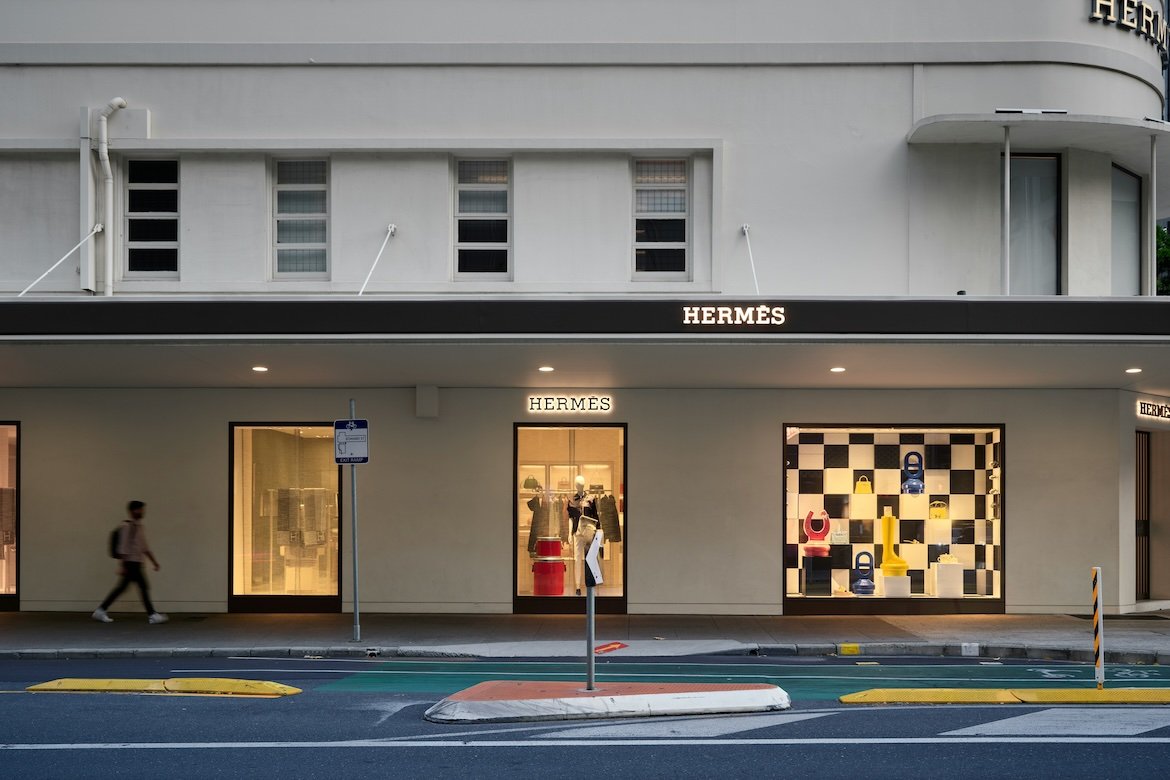
European luxury stocks fell sharply after disappointing first-quarter earnings from major players, with Hermès shares dropping as much as 14% and Kering reporting declining revenue amid weakening global demand.
The selloff reflects growing pressure on the luxury sector as geopolitical tensions linked to the Iran war disrupt spending patterns, particularly in the Middle East – a key growth region for high-end brands.
Hermès shares recorded their steepest intraday decline in years after sales growth of 5.6% missed expectations of roughly 7%, while Kering reported a 6% drop in first-quarter revenue, driven largely by continued weakness at its flagship Gucci brand.
Geopolitical Tensions Weigh on Luxury Demand and Tourism
The Iran war has significantly impacted consumer behavior in the Middle East, leading to a decline in luxury spending and reduced tourism flows into Europe.
Hermès reported a roughly 6% drop in sales across the Middle East, with a sharp slowdown in March as regional tensions escalated.
The conflict has also reduced travel from wealthy Middle Eastern consumers, a key customer base for luxury retailers in cities such as Paris and London. Fewer tourists translated into weaker in-store sales, particularly in France, where spending declined as visitor numbers fell.
Kering, which owns Gucci, Yves Saint Laurent, and Balenciaga, faced similar pressures. Gucci sales dropped about 8% year-over-year, extending a prolonged period of weakness for the brand.
Overall, the Middle East while representing a relatively small share of total revenue has historically been one of the fastest-growing markets for luxury goods, making the recent slowdown particularly impactful for investor expectations.
As previously covered, geopolitical instability has increasingly become a key risk factor for consumer-facing sectors, especially those reliant on global travel and discretionary spending.
Market Reaction Highlights Fragility of Luxury Sector Recovery
The sharp market reaction underscores investor concerns about the sustainability of the luxury sector’s recovery following a period of slowing growth and consumer pushback against high prices.
Kering shares declined alongside Hermès, with investors focusing on Gucci’s turnaround challenges and broader signs of weakening demand across regions including Europe and China.
Analysts note that the sector is facing multiple headwinds, including geopolitical uncertainty, currency fluctuations, and shifting consumer behavior.
At the same time, valuation pressures are increasing. Luxury stocks, traditionally seen as defensive plays tied to ultra-wealthy consumers, are now being reassessed as growth slows and earnings visibility weakens.
Some investors view the selloff as a potential buying opportunity, particularly for stronger brands with resilient pricing power. However, weaker performers such as Kering may face a longer recovery cycle without clear signs of operational improvement.
The latest earnings season highlights a key theme for markets: even premium consumer segments are not immune to macroeconomic and geopolitical shocks.
For investors, the focus now shifts to whether demand stabilizes in the second half of the year or if prolonged uncertainty continues to weigh on luxury spending globally.