Global Copper Inventories Hit 23-Year High as Supply Surge Accelerates

Global copper inventories have climbed to a 23-year high, surpassing 1.02 million tonnes. The rapid buildup signals shifting dynamics in the commodities market.

By Nathan Cole | Edited by Oleg Petrenko Published: Updated:
Global copper inventories have risen to a 23-year high, exceeding 1.02 million tonnes, signaling a significant shift in commodities market dynamics. Photo: Marcel Strauß / Unsplash

Global copper inventories have surged to 1.02 million tonnes across major exchanges, reaching their highest level in 23 years and underscoring a dramatic shift in global supply dynamics.

Stocks tracked across Comex, the Shanghai Futures Exchange, and the London Metal Exchange have doubled since September and risen by approximately 380% since 2024, marking one of the fastest increases on record.

The sharp accumulation comes amid heightened trading activity and changing expectations around industrial demand.

Supply Build Signals Market Imbalance

The rapid rise in inventories suggests a growing imbalance between supply and demand, with production outpacing consumption in key markets. On Comex alone, copper inventories reached a record 534,405 tonnes in early February, reflecting a significant influx of material into exchange-monitored warehouses.

Meanwhile, stockpiles tracked by the London Metal Exchange have increased for 27 consecutive days, the longest stretch of gains since 2009. As previously covered, copper is widely viewed as a barometer of global economic activity due to its critical role in construction, manufacturing, and energy infrastructure.

The surge in supply may indicate slowing industrial demand or anticipatory stockpiling ahead of potential market disruptions.

Implications for Prices and Global Markets

The buildup in inventories could place downward pressure on copper prices if demand fails to keep pace with supply growth.

For investors, the trend raises questions about the near-term outlook for industrial metals, particularly as global growth expectations remain uncertain. At the same time, structural demand drivers such as electrification, renewable energy, and infrastructure investment continue to support a longer-term bullish case for copper.

Analysts note that short-term oversupply does not necessarily undermine the metal’s strategic importance in the global energy transition. However, the scale and speed of the current inventory surge highlight increasing volatility in commodities markets.

If the trend persists, it could reshape pricing dynamics and influence investment flows across the broader metals sector.

Buffett Says Berkshire Made $100 Billion on Apple, Signals Readiness to Deploy Cash

Warren Buffett said Berkshire Hathaway has earned over $100 billion from its Apple investment. He signaled the firm is ready to deploy cash if markets decline.

By Sophia Reynolds | Edited by Oleg Petrenko Published:
Warren Buffett said Berkshire Hathaway has generated more than $100 billion from its Apple investment and indicated the firm is ready to deploy capital if markets decline. Photo: Oleg Petrenko / MarketSpeaker

Warren Buffett said Berkshire Hathaway has generated more than $100 billion in profits from its long-standing investment in Apple, which remains the firm’s largest holding despite partial sales in recent years.

Speaking in a televised interview, Buffett acknowledged that he sold a portion of the Apple stake earlier than he would have preferred, though he emphasized the investment’s overall success.

The comments come as Berkshire continues to manage a large cash position amid uncertain market conditions.

Cautious Strategy Amid Market Uncertainty

Buffett indicated that Berkshire is prepared to deploy significant capital if markets experience a meaningful downturn, signaling a readiness to take advantage of lower valuations.

The company has already allocated approximately $17 billion into U.S. Treasury bonds, reflecting a defensive positioning while waiting for more attractive opportunities. Investment decisions are increasingly being coordinated with CEO Greg Abel, as part of the firm’s long-term leadership transition.

As previously covered, Berkshire has maintained a disciplined approach to capital allocation, favoring patience over aggressive buying during periods of elevated valuations.

Buffett also addressed monetary policy, noting that while he is uncertain whether he would lower interest rates, he would prioritize controlling inflation and maintaining stability in the banking system.

Implications for Investors

Buffett’s remarks reinforce Berkshire’s dual strategy of caution and opportunism, balancing capital preservation with readiness to act when markets present compelling value.

For investors, the continued prominence of Apple in Berkshire’s portfolio highlights confidence in large-cap technology as a long-term investment.

At the same time, the buildup of Treasury holdings suggests ongoing concern about market conditions and valuation levels. Analysts say Berkshire’s positioning could allow it to move quickly in the event of market dislocations, potentially capturing outsized returns during periods of volatility. The comments also provide insight into how one of the world’s most closely watched investors views the current macroeconomic environment, particularly the role of interest rates and inflation.

As markets remain sensitive to policy shifts and geopolitical risks, Berkshire’s approach may serve as a benchmark for institutional investors navigating an uncertain landscape.

SpaceX Targets $2 Trillion Valuation in Potential Record IPO

SpaceX is targeting a valuation of more than $2 trillion in its upcoming IPO, according to reports. The listing could become the largest in stock market history.

By Sophia Reynolds | Edited by Oleg Petrenko Published:
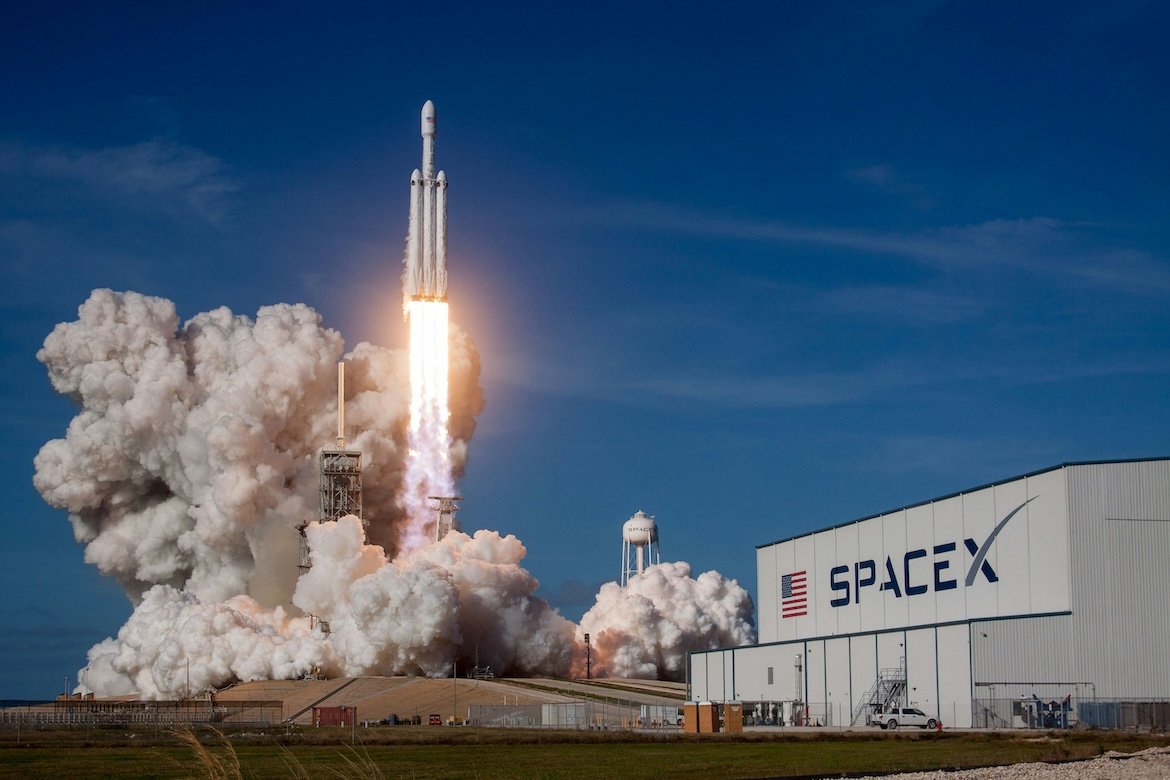
SpaceX is reportedly targeting a valuation above $2 trillion for its upcoming IPO, a move that could make it the largest stock market listing in history. Photo: SpaceX / Unsplash

SpaceX is targeting a valuation of more than $2 trillion for its upcoming initial public offering, according to reports, positioning the company for what could become the largest stock market debut on record.

The company has reportedly begun floating the valuation to prospective investors following its confidential IPO filing with U.S. regulators, as it prepares for a potential market debut later this year.

The move underscores the scale of investor interest in high-growth technology platforms at the intersection of space infrastructure and artificial intelligence.

Valuation Ambitions Reflect Strategic Expansion

SpaceX’s ambitious valuation target follows its recent merger with xAI, a deal that valued the rocket company at approximately $1 trillion and the AI business at $250 billion. The combined structure is designed to integrate space-based infrastructure with advanced AI capabilities, including satellite communications and data processing.

As previously covered, SpaceX has rapidly expanded its Starlink satellite network while maintaining dominance in commercial launch services, creating multiple high-growth revenue streams.

The company’s ability to scale both launch capacity and global connectivity has been a key factor behind its rising valuation expectations.

Implications for Markets and IPO Pipeline

A successful listing at or near the $2 trillion level would set a new benchmark for global equity markets and could reshape investor expectations for large-scale IPOs. The offering is widely seen as a potential catalyst for a broader reopening of the IPO market, particularly for capital-intensive technology companies.

Analysts note that strong demand for the deal could pave the way for other major listings, especially in artificial intelligence and infrastructure sectors. However, such a high valuation also raises questions around sustainability, capital requirements, and execution risks in a highly competitive environment.

Still, SpaceX’s positioning at the center of two transformative industries space and AI continues to attract significant investor attention.

If successful, the IPO could mark a defining moment for global markets, reinforcing the shift toward next-generation technology platforms as key drivers of valuation.

OpenAI Secures $122 Billion Funding Round Ahead of Potential IPO

OpenAI has raised $122 billion in a record-breaking funding round to accelerate AI development. The deal comes as expectations grow for a future public offering.

By Emma Clarke | Edited by Oleg Petrenko Published: Updated:
OpenAI has secured $122 billion in a record-breaking funding round to accelerate AI development, as expectations build around a potential future IPO. Photo: Focal Foto / Wikimedia

OpenAI has secured $122 billion in committed capital in one of the largest funding rounds ever, underscoring the escalating scale of investment in artificial intelligence as the company prepares for its next phase of growth.

The financing comes amid growing expectations that OpenAI could move toward a public listing, positioning itself as a central player in the rapidly expanding AI economy. The capital will be used to scale infrastructure, advance research, and expand commercial applications of AI technologies.

Massive Capital Push to Scale AI Infrastructure

The size of the funding round reflects the enormous cost of building and maintaining advanced AI systems, particularly in areas such as data centers, chip procurement, and model training.

OpenAI has been aggressively investing in compute capacity to support increasingly complex models, as competition intensifies across the technology sector. As previously covered, AI development requires billions in ongoing investment, with companies racing to secure both hardware and talent to maintain a competitive edge. The latest funding round significantly strengthens OpenAI’s ability to scale its operations and accelerate product deployment across enterprise and consumer markets.

It also signals continued confidence from investors in the long-term potential of AI-driven platforms.

Implications for Markets and the AI Race

The $122 billion raise highlights how artificial intelligence is reshaping capital allocation across global markets, with unprecedented sums flowing into the sector. For investors, the deal reinforces the view that AI will remain a dominant theme driving valuations in Big Tech and adjacent industries.

At the same time, the scale of spending raises questions about profitability timelines and capital efficiency, particularly as companies face mounting infrastructure costs.

OpenAI has indicated plans to reach profitability in the coming years, though analysts note that the path forward will depend heavily on monetization and cost management. The funding round also increases pressure on competitors, who may need to raise additional capital to keep pace with the rapidly evolving AI landscape. As anticipation builds around a potential IPO, OpenAI’s latest move positions it at the center of one of the most significant technological and financial shifts in recent history.

SpaceX Files Confidentially for IPO Ahead of Potential June Listing

SpaceX has reportedly filed confidentially for an IPO, with a potential listing as early as June. The move could kick off a wave of major tech offerings.

By Sophia Reynolds | Edited by Oleg Petrenko Published: Updated:
SpaceX has reportedly filed confidentially for an IPO, with a potential listing as early as June, a move that could trigger a new wave of major tech offerings. Photo: SpaceX / Unsplash

SpaceX has confidentially filed for an initial public offering, according to reports, signaling a potential market debut as early as June and setting the stage for one of the most anticipated listings in years.

The move comes as investor appetite for high-growth technology companies shows signs of returning, particularly in sectors tied to artificial intelligence and advanced infrastructure.

If completed, the offering could rank among the largest IPOs in history, given SpaceX’s massive valuation and dominant position in the global space industry.

IPO Momentum Builds Across Big Tech

SpaceX’s filing could mark the beginning of a broader wave of major public offerings, with companies such as OpenAI and Anthropic also widely expected to pursue listings in the near future.

The timing reflects improving market conditions after a period of muted IPO activity, as volatility stabilizes and investor confidence gradually returns.

As previously covered, companies in capital-intensive sectors like AI and space technology are increasingly turning to public markets to fund expansion and offset rising operational costs.

For SpaceX, going public could provide additional capital to scale its satellite network, launch capabilities, and long-term ambitions in deep space exploration.

Implications for Markets and Investors

A successful SpaceX IPO would likely attract significant institutional demand, given the company’s leadership in commercial space launches and satellite communications. It could also serve as a key test of market appetite for large-scale, high-valuation tech listings following a cautious period for IPOs.

Analysts say a strong debut may pave the way for other major tech firms to accelerate their own listing plans, potentially reshaping capital markets in the second half of the year.

However, risks remain, including valuation sensitivity, broader market conditions, and the capital intensity of SpaceX’s business model.

Still, the confidential filing marks a critical step toward public markets and reinforces the growing intersection between advanced technology sectors and investor capital.

Apple Co-Founder Ron Wayne Claims He Still Owns 10% Stake

Apple’s third co-founder Ron Wayne says he still owns a 10% stake in the company despite exiting shortly after its founding. The claim has reignited debate over early ownership agreements.

By Emma Clarke | Edited by Oleg Petrenko Published:
Apple’s third co-founder Ron Wayne claims he still holds a 10% stake in the company despite leaving shortly after its founding, reigniting debate over early ownership agreements. Photo: Laurenz Heymann / Unsplash

Ron Wayne, the lesser-known third co-founder of Apple, has renewed claims that he still holds a 10% ownership stake in the company despite leaving just days after its founding.

Wayne, who exited Apple roughly 12 days after its creation in 1976, was reportedly bought out for a relatively small sum at the time, relinquishing his formal stake in the business.

His latest remarks have sparked renewed discussion around the company’s early ownership structure and the legal interpretation of its founding agreements.

A Contested Claim Rooted in Apple’s Early Days

Wayne co-founded Apple alongside Steve Jobs and Steve Wozniak but quickly withdrew due to concerns over financial risk. At the time, he agreed to sell his stake back to the company, a decision that has since become one of the most widely cited missed opportunities in business history. Despite this, Wayne has argued that certain aspects of the original agreement may leave room for interpretation regarding his ownership.

As previously covered, early-stage startup agreements in the 1970s were often informal, which can complicate retrospective claims decades later. However, there is no widely recognized legal basis supporting Wayne’s current assertion of ownership.

Implications and Market Perspective

While Wayne’s claim is unlikely to have any direct impact on Apple’s current valuation or shareholder structure, it has drawn attention due to the company’s immense scale.

Apple remains one of the most valuable companies in the world, with a market capitalization measured in trillions of dollars. A hypothetical 10% stake today would be worth hundreds of billions, underscoring the magnitude of Wayne’s early exit. For investors, the situation serves more as a historical footnote than a material development.

Still, the renewed claim highlights the enduring fascination with Silicon Valley origin stories and the long-term consequences of early business decisions.

It also reflects how narratives around Big Tech founders continue to shape public and investor interest, even decades after a company’s formation.

Exit mobile version