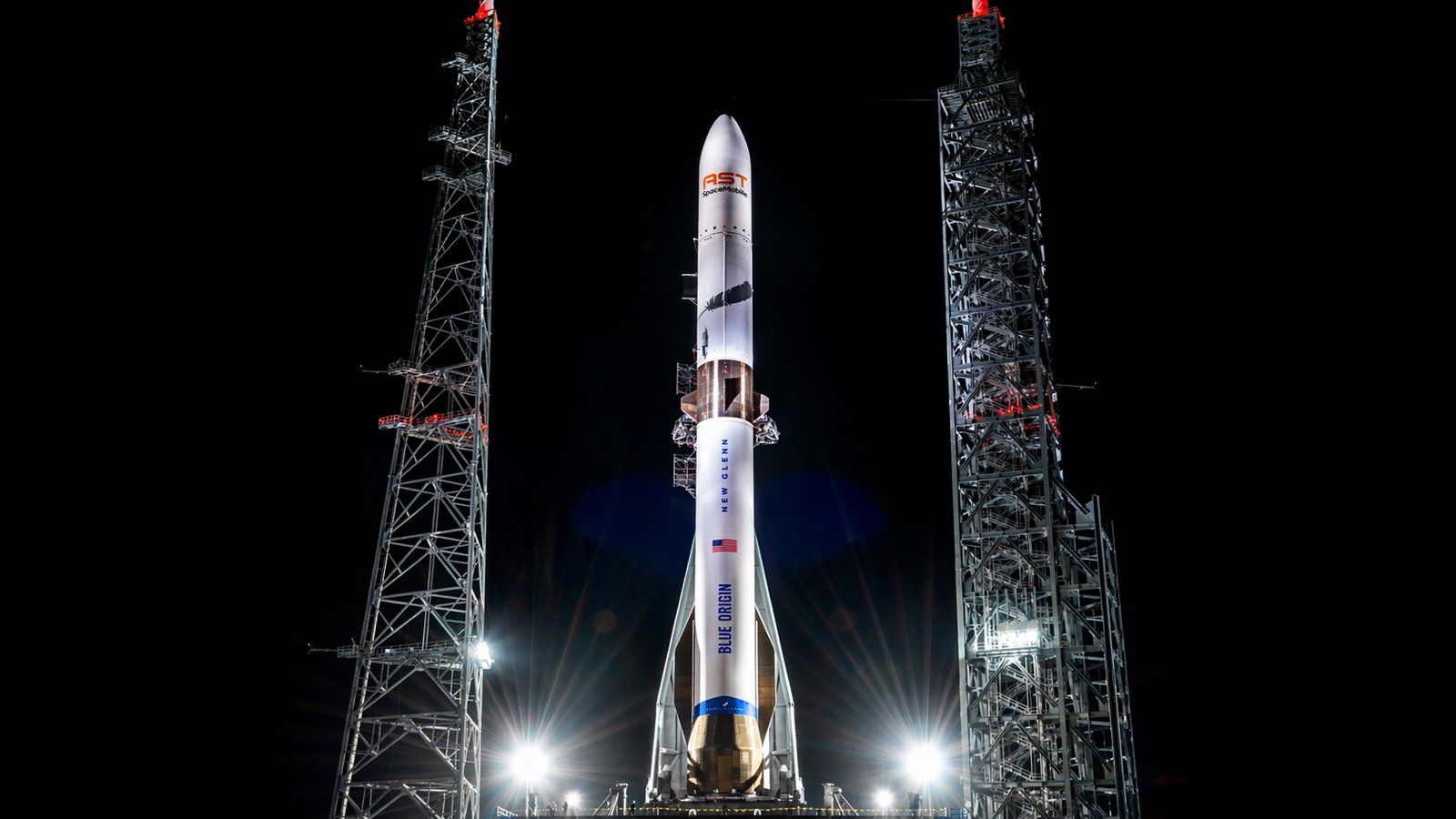
Blue Origin has successfully reused its heavy-lift New Glenn rocket for the first time, marking a major milestone in the company’s push toward reusable launch systems though the mission ultimately failed to achieve its primary objective.
The rocket launched with a previously flown booster, which was successfully recovered and landed on a platform in the Atlantic Ocean approximately six minutes after liftoff. However, the payload a satellite designed for direct-to-smartphone communication was not delivered to its intended orbit.
The mixed outcome highlights both the progress and ongoing challenges in Blue Origin’s effort to compete in the increasingly competitive space launch market.
Reusable Milestone Signals Progress in Launch Economics
The successful reuse and landing of the New Glenn booster represents a critical step toward reducing launch costs and improving operational efficiency.
Reusable rocket technology has become a key differentiator in the space industry, allowing companies to lower expenses and increase launch frequency. Blue Origin’s achievement brings it closer to competing with established players that have already demonstrated consistent reuse capabilities.
The New Glenn rocket is designed to carry heavy payloads into orbit, targeting commercial satellite launches, government missions, and future space infrastructure projects.
As previously covered, the race to develop reliable reusable launch systems is intensifying, with companies seeking to capture a growing share of the global launch market.
The ability to recover and reuse boosters is expected to play a central role in long-term profitability and scalability in the sector.
Mission Failure Highlights Execution Risks in Space Industry
Despite the successful booster recovery, the mission’s failure to place the satellite into the correct orbit underscores the technical complexity and risks associated with space launches.
Accurate orbital insertion is critical for satellite functionality, particularly for communications systems designed to connect directly with smartphones.
The setback may delay deployment timelines and raise questions about reliability, especially as Blue Origin seeks to secure additional commercial contracts.
At the same time, industry analysts note that early-stage missions often encounter setbacks, particularly when introducing new technologies or mission profiles.
For investors and market observers, the event reflects a broader theme in the space sector: rapid technological progress is often accompanied by operational risk.
Blue Origin’s ability to learn from the failure and improve future mission performance will be key to establishing credibility and competitiveness in the evolving space launch landscape.