Japan’s U.S. Treasury Holdings Draw Attention as Bond Market Risks Resurface

Japan’s massive holdings of U.S. Treasury bonds have come into focus as investors debate whether foreign selling could pressure global bond markets. Analysts say fears of large-scale liquidation highlight growing fragility in the world’s largest debt market.

By Michael Foster | Edited by Oleg Petrenko Published:
Japan’s large holdings of U.S. Treasury bonds are drawing renewed attention as investors debate whether foreign selling could put pressure on global bond markets. Analysts say such concerns underscore growing sensitivity in the world’s largest debt market. Photo: Szymon Shields / Pexels

Japan’s position as the largest foreign holder of U.S. government debt has come under renewed scrutiny as volatility spreads across global bond markets. Investors are increasingly debating how shifts in Japanese policy or capital flows could influence the stability of the U.S. Treasury market, the backbone of the global financial system.

According to widely cited estimates, Japanese institutions collectively hold trillions of dollars in U.S. Treasury securities, making the country one of the most important overseas lenders to the United States.

The renewed attention comes as Japan faces mounting economic pressures, including currency weakness, volatility in domestic equities, and changes in monetary policy.

Why Japan’s Treasury Holdings Matter

The U.S. Treasury market, valued at roughly $30 trillion, plays a central role in global finance. Treasuries are widely used as reserve assets, collateral in financial transactions, and benchmarks for global interest rates.

Japan’s large holdings stem from decades of trade surpluses and investment flows. Japanese institutions – including banks, insurers, pension funds, and government-related entities – have historically invested heavily in Treasuries because of their liquidity and perceived safety.

However, changes in domestic conditions can alter those flows. When the Japanese yen weakens or domestic yields rise, Japanese investors may shift capital back home to capture better returns or stabilize their balance sheets.

As previously covered, the Bank of Japan’s gradual shift away from strict yield curve control policies has already begun to reshape global capital flows.

Could Foreign Selling Shake the Bond Market?

Some market commentary has suggested that large-scale selling of U.S. Treasuries by foreign holders could destabilize financial markets. In theory, heavy selling would push bond prices lower and yields higher, tightening financial conditions across the economy.

However, analysts caution that the U.S. Treasury market is among the deepest and most liquid financial markets in the world. Even substantial portfolio adjustments by foreign investors are typically absorbed by a broad range of buyers, including domestic institutions, pension funds, banks, and the Federal Reserve.

Moreover, while Japan is the largest foreign holder, its share of the overall Treasury market remains a minority portion of total outstanding debt.

Still, the debate highlights how sensitive global markets have become to shifts in capital flows. As monetary policies diverge and geopolitical tensions rise, investors are increasingly focused on who is buying or selling government debt.

For now, most analysts view the risk of a sudden, destabilizing liquidation as unlikely. Yet the attention surrounding Japan’s holdings underscores a broader reality: the global financial system remains deeply interconnected, and large changes in cross-border investment patterns can ripple through markets faster than expected.


Oil Surges Toward $120 as Iran War Sends Global Stocks Tumbling

Oil prices surged toward $120 per barrel as the conflict involving Iran intensified fears of supply disruptions through the Strait of Hormuz. Global equity markets fell sharply as energy costs spiked.

By Nathan Cole | Edited by Oleg Petrenko Published:
Oil prices surged toward $120 per barrel as the conflict involving Iran heightened fears of supply disruptions through the Strait of Hormuz, a route that normally carries about 20% of global oil shipments. The spike in energy costs sent global equity markets sharply lower. Photo: Soly Moses / Pexels

Global markets were rocked as oil prices surged toward $120 per barrel amid escalating conflict involving Iran, raising fears of severe disruptions to global energy supplies.

Crude oil prices climbed sharply during trading, with Brent crude briefly rising above $119 per barrel – the highest level in more than three and a half years. The surge reflects mounting concerns that tensions in the Middle East could disrupt shipments through the Strait of Hormuz, one of the world’s most critical oil transport routes.

If supply flows through the strait are significantly affected, analysts warn the shock could push energy prices higher and intensify inflation pressures across the global economy.

Oil Shock Sends Stocks Lower

The rapid rise in oil prices triggered a broad selloff in equity markets. The S&P 500 fell around 2%, while the Nasdaq 100 declined roughly 2.3%. The Dow Jones Industrial Average dropped approximately 2.2% as investors reduced exposure to risk assets.

Energy markets moved in the opposite direction. U.S. benchmark WTI crude jumped about 26.5%, while Brent crude surged roughly 23% during the latest rally.

The sharp divergence highlights how energy shocks often pressure equities while boosting commodity markets. Higher oil prices increase costs for businesses and consumers, raising fears of slower economic growth and persistent inflation.

As previously covered, oil price spikes tied to geopolitical conflicts can have broad economic consequences, especially when they involve key shipping routes such as the Strait of Hormuz.

Asia-Pacific Markets Extend the Selloff

Stock markets across the Asia-Pacific region also fell sharply during morning trading as investors reacted to the escalating conflict and rising energy prices.

Japan’s Nikkei 225 dropped more than 7%, while Hong Kong’s Hang Seng index fell over 3%. Australia’s ASX 200 declined more than 4%.

South Korea’s KOSPI, which has been particularly sensitive since the conflict began, fell more than 8%, triggering a 20-minute trading halt as circuit breakers were activated.

The widespread declines underscore how quickly geopolitical shocks can ripple through global financial markets. Investors remain focused on developments in the Middle East, particularly any signs of disruptions to energy infrastructure or shipping routes.

For now, the surge in oil prices and the simultaneous decline in global equities reflect a classic risk-off reaction as markets brace for the potential economic consequences of prolonged conflict.

BlackRock Limits Withdrawals From $26B Private Credit Fund After Surge in Redemption Requests

BlackRock capped investor withdrawals from its $26 billion HPS Corporate Lending Fund after redemption requests surged to about $1.2 billion. The move highlights growing stress in the rapidly expanding private credit market.

By Michael Foster | Edited by Oleg Petrenko Published:
BlackRock limited investor withdrawals from its $26 billion HPS Corporate Lending Fund after redemption requests climbed to roughly $1.2 billion. The decision underscores rising pressure in the fast-growing private credit market. Photo: BlackRock

BlackRock has restricted investor withdrawals from its flagship private credit vehicle, the HPS Corporate Lending Fund, after redemption requests surged well beyond the fund’s quarterly limits.

Investors sought to withdraw approximately $1.2 billion from the fund about 9.3% of its roughly $26 billion in assets under management. However, the fund allowed withdrawals of only about 5%, equivalent to roughly $620 million, in line with its redemption cap.

The move has drawn attention across financial markets because it highlights liquidity pressures in the fast-growing private credit industry, which has become a major alternative to traditional bank lending.

Why the Fund Restricted Withdrawals

Private credit funds typically invest in long-term corporate loans that cannot be quickly sold without significant price concessions. As a result, many funds impose redemption limits designed to prevent sudden investor withdrawals from forcing distressed asset sales.

BlackRock’s decision reflects these structural constraints rather than a collapse in the underlying portfolio. However, the surge in redemption requests suggests investors may be reassessing exposure to private credit amid rising interest rates, economic uncertainty, and tightening financial conditions.

As previously covered, private credit markets have expanded rapidly over the past decade as banks pulled back from certain lending activities. The sector is now estimated to be worth roughly $1.8 trillion to $2 trillion globally.

Because these funds often finance mid-sized companies that rely heavily on non-bank lending, any liquidity stress in the sector could ripple into broader corporate financing conditions.

Concerns Over a Potential Domino Effect

The restriction has sparked debate among investors about whether redemption pressures could spread across the private credit industry. If withdrawals accelerate, funds may face increasing pressure to sell loans or mark down asset values, potentially triggering wider losses.

Such dynamics could also affect companies that depend on private credit financing. If funds tighten lending standards or reduce exposure, some borrowers could face refinancing challenges, increasing default risk across segments of the market.

Shares of BlackRock and other alternative asset managers came under pressure following the news, reflecting investor concern that redemption trends could signal deeper stress in the sector.

Analysts note that the private credit market’s rapid growth has created a systemically important pool of capital outside traditional banking channels. While redemption limits are standard in the industry, sudden spikes in withdrawal requests can still test the resilience of the model.

For now, the situation underscores the trade-off at the heart of private credit investing: higher yields in exchange for reduced liquidity. As investors reassess risk exposure, the sector may face closer scrutiny from both markets and regulators.

Nearly $1 Trillion Wiped From U.S. Stocks as Major Indexes Slide

U.S. equities lost nearly $1 trillion in market value shortly after the opening bell as major indexes fell across the board. The decline hit large-cap tech and small-cap stocks alike.

By Sophia Reynolds | Edited by Oleg Petrenko Published:
U.S. stocks shed nearly $1 trillion in market value shortly after the opening bell as major indices declined broadly. The selloff affected both large-cap technology names and smaller-cap companies. Photo: www.kaboompics.com / Pexels

U.S. equity markets suffered a sharp selloff shortly after the opening bell, wiping out nearly $1 trillion in market capitalization as investors reacted to rising geopolitical risks and broader global market volatility.

All major indexes moved lower in early trading, reflecting broad-based selling across both large-cap technology stocks and smaller companies.

The rapid losses highlight the fragile sentiment currently dominating financial markets as investors reassess risk exposure amid escalating global tensions and rising commodity prices.

Major Indexes Decline Across the Board

The S&P 500 dropped 1.44%, erasing approximately $870 billion in market value. The technology-heavy Nasdaq Composite fell even further, declining 1.64% and wiping out roughly $640 billion.

The Dow Jones Industrial Average slid 1.69% at one point during the session, destroying about $380 billion in market capitalization. Meanwhile, the small-cap Russell 2000 index declined 2.45%, losing roughly $80 billion.

The declines signal a broad market pullback rather than a sector-specific selloff. Analysts note that when both large-cap and small-cap indexes fall simultaneously, it often reflects macro-driven investor repositioning.

As previously covered, periods of geopolitical uncertainty frequently trigger rapid capital rotation out of equities and into defensive assets.

Investors Brace for Elevated Volatility

Market participants are increasingly concerned that ongoing geopolitical tensions and rising energy prices could amplify volatility across global financial markets.

Rapid swings in commodities and currencies have added additional pressure on equities, particularly as higher energy prices raise concerns about inflation and corporate margins.

Traders are also watching bond markets and safe-haven assets for signs of stabilization. Historically, synchronized declines across equities and bonds can signal deeper stress in financial conditions.

For now, the nearly $1 trillion loss highlights the speed at which market sentiment can shift during periods of heightened uncertainty. Analysts expect further volatility as investors respond to geopolitical developments and macroeconomic signals in the coming sessions.

Asian Markets Slide as KOSPI Plunges 11% and Thailand Triggers Circuit Breaker

Asian markets tumbled amid rising geopolitical tensions and energy supply fears. South Korea’s KOSPI plunged more than 11%, while Thailand halted trading after an 8% intraday drop.

By Michael Foster | Edited by Oleg Petrenko Published:
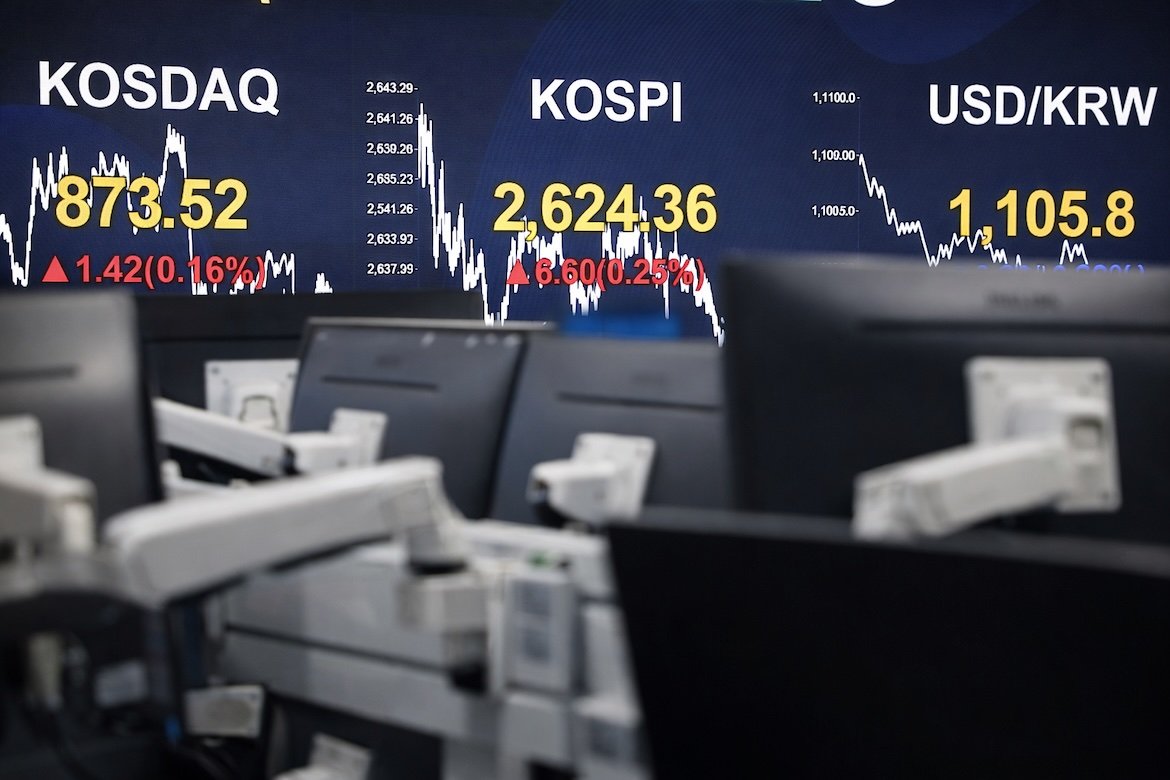
Asian markets fell sharply amid escalating geopolitical tensions and concerns over energy supply disruptions. South Korea’s KOSPI plunged more than 11%, while Thailand halted trading after an 8% intraday decline. Photo: bada.kbs.co.kr / Wikimedia

Asian markets opened sharply lower as geopolitical tensions and concerns over potential disruptions to global energy supplies triggered a wave of selling across the region.

Dubai’s benchmark stock index dropped 4.7% at the open, reflecting broad investor risk aversion as markets reacted to the escalating crisis in the Middle East.

Across Asia, the selloff intensified as traders reassessed economic risks tied to rising energy costs and regional instability.

South Korea’s KOSPI Suffers Deepest Drop Since Crisis

The sharpest decline came from South Korea, where the KOSPI index plunged more than 11% in a single trading session. The two-day drop now ranks among the steepest since the 2008 global financial crisis following the collapse of Lehman Brothers.

Technology companies led the decline, dragging the broader market lower as investors sold growth and export-oriented stocks. The selloff also weakened the Korean won, reflecting capital outflows and rising demand for defensive assets.

Analysts say the combination of geopolitical uncertainty and energy supply fears is particularly sensitive for South Korea’s export-driven economy, which relies heavily on stable global trade conditions.

As previously covered, rapid market declines in Asia often amplify global volatility because the region serves as an early signal of investor sentiment before U.S. and European markets open.

Thailand Halts Trading After 8% Market Drop

Thailand’s stock market also experienced a dramatic selloff. The benchmark SET index dropped more than 8% during the session, marking the largest intraday decline since March 2020.

The fall was severe enough to trigger a circuit breaker mechanism designed to slow panic selling. Authorities temporarily halted trading on index futures, options, and selected equities on the Thailand Futures Exchange (TFEX) to stabilize market conditions.

Circuit breakers are typically activated during extreme volatility to prevent disorderly market behavior and allow investors time to reassess positions.

The sharp declines across Asian markets highlight how geopolitical developments are rapidly spilling into financial markets. Investors remain cautious as energy prices, currency movements, and global equity markets continue to react to unfolding events.

For now, analysts warn that volatility may persist across global markets as traders digest geopolitical developments and their potential impact on economic growth.

Global Markets Lose $4.7 Trillion as Energy Shock Sparks Selloff

Global markets plunged as soaring energy prices tied to the Middle East conflict triggered widespread selling across equities, bonds, metals, and crypto. More than $4.7 trillion in value was erased within hours.

By Michael Foster | Edited by Oleg Petrenko Published:
Global markets plunged as soaring energy prices tied to the Middle East conflict triggered widespread selling across equities, bonds, metals, and crypto. More than $4.7 trillion in value was erased within hours. Photo: Anton Uniqueton / Pexels

Global financial markets have entered a period of extreme turbulence as rising energy prices and escalating conflict in the Middle East trigger widespread selling across asset classes. Stocks, bonds, precious metals, and cryptocurrencies have all come under pressure as investors reassess growth and inflation risks.

In Europe, the broad STOXX Europe 600 index fell 3.2%, while Germany’s DAX dropped 3.7% as markets reacted to the sharp increase in energy costs. Government bonds also faced heavy selling pressure, particularly across European markets, where higher energy prices are fueling concerns about inflation and economic slowdown.

The selloff reflects growing fears that the conflict could trigger a stagflationary shock, combining slower economic growth with rising costs.

Energy Prices Drive Market Panic

Oil prices have surged as supply concerns intensify. U.S. crude climbed above $77 per barrel, marking its highest level since January 21, 2025 – the day after President Donald Trump’s inauguration – effectively reversing the entire decline in oil prices seen during his presidency.

Natural gas prices have also surged. According to reports from Sky News, gas prices in the United Kingdom have jumped 93%, with the benchmark price exceeding $700 for the first time since 2023.

The surge in energy costs has raised alarm across financial markets. Emmanuel Cau, head of European equity strategy at Barclays, described the market reaction bluntly: “This is panic selling. This is fear of stagflation. The market underestimated the scale of this war.”

Higher energy costs threaten to ripple through global supply chains, raising inflation pressures and complicating central bank policy decisions.

Trillions Wiped Out Across Asset Classes

The market turmoil has erased an estimated $4.7 trillion across major asset classes within roughly 11 hours. Precious metals experienced some of the largest declines after earlier surges.

Gold fell 7%, wiping out roughly $2.6 trillion in market value, while silver dropped 12.3%, erasing about $610 billion.

Equity markets also took heavy losses. The S&P 500 declined 1.88%, destroying about $1.14 trillion in capitalization. The Nasdaq fell 2.13%, losing approximately $845 billion, while the Russell 2000 dropped 3.17%, wiping out roughly $100 billion.

Cryptocurrencies were not immune. Bitcoin slipped about 3%, reducing the market’s value by roughly $40 billion.

The scale and speed of the selloff highlight how sensitive global markets have become to geopolitical shocks. Rapid cross-asset movements suggest investors are quickly repricing risk across commodities, equities, and digital assets simultaneously.

For now, markets remain on edge as energy prices, geopolitical developments, and macroeconomic fears collide. Analysts warn that volatility could remain elevated until clearer signals emerge regarding both the conflict and the stability of global energy supply.

Exit mobile version